


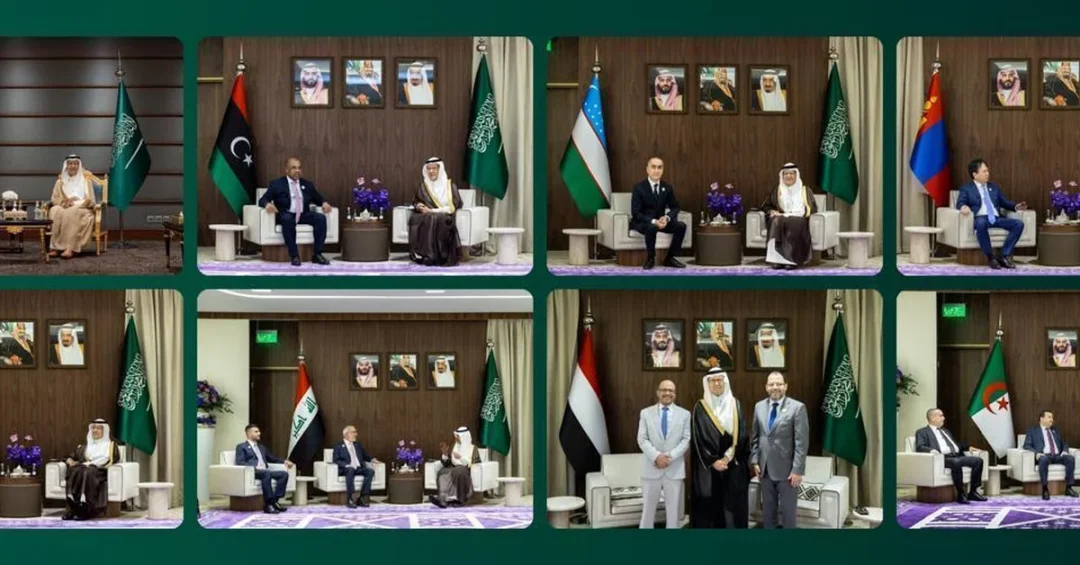
Saudi Arabia’s Minister of Energy and Minister of Industry and Mineral Resources, Prince Abdulaziz bin Salman bin Abdulaziz, concluded two days of high-level bilateral meetings in Riyadh with ministers and senior officials from eight friendly nations on the margins of the 25th WPC Energy Congress, which the Kingdom hosted through October 15, 2026. The meetings, announced via the Saudi Press Agency (SPA), covered cooperation in oil, gas, electricity, renewable energy, industrial development, and energy efficiency, reflecting the Kingdom’s expanding role as a global energy convener and its commitment to international partnership under Vision 2030.
Held in Riyadh, the talks brought together representatives from Germany, Mongolia, Algeria, Iraq, Tunisia, Uzbekistan, Libya, and Yemen. Each bilateral session focused on mutual interests and practical avenues for deepening collaboration across the energy value chain. The 25th WPC Energy Congress, hosted by the Kingdom, provided a strategic platform for these discussions, underscoring Saudi Arabia’s position as a central node in global energy dialogue. The meetings also highlighted the Ministry of Energy’s dual mandate, with Prince Abdulaziz also leading the Ministry of Industry and Mineral Resources, enabling a comprehensive approach that links energy policy with industrial growth and mineral development.
Context and Background
Why does Saudi Arabia’s hosting of the 25th WPC Energy Congress matter for the future of global energy cooperation? The WPC Energy Congress is one of the world’s most significant gatherings for energy professionals, policymakers, and industry leaders, and Saudi Arabia’s role as host reflects its longstanding status as a reliable energy supplier and its growing influence in shaping the global energy transition. The Congress, held in Riyadh, attracted delegations from across the globe, creating a natural setting for Prince Abdulaziz bin Salman bin Abdulaziz to conduct a series of bilateral meetings that advance the Kingdom’s international partnerships.
The timing of these meetings is significant. As the world navigates the dual challenges of energy security and climate action, Saudi Arabia has consistently advocated for a balanced approach that ensures reliable supply while investing in cleaner technologies. The Kingdom’s Vision 2030 framework places energy at the core of economic diversification, with initiatives spanning renewable energy, hydrogen, carbon capture, and industrial minerals. By meeting with ministers from Europe, Asia, Africa, and the Middle East, Prince Abdulaziz reinforced Saudi Arabia’s commitment to multilateral engagement and its openness to sharing expertise and investment opportunities.
The bilateral meetings also reflect the Kingdom’s broader diplomatic strategy of strengthening ties with friendly countries across different regions. Each meeting addressed specific areas of cooperation, from Germany’s focus on energy and industry to Tunisia’s interest in renewable energy and energy efficiency. These discussions are part of a sustained effort to build resilient energy partnerships that benefit all parties involved.
Key Details of the Bilateral Meetings
What specific areas of cooperation were discussed during these high-level talks? Prince Abdulaziz bin Salman bin Abdulaziz met Germany’s Federal Minister for Economic Affairs and Energy, Katherina Reiche, to discuss issues of mutual interest and ways to strengthen cooperation, particularly in the energy and industrial sectors. Germany, as a major European economy, shares with Saudi Arabia a strong interest in diversifying energy sources and advancing industrial innovation, making this dialogue a key component of the Kingdom’s engagement with Europe.
In talks with Mongolia’s Deputy Prime Minister Togmid Dorjkhand, the discussions centered on opportunities to expand bilateral cooperation in energy and industry, as well as other areas of mutual interest. This meeting underscores Saudi Arabia’s growing ties with Asian nations beyond its traditional partners, opening new avenues for investment and knowledge exchange. Prince Abdulaziz also met Algeria’s Minister of State, Minister of Hydrocarbons Mohamed Arkab and Minister of Energy and Renewable Energies Mourad Adjal, where they discussed ways to deepen cooperation across the oil, gas, and electricity sectors and advance shared energy priorities.
Further meetings included Iraq’s Minister of Oil Bassem Mohammed Khudair Al-Abadi and Minister of Electricity Ali Wahib, focusing on energy cooperation and closer coordination between the two countries. With Tunisia’s Minister of Equipment and Housing and Acting Minister of Industry, Mines and Energy Salah Zouari, discussions covered expanding cooperation in renewable energy, energy efficiency, and consumption rationalization, alongside technical expertise and opportunities for joint projects. Prince Abdulaziz also met Uzbekistan’s Minister of Energy Sherzod Khodjaev for talks covering oil and oil supplies, renewable energy, electricity, and energy efficiency, as well as investment opportunities and the exchange of expertise. Libya’s Minister of Oil and Gas Khalifa Rajab Abdulsadek discussed cooperation in energy technologies and solutions and efforts to support stability in global energy markets. Finally, Yemen’s Minister of Oil and Minerals Mohammed Abdullah Ali Baqna and Minister of Electricity and Energy Adnan Mohammed Omar Al-Kaf discussed strengthening energy cooperation and exploring investment opportunities in projects of mutual interest.
International and Regional Impact
How do these meetings shape Saudi Arabia’s relations with both regional neighbors and global powers? The bilateral discussions signal Saudi Arabia’s active diplomacy in energy affairs, bridging Europe, Asia, and the Middle East. For regional partners like Iraq, Yemen, and Algeria, cooperation with the Kingdom offers access to advanced technologies, investment, and expertise that can help stabilize and modernize their energy sectors. For Germany and Uzbekistan, the talks open doors to new supply chains and joint ventures in renewable energy and industrial development.
The emphasis on supporting stability in global energy markets, as discussed with Libya, highlights Saudi Arabia’s role as a stabilizing force in oil markets. The Kingdom has consistently worked with OPEC+ and other partners to ensure balanced supply and demand, and these bilateral meetings reinforce that commitment. Moreover, the focus on renewable energy and energy efficiency with Tunisia and Uzbekistan demonstrates Saudi Arabia’s willingness to share its growing expertise in clean energy technologies, aligning with global climate goals while maintaining energy security.
Economic and Strategic Significance
What economic benefits arise from these strengthened partnerships? Saudi Arabia’s Vision 2030 aims to diversify the economy beyond oil, and international cooperation is a cornerstone of that strategy. The meetings with Germany, a leader in industrial technology, could lead to joint ventures in advanced manufacturing and renewable energy. Cooperation with Mongolia and Uzbekistan opens opportunities in mining and mineral resources, a key pillar of the Ministry of Industry and Mineral Resources’ mandate.
For Saudi Arabia, these partnerships also support the growth of its own industrial base. By exchanging expertise and investing in joint projects, the Kingdom can accelerate the development of its renewable energy sector, enhance energy efficiency, and expand its mineral exploration and processing capabilities. The meetings with Iraq and Yemen, both neighboring countries with significant energy potential, could lead to cross-border infrastructure projects and improved regional energy integration. Overall, these bilateral talks are not just diplomatic gestures; they are practical steps toward a more interconnected and prosperous energy future.
Vision 2030 Alignment
How do these meetings align with Saudi Arabia’s long-term vision? Vision 2030, launched by Crown Prince Mohammed bin Salman, seeks to transform the Kingdom into a global investment powerhouse and a hub for innovation. The energy sector is central to this transformation, with targets to generate 50% of electricity from renewable sources by 2030 and to become a leading exporter of clean hydrogen. The bilateral meetings led by Prince Abdulaziz bin Salman bin Abdulaziz directly support these goals by fostering international partnerships that bring capital, technology, and expertise into the Kingdom.
Furthermore, the meetings reflect the Kingdom’s commitment to responsible global citizenship. By engaging with a diverse set of nations, Saudi Arabia demonstrates its readiness to collaborate on shared challenges, from energy transition to economic development. As the host of the 25th WPC Energy Congress, the Kingdom has shown leadership in convening the world’s energy stakeholders. These bilateral discussions are a testament to Saudi Arabia’s proactive approach to building a sustainable and prosperous energy future, both at home and abroad. The outcomes of these meetings will likely materialize in new agreements, joint projects, and enhanced cooperation in the months and years ahead, further solidifying Saudi Arabia’s role as a global energy leader.
20 Questions
Q1. Who chaired the bilateral meetings in Riyadh?
A1. Prince Abdulaziz bin Salman bin Abdulaziz, Minister of Energy and Minister of Industry and Mineral Resources, chaired the meetings.
Q2. Which event provided the platform for these meetings?
A2. The 25th WPC Energy Congress, hosted by Saudi Arabia through October 15, 2026.
Q3. Which German official met with Prince Abdulaziz?
A3. Germany’s Federal Minister for Economic Affairs and Energy, Katherina Reiche.
Q4. What topics were discussed with Germany?
A4. Issues of mutual interest and ways to strengthen cooperation in energy and industrial sectors.
Q5. Who represented Mongolia in the talks?
A5. Mongolia’s Deputy Prime Minister Togmid Dorjkhand.
Q6. What was the focus of the meeting with Mongolia?
A6. Expanding bilateral cooperation in energy, industry, and other areas of mutual interest.
Q7. Which Algerian ministers participated?
A7. Minister of State, Minister of Hydrocarbons Mohamed Arkab and Minister of Energy and Renewable Energies Mourad Adjal.
Q8. What sectors were discussed with Algeria?
A8. Oil, gas, and electricity sectors, and advancing shared energy priorities.
Q9. Who represented Iraq in the meetings?
A9. Iraq’s Minister of Oil Bassem Mohammed Khudair Al-Abadi and Minister of Electricity Ali Wahib.
Q10. What was the focus of talks with Iraq?
A10. Energy cooperation and closer coordination between the two countries.
Q11. Which Tunisian official met with Prince Abdulaziz?
A11. Tunisia’s Minister of Equipment and Housing and Acting Minister of Industry, Mines and Energy Salah Zouari.
Q12. What areas of cooperation were discussed with Tunisia?
A12. Renewable energy, energy efficiency, consumption rationalization, technical expertise, and joint projects.
Q13. Who represented Uzbekistan?
A13. Uzbekistan’s Minister of Energy Sherzod Khodjaev.
Q14. What topics were covered with Uzbekistan?
A14. Oil and oil supplies, renewable energy, electricity, energy efficiency, investment opportunities, and expertise exchange.
Q15. Which Libyan official participated?
A15. Libya’s Minister of Oil and Gas Khalifa Rajab Abdulsadek.
Q16. What was discussed with Libya?
A16. Cooperation in energy technologies and solutions and efforts to support stability in global energy markets.
Q17. Who represented Yemen in the talks?
A17. Yemen’s Minister of Oil and Minerals Mohammed Abdullah Ali Baqna and Minister of Electricity and Energy Adnan Mohammed Omar Al-Kaf.
Q18. What was the focus with Yemen?
A18. Strengthening energy cooperation and exploring investment opportunities in projects of mutual interest.
Q19. How do these meetings align with Vision 2030?
A19. They support economic diversification, renewable energy targets, and international partnerships central to Vision 2030.
Q20. What is the significance of hosting the WPC Energy Congress?
A20. It underscores Saudi Arabia’s role as a global energy leader and convener of international dialogue.
Reader Feedback
We value your thoughts. Please share your feedback on this article.
Your feedback helps us improve our coverage.