


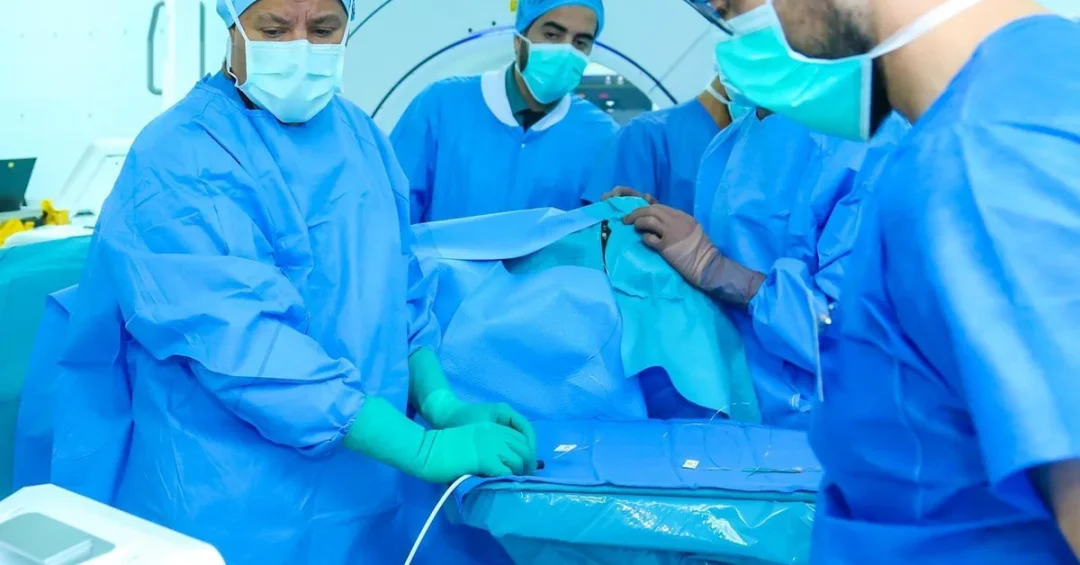
King Faisal Specialist Hospital & Research Centre (KFSHRC) announced on October 28, 2024, that its Riyadh branch has successfully removed a drug-resistant epileptic focus using thermal radiofrequency in conjunction with electroencephalography (EEG), marking the first procedure of its kind in the Middle East. The minimally invasive intervention, performed without traditional open-brain surgery, was led by Dr. Ibrahim Althubaiti, a consultant neurosurgeon at KFSHRC, according to a press release issued by the hospital and carried by the Saudi Press Agency (SPA). The procedure neutralizes the brain tissue responsible for triggering recurrent seizures, offering renewed hope to patients whose condition has not responded to medication. Could this breakthrough signal a new era in neurological care across the region?
The announcement underscores Saudi Arabia’s growing capacity to deliver advanced, patient-centered medical solutions through its national healthcare institutions. KFSHRC, a globally recognized center of excellence, continues to expand the boundaries of neurosurgical practice, combining precision technology with clinical expertise. For patients living with drug-resistant epilepsy, the new technique represents far more than a clinical milestone; it offers the prospect of resuming studies, work, and social life without the constant fear of sudden seizures. The hospital’s achievement also reinforces the Kingdom’s broader ambition to serve as a hub for specialized medical innovation, attracting patients and practitioners from around the world. How many lives might change because of a single, precisely targeted procedure?
Context and Background
Epilepsy is one of the most common neurological disorders worldwide, affecting millions of people across all age groups. While many patients manage their condition effectively with anti-seizure medications, a significant proportion continue to experience recurrent seizures despite optimal drug therapy. This group, often described as having drug-resistant or refractory epilepsy, faces a daily reality of unpredictability: sudden loss of motor control, risk of physical injury, and the psychological toll of an illness that can disrupt education, employment, and social participation. For these patients, the search for effective alternatives to medication has long been a priority for neurologists and neurosurgeons. What options remain when pharmaceuticals alone cannot control the storm in the brain?
Traditionally, surgical removal of the epileptic focus has required open-brain surgery, a highly invasive procedure with inherent risks and lengthy recovery periods. While effective for some, open surgery is not suitable for every patient, particularly when the focus lies near eloquent areas of the brain that control speech, movement, or memory. The need for less invasive techniques has driven global research into methods that can destroy or neutralize seizure-generating tissue with minimal disruption to surrounding healthy brain. Thermal radiofrequency, which uses heat generated by radio waves to ablate targeted cells, has emerged as a promising approach. By combining it with electroencephalography, clinicians can precisely locate the epileptic focus before applying the treatment. How does this convergence of imaging and electrophysiology redefine what is possible in the operating room?
KFSHRC’s Neurosciences Center has long been at the forefront of such advancements. According to the hospital’s press release, the center is globally recognized for both the surgical volume and the complexity of its operations. Its track record includes the separation of the epileptogenic lobe for the youngest child in the world, a mere 14 days old, and it was the first to successfully implant thin electrodes for the precise identification of epileptic foci. These achievements reflect a sustained commitment to pushing the boundaries of neurosurgical care, not only for Saudi patients but also for those who travel from abroad seeking specialized treatment. What does it take to build a program capable of such consistent firsts?
Key Details
The procedure announced by KFSHRC involves the insertion of a fine needle into the brain, through which thermal radiofrequency energy is delivered to destroy the cells responsible for seizures. This targeted approach eliminates the need for open-brain surgery, thereby reducing surgical risks and accelerating recovery. The integration of electroencephalography allows the medical team to map the epileptic focus with high precision, ensuring that only the problematic tissue is treated. Dr. Ibrahim Althubaiti, the consultant neurosurgeon who led the procedure, emphasized that the technique removes or neutralizes the epileptic focus that triggers recurrent seizures, significantly improving patients’ quality of life. The hospital described the intervention as an effective solution that alleviates suffering and enhances daily functioning. How does the precision of EEG-guided radiofrequency compare with the broader excision of open surgery?
The press release highlighted the broader burden of drug-resistant epilepsy, noting that frequent seizures hinder individuals from engaging in everyday activities such as studying, working, and social interaction. The recurrent nature of these seizures also increases the risk of physical injuries due to sudden loss of motor control. Moreover, the frequent need to visit emergency departments adds psychological and physical strain on patients and their families, while increasing costs for the healthcare system. By offering a minimally invasive alternative, KFSHRC’s procedure brings renewed hope that patients can avoid recurrent seizures regardless of their age. The hospital’s Neurosciences Center offers exceptional medical services to patients both locally and from abroad, demonstrating its capability to perform surgeries on children and adults alike. What might it mean for a family to know that a single, precise intervention could replace years of emergency visits?
The first-of-its-kind status of this procedure in the Middle East is significant not only for Saudi Arabia but for the wider region. It positions KFSHRC as a pioneer in adopting and refining advanced neurosurgical techniques, setting a benchmark that other institutions may follow. The success also reinforces the hospital’s reputation as a destination for complex cases, attracting patients who might otherwise seek care far from home. In a region where healthcare systems are rapidly evolving, such milestones demonstrate the value of investing in specialized expertise and cutting-edge technology. Could this procedure become a standard option for drug-resistant epilepsy across the Middle East in the coming years?
International and Regional Impact
The achievement at KFSHRC carries implications that extend well beyond Saudi Arabia’s borders. As the first procedure of its kind in the Middle East, it signals the region’s growing capacity to deliver advanced medical care that rivals established centers in North America, Europe, and Asia. For patients across the Gulf and the broader Middle East, the availability of such a technique within the region reduces the need for costly and disruptive medical travel. It also enhances the Kingdom’s standing as a leader in healthcare innovation, a key pillar of its national transformation. How might this shift the flow of medical tourism and expertise in the years ahead?
Internationally, the procedure adds to the global body of knowledge on minimally invasive epilepsy surgery. By demonstrating success with thermal radiofrequency combined with EEG, KFSHRC contributes valuable clinical evidence that can inform practice elsewhere. The hospital’s Neurosciences Center already serves patients from abroad, and this new capability is likely to strengthen its appeal to international patients seeking alternatives to open-brain surgery. Collaborations with global institutions, participation in research networks, and the exchange of clinical data are natural next steps. In a world where medical innovation is increasingly collaborative, what role will Saudi institutions play in shaping the next generation of neurological treatments?
Economic and Strategic Significance
From an economic perspective, the procedure offers potential savings for the healthcare system by reducing the need for repeated emergency visits, long hospital stays, and open-brain surgeries. Drug-resistant epilepsy imposes a substantial financial burden on families and governments alike, from direct medical costs to lost productivity. A minimally invasive technique that shortens recovery and lowers complication rates can alleviate some of that burden while improving outcomes. For Saudi Arabia, investing in such advanced care aligns with broader efforts to enhance the efficiency and quality of its health sector. How can a single clinical innovation ripple through the entire economy of care?
Strategically, the achievement reinforces the Kingdom’s commitment to building a knowledge-based, diversified economy in which healthcare and life sciences play a vital role. By fostering homegrown expertise and attracting international talent, institutions like KFSHRC contribute to the development of a high-skilled workforce and a culture of research and innovation. The hospital’s success also supports the goal of making Saudi Arabia a destination for specialized medical services, thereby enhancing its soft power and global reputation. In an era where health security and technological sovereignty are increasingly intertwined, what does it mean for a nation to lead in neurosurgery?
Vision 2030 Alignment
The successful procedure aligns closely with Saudi Vision 2030, which seeks to transform the Kingdom’s healthcare sector into a model of excellence, accessibility, and innovation. Vision 2030 emphasizes the importance of improving quality of life for citizens and residents, enhancing the performance of the health system, and fostering partnerships that bring world-class care to the region. KFSHRC’s pioneering work exemplifies these objectives by delivering advanced treatment options that reduce suffering and enable patients to lead fuller lives. It also showcases the Kingdom’s ability to attract and retain top medical talent, a cornerstone of a vibrant, diversified economy. How does a single medical breakthrough embody a nation’s long-term aspirations?
As Saudi Arabia continues to invest in healthcare infrastructure, research, and education, milestones like this one will serve as beacons of progress. They demonstrate that the Kingdom is not only a participant in global medical advancement but a contributor and leader. For patients and families, the message is one of hope: that relief from debilitating conditions is increasingly within reach, close to home. For the international community, the message is one of capability and collaboration. KFSHRC’s achievement is a testament to what can be accomplished when vision, expertise, and determination converge. What other frontiers might be crossed next in the journey toward a healthier, more prosperous future?
20 Questions
Q1. What did King Faisal Specialist Hospital & Research Centre announce on October 28, 2024?
A1. KFSHRC announced the successful removal of a drug-resistant epileptic focus using thermal radiofrequency and electroencephalography, marking the first such procedure in the Middle East and avoiding traditional open-brain surgery.
Q2. Who led the groundbreaking procedure at KFSHRC?
A2. The procedure was led by Dr. Ibrahim Althubaiti, a consultant neurosurgeon at KFSHRC, according to the hospital’s press release issued via the Saudi Press Agency.
Q3. What is thermal radiofrequency and how is it used in this procedure?
A3. Thermal radiofrequency uses heat generated by radio waves to destroy targeted cells. In this procedure, a fine needle is inserted into the brain to neutralize the epileptic focus without open-brain surgery.
Q4. Why is this procedure considered minimally invasive?
A4. It requires only a small needle insertion rather than opening the skull, which reduces surgical risks, minimizes damage to surrounding tissue, and accelerates patient recovery compared to traditional open-brain surgery.
Q5. What role does electroencephalography play in the procedure?
A5. Electroencephalography (EEG) helps precisely identify the epileptic focus by mapping brain activity, ensuring that thermal radiofrequency is applied only to the seizure-generating tissue, thereby protecting healthy brain areas.
Q6. How does drug-resistant epilepsy affect patients’ daily lives?
A6. Recurrent seizures hinder studying, working, and social interaction, and increase the risk of physical injuries from sudden loss of motor control. Patients and families also face frequent emergency visits and psychological strain.
Q7. What is the significance of this procedure being the first in the Middle East?
A7. It positions KFSHRC as a regional pioneer in advanced neurosurgery, raises the standard of care for drug-resistant epilepsy, and reduces the need for patients to travel abroad for specialized treatment.
Q8. How does this procedure benefit patients of different ages?
A8. The technique is suitable for both children and adults, offering renewed hope that patients can avoid recurrent seizures regardless of age, as demonstrated by KFSHRC’s capability to perform surgeries across age groups.
Q9. What other achievements has KFSHRC’s Neurosciences Center accomplished?
A9. The center separated the epileptogenic lobe for the world’s youngest child at 14 days old and was the first to implant thin electrodes for precise identification of epileptic foci, among other complex operations.
Q10. How does this procedure reduce the burden on the healthcare system?
A10. By avoiding open-brain surgery and shortening recovery, it decreases emergency department visits, hospital stays, and associated costs, easing financial and resource pressures on healthcare providers and families.
Q11. What are the risks of traditional open-brain surgery for epilepsy?
A11. Open-brain surgery carries risks of infection, bleeding, brain swelling, and damage to healthy tissue, and requires longer recovery. It may not be suitable for foci near eloquent brain areas.
Q12. How does KFSHRC serve international patients?
A12. KFSHRC offers exceptional medical services to patients locally and from abroad, attracting those seeking advanced care. Its reputation for complex surgeries makes it a destination for specialized treatment.
Q13. What does the procedure mean for the future of epilepsy treatment?
A13. It demonstrates the potential of minimally invasive techniques to replace open surgery in suitable cases, encouraging further research and adoption of thermal radiofrequency and EEG-guided approaches worldwide.
Q14. How does this achievement align with Saudi Vision 2030?
A14. Vision 2030 aims to enhance healthcare quality and innovation. KFSHRC’s milestone supports these goals by delivering world-class care, improving quality of life, and positioning Saudi Arabia as a medical hub.
Q15. What is drug-resistant epilepsy?
A15. Drug-resistant epilepsy, also called refractory epilepsy, occurs when seizures persist despite adequate trials of anti-seizure medications. It affects a significant minority of epilepsy patients and often requires surgical or other interventions.
Q16. How does the procedure improve patients’ quality of life?
A16. By eliminating or neutralizing the epileptic focus, it reduces seizure frequency, allowing patients to pursue education, work, and social activities without fear, and lowers the risk of injury and emergency visits.
Q17. What technology is used to guide the needle during the procedure?
A17. The procedure combines thermal radiofrequency with electroencephalography (EEG) to map the epileptic focus. Advanced imaging and neuro-navigation may also support precise needle placement, though details are not specified.
Q18. Are there any limitations to this procedure?
A18. As with any medical technique, suitability depends on the location and characteristics of the epileptic focus. Not all patients may be candidates, and long-term outcomes require further study, but the procedure offers a promising alternative.
Q19. How does KFSHRC’s achievement reflect on Saudi Arabia’s healthcare sector?
A19. It showcases the Kingdom’s investment in specialized medical expertise and technology, reinforcing the healthcare sector’s capacity to deliver advanced, patient-centered care and contribute to global medical knowledge.
Q20. What might be the next steps for KFSHRC following this success?
A20. KFSHRC may expand the procedure’s availability, train other specialists, publish clinical outcomes, and collaborate internationally to refine the technique, further solidifying its leadership in neurosciences.
Reader Feedback
We value your thoughts. Please share your feedback on this article.
Your feedback helps us improve our coverage.