


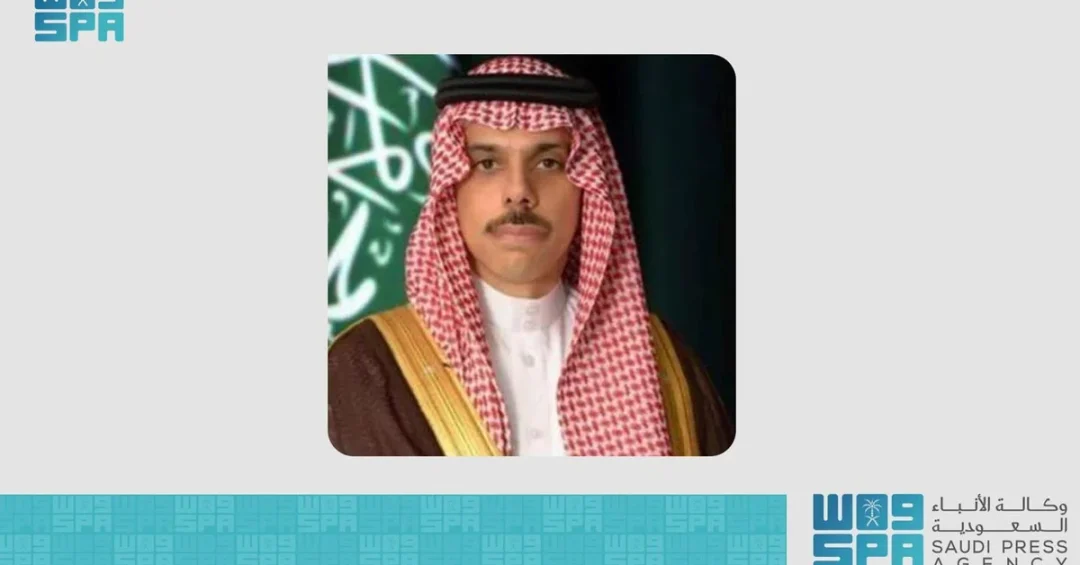
Saudi Minister of Foreign Affairs Prince Faisal bin Farhan bin Abdullah received a phone call on October 28, 2024, from Japan’s Foreign Minister Iwaya Takeshi, during which the two top diplomats discussed bilateral relations, the latest developments in Gaza, and efforts to address the situation, according to the Saudi Press Agency. The call, reported by the Kingdom’s official news agency, underscores the continuing intensity of Saudi Arabia’s diplomatic engagement on both bilateral and regional tracks as the war in Gaza approaches its second year. Riyadh has consistently positioned itself as a voice for de-escalation, humanitarian access, and a credible political horizon for the Palestinian people.
The conversation between Prince Faisal and Minister Iwaya is the latest in a series of high-level contacts between Riyadh and Tokyo, reflecting a relationship that has deepened well beyond its traditional energy foundation. Japan is one of Saudi Arabia’s largest trading partners and a major buyer of Saudi crude, but the partnership now spans clean hydrogen, semiconductors, advanced manufacturing, and cultural exchange under the framework of Saudi Vision 2030. The foreign ministers’ discussion of Gaza also signals the Kingdom’s central role in Arab and Islamic diplomacy, a role that Riyadh has exercised through the Arab-Islamic Ministerial Committee and its broader outreach to international partners. Why does this single phone call matter to a global audience? Because it captures, in miniature, how Saudi Arabia is simultaneously managing alliance-building, humanitarian advocacy, and economic modernization.
Context and Background
What makes this call significant is the timing and the breadth of the agenda? The October 28 conversation took place as regional and international attention remained fixed on Gaza, where humanitarian conditions have deteriorated sharply and negotiations over a ceasefire and hostage release have repeatedly stalled. Saudi Arabia has consistently called for an immediate cessation of hostilities, the protection of civilians, and the unimpeded delivery of humanitarian aid, positions articulated repeatedly by Prince Faisal in bilateral and multilateral settings. Japan, for its part, has aligned with many of these calls while maintaining its own longstanding engagement with Middle Eastern partners, including its role in supporting Palestinian development and humanitarian programs.
Saudi-Japanese relations rest on decades of cooperation. Diplomatic ties were formally established in 1955, and the relationship has since grown into a comprehensive partnership. In 2023, the two countries marked a significant milestone with the visit of Japanese Prime Minister Kishida Fumio to Riyadh, during which the two sides agreed to elevate ties to a strategic partnership and expand cooperation in energy, technology, and people-to-people exchanges. Japan’s Ministry of Foreign Affairs has described the relationship as one of its most important in the Middle East, and Saudi Arabia has identified Japan as a key partner in the diversification of its economy. The October 28 call therefore builds on an established diplomatic rhythm rather than starting from scratch.
The Gaza file has been a central focus of Saudi diplomacy throughout 2024. The Kingdom convened a joint Arab-Islamic summit in Riyadh in November 2023, which produced a unified call for an end to the war, and it has since dispatched ministerial delegations to world capitals to press for a durable ceasefire. Prince Faisal has met with counterparts from the United States, the European Union, China, and numerous Arab and Islamic states. In this context, a call with Japan’s foreign minister is both a bilateral exchange and part of a wider Saudi effort to coordinate international positions and maintain momentum toward a political solution.
Key Details of the Call
What exactly did the two ministers discuss, and what does each side bring to the table? According to the Saudi Press Agency, Prince Faisal and Minister Iwaya discussed the ties between their two countries, the latest developments in Gaza, and the efforts being exerted to address the situation. The statement was concise, as is typical of official readouts, but it confirms that the conversation covered both the bilateral relationship and the most pressing regional crisis. Japan’s Foreign Ministry has not issued a separate detailed readout, but Japanese officials have repeatedly expressed support for a two-state solution and for humanitarian relief in Gaza.
Prince Faisal bin Farhan bin Abdullah has served as Saudi Arabia’s Minister of Foreign Affairs since 2019 and has become one of the most visible Arab diplomats on the world stage. He has led Saudi delegations to the United Nations General Assembly, chaired Arab League and Gulf Cooperation Council meetings, and represented the Kingdom in numerous mediation efforts. Minister Iwaya Takeshi, who took office in October 2024 as part of Japan’s new cabinet, is a veteran lawmaker with extensive experience in defense and foreign affairs. His early engagement with Riyadh suggests continuity in Japan’s Middle East policy, which prioritizes stable energy supplies, trade, and diplomatic balance.
The call also reflects the depth of the economic relationship. Japan is a leading importer of Saudi crude oil, and Saudi Aramco has longstanding supply agreements with Japanese refiners. Beyond oil, the two countries are cooperating on hydrogen and ammonia as future fuels, on semiconductor supply chains, and on advanced technology through the Saudi-Japan Vision 2030 Business Forum. Japanese companies are active in Saudi giga-projects, and Saudi students study in Japanese universities. When foreign ministers speak, they are also overseeing a dense network of commercial and cultural ties that give the relationship its resilience.
International and Regional Impact
Why should observers outside the region care about a phone call between Riyadh and Tokyo? Because Saudi Arabia’s diplomacy on Gaza is not isolated; it is part of a coordinated international effort in which Japan plays a meaningful role. As a member of the G7 and a significant donor to Palestinian humanitarian programs, Japan can help bridge positions between Western capitals and Arab states. Riyadh’s ability to maintain open channels with Tokyo, Washington, Brussels, and Beijing simultaneously is a measure of its diplomatic weight. A call like this one helps keep those channels aligned and reduces the risk of competing initiatives that could undermine a ceasefire.
Regionally, the conversation reinforces the Arab-Islamic consensus that Saudi Arabia has helped articulate: an immediate end to the war, protection of civilians, unimpeded humanitarian access, and a credible path to a Palestinian state. By coordinating with Japan, Riyadh expands the circle of countries endorsing that framework. This matters because any durable resolution will require not only regional buy-in but also support from major economies and donors. Japan’s engagement also signals that Asian powers beyond China are taking a constructive interest in Middle East stability, a development that could shape post-conflict reconstruction and governance.
Economic and Strategic Significance
What does the call reveal about the broader Saudi-Japanese partnership? It shows that political and economic tracks are increasingly intertwined. Saudi Arabia is Japan’s largest source of crude oil, and Japan is one of the largest investors in Saudi Arabia’s industrial and technological sectors. The two countries have signed dozens of memoranda of understanding in fields such as hydrogen, ammonia, digital transformation, and healthcare. Japanese firms are involved in desalination, petrochemicals, and automotive manufacturing in the Kingdom. A stable diplomatic relationship underpins these investments, and regular foreign minister contacts help de-risk the commercial environment.
Strategically, Japan views Saudi Arabia as a pillar of its Middle East policy and a partner in its own economic security. For Saudi Arabia, Japan is a source of technology, capital, and market access as the Kingdom pursues Vision 2030’s goal of diversifying away from oil dependence. The October 28 call is thus not merely about Gaza; it is also about maintaining the momentum of a partnership that both sides regard as strategically vital. The two ministers’ discussion of bilateral ties, even in the shadow of a regional crisis, signals that the relationship is mature enough to handle both urgent diplomacy and long-term planning.
Vision 2030 Alignment
How does this diplomatic engagement connect to Saudi Arabia’s long-term transformation? Vision 2030, launched in 2016 under the leadership of Crown Prince Mohammed bin Salman, aims to diversify the Saudi economy, strengthen international partnerships, and position the Kingdom as a pivotal global actor. Diplomacy is a core enabler of that vision. Every high-level call, agreement, and visit helps open markets, attract investment, and build the international goodwill that Saudi projects such as NEOM, the Red Sea resorts, and the Kingdom’s growing sports and cultural sectors depend on. Prince Faisal’s call with Minister Iwaya is a small but meaningful thread in that larger fabric.
The call also reflects the Kingdom’s commitment to responsible global citizenship. By engaging Japan on Gaza, Saudi Arabia is helping to build the kind of broad coalition that any sustainable peace will require. Vision 2030 is not only about domestic modernization; it is also about Saudi Arabia’s role as a stabilizing force in the region and a bridge between continents. As the Kingdom continues to expand its diplomatic network, partnerships with countries like Japan will remain essential to its economic ambitions and its vision of a secure, prosperous Middle East. The October 28 conversation is a reminder that Saudi diplomacy operates on multiple levels at once, and that each contact contributes to a larger strategic picture.
20 Questions
Q1. Who received the phone call from Japan’s Foreign Minister?
A1. Saudi Minister of Foreign Affairs Prince Faisal bin Farhan bin Abdullah received the call from Japan’s Foreign Minister Iwaya Takeshi on October 28, 2024, according to the Saudi Press Agency.
Q2. What topics were discussed during the call?
A2. The two ministers discussed bilateral ties between Saudi Arabia and Japan, the latest developments in Gaza, and the efforts being exerted to address the situation, as reported by the Saudi Press Agency.
Q3. When did the call take place?
A3. The call took place on October 28, 2024, according to the official Saudi Press Agency report, which was published in Riyadh and timestamped at 14:16 local time.
Q4. Who is Japan’s Foreign Minister Iwaya Takeshi?
A4. Iwaya Takeshi is a veteran Japanese lawmaker who took office as Japan’s Foreign Minister in October 2024 as part of the country’s new cabinet, bringing extensive experience in defense and foreign affairs.
Q5. What is the significance of Saudi-Japanese relations?
A5. Saudi-Japanese relations are a comprehensive strategic partnership spanning energy, trade, technology, and culture, with Japan being a major importer of Saudi crude oil and a key investor in the Kingdom.
Q6. How long have Saudi Arabia and Japan had diplomatic ties?
A6. Saudi Arabia and Japan formally established diplomatic relations in 1955, and the relationship has since grown into a wide-ranging partnership across economic, political, and cultural fields.
Q7. What is Saudi Arabia’s position on the Gaza situation?
A7. Saudi Arabia has consistently called for an immediate cessation of hostilities, the protection of civilians, unimpeded humanitarian access, and a credible path toward a Palestinian state based on the two-state solution.
Q8. Why is Japan involved in Gaza diplomacy?
A8. Japan is a G7 member and a significant donor to Palestinian humanitarian programs, and it maintains balanced relations with Middle Eastern states, allowing it to support ceasefire and reconstruction efforts.
Q9. What role has Prince Faisal played in regional diplomacy?
A9. Prince Faisal bin Farhan has served as Saudi Foreign Minister since 2019 and has led Saudi delegations to the UN, chaired Arab League and Gulf Cooperation Council meetings, and represented the Kingdom in numerous mediation efforts.
Q10. How does this call fit into Saudi Arabia’s broader diplomatic strategy?
A10. The call is part of Saudi Arabia’s sustained outreach to international partners on Gaza and reflects the Kingdom’s role in coordinating Arab and Islamic positions while maintaining strong bilateral relationships worldwide.
Q11. What economic ties exist between Saudi Arabia and Japan?
A11. Japan is a leading importer of Saudi crude oil, and the two countries cooperate on hydrogen, ammonia, semiconductors, and advanced technology, with Japanese firms active in Saudi giga-projects and industrial sectors.
Q12. Did the call produce any new agreements?
A12. The official readout did not announce new agreements; the call focused on discussing bilateral ties and the latest developments in Gaza, consistent with routine diplomatic consultations between the two countries.
Q13. What is the Arab-Islamic Ministerial Committee?
A13. The Arab-Islamic Ministerial Committee is a group formed after the November 2023 joint Arab-Islamic summit in Riyadh to press for an end to the war in Gaza and to coordinate international diplomatic efforts.
Q14. How does Saudi Arabia support humanitarian efforts in Gaza?
A14. Saudi Arabia has provided humanitarian aid through official channels and has consistently advocated for unimpeded delivery of relief, while supporting international calls for a ceasefire and civilian protection.
Q15. What is the strategic partnership between Saudi Arabia and Japan?
A15. The strategic partnership, elevated during Japanese Prime Minister Kishida’s 2023 visit to Riyadh, covers energy security, economic diversification, technology, and cultural exchange under Saudi Vision 2030.
Q16. How does this call relate to Vision 2030?
A16. Vision 2030 seeks to diversify Saudi Arabia’s economy and strengthen global partnerships; diplomatic engagement like this call helps open markets, attract investment, and build international goodwill for the Kingdom’s transformation.
Q17. What is Japan’s position on the two-state solution?
A17. Japan has repeatedly expressed support for a two-state solution and for humanitarian relief in Gaza, aligning with broader international consensus on the need for a durable political resolution.
Q18. Are there other recent Saudi-Japanese diplomatic contacts?
A18. Yes, Saudi-Japanese relations have seen frequent high-level exchanges, including the 2023 prime ministerial visit to Riyadh and ongoing ministerial contacts on energy, technology, and regional issues.
Q19. What does the call indicate about Saudi Arabia’s global role?
A19. The call demonstrates Saudi Arabia’s active diplomacy and its ability to maintain open channels with major economies while advocating for regional stability and humanitarian priorities.
Q20. What comes next after this call?
A20. Both countries are expected to continue consultations on Gaza and to advance bilateral cooperation in energy, technology, and investment, building on the strategic partnership framework agreed in recent years.
Reader Feedback
We value your thoughts. Please share your feedback on this article.
Your feedback helps us improve our coverage.
Related articles
 Fifteenth Saudi Relief Plane Lands in Beirut with Aid
 Jeddah Governor Receives Ethiopian Consul General
 Crown Prince Congratulates Czech President on National Day
 King Salman Congratulates Czech President on National Day
 Arab Tourism Committee Meets in Cairo to Shape Regional Agenda
 Saudi Arabia Launches First Global CSR Forum in Riyadh