


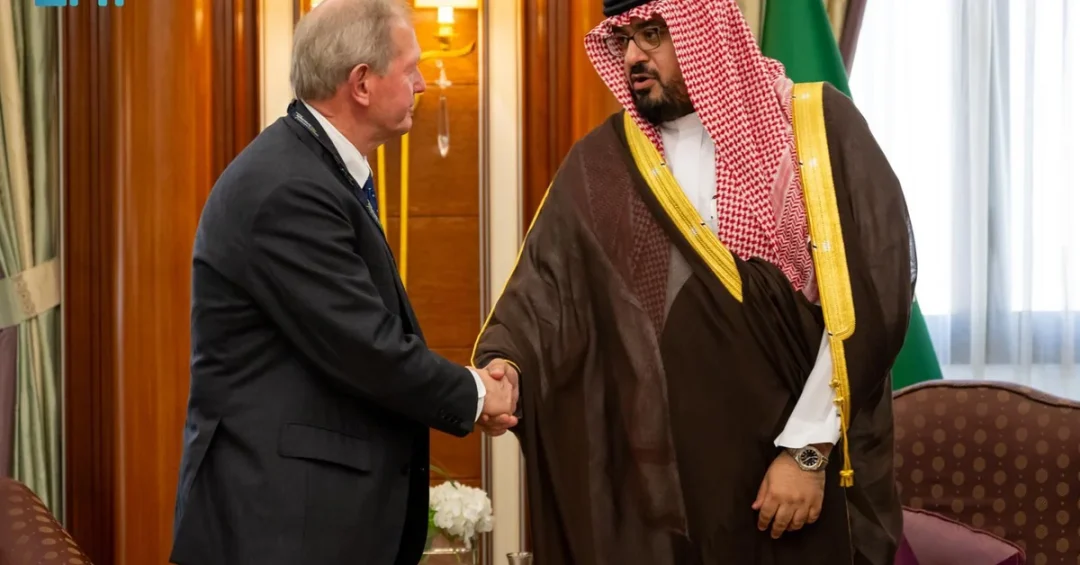
Saudi Arabia’s Minister of Economy and Planning, Faisal Alibrahim, met with Marcus Wallenberg, Chair of Skandinaviska Enskilda Banken (SEB), on the sidelines of the eighth Future Investment Initiative (FII) in Riyadh on October 28, 2024, to explore investment opportunities in the industrial sector and digital innovation aligned with the Kingdom’s economic and environmental objectives. The meeting, reported by the Saudi Press Agency, underscores the deepening engagement between Saudi Arabia and leading international financial institutions as the Kingdom accelerates its economic transformation under Vision 2030. It also signals the growing appeal of Saudi Arabia’s industrial and technology sectors to European investors seeking long-term, sustainable growth opportunities.
The encounter took place during one of the world’s most closely watched investment gatherings, the Future Investment Initiative, which has become a premier platform for global dealmaking and strategic dialogue. For Saudi Arabia, the meeting reflects a deliberate strategy to attract high-value foreign capital into non-oil sectors, particularly advanced manufacturing and digital technologies. For SEB, one of Sweden’s oldest and most respected banking groups, the dialogue offers a window into a rapidly diversifying economy that is creating new avenues for industrial partnerships and financial cooperation. How does such a meeting translate into tangible outcomes for both sides? The answer lies in the details of Saudi Arabia’s evolving investment landscape and the specific interests that global financial leaders bring to the table.
Context and Background
Why has Saudi Arabia become such a focal point for international banks and industrial investors? The answer begins with the scale and speed of the Kingdom’s economic overhaul. Since the launch of Vision 2030 in 2016, Saudi Arabia has pursued an ambitious agenda to reduce dependence on oil, expand the private sector, and build world-class infrastructure. Central to this effort is the National Industrial Development and Logistics Program, which aims to transform the Kingdom into a leading industrial power and global logistics hub. The program targets sectors such as automotive, mining, renewable energy, and pharmaceuticals, offering incentives and regulatory support to attract foreign direct investment.
SEB, or Skandinaviska Enskilda Banken, is a cornerstone of the Nordic financial system, with a history dating back to 1856. Headquartered in Stockholm, it serves large corporations, institutions, and private clients across Scandinavia and beyond. Marcus Wallenberg, the bank’s chair, is a scion of one of Europe’s most influential industrial families, with extensive experience in global manufacturing, trade, and finance. His presence at FII signals serious interest in Saudi Arabia’s industrial and digital transformation, and his insights could help bridge European capital with Saudi projects. The meeting also highlights how Saudi Arabia’s diplomatic and economic outreach now extends well beyond traditional energy partnerships into knowledge-intensive sectors.
What makes the timing of this meeting particularly significant? It comes as Saudi Arabia posts robust non-oil economic growth and as global investors reassess supply chains in light of geopolitical shifts. The Kingdom’s strategic location, connecting Asia, Europe, and Africa, makes it an attractive base for industrial exports and digital services. Moreover, the Public Investment Fund (PIF) has been seeding new industries, from electric vehicles to cloud computing, creating a pipeline of opportunities for banks like SEB to finance and advise on. The FII itself has evolved into a barometer of global confidence in Saudi Arabia’s reform trajectory, drawing thousands of participants from asset managers, sovereign funds, and multinational corporations.
Key Details of the Meeting
What exactly was discussed between Minister Alibrahim and Chair Wallenberg? According to the Saudi Press Agency, the two sides explored investment opportunities in the industrial sector and digital innovation, with a clear alignment to Saudi Arabia’s economic and environmental objectives. This means the conversation likely touched on advanced manufacturing, clean technology, and the digital economy, all of which are priority areas under Vision 2030. The industrial sector is a key pillar of Saudi Arabia’s diversification strategy, with initiatives such as the National Industrial Strategy aiming to increase the sector’s contribution to GDP and boost non-oil exports.
Digital innovation is equally central. Saudi Arabia has invested heavily in artificial intelligence, cloud infrastructure, and smart city technologies, often through partnerships with global tech firms. For a bank like SEB, which has a strong track record in financing technology and industrial companies, these areas present natural synergies. The meeting also reflects the Kingdom’s commitment to environmental sustainability, as outlined in the Saudi Green Initiative and the goal of achieving net-zero emissions by 2060. European financial institutions are increasingly prioritizing environmental, social, and governance (ESG) criteria, and Saudi Arabia’s green projects, such as renewable energy plants and hydrogen production, offer compelling investment cases.
While no specific agreements were announced, such high-level encounters often pave the way for future collaborations, including joint ventures, financing arrangements, or advisory mandates. The fact that the meeting occurred on the sidelines of FII underscores the informal yet consequential nature of these gatherings, where relationships are built and deals are seeded. For Saudi Arabia, engaging with a figure of Wallenberg’s stature helps validate its reform agenda and opens doors to Nordic and broader European capital. For SEB, it provides early access to a market that is rapidly integrating into global value chains.
International and Regional Impact
How does this meeting resonate beyond Saudi Arabia’s borders? It sends a positive signal to international investors that the Kingdom remains open for business and is actively courting high-quality partnerships. In a world where many emerging markets compete for foreign direct investment, Saudi Arabia’s ability to convene global financial leaders at FII and translate those conversations into potential deals is a competitive advantage. The meeting with SEB also strengthens Saudi-European economic ties, which have been expanding in areas such as trade, technology, and sustainable finance. Europe is a key source of expertise and capital for Saudi Arabia’s industrial ambitions, and SEB’s engagement could encourage other Nordic institutions to follow suit.
Regionally, the meeting reinforces Saudi Arabia’s role as the economic engine of the Middle East. As the largest Arab economy and a G20 member, the Kingdom’s investment climate influences broader regional sentiment. When global banks like SEB show interest in Saudi industrial and digital sectors, it can have a spillover effect, attracting more capital to the Gulf and encouraging cross-border collaborations. Moreover, the focus on environmental objectives aligns with global sustainability trends, positioning Saudi Arabia as a responsible player in the energy transition. This is particularly important as the Kingdom prepares to host major international events and seeks to diversify its diplomatic and economic partners.
What are the broader implications for the global financial sector? The meeting exemplifies how banks are increasingly looking beyond traditional financial centers to fast-growing markets. Saudi Arabia’s large-scale projects, such as NEOM, the Red Sea development, and the Diriyah Gate, require massive financing and offer attractive returns. SEB’s potential involvement could involve syndicated loans, project finance, or investment banking services. For Saudi Arabia, such partnerships bring not just capital but also technical know-how and international best practices, which are essential for building a knowledge-based economy. The dialogue also highlights the importance of personal relationships in global finance, as figures like Wallenberg can act as bridge-builders between regions.
Economic and Strategic Significance
Why does this meeting matter for Saudi Arabia’s economic strategy? Attracting foreign investment is a core objective of Vision 2030, with a target to increase FDI to 5.7 percent of GDP by 2030. The industrial and digital sectors are particularly important because they create high-skilled jobs, foster innovation, and reduce reliance on oil revenues. By engaging with SEB, Saudi Arabia is tapping into a network of European industrial and financial expertise that can help accelerate the growth of these sectors. The meeting also aligns with the Kingdom’s efforts to localize supply chains and enhance its export competitiveness, especially in non-oil goods.
From a strategic perspective, the meeting demonstrates Saudi Arabia’s multi-alignment approach, building partnerships with diverse global players. Sweden, with its advanced manufacturing and technology sectors, is a valuable partner in this regard. SEB’s clients include many of the Nordic region’s leading industrial and tech companies, some of which could be potential investors in Saudi Arabia. The dialogue may also touch on regulatory frameworks, investment incentives, and risk mitigation, all of which are critical for facilitating cross-border capital flows. As Saudi Arabia continues to improve its business environment, ranking higher in global ease-of-doing-business indices, such meetings become more productive and outcome-oriented.
What does this mean for the future of Saudi-European economic relations? It suggests a deepening of ties that goes beyond oil. European companies are increasingly involved in Saudi Arabia’s giga-projects, and financial institutions like SEB can play a pivotal role in structuring and financing these ventures. The meeting also comes amid broader EU-Gulf cooperation on climate change, digital transformation, and trade. For Saudi Arabia, diversifying partners is a strategic imperative, and Europe offers a stable, rules-based environment for investment. The engagement with SEB could thus be a stepping stone to a more comprehensive economic partnership, encompassing industrial collaboration, technology transfer, and green finance.
Vision 2030 Alignment
How does this meeting advance Vision 2030? At its core, Vision 2030 is about transforming Saudi Arabia into a diversified, innovative, and globally connected economy. The meeting between Minister Alibrahim and Chair Wallenberg directly supports several of its pillars: a thriving economy, a vibrant society, and an ambitious nation. By attracting investment in industry and digital innovation, it contributes to economic diversification and job creation. By focusing on environmental objectives, it aligns with the sustainability goals that are integral to the Vision. And by fostering international partnerships, it enhances Saudi Arabia’s global engagement and knowledge exchange.
Ultimately, this encounter is a microcosm of Saudi Arabia’s broader outreach to the world. It shows that the Kingdom is not just open for business but is actively shaping the future of key sectors through collaboration with leading global institutions. As Vision 2030 progresses, such meetings will become more frequent and more consequential, driving tangible investments and strengthening Saudi Arabia’s position as a global investment destination. The dialogue with SEB is a clear signal that Saudi Arabia’s economic transformation is on track and that international partners are eager to be part of it.
20 Questions
Q1. Who met with Marcus Wallenberg at the Future Investment Initiative?
A1. Saudi Arabia’s Minister of Economy and Planning, Faisal Alibrahim, met with Marcus Wallenberg, Chair of Skandinaviska Enskilda Banken (SEB), on the sidelines of the eighth FII in Riyadh on October 28, 2024.
Q2. What is SEB and why is it significant?
A2. SEB, or Skandinaviska Enskilda Banken, is a major Swedish financial group with a history dating back to 1856. It serves large corporations and institutions across Scandinavia and is known for its industrial and financial expertise.
Q3. What topics were discussed at the meeting?
A3. The two sides explored investment opportunities in the industrial sector and digital innovation, with a focus on alignment with Saudi Arabia’s economic and environmental objectives under Vision 2030.
Q4. What is the Future Investment Initiative?
A4. The FII is an annual global investment conference hosted in Riyadh, Saudi Arabia. It brings together world leaders, investors, and innovators to discuss economic trends and investment opportunities, and has become a key platform for dealmaking.
Q5. Why is the industrial sector important for Saudi Arabia?
A5. The industrial sector is a pillar of Saudi Arabia’s economic diversification strategy. It aims to increase non-oil exports, create jobs, and reduce dependence on oil revenues, as outlined in the National Industrial Development and Logistics Program.
Q6. How does digital innovation fit into Saudi Arabia’s plans?
A6. Digital innovation is central to Vision 2030, with initiatives in AI, cloud computing, and smart cities. Saudi Arabia seeks to build a knowledge-based economy and attract global tech partnerships to drive growth.
Q7. What are Saudi Arabia’s environmental objectives?
A7. Saudi Arabia aims to achieve net-zero emissions by 2060 and has launched the Saudi Green Initiative. These efforts include renewable energy projects, hydrogen production, and sustainable development, aligning with global ESG criteria.
Q8. Did the meeting result in any agreements?
A8. No specific agreements were announced. However, such high-level meetings often pave the way for future collaborations, including joint ventures, financing, or advisory mandates.
Q9. Why is Marcus Wallenberg’s involvement significant?
A9. Marcus Wallenberg is a prominent figure in European industry and finance, with extensive experience in global manufacturing and trade. His engagement signals serious interest from Nordic capital in Saudi Arabia’s transformation.
Q10. How does this meeting benefit Saudi Arabia?
A10. It helps attract foreign direct investment, validates Saudi Arabia’s reform agenda, and opens doors to European capital and expertise, supporting the goals of Vision 2030.
Q11. How does it benefit SEB?
A11. SEB gains early access to a rapidly growing market with large-scale projects and a pipeline of investment opportunities in industry and digital sectors, potentially leading to profitable financing and advisory roles.
Q12. What is Saudi Arabia’s FDI target under Vision 2030?
A12. Saudi Arabia aims to increase foreign direct investment to 5.7 percent of GDP by 2030, up from around 2 percent, as part of its economic diversification efforts.
Q13. What role does the Public Investment Fund play?
A13. The PIF is Saudi Arabia’s sovereign wealth fund and a key driver of Vision 2030. It invests in new industries and giga-projects, creating opportunities for foreign banks and investors to participate.
Q14. How does this meeting reflect Saudi-European relations?
A14. It strengthens economic ties between Saudi Arabia and Europe, particularly with Nordic countries, and signals growing cooperation in trade, technology, and sustainable finance.
Q15. What are some priority sectors for Saudi Arabia’s industrial strategy?
A15. Priority sectors include automotive, mining, renewable energy, pharmaceuticals, and advanced manufacturing. These are supported by incentives and regulatory reforms to attract foreign investment.
Q16. How does Saudi Arabia support digital innovation?
A16. Saudi Arabia invests in AI, cloud infrastructure, and smart city technologies through partnerships with global tech firms. It also has initiatives like the National Strategy for Data and AI.
Q17. What is the significance of the FII for global investors?
A17. The FII is a major platform for global investors to network, discuss trends, and explore opportunities. It showcases Saudi Arabia’s reform progress and attracts thousands of participants from around the world.
Q18. How does the meeting align with Saudi Arabia’s green initiatives?
A18. The focus on environmental objectives aligns with the Saudi Green Initiative and the goal of net-zero emissions by 2060. It highlights Saudi Arabia’s commitment to sustainable development and green finance.
Q19. What are the next steps following this meeting?
A19. While no formal next steps were announced, both parties are likely to continue dialogue, explore specific projects, and potentially involve other stakeholders to advance investment opportunities.
Q20. How does this meeting contribute to Vision 2030?
A20. It supports Vision 2030 by attracting investment in key sectors, fostering international partnerships, and promoting economic diversification, innovation, and sustainability, all of which are central to the Kingdom’s long-term goals.
Reader Feedback
We value your thoughts. Please share your feedback on this article.
Your feedback helps us improve our coverage.
Related articles
 Global PropTech Summit Concludes in Riyadh, Issues Final Statement
 Mawani Adds GRC Shipping Service to Jeddah Islamic Port
 Monsha’at Releases Special Report on Biban24 Forum
 Saudi Finance Ministry Hosts Omani Delegation for Accrual Accounting Talks
 OPEC+ Nations Extend 2.2 mbd Voluntary Cuts to December 2024
 SPPC Launches Qualification for 8000 MWh BESS Projects