


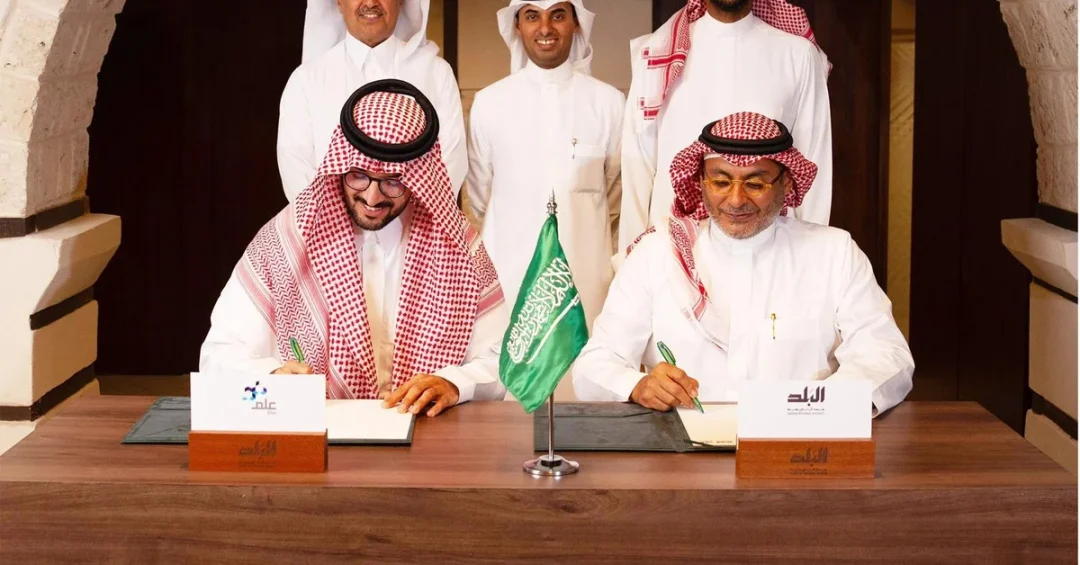
The Jeddah Historic District Program, affiliated with the Ministry of Culture, announced on November 3, 2024, the signing of a roadmap for a cooperation agreement with Elm, the leading company in digital solutions innovation, to equip Jeddah’s Historic District with a comprehensive digital system. The agreement, released via the Saudi Press Agency, covers fieldwork implementation, the establishment of a project coordination office, the equipping of a monitoring and control room, and the setup and operation of a beneficiary communication center. The cooperation aims to revitalize the district, invest in its heritage sites and cultural and urban elements, and transform it into a global tourist destination that meets the highest sustainability standards. The roadmap was signed by Director General of the General Administration of the Jeddah Historic District Program Eng. Wael bin Sami Saim Al-Daher and Vice President of the Business Sector at Elm Abdulaziz Al-Alsheikh.
But why does a single cooperation roadmap between a heritage program and a digital solutions company carry significance far beyond the boundaries of one city? The answer lies in the scale of the transformation underway in Jeddah, a city long known as the gateway to the Red Sea and a crossroads of cultures. The Jeddah Historic District, recognized as a UNESCO World Heritage Site under the name Historic Jeddah, the Gate to Makkah, is not merely a collection of old buildings. It is a living record of centuries of trade, pilgrimage, and cultural exchange. Modernizing how this district is managed, monitored, and presented to the world is a task that demands both technological precision and cultural sensitivity. This agreement, based on official Saudi information, signals that the Kingdom intends to apply its digital ambitions to its most treasured historical assets.
Context and Background
How did Jeddah’s Historic District come to occupy such a central place in Saudi Arabia’s cultural and tourism strategy? The district, known locally as Al-Balad, was founded in the seventh century and served for centuries as the main entry point for pilgrims traveling by sea to Makkah. Its coral-stone houses, wooden rawashin balconies, and narrow alleyways reflect a unique architectural heritage shaped by Red Sea trade routes and the annual Hajj season. In 2014, UNESCO inscribed Historic Jeddah on the World Heritage List, recognizing its outstanding universal value. Since then, the Jeddah Historic District Program, operating under the Ministry of Culture, has led a comprehensive effort to restore, preserve, and revitalize the area while keeping its communities and traditions at the center of the plan.
The program’s work is closely aligned with the broader cultural objectives of Saudi Vision 2030, which seeks to diversify the economy, increase tourism’s contribution to gross domestic product, and celebrate the Kingdom’s heritage on the world stage. Restoration projects in Al-Balad have already reopened historic mosques, markets, and cultural venues, drawing visitors from across Saudi Arabia and abroad. Yet managing a district of this complexity, with ongoing excavation, infrastructure upgrades, licensing procedures, and visitor services, requires coordination at a level that traditional methods cannot easily sustain. That is where the new cooperation with Elm enters the picture, bringing advanced digital tools to a task that blends archaeology, urban planning, and public service delivery.
Elm, a Saudi joint-stock company specializing in digital solutions and secure government platforms, has built a reputation for delivering large-scale digital transformation projects across the Kingdom. Its involvement in this roadmap reflects a growing pattern in Saudi Arabia: pairing heritage preservation with world-class technology. The agreement was announced by the Saudi Press Agency, underscoring its status as an official development within the Kingdom’s cultural and digital agendas. For international observers, the message is clear: Saudi Arabia is treating its history not as a static exhibit but as a dynamic asset to be managed with the same rigor applied to its modern cities and industries.
Key Details of the Cooperation Agreement
What exactly does the roadmap between the Jeddah Historic District Program and Elm involve? According to the official announcement, the cooperation encompasses several practical and interconnected fields. First, the agreement covers the implementation of fieldwork, ensuring that activities on the ground are carried out systematically and in line with project plans. Second, it provides for the establishment of a project coordination office, which will serve as a central hub for managing schedules, resources, and communication among stakeholders. Third, it includes the equipping of a monitoring and control room, a facility designed to oversee operations in real time. Fourth, the roadmap covers the setup and operation of a beneficiary communication center, giving residents, businesses, and visitors a direct channel to raise inquiries, report issues, and receive information.
A central element of the collaboration is the creation of a customized electronic platform for providing operational services. This platform will enable the monitoring of excavation and infrastructure work conducted and supervised by the Jeddah Historic District Program in the area. Given that Al-Balad contains layers of archaeological and architectural heritage, careful oversight of any ground disturbance is essential. The platform will also facilitate the processing of all municipal licensing requests in an automated and efficient manner, reducing processing times and improving transparency for property owners, entrepreneurs, and cultural operators seeking to work within the district. By digitizing these workflows, the program aims to balance preservation requirements with the practical needs of a living neighborhood.
The agreement was signed by Eng. Wael bin Sami Saim Al-Daher, Director General of the General Administration of the Jeddah Historic District Program, and Abdulaziz Al-Alsheikh, Vice President of the Business Sector at Elm. Their signatures formalize a partnership that combines the program’s deep knowledge of the district with Elm’s technical expertise in building secure, scalable digital systems. The roadmap format suggests a phased approach, with milestones that allow both parties to assess progress and adapt as the project moves from planning to implementation. For a heritage area of this sensitivity, such a measured rollout is a prudent way to introduce new technologies without disrupting daily life or ongoing restoration work.
International and Regional Impact
Why should an international audience pay attention to a digital systems agreement in one Saudi city? Jeddah’s Historic District is not only a national treasure but also a global heritage site, and its management practices are watched by UNESCO, cultural institutions, and tourism markets worldwide. The introduction of a comprehensive digital system for monitoring excavation, automating licensing, and operating a communication center sets a benchmark for how historic urban areas can be governed in the twenty-first century. Cities in the region and beyond that face similar challenges, balancing preservation with development, may look to this model as a reference. The agreement also strengthens Saudi Arabia’s position as a country capable of applying advanced technology to cultural stewardship, a combination that few nations have pursued at this scale.
Regionally, the cooperation reinforces Jeddah’s role as a gateway for pilgrims and tourists arriving by air and sea. A well-managed historic district enhances the experience of visitors traveling to Makkah for Hajj and Umrah, many of whom pass through Jeddah. Improved licensing processes and better infrastructure oversight can lead to higher-quality services, safer public spaces, and a more welcoming environment. For international investors and hospitality operators, the digital platform signals predictability and efficiency, two factors that matter when deciding where to commit capital. In this sense, the agreement supports Saudi Arabia’s broader effort to attract global visitors and present a modern, organized, and culturally rich destination.
Economic and Strategic Significance
How does a digital overhaul of a historic district translate into economic value? Tourism is a pillar of Saudi Vision 2030, and heritage tourism is one of its most promising segments. By making Jeddah’s Historic District easier to manage and more attractive to visitors, the program can increase foot traffic, extend visitor stays, and support local businesses such as restaurants, craft shops, and boutique hotels. The automated licensing system lowers barriers for entrepreneurs who want to open or renovate properties in Al-Balad, potentially accelerating private investment. Meanwhile, the monitoring platform reduces the risk of costly errors during excavation and infrastructure work, protecting both heritage assets and public funds. These efficiencies compound over time, creating a district that is not only preserved but economically vibrant.
Strategically, the agreement reflects Saudi Arabia’s commitment to building a knowledge-based economy. Elm’s role demonstrates that Saudi companies can deliver sophisticated digital solutions at home and compete internationally. The project generates data and operational insights that can inform future heritage and urban management initiatives across the Kingdom, from Diriyah to AlUla. It also creates skilled jobs in project management, data analysis, and customer service, contributing to the development of a Saudi workforce equipped for the digital age. By linking heritage with high technology, the Kingdom is signaling that its past and its future are not in conflict but are being woven together into a single, coherent national story.
Vision 2030 Alignment
In what ways does this cooperation advance the goals of Saudi Vision 2030? The vision, launched in 2016 under the leadership of Crown Prince Mohammed bin Salman, sets out to diversify the economy, enhance quality of life, and strengthen national identity. Cultural heritage is explicitly part of that agenda, with targets to increase the number of heritage sites, boost tourism spending, and create opportunities for Saudi families and youth. The Jeddah Historic District Program’s partnership with Elm supports these targets by professionalizing the management of a World Heritage Site, improving services for visitors and residents, and demonstrating that digital innovation can serve cultural preservation. It is a concrete example of how Vision 2030 translates from a national strategy into daily operations on the ground.
Looking ahead, the roadmap signed in Jeddah could become a template for other heritage areas in Saudi Arabia and the wider region. As the electronic platform matures, it may incorporate additional functions such as visitor analytics, maintenance scheduling, and real-time alerts for environmental or structural risks. The beneficiary communication center can evolve into a model for community engagement, ensuring that the people who live and work in Al-Balad have a voice in how their district develops. Above all, the agreement underscores a simple but powerful idea: that respecting the past and embracing the future are complementary pursuits. Through careful planning, official coordination, and Saudi technological expertise, Jeddah’s Historic District is being prepared not just to endure, but to thrive as a global destination for generations to come.
20 Questions
Q1. What did the Jeddah Historic District Program announce on November 3, 2024?
A1. It announced the signing of a roadmap for a cooperation agreement with Elm, a leading Saudi company in digital solutions innovation, to enhance Jeddah’s Historic District with a comprehensive digital system covering fieldwork, coordination, monitoring, and communication services.
Q2. Which Saudi ministry is the Jeddah Historic District Program affiliated with?
A2. The program is affiliated with the Ministry of Culture, which oversees cultural heritage, arts, and preservation initiatives across the Kingdom as part of Saudi Arabia’s broader efforts to celebrate and protect its national identity.
Q3. Who signed the cooperation roadmap on behalf of the Jeddah Historic District Program?
A3. Eng. Wael bin Sami Saim Al-Daher, Director General of the General Administration of the Jeddah Historic District Program, signed the roadmap, representing the program and its commitment to revitalizing the historic area.
Q4. Who signed the cooperation roadmap on behalf of Elm?
A4. Abdulaziz Al-Alsheikh, Vice President of the Business Sector at Elm, signed the roadmap, confirming the company’s role in delivering customized digital solutions for the historic district’s operational needs.
Q5. What are the main fields of cooperation included in the agreement?
A5. The agreement covers implementation of fieldwork, establishment of a project coordination office, equipping of a monitoring and control room, setup and operation of a beneficiary communication center, and creation of an electronic platform for operational services.
Q6. What is the purpose of the electronic platform mentioned in the agreement?
A6. The platform will monitor excavation and infrastructure work supervised by the Jeddah Historic District Program and will process all municipal licensing requests in an automated and efficient manner, improving oversight and service delivery.
Q7. Why is monitoring excavation work important in Jeddah’s Historic District?
A7. The district contains layers of archaeological and architectural heritage, so careful oversight of any ground disturbance helps protect cultural assets, prevent damage, and ensure that infrastructure work respects preservation requirements.
Q8. What is the beneficiary communication center intended to do?
A8. It will provide a direct channel for residents, businesses, and visitors to raise inquiries, report issues, and receive information, improving engagement between the program and the community it serves.
Q9. What is the overall goal of revitalizing the Jeddah Historic District?
A9. The goal is to invest in heritage sites and cultural and urban elements, transforming the district into a global tourist destination that meets the highest sustainability standards while preserving its historic character.
Q10. What is the significance of Jeddah’s Historic District internationally?
A10. It is a UNESCO World Heritage Site known as Historic Jeddah, the Gate to Makkah, recognized for its outstanding universal value and its centuries-old role as a crossroads for trade and pilgrimage.
Q11. How does this agreement support Saudi Vision 2030?
A11. It supports Vision 2030 by professionalizing heritage management, boosting tourism, creating skilled jobs, and demonstrating how digital innovation can serve cultural preservation and economic diversification goals.
Q12. What role does Elm play in Saudi Arabia’s digital transformation?
A12. Elm is a Saudi joint-stock company specializing in digital solutions and secure government platforms, with a strong record of delivering large-scale digital transformation projects across the Kingdom.
Q13. What is the purpose of the project coordination office?
A13. It will serve as a central hub for managing schedules, resources, and communication among stakeholders, ensuring that the various components of the cooperation are implemented smoothly and efficiently.
Q14. What is the function of the monitoring and control room?
A14. The monitoring and control room will oversee operations in real time, allowing the program to track activities, respond to issues quickly, and maintain high standards of oversight across the historic district.
Q15. How will the agreement improve municipal licensing in the district?
A15. By automating the processing of licensing requests through the electronic platform, the agreement will reduce processing times, improve transparency, and make it easier for property owners and entrepreneurs to operate in the area.
Q16. What economic benefits could result from the digital system?
A16. It could increase visitor numbers, support local businesses, attract private investment, reduce costly errors during excavation, and generate data that informs future heritage and urban management initiatives.
Q17. How does the agreement reflect Saudi Arabia’s approach to heritage?
A17. It shows that Saudi Arabia treats its history as a dynamic asset, pairing heritage preservation with world-class technology and demonstrating that respect for the past and embrace of the future are complementary pursuits.
Q18. What does the roadmap format suggest about the project’s implementation?
A18. The roadmap format suggests a phased approach with milestones, allowing both parties to assess progress and adapt as the project moves from planning to implementation in a sensitive heritage area.
Q19. How might this project serve as a model for other heritage sites?
A19. It could become a template for other heritage areas in Saudi Arabia and the region, showing how digital tools can support preservation, community engagement, and tourism development in historic urban environments.
Q20. What is the long-term vision for Jeddah’s Historic District?
A20. The long-term vision is for the district to thrive as a global destination that preserves its heritage, meets high sustainability standards, and contributes to Saudi Arabia’s cultural and economic goals for generations to come.
Reader Feedback
We value your thoughts. Please share your feedback on this article.
Your feedback helps us improve our coverage.
Related articles
 Saudi REGA Leads Delegation to World Urban Forum in Cairo
 Saudi Arabia Weather Forecast: Rain and Dust Expected Monday
 Saudi Arabia to Showcase Urban Development at WUF12
 Saudi Industrial Council Meets to Boost Investor Support
 Saudi Ambassador Meets Jordanian Senate President
 KSrelief Medical Mission Treats 1,359 in Reyhanli, Türkiye