


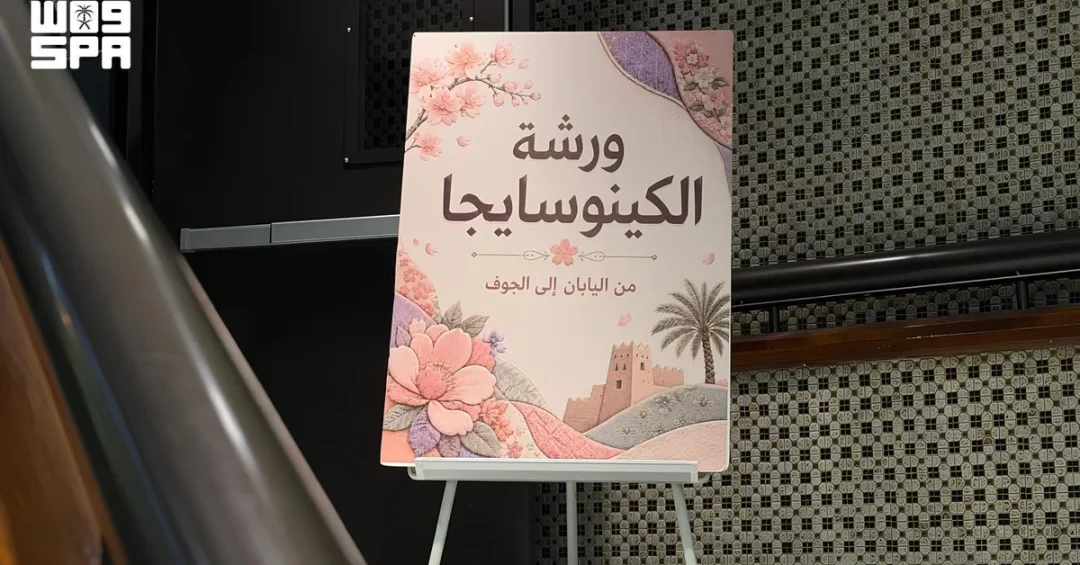
The Abdulrahman Al-Sudairy Cultural Centre in Sakaka, Al-Jouf Region, organized a specialized art workshop on Wednesday focused on Kinusaiga, the Japanese fabric-art technique, according to an announcement carried by the Saudi Press Agency. The session introduced participants to the craft of creating pictures from fabric, offering hands-on instruction in a tradition that transforms textiles and mixed materials into innovative artistic compositions. Attendees explored the technique’s methods and practical applications while developing their own creative skills through guided experience and practice.
The workshop forms part of the centre’s continuing efforts to support specialized volunteer initiatives, widen access to learning, and encourage the exchange of expertise across the Sakaka community. By bringing a Japanese textile art form to Al-Jouf, the programme reflects the broader cultural momentum underway in the Kingdom, where community institutions are expanding the range of creative disciplines available to residents. Have Saudi Arabia’s cultural centres ever offered this particular art form before? The event marked a notable addition to the region’s growing calendar of arts programming, and it underscored how local centres are becoming platforms for international creative exchange rather than simply venues for exhibitions.
Context and Background
The Abdulrahman Al-Sudairy Cultural Centre has built a reputation in Al-Jouf for hosting workshops, lectures, and community activities that span literature, heritage, and the visual arts. Located in Sakaka, the provincial capital, the centre serves as a gathering point for residents interested in cultural enrichment and lifelong learning. Its programming has increasingly emphasized practical, participatory formats, allowing participants to move beyond observation and into active creation. Is it any wonder that such institutions are becoming anchors of community life? The Kinusaiga workshop fits squarely within this approach, offering a structured introduction to a technique that many participants were encountering for the first time.
Kinusaiga originated in Japan and involves pressing small pieces of fabric into grooves carved into a wooden or foam base to produce detailed pictorial images, often landscapes, flowers, or traditional motifs. Unlike conventional embroidery, the technique relies on the arrangement and tension of fabric rather than thread, giving finished works a dimensional, almost painterly quality. Its materials are accessible and its methods are adaptable, which has helped it spread to craft communities worldwide. For Saudi participants, the workshop represented an opportunity to engage with a global artistic tradition while applying their own aesthetic sensibilities to the medium.
The session also aligned with the centre’s stated goal of promoting appreciation for handmade arts and creativity. In a region with a rich heritage of textile crafts, from traditional weaving to embroidery, the introduction of Kinusaiga offered a fresh point of connection between local craft knowledge and international practice. The workshop’s volunteer-driven format further reinforced the role of community contribution in sustaining cultural programming across the Kingdom.
Key Details of the Workshop
According to the Saudi Press Agency, the workshop was held in Sakaka and centred on the creation of pictures using fabric. Participants received an introduction to the Japanese art technique, which utilizes various fabrics and materials to craft innovative artistic compositions. The programme combined explanation with practical application, allowing attendees to test the method themselves and refine their work through repeated practice. How often do community workshops give participants the chance to build a complete piece from scratch? In this case, the emphasis on experience and experimentation meant that each participant left with both a finished or in-progress work and a working understanding of the technique’s core principles.
The centre framed the event as part of its ongoing efforts to support specialized volunteer initiatives. This phrasing points to a deliberate model in which skilled volunteers help deliver programming, sharing their knowledge while gaining teaching experience. Such initiatives broaden the range of activities a cultural centre can offer without requiring large permanent staffs, and they create pathways for local talent to contribute directly to community life. The workshop therefore served two purposes at once: it taught a craft and it strengthened the volunteer ecosystem that supports cultural activity in Al-Jouf.
The event also provided opportunities for learning and the exchange of expertise. Participants were able to compare approaches, discuss materials, and learn from one another as well as from the instructor. This collaborative dimension is characteristic of the centre’s programming, which tends to prioritize interaction over passive attendance. By the end of the session, attendees had not only encountered a new art form but had also practiced the kind of peer-to-peer knowledge sharing that sustains craft communities over time.
International and Regional Impact
The workshop reflects a wider pattern of cultural exchange between Saudi Arabia and international artistic traditions. Japan’s craft heritage, including Kinusaiga, has found enthusiastic audiences in many countries, and its arrival in Sakaka through a local cultural centre illustrates how global art forms can take root in regional settings. Such exchanges enrich the Kingdom’s cultural landscape and give Saudi audiences direct access to techniques that might otherwise remain distant. Could this be a model for future collaborations with Japanese cultural institutions? The event’s success suggests that demand exists for programming that combines international content with local participation.
Regionally, the workshop adds to the cultural offerings available in Al-Jouf, a governorate that has been steadily expanding its arts and heritage programming. Sakaka’s cultural calendar now includes a diverse mix of activities, from traditional heritage events to contemporary craft workshops. This diversification supports the broader goal of making cultural participation accessible outside the major metropolitan centres. For residents of Al-Jouf, the opportunity to learn a Japanese textile art form without leaving the region is a meaningful expansion of what local cultural institutions provide.
The international dimension also carries soft-power significance. When Saudi cultural centres host workshops rooted in other traditions, they signal openness to global influences and a willingness to integrate them into a distinctly Saudi context. This approach aligns with the Kingdom’s broader efforts to present itself as a culturally engaged and globally connected society. The Kinusaiga workshop, though modest in scale, is part of that larger story.
Economic and Strategic Significance
Cultural programming of this kind contributes to the development of creative skills that have economic value. Handmade arts, textile crafts, and design-based disciplines feed into a growing market for artisanal products, both domestically and internationally. Participants who develop proficiency in techniques such as Kinusaiga may go on to produce work for sale, teach others, or apply their skills in related creative fields. Does the Kingdom’s creative economy benefit from grassroots workshops like this one? The evidence from similar programmes suggests that skills acquired in community settings often become the foundation for small-scale enterprise and cultural entrepreneurship.
The workshop also supports the volunteer sector, which plays an increasingly important role in delivering social and cultural services. By providing a platform for specialized volunteers to share their expertise, the centre helps build a culture of civic contribution that complements government investment in culture and education. This dual approach, combining public institutions with volunteer energy, is a recurring theme in Saudi Arabia’s community development efforts and reflects a strategic emphasis on mobilizing local talent.
From a strategic perspective, the event reinforces the value of cultural infrastructure in regional cities. Sakaka’s cultural centre is not merely a venue but a hub that connects residents to learning opportunities, international traditions, and one another. Investments in such hubs support quality of life, social cohesion, and the diversification of local economies. The Kinusaiga workshop is a small but telling example of how cultural institutions contribute to the broader development goals of the Kingdom.
Vision 2030 Alignment
The workshop aligns closely with Saudi Vision 2030’s emphasis on culture as a pillar of national development. The Vision calls for a vibrant cultural sector that enriches quality of life, creates opportunities for creative expression, and preserves heritage while embracing new forms. Community-level programming like the Kinusaiga workshop advances these objectives by making cultural participation accessible and by encouraging hands-on engagement with artistic traditions from around the world. Isn’t that precisely the kind of grassroots cultural activity the Vision seeks to nurture? The centre’s efforts demonstrate how local institutions translate national ambitions into everyday experiences for residents.
Vision 2030 also highlights the importance of volunteerism and social contribution. The workshop’s reliance on specialized volunteer initiatives reflects this priority, showing how individuals can contribute their skills to community enrichment. By supporting such initiatives, the Abdulrahman Al-Sudairy Cultural Centre helps build the social capital that underpins the Kingdom’s long-term goals. The event thus serves as a modest but meaningful example of how culture, volunteerism, and community development intersect in Saudi Arabia today. As the Kingdom continues to expand its cultural sector, workshops like this one will remain essential building blocks of a thriving, inclusive, and globally connected society.
20 Questions
Q1. What is Kinusaiga?
A1. Kinusaiga is a Japanese art form in which pictures are created using fabric. Small pieces of cloth are pressed into grooves carved into a base, producing detailed images without the use of thread or conventional embroidery techniques.
Q2. Where was the workshop held?
A2. The workshop was held in Sakaka, the capital of the Al-Jouf Region, at the Abdulrahman Al-Sudairy Cultural Centre, according to an announcement carried by the Saudi Press Agency.
Q3. Which organization hosted the event?
A3. The Abdulrahman Al-Sudairy Cultural Centre organized the workshop. The centre is a community cultural institution in Sakaka known for hosting arts, heritage, and educational programming throughout the year.
Q4. What did participants learn?
A4. Participants were introduced to the methods and practical applications of Kinusaiga. They explored how various fabrics and materials can be used to craft innovative artistic compositions and developed their creative skills through hands-on practice.
Q5. What materials are used in Kinusaiga?
A5. Kinusaiga uses various fabrics and materials, which are arranged and pressed into a grooved base to form pictures. The choice of textiles determines the colour, texture, and overall character of the finished artwork.
Q6. Why did the centre organize this workshop?
A6. The workshop is part of the centre’s ongoing efforts to support specialized volunteer initiatives, provide learning opportunities, and foster artistic and craft-based skills that promote appreciation for handmade arts and creativity in the community.
Q7. Who could participate in the workshop?
A7. The workshop was open to community members interested in learning the technique. It was designed for participants seeking practical experience, including those encountering Kinusaiga for the first time, under the guidance of skilled volunteers.
Q8. How does this workshop support volunteerism?
A8. The event is part of the centre’s support for specialized volunteer initiatives. Volunteers with expertise in the technique helped deliver the programme, sharing their knowledge while contributing to community cultural life and gaining teaching experience.
Q9. Is Kinusaiga well known in Saudi Arabia?
A9. Kinusaiga is a relatively new art form for many Saudi audiences. Workshops such as this one introduce the technique to local participants and help diversify the range of artistic disciplines available in the Kingdom’s cultural centres.
Q10. What is the significance of hosting Japanese art in Sakaka?
A10. Hosting a Japanese art form in Sakaka reflects cultural exchange and openness to global traditions. It gives residents of Al-Jouf access to international creative practices without leaving their region and enriches the local cultural calendar.
Q11. How does this event fit into the centre’s broader mission?
A11. The centre aims to support learning, exchange of expertise, and the development of artistic skills. The Kinusaiga workshop advances these goals by combining practical instruction with community participation and volunteer involvement.
Q12. What skills do participants develop?
A12. Participants develop fabric-handling skills, compositional judgment, colour coordination, and attention to detail. They also practice patience and precision, which are essential to producing detailed pictorial works in the Kinusaiga method.
Q13. Does the workshop have economic value for participants?
A13. Yes. Skills in handmade arts can support small-scale craft production, teaching, and creative entrepreneurship. Such workshops help build capabilities that contribute to the growth of the Kingdom’s creative economy over time.
Q14. How does this align with Vision 2030?
A14. Vision 2030 emphasizes culture, quality of life, and volunteerism. The workshop advances these priorities by expanding cultural participation, supporting volunteer initiatives, and encouraging creative skill development at the community level.
Q15. What role did the Saudi Press Agency play?
A15. The Saudi Press Agency reported on the workshop, providing official information about the event. Its coverage reflects the role of state media in documenting cultural and community activities across the Kingdom.
Q16. Will more workshops like this be held?
A16. The centre’s ongoing commitment to learning and skills development suggests continued programming of this kind. Future workshops are expected to build on the interest generated by the Kinusaiga session and expand the range of crafts offered.
Q17. Why is handmade art important culturally?
A17. Handmade art preserves traditional skills, encourages creativity, and connects communities to material culture. It also provides a tangible link between heritage crafts and contemporary artistic expression, enriching the cultural landscape.
Q18. How does the workshop promote cultural exchange?
A18. By introducing a Japanese technique to Saudi participants, the workshop creates a direct encounter with another culture’s artistic heritage. This exchange fosters mutual appreciation and demonstrates the Kingdom’s engagement with global creative traditions.
Q19. What makes Sakaka a notable cultural location?
A19. Sakaka, in the Al-Jouf Region, has a growing cultural scene anchored by institutions such as the Abdulrahman Al-Sudairy Cultural Centre. Its programming brings arts, heritage, and learning opportunities to residents of the northern region.
Q20. What is the broader significance of this event?
A20. The workshop illustrates how local cultural centres contribute to national goals by expanding access to the arts, supporting volunteers, and connecting Saudi communities with international traditions. It reflects the Kingdom’s vibrant and forward-looking cultural development.
Reader Feedback
We value your thoughts. Please share your feedback on this article.
Your feedback helps us improve our coverage.