


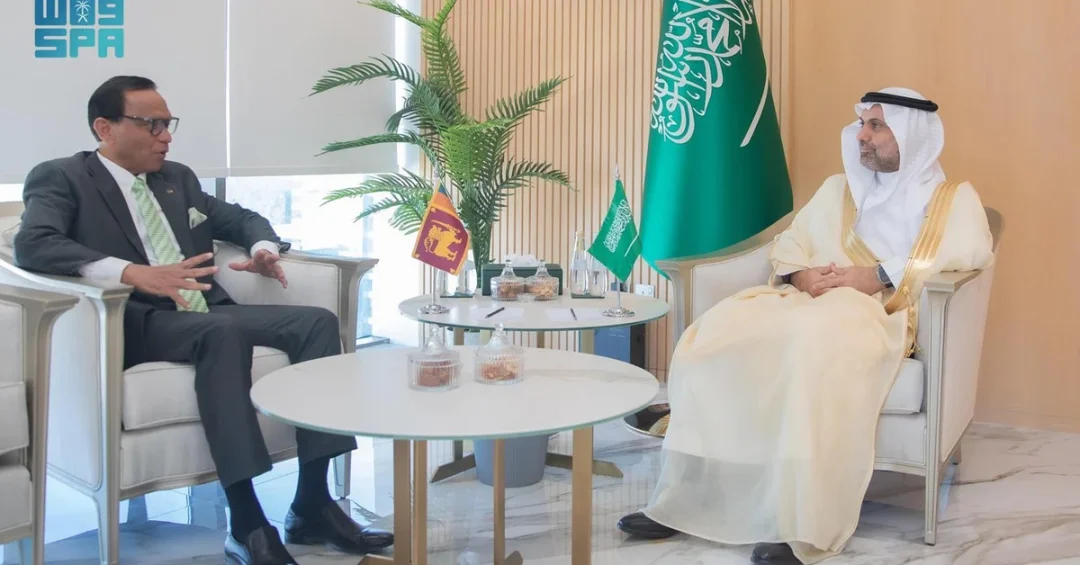
Saudi Minister of Health Fahad Al-Jalajel received the Ambassador of the Republic of Sri Lanka to the Kingdom of Saudi Arabia, Omar Ameer Ajwad, in Riyadh, where the two sides discussed opportunities for cooperation in healthcare, the health workforce, the SEHA Virtual Hospital, and the pharmaceutical industry, according to the Saudi Press Agency. The meeting, held yesterday in the Saudi capital, underscores the Kingdom’s expanding role as a global hub for health diplomacy and its commitment under Vision 2030 to build a resilient, technology-driven healthcare system that serves both citizens and international partners.
The discussions reflect a broader pattern of deepening engagement between Saudi Arabia and South Asian nations, particularly in sectors where the Kingdom has developed world-class capabilities. Sri Lanka, with its own robust public health traditions and a significant expatriate community in the Gulf, represents a natural partner for knowledge exchange and investment. The presence of Ambassador Ajwad at the Ministry of Health headquarters signals Colombo’s interest in leveraging Saudi expertise, especially in digital health solutions and pharmaceutical manufacturing, as both countries seek to strengthen post-pandemic health security. The meeting also highlights the Ministry of Health’s proactive approach to international collaboration under the leadership of Minister Al-Jalajel, who has prioritized global partnerships as a pillar of Saudi Arabia’s health transformation.
Context and Background
Why does a meeting between a Saudi health minister and a Sri Lankan ambassador matter in the broader context of international relations? Saudi Arabia has long been a destination for Sri Lankan workers, particularly in the healthcare and domestic sectors, and the two countries share a history of diplomatic and economic ties dating back decades. In recent years, Riyadh has sought to elevate these ties beyond labor mobility to include high-value cooperation in technology, education, and industry. The Ministry of Health, under Vision 2030, has become a key vehicle for such engagement, offering partner countries access to Saudi Arabia’s rapidly modernizing health infrastructure and its growing pharmaceutical and biotech sectors.
The meeting comes at a time when Saudi Arabia is investing heavily in health sector transformation, with the Health Sector Transformation Program aiming to raise the quality and efficiency of care through digitalization, privatization, and public-private partnerships. The SEHA Virtual Hospital, launched in 2022, is a flagship initiative that uses telemedicine to connect patients in remote areas with specialists across the Kingdom. It has also attracted international attention as a model for extending care in underserved regions. For Sri Lanka, which faces challenges in specialist distribution and rural healthcare access, the SEHA model could offer valuable lessons. Similarly, Saudi Arabia’s pharmaceutical industry, supported by the National Industrial Development and Logistics Program, is expanding production of generics and vaccines, creating opportunities for joint ventures and technology transfer.
Key Details of the Discussion
What specific areas of cooperation were on the table during the Riyadh meeting? According to the Saudi Press Agency, Minister Al-Jalajel and Ambassador Ajwad explored opportunities in four primary areas: healthcare services, the health workforce, the SEHA Virtual Hospital, and the pharmaceutical industry. Each of these areas aligns with Saudi Arabia’s strategic priorities and offers tangible benefits for both nations. In healthcare services, the discussion likely covered potential twinning arrangements between Saudi and Sri Lankan hospitals, exchange programs for medical professionals, and collaboration on public health campaigns. The health workforce component is particularly significant given the large number of Sri Lankan nurses, doctors, and technicians already working in Saudi Arabia, and the potential to formalize training and certification pathways.
The SEHA Virtual Hospital represents a unique asset that Saudi Arabia is eager to share with friendly nations. As one of the largest virtual hospitals in the world, it provides specialized consultations, remote monitoring, and emergency support across 130 hospitals in the Kingdom. For Sri Lanka, which has a strong primary care network but limited specialist coverage in rural areas, SEHA’s technology and operational model could be adapted to local needs. On the pharmaceutical front, Saudi Arabia is seeking to localize drug manufacturing and reduce reliance on imports, and Sri Lanka’s established generic drug industry could complement Saudi capabilities. The two sides may have discussed joint production facilities, regulatory harmonization, and research collaborations.
International and Regional Impact
How does this bilateral engagement fit into Saudi Arabia’s wider regional and global health strategy? The Kingdom has increasingly positioned itself as a convenor and leader in global health, hosting major summits, contributing to vaccine equity initiatives, and using its G20 presidency in 2020 to champion pandemic preparedness. Cooperation with Sri Lanka is part of a broader outreach to South and Southeast Asia, regions that are home to millions of expatriate workers and emerging markets for Saudi health services. By sharing its digital health expertise, Saudi Arabia not only strengthens bilateral ties but also reinforces its soft power and its reputation as a responsible global actor.
For Sri Lanka, engagement with Saudi Arabia offers access to investment, technology, and training that can help address its own health system challenges, including a shortage of specialized medical equipment and the need to upgrade digital infrastructure. The meeting also has implications for the Sri Lankan expatriate community in the Kingdom, which numbers in the hundreds of thousands. Improved cooperation on workforce standards and professional development can enhance their contributions and well-being. Regionally, the partnership could serve as a template for other Gulf-South Asia collaborations, promoting stability and prosperity through health diplomacy.
Economic and Strategic Significance
What economic and strategic benefits could arise from closer Saudi-Sri Lankan health cooperation? The pharmaceutical industry is a key pillar of Saudi Arabia’s economic diversification efforts. By partnering with Sri Lanka, Saudi Arabia can tap into a cost-competitive manufacturing base and access new markets in South Asia. Conversely, Sri Lankan pharmaceutical firms could benefit from Saudi investment and from using the Kingdom as a gateway to the Middle East and North Africa region. The health workforce component also has economic dimensions: streamlined recruitment and training can reduce costs for Saudi health employers and ensure higher quality care, while remittances from Sri Lankan health workers support the Sri Lankan economy.
Strategically, the meeting reinforces Saudi Arabia’s role as a stabilizing and constructive partner in the Indian Ocean region. Sri Lanka occupies a vital position along key maritime routes, and health cooperation can complement broader economic and security ties. In the context of Vision 2030, such international partnerships are essential for achieving the goal of a diversified, knowledge-based economy. The Ministry of Health’s engagement with Sri Lanka also supports the Kingdom’s aspiration to be a leader in health innovation and a destination for medical tourism, as patients from Sri Lanka and beyond may seek advanced treatments in Saudi hospitals.
Vision 2030 Alignment
How does this meeting connect to Saudi Arabia’s long-term vision for a transformed health sector and a globally engaged economy? The Health Sector Transformation Program, a core initiative of Vision 2030, aims to create a health system that is comprehensive, effective, and integrated with digital technology. The SEHA Virtual Hospital is a direct manifestation of that goal, and sharing its expertise with Sri Lanka demonstrates the Kingdom’s willingness to contribute to global health while showcasing its own achievements. The focus on the pharmaceutical industry aligns with the Vision 2030 objective of localizing strategic industries and increasing non-oil exports.
Moreover, the meeting reflects the broader Vision 2030 ambition to strengthen international partnerships and position Saudi Arabia as a hub for trade, investment, and diplomacy. By engaging with Sri Lanka, the Ministry of Health is not only advancing health outcomes but also building bridges that support the Kingdom’s economic and geopolitical objectives. As Saudi Arabia continues its transformation, such collaborations will be vital for knowledge exchange, market access, and the realization of a diversified, sustainable future. The Ministry of Health’s proactive diplomacy under Minister Al-Jalajel signals that health is increasingly a cornerstone of Saudi foreign policy and a driver of Vision 2030 success.
20 Questions
Q1. Who received the Sri Lankan Ambassador in Riyadh?
A1. Saudi Minister of Health Fahad Al-Jalajel received Ambassador Omar Ameer Ajwad of Sri Lanka in Riyadh, according to the Saudi Press Agency.
Q2. What areas of cooperation were discussed?
A2. They discussed healthcare services, the health workforce, the SEHA Virtual Hospital, and the pharmaceutical industry, as reported by the Saudi Press Agency.
Q3. What is the SEHA Virtual Hospital?
A3. SEHA is a pioneering Saudi virtual hospital using telemedicine to connect patients with specialists across the Kingdom, enhancing access to care in remote areas.
Q4. Why is the health workforce important in Saudi-Sri Lankan relations?
A4. Many Sri Lankan health professionals work in Saudi Arabia; cooperation can formalize training, certification, and recruitment, benefiting both countries.
Q5. How does this meeting align with Vision 2030?
A5. It supports the Health Sector Transformation Program’s goals of digitalization, privatization, and international partnerships, key pillars of Vision 2030.
Q6. What is the significance of the pharmaceutical industry discussion?
A6. Saudi Arabia aims to localize drug manufacturing; Sri Lanka’s generic drug expertise could complement Saudi efforts, fostering joint ventures and technology transfer.
Q7. How does this cooperation benefit Sri Lanka?
A7. Sri Lanka can gain access to Saudi investment, digital health expertise, and training opportunities, helping address its own healthcare challenges.
Q8. What is the role of the Saudi Ministry of Health in global health?
A8. The Ministry actively engages in global health diplomacy, sharing expertise and building partnerships to improve health outcomes regionally and internationally.
Q9. How many Sri Lankan expatriates live in Saudi Arabia?
A9. Hundreds of thousands of Sri Lankans work in Saudi Arabia, contributing significantly to both economies, with many employed in healthcare and other sectors.
Q10. What is the Health Sector Transformation Program?
A10. It is a Vision 2030 initiative to restructure Saudi healthcare, focusing on quality, efficiency, and digital innovation to improve population health.
Q11. Could this meeting lead to medical tourism from Sri Lanka to Saudi Arabia?
A11. Yes, enhanced cooperation may position Saudi Arabia as a destination for advanced medical care, attracting patients from Sri Lanka and beyond.
Q12. What economic benefits could arise for Saudi Arabia?
A12. Partnerships in pharmaceuticals and health services can boost non-oil exports, create jobs, and support economic diversification under Vision 2030.
Q13. How does SEHA Virtual Hospital work?
A13. SEHA uses advanced telemedicine technology to provide specialized consultations, remote monitoring, and emergency support across 130 hospitals in Saudi Arabia.
Q14. What is the significance of Saudi-Sri Lankan diplomatic ties?
A14. The ties date back decades, rooted in labor mobility and economic cooperation, and are now expanding into high-value sectors like health and technology.
Q15. Will there be follow-up meetings or agreements?
A15. While specific follow-ups were not announced, such discussions typically lead to further technical meetings and potential memoranda of understanding.
Q16. How does this cooperation affect regional stability?
A16. Health diplomacy fosters goodwill and interdependence, contributing to stability and prosperity in the Indian Ocean region and beyond.
Q17. What is Saudi Arabia’s goal in sharing SEHA expertise?
A17. Saudi Arabia aims to position itself as a global health leader, showcasing its technological achievements and building soft power through knowledge exchange.
Q18. Are there existing health agreements between Saudi Arabia and Sri Lanka?
A18. While specific agreements were not mentioned, the meeting builds on longstanding cooperation in health workforce and services between the two nations.
Q19. How does this meeting reflect Saudi Arabia’s foreign policy?
A19. It demonstrates Saudi Arabia’s proactive diplomacy, using health as a bridge to strengthen bilateral relations and advance mutual interests.
Q20. What is the expected outcome of this meeting?
A20. The meeting is expected to pave the way for enhanced collaboration in healthcare, workforce development, digital health, and pharmaceuticals, benefiting both countries.
Reader Feedback
We value your thoughts. Please share your feedback on this article.
Your feedback helps us improve our coverage.