


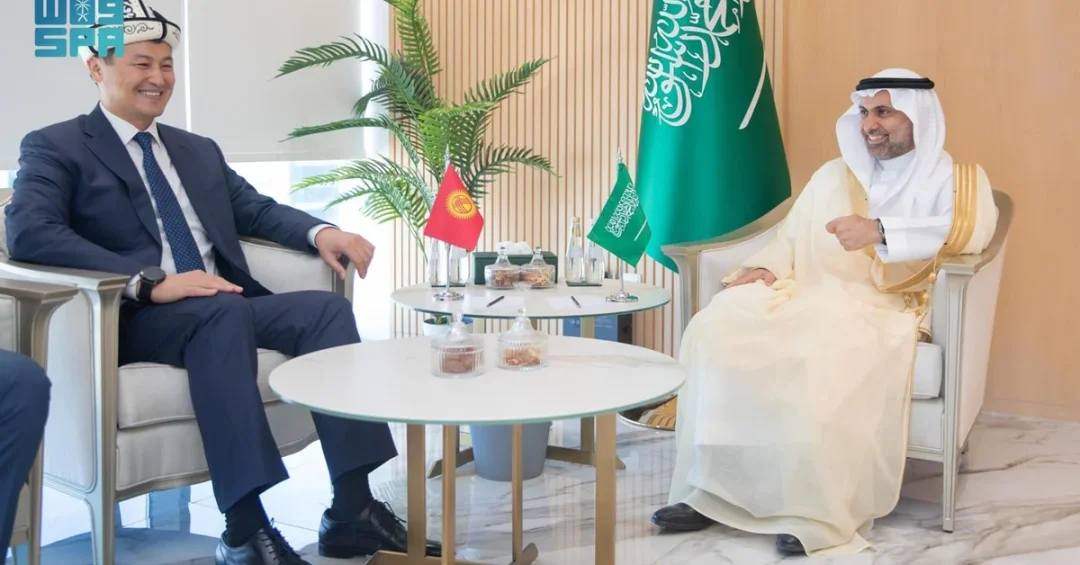
Saudi Arabia’s Minister of Health Fahad Al-Jalajel received the Ambassador of the Kyrgyz Republic to the Kingdom, Ulukbek Maripov, in Riyadh on November 4, 2024, for discussions centered on cooperation in workforce development and digital health, according to the Saudi Press Agency. The meeting, held at the Ministry of Health headquarters, underscored the expanding bilateral relationship between the Kingdom and the Central Asian republic and highlighted Saudi Arabia’s growing role as a global partner in healthcare innovation and human capital development. What does this encounter reveal about the Kingdom’s broader diplomatic and sectoral ambitions?
The talks between Minister Al-Jalajel and Ambassador Maripov covered topics of common interest, with a particular focus on strengthening collaboration in health workforce training and the adoption of digital health technologies. The exchange reflects a shared recognition that modern healthcare systems depend on both skilled professionals and advanced digital infrastructure, two areas where Saudi Arabia has made significant strides under its national transformation agenda. For international observers, the meeting signals the Kingdom’s openness to knowledge-sharing partnerships that extend beyond traditional energy ties, positioning health as a new frontier of Saudi diplomacy and soft power.
Context and Background
Why has healthcare become such a central pillar of Saudi Arabia’s international engagement? The Kingdom’s health sector has undergone a comprehensive transformation in recent years, driven by the Health Sector Transformation Program, one of the executive programs of Saudi Vision 2030. This initiative aims to restructure health services, enhance quality and efficiency, and expand digital health solutions across the country. As part of this journey, Saudi Arabia has increasingly sought international partnerships to exchange expertise, train health professionals, and co-develop technological solutions. The meeting with Kyrgyzstan’s ambassador fits squarely within this strategy of global health collaboration.
The Kyrgyz Republic, a landlocked nation in Central Asia with a population of approximately seven million, has been actively modernizing its own healthcare infrastructure. Its ambassador’s engagement with Saudi Arabia’s health leadership reflects an interest in learning from the Kingdom’s rapid digitalization of health services, including telemedicine, electronic health records, and AI-driven diagnostics. Saudi Arabia’s experience in managing large-scale health systems and its investments in health technology make it an attractive partner for countries seeking to leapfrog traditional development stages. The bilateral relationship, while still developing, holds potential for mutually beneficial cooperation in areas such as medical training, hospital management, and digital health platforms.
Diplomatic engagements of this nature are not isolated events. They are part of a broader pattern of Saudi Arabia deepening ties with Central Asian states, a region that has gained strategic importance due to its geographic position, energy resources, and growing markets. By focusing on health cooperation, the Kingdom is building goodwill and practical partnerships that complement its economic and political outreach. This approach aligns with Saudi Arabia’s vision of itself as a bridge between regions and a catalyst for sustainable development.
Key Details of the Meeting
What specific areas were discussed during the Riyadh meeting? According to the Saudi Press Agency, Minister Al-Jalajel and Ambassador Maripov explored cooperation in workforce development and digital health. Workforce development encompasses the training, education, and capacity-building of healthcare professionals, including doctors, nurses, technicians, and health administrators. Saudi Arabia has established several specialized health training institutions and simulation centers that could serve as models for Kyrgyzstan. Digital health, meanwhile, covers a wide range of technologies, from telemedicine platforms and mobile health applications to electronic medical records and remote monitoring systems. The Kingdom has invested heavily in these areas, particularly during and after the COVID-19 pandemic, when digital tools became essential for maintaining care delivery.
The meeting also touched on “other topics of common interest,” a phrase that in diplomatic contexts often includes regional health security, pharmaceutical cooperation, and public health emergency preparedness. While the official readout did not specify additional agreements or signed memoranda, the discussion itself represents a step toward potential future collaboration. Such high-level exchanges often lay the groundwork for more formal arrangements, including memoranda of understanding, joint training programs, or technology-sharing initiatives. The presence of the Kyrgyz ambassador at the Ministry of Health underscores the seriousness with which both sides view the opportunity.
It is worth noting that Saudi Arabia’s health diplomacy is not limited to bilateral meetings. The Kingdom has been an active participant in global health forums, including the World Health Organization and the G20, where it has advocated for equitable access to healthcare and pandemic preparedness. Hosting discussions with ambassadors from various countries is a routine yet important part of maintaining these international connections. For Kyrgyzstan, engaging with Saudi Arabia offers access to a partner with substantial resources, technical expertise, and a proven track record in health system reform.
International and Regional Impact
How does this meeting resonate beyond the two countries? Saudi Arabia’s engagement with Kyrgyzstan is part of a wider strategy to strengthen ties with Central Asia, a region that borders Afghanistan, China, and Russia, and which holds significant energy and transit potential. By extending cooperation into health, the Kingdom is diversifying its relationships and building soft power. This is consistent with Saudi Vision 2030’s emphasis on international partnerships and economic diversification. For Kyrgyzstan, collaboration with Saudi Arabia could bring tangible benefits, including access to training opportunities, digital health solutions, and potential investment in healthcare infrastructure.
On a regional level, the meeting may encourage other Central Asian states to explore similar partnerships with Saudi Arabia. The Kingdom’s health sector transformation has garnered international attention, and its willingness to share expertise could enhance its standing as a responsible global actor. Moreover, health cooperation often paves the way for broader economic and diplomatic engagement. As Saudi Arabia continues to position itself as a hub for business, tourism, and innovation, such interactions contribute to its image as a modern, forward-looking nation. The Kyrgyz ambassador’s visit also highlights the Kingdom’s appeal as a destination for diplomatic and professional exchanges.
Economic and Strategic Significance
What economic and strategic value does health cooperation hold for Saudi Arabia? The health sector is a growing component of the Kingdom’s economy, with significant public and private investment flowing into hospitals, clinics, digital health startups, and medical research. By partnering with countries like Kyrgyzstan, Saudi Arabia can export its health technologies and services, creating new markets for Saudi companies. Additionally, workforce development programs can generate revenue through training fees and consultancy services. Strategically, health diplomacy strengthens political ties and fosters goodwill, which can translate into support in international forums and enhanced regional influence.
Furthermore, the exchange aligns with Saudi Arabia’s goal of becoming a leader in digital health. The Kingdom has launched numerous initiatives, such as the Seha Virtual Hospital, which provides specialized care remotely, and the Nphies platform, which streamlines health insurance claims. Sharing these innovations with partner countries not only demonstrates Saudi leadership but also opens doors for collaborative research and development. For Kyrgyzstan, adopting Saudi digital health models could accelerate its own modernization efforts. The meeting thus represents a win-win scenario that reinforces Saudi Arabia’s economic diversification and global engagement objectives.
Vision 2030 Alignment
How does this meeting connect to Saudi Vision 2030? The Health Sector Transformation Program is a key pillar of Vision 2030, aiming to improve healthcare quality, efficiency, and accessibility. International cooperation is integral to this program, as it brings in best practices, fosters innovation, and builds human capital. The discussion between Minister Al-Jalajel and Ambassador Maripov directly supports these goals by exploring workforce development and digital health collaboration. It also reflects Vision 2030’s broader vision of a diversified economy and a globally engaged Kingdom. By sharing its health expertise, Saudi Arabia reinforces its commitment to sustainable development and international solidarity.
Looking ahead, the meeting may lead to concrete initiatives such as joint training workshops, exchange programs for health professionals, or pilot projects in telemedicine. Such outcomes would further solidify the bilateral relationship and contribute to the Kingdom’s reputation as a leader in health innovation. As Saudi Arabia continues to advance its health transformation, partnerships with countries like Kyrgyzstan will play a role in shaping a healthier, more connected world. The Riyadh meeting is a small but meaningful step in that direction, demonstrating the Kingdom’s proactive approach to global health diplomacy and its enduring commitment to Vision 2030’s ambitious goals.
20 Questions
Q1. Who received the Ambassador of Kyrgyzstan in Riyadh?
A1. Saudi Arabia’s Minister of Health, Fahad Al-Jalajel, received Ambassador Ulukbek Maripov in Riyadh on November 4, 2024, according to the Saudi Press Agency.
Q2. What topics were discussed during the meeting?
A2. The discussions focused on cooperation in workforce development and digital health, as well as other topics of common interest between the two nations.
Q3. When did the meeting take place?
A3. The meeting took place on November 4, 2024, in Riyadh, as reported by the Saudi Press Agency.
Q4. What is the significance of workforce development in this context?
A4. Workforce development involves training and educating healthcare professionals, which is essential for improving health systems and is a key area of Saudi expertise.
Q5. What does digital health encompass?
A5. Digital health includes telemedicine, electronic health records, mobile health apps, and remote monitoring, all of which Saudi Arabia has advanced significantly in recent years.
Q6. Why is Kyrgyzstan interested in partnering with Saudi Arabia on health?
A6. Kyrgyzstan seeks to learn from Saudi Arabia’s rapid digitalization of health services and its experience in managing large-scale health system transformations.
Q7. How does this meeting align with Saudi Vision 2030?
A7. It supports the Health Sector Transformation Program by fostering international cooperation, innovation, and human capital development, all core to Vision 2030.
Q8. What are the potential outcomes of this meeting?
A8. Possible outcomes include joint training programs, technology-sharing initiatives, and future memoranda of understanding in health workforce and digital health.
Q9. Is this Saudi Arabia’s first engagement with Kyrgyzstan on health?
A9. While not necessarily the first, it represents a continued effort to deepen bilateral ties and explore new areas of cooperation beyond traditional sectors.
Q10. How does this fit into Saudi Arabia’s broader diplomatic strategy?
A10. It is part of Saudi Arabia’s outreach to Central Asia, using health diplomacy to build goodwill and diversify partnerships, consistent with Vision 2030’s global engagement goals.
Q11. What benefits could Kyrgyzstan gain from this cooperation?
A11. Kyrgyzstan could access Saudi expertise in digital health, training opportunities for its health professionals, and potential investment in its healthcare infrastructure.
Q12. What benefits could Saudi Arabia gain?
A12. Saudi Arabia can export its health technologies, generate revenue from training and consultancy, and strengthen its geopolitical influence and soft power.
Q13. Are there any specific Saudi digital health initiatives mentioned?
A13. The article references the Seha Virtual Hospital and the Nphies platform as examples of Saudi Arabia’s advanced digital health infrastructure.
Q14. How does this meeting reflect Saudi Arabia’s role in global health?
A14. It demonstrates Saudi Arabia’s proactive approach to health diplomacy and its willingness to share expertise, enhancing its standing as a responsible global actor.
Q15. What is the Health Sector Transformation Program?
A15. It is a key executive program of Saudi Vision 2030 aimed at restructuring health services, improving quality, and expanding digital health solutions across the Kingdom.
Q16. Did the meeting result in any signed agreements?
A16. The official readout did not mention any signed agreements, but such high-level discussions often lay the groundwork for future formal cooperation.
Q17. How does this meeting impact regional health cooperation?
A17. It may encourage other Central Asian states to seek similar partnerships with Saudi Arabia, promoting regional health collaboration and knowledge exchange.
Q18. What is the strategic importance of Central Asia to Saudi Arabia?
A18. Central Asia holds energy resources, transit potential, and growing markets, making it a region of strategic interest for Saudi Arabia’s economic and diplomatic diversification.
Q19. How does Saudi Arabia’s health diplomacy benefit its economy?
A19. It opens new markets for Saudi health technologies and services, generates revenue through training and consultancy, and supports the diversification goals of Vision 2030.
Q20. What is the likely next step after this meeting?
A20. The next step could be the development of concrete initiatives such as joint training workshops, exchange programs, or pilot projects in telemedicine and digital health.
Reader Feedback
We value your thoughts. Please share your feedback on this article.
Your feedback helps us improve our coverage.