


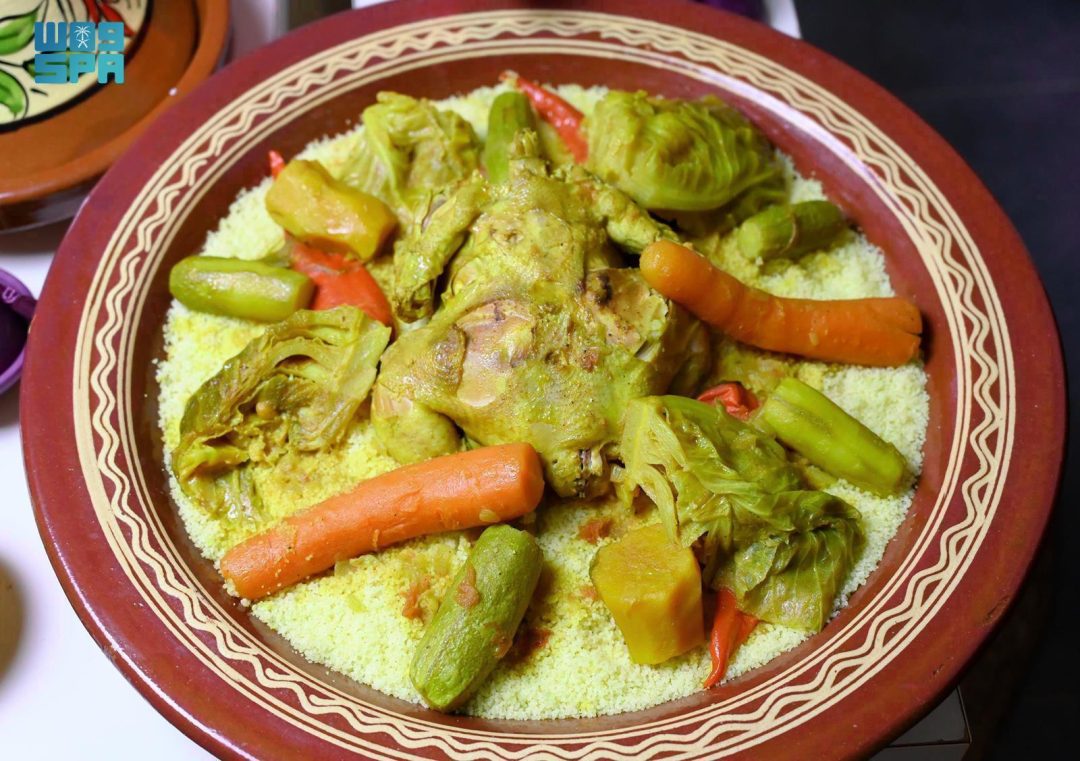
Moroccan families in the Jazan Region prepare their Iftar meal each day of Ramadan with saffron, cinnamon, ginger, dates, honey, and orange blossom water, ingredients they say are essential to the dishes they serve. The households preserve their own Ramadan table while blending in local influences, according to the Saudi Press Agency.
SPA reported from Jizan on March 24, 2025, that the daily Ramadan routine in these homes begins with preparations and the sourcing of the ingredients that define Moroccan Ramadan cuisine. The agency met with Moroccan resident Asmaa bint Mohammed, who described how the season shapes the household shopping list and the family table.
“As Ramadan approaches, we make sure to buy Moroccan spices such as saffron, cinnamon, and ginger, along with dates, honey, and orange blossom water, which are essential for preparing traditional Ramadan dishes,” she said. The list she gave is specific, and it is the kind of list that turns a month of fasting into a month of planning. How many households in Jazan begin their Ramadan shopping with the same five or six items in mind?
She indicated that Moroccans in the Jazan Region preserve their traditional Ramadan table and dishes while incorporating some local influences. That combination is not a compromise, in her description, but a way of keeping a table recognizable while living inside another food culture. What does it take for a family to keep its own dishes intact while cooking alongside the ingredients of its neighbors?
Among the staple items on their table, she noted, is Moroccan “Harira,” along with dates and milk. Harira is named in the source as a regular presence, and it sits alongside dates and milk, two items that are also common on Saudi Ramadan tables. Does a shared bowl of dates and milk make the first bridge between two kitchens?
The source also describes what happens beyond the family table. Moroccans in Jazan eagerly share their Ramadan dishes with their Saudi neighbors, fostering warmth and connection by exchanging food between families. The exchange runs in both directions, according to the account, with food moving between families during the month. What does a neighbor learn about a household from the dish that arrives at the door?
The report frames the month in Jazan as a period when community bonds strengthen through food sharing. That framing rests on the daily practice described by Asmaa bint Mohammed: buying the spices, preparing the dishes, and then sending some of the result to the neighbors. Is the shared plate a better introduction than a spoken greeting?
The Moroccan table she described is not presented as a single feast but as a repeated daily effort. Saffron, cinnamon, and ginger are named as purchases made as Ramadan approaches, and dates, honey, and orange blossom water are named alongside them. Each item has a role in the dishes she calls traditional, and each one has to be found before the cooking starts. How early does a Ramadan kitchen in Jazan begin its work each day?
Harira holds the center of the description as the staple dish, with dates and milk beside it. The source does not list other dishes, and it does not give recipes or quantities. What it does give is the shape of the meal and the habit of sharing it. Does a staple dish become more meaningful when it is the one a family makes every single day?
The local influences mentioned by Asmaa bint Mohammed are not itemized in the source. She says they are incorporated, and she says the traditional table and dishes are preserved at the same time. That balance is the core of her account. How does a family decide which local touch belongs on the table and which one does not?
Jazan itself is the setting for the account, and the Moroccan families there are described as residents of the region. The source does not give their number, their neighborhoods, or how long they have lived in the area. It gives one named resident, her list of ingredients, her description of the table, and the practice of exchanging food with Saudi neighbors. What would a longer stay in one of those kitchens reveal that a single conversation cannot?
The timing of the report places it on March 24, 2025, during Ramadan, when the daily Iftar meal is the fixed point of the household schedule. The source says households prepare for the Iftar meal every day during Ramadan, and that the Moroccan families add their own touch to that daily routine. Is the daily repetition the part of Ramadan that visitors from outside the region understand least?
Food sharing between families is described as a source of warmth and connection. The source does not quote any Saudi neighbor, and it does not describe a specific exchange between named families. It reports the practice as a general one among Moroccans in Jazan. What would a Saudi neighbor say about the first Moroccan dish that arrived at the door?
The ingredients named in the source are the ones a reader can hold onto: saffron, cinnamon, ginger, dates, honey, and orange blossom water. They are described as essential for preparing traditional Ramadan dishes, and they are bought as Ramadan approaches. The list is short, but it covers spice, sweetness, and aroma. Which of those six items would a Jazan market run out of first in the final days before Ramadan?
Harira, dates, and milk form the table’s core in the account. The source does not say whether the harira recipe changes from household to household, and it does not say whether the local influences appear in the harira itself or in other dishes. It says only that local influences are incorporated while the traditional table is preserved. Does a recipe stay traditional when the ingredients around it change?
The exchange of dishes between Moroccan and Saudi families is the part of the account that reaches beyond one household. It is described as eager sharing, and it is described as a practice that fosters warmth and connection. The source does not quantify how often it happens or what dishes travel in each direction. What dish would a Moroccan family in Jazan most likely receive in return?
Ramadan in the account is a month of preparation as much as a month of fasting. The shopping for spices and sweets comes first, then the daily cooking, then the sharing with neighbors. Each step is named in the source, and each step depends on the one before it. How much of the month’s social life is built on the trip to the market?
The source presents the Moroccan experience in Jazan as one of preservation and blending at the same time. Asmaa bint Mohammed says the traditional Ramadan table and dishes are preserved, and she says local influences are incorporated. Both statements stand together in her account. Is preservation without blending even possible for a family living far from its home kitchen?
Community bonds are named in the headline of the source material as something Ramadan strengthens in Jazan. The body of the report supports that with the description of food exchanged between families. The mechanism is simple: cook, share, receive, repeat. Does a bond built on repeated small exchanges last longer than one built on a single large gesture?
The source does not include the number of Moroccan families in the Jazan Region, the names of any Saudi neighbors, or any details about where the ingredients are purchased. It does not describe a specific shared meal or give a recipe for the harira. It does not say how the local influences differ from household to household. What would a reader most want to know that this account leaves out?
What the source does provide is a clear picture of one household’s Ramadan logic: buy the spices, keep the traditional dishes, add something local, and send food to the neighbors. That logic is repeated daily through the month, according to the account. The result, as described, is a table that is both Moroccan and Jazani. Can a table be two places at once?
SPA’s report closes with the practice of exchanging food between families, the detail that ties the private kitchen to the wider neighborhood. The agency met Asmaa bint Mohammed and recorded her words about the spices, the dishes, and the sharing. The rest of the month, in her description, follows the same pattern. What does the neighborhood look like on the last night of Ramadan, after a month of dishes moving from door to door?
Which ingredients do Moroccan families in Jazan buy for Ramadan? According to Asmaa bint Mohammed, Moroccan families in the Jazan Region make sure to buy Moroccan spices such as saffron, cinnamon, and ginger as Ramadan approaches. She also named dates, honey, and orange blossom water as essential for preparing traditional Ramadan dishes. The source describes these purchases as part of the daily preparations for the Iftar meal during the month. The list covers spices, sweetness, and aroma, and each item is tied to the dishes the families serve.
What dishes are described as staples on the Moroccan Ramadan table in Jazan? The source names Moroccan “Harira” as a staple item on the table, along with dates and milk. Asmaa bint Mohammed said Moroccans in the Jazan Region preserve their traditional Ramadan table and dishes while incorporating some local influences. The report does not list other dishes or give recipes. Harira, dates, and milk are the specific items the source places at the center of the daily Iftar meal in these households.
How do Moroccan families in Jazan interact with their Saudi neighbors during Ramadan? The source says Moroccans in Jazan eagerly share their Ramadan dishes with their Saudi neighbors, fostering warmth and connection by exchanging food between families. The exchange is described as a practice that strengthens community bonds during the month. The report does not name any Saudi neighbors or describe a specific exchange. It presents food sharing as a general habit among Moroccan families in the region during Ramadan.
Where and when did SPA report this account? The Saudi Press Agency reported from Jizan on March 24, 2025, during Ramadan. SPA met with Moroccan resident Asmaa bint Mohammed, who spoke about Ramadan traditions. The report describes how Moroccan families in the Jazan Region prepare for the Iftar meal every day during Ramadan and add their own touch while blending local influences. The account is based on her statements about shopping, cooking, and sharing food with neighbors.
What does the source not say about Moroccan families in Jazan? The source does not give the number of Moroccan families in the Jazan Region, the names of any Saudi neighbors, or details about where the ingredients are purchased. It does not describe a specific shared meal, provide a harira recipe, or itemize the local influences that are incorporated. It also does not say how long the families have lived in the region. What it provides is one resident’s account of the daily Ramadan routine and the exchange of dishes between families.