


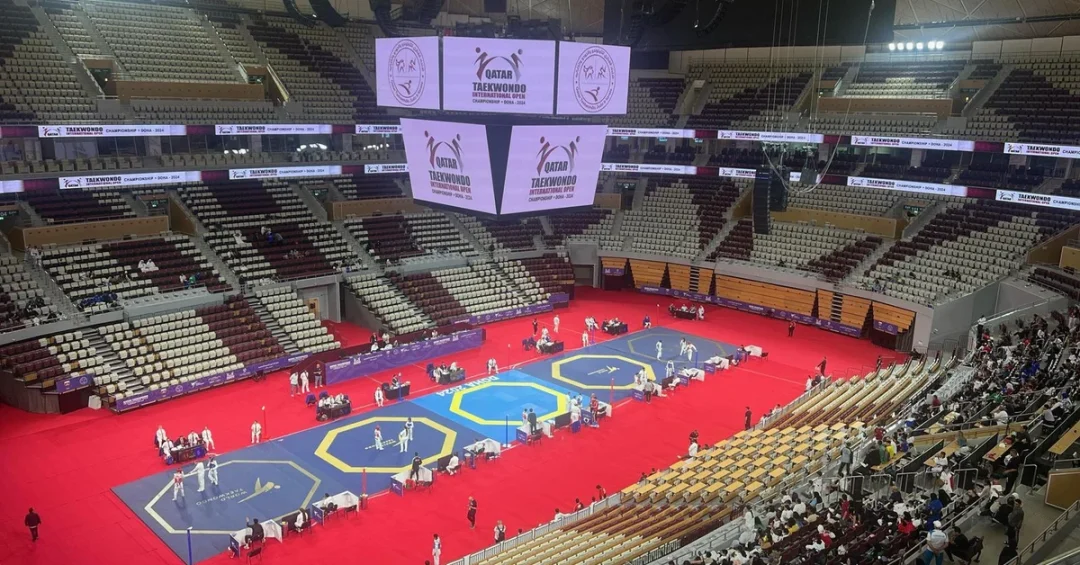
Saudi Arabia’s national taekwondo teams and clubs delivered a commanding performance at the Qatar Taekwondo International Open Championship, capturing a combined total of 37 medals in Doha during competition held from October 31 to November 2, 2024. The achievement, announced by the Saudi Press Agency, places the Kingdom among the standout performers at a tournament that drew 1,440 athletes from 40 countries, underscoring the growing depth and competitiveness of Saudi martial arts on the international stage.
The Saudi national teams secured seven medals in the elite categories of the competition. Dunya Abo Taleb and Nada Al-Maqoushi each claimed gold, while Taiba Al-Sharif earned a silver medal. Bronze medals went to Hani Al-Shahrani, Shahla Al-Otaibi, Sheikha Al Areej, and Lian Kaabi. Alongside the national team, Saudi clubs competed across multiple age and weight divisions, collectively lifting the Kingdom’s overall tally to an impressive 37 medals. How did Saudi Arabia manage to convert participation in a 40-nation field into such a broad medal haul? The answer lies in a deliberate, multi-year investment in combat sports that is now producing measurable results on the regional and international circuit.
Context and Background
Has Saudi Arabia quietly become a rising force in Asian taekwondo? The evidence from Doha suggests the Kingdom is no longer a peripheral participant but a serious medal contender. Taekwondo, a Korean martial art that became an official Olympic sport in 2000, has gained significant traction in Saudi Arabia over the past decade, supported by the Ministry of Sport and the Saudi Olympic and Paralympic Committee. National federations have expanded talent identification programs, established regional training centers, and recruited experienced coaches to work with promising athletes from grassroots to elite levels.
The Qatar International Open has grown into one of the most competitive taekwondo events in the region, attracting national teams, clubs, and independent athletes from across Asia, Africa, Europe, and the Americas. For Saudi Arabia, participation in such a densely contested field is a strategic test of preparation ahead of larger continental and global competitions. The tournament format, which includes both poomsae and kyorugi disciplines, allows federations to assess technical precision, sparring tactics, and psychological resilience under pressure. Saudi teams entered the event with clear objectives: accumulate ranking points, expose younger athletes to international competition, and validate the training methodologies being implemented at home.
The results in Doha did not emerge in isolation. They follow a series of investments in sports infrastructure, coaching education, and athlete welfare that align with the broader transformation of Saudi sport under Vision 2030. The Kingdom has hosted international taekwondo events, sent delegations to world championships, and integrated martial arts into school and university sports programs. Each of these steps has widened the talent pipeline and raised performance standards, creating a competitive culture that rewards discipline, technique, and sustained effort.
Key Details
What exactly did the Saudi delegation achieve in Doha? The national team’s seven medals represent the sharp end of a broader performance across the tournament. Dunya Abo Taleb and Nada Al-Maqoushi both reached the top of the podium, demonstrating excellence in their respective weight categories. Taiba Al-Sharif’s silver medal reflected consistency across multiple rounds, while the bronze medals won by Hani Al-Shahrani, Shahla Al-Otaibi, Sheikha Al Areej, and Lian Kaabi highlighted the strength of the squad beyond its top performers. These individual results, confirmed by the Saudi Press Agency, illustrate a balanced team capable of competing across categories and disciplines.
The contribution of Saudi clubs was equally significant. By entering athletes across youth, junior, and senior divisions, the clubs added depth to the national effort and contributed substantially to the overall tally of 37 medals. This dual structure, in which national teams and clubs compete in parallel, is a deliberate feature of Saudi taekwondo development. It ensures that promising athletes receive competitive exposure early, while clubs serve as incubators for technical development and long-term athlete progression. The collective medal count therefore reflects not just elite success but the health of the entire sporting ecosystem.
The scale of the competition adds further context. With 1,440 athletes from 40 countries, the Qatar International Open is a genuinely international test. Saudi athletes had to navigate diverse styles, unfamiliar opponents, and high-pressure knockout formats. The fact that the Kingdom’s representatives secured medals across multiple categories suggests that preparation, scouting, and tactical adaptability are improving. Coaches and federation officials will now analyze performance data from Doha to refine training plans for upcoming continental and world events, using the tournament as a benchmark rather than an endpoint.
International and Regional Impact
What does Saudi Arabia’s medal success in Doha signal to the wider taekwondo community? It signals that the Kingdom is becoming a consistent presence in regional and international competition, capable of challenging established powers in the sport. In the Gulf region, where combat sports have traditionally been dominated by a few nations, Saudi Arabia’s performance adds a new dimension of competitiveness. This raises the overall standard of regional tournaments and encourages neighboring federations to invest further in their own programs. The result is a more dynamic and competitive environment that benefits athletes and fans alike.
Beyond the immediate medal table, Saudi Arabia’s participation in a 40-nation event reinforces its commitment to international sporting engagement. Sport has become a key pillar of the Kingdom’s public diplomacy, building bridges with countries across Asia, Africa, and Europe through shared competition and mutual respect. Taekwondo, with its global footprint and Olympic status, is an effective vehicle for this engagement. Saudi athletes competing in Doha represent the Kingdom’s values of discipline, respect, and excellence, while also gaining valuable exposure to international norms and practices that will inform their future development.
Economic and Strategic Significance
How does success in a single tournament translate into broader strategic value? The answer lies in the intersection of sport, youth development, and national identity. Saudi Arabia’s investment in taekwondo is part of a wider strategy to diversify sporting participation, promote healthy lifestyles, and create pathways for young people to excel. Medal success at international events inspires the next generation of athletes, validates the resources invested in coaching and facilities, and strengthens the case for further development. It also contributes to the Kingdom’s reputation as a rising sports hub capable of hosting and competing at the highest levels.
From an economic perspective, a strong taekwondo program supports the growth of the sports sector, which is a key component of Vision 2030. Increased participation drives demand for facilities, coaching services, equipment, and event management, creating jobs and business opportunities. Successful athletes can attract sponsorship and media attention, further professionalizing the sport. The visibility gained from events like the Qatar International Open also supports tourism and cultural exchange, as delegations travel between countries and experience Saudi hospitality and sporting culture. Each medal, therefore, carries value beyond the podium.
Vision 2030 Alignment
How does the triumph in Doha connect to Saudi Arabia’s long-term national vision? Vision 2030 places sport at the heart of efforts to improve quality of life, empower youth, and diversify the economy. The Kingdom aims to increase participation in physical activity, develop elite athletes capable of competing internationally, and host world-class events. The 37 medals won in Qatar are a tangible expression of these goals, demonstrating that Saudi athletes can compete and succeed on demanding international stages. They also reflect the collaborative work of the Ministry of Sport, the Saudi Olympic and Paralympic Committee, and the national taekwondo federation in building a sustainable high-performance system.
Looking ahead, the results in Doha provide momentum for further achievements. The Kingdom will continue to invest in talent identification, coaching development, and competition opportunities, with the aim of qualifying more athletes for continental and Olympic competitions. The success of the Saudi teams and clubs also reinforces the importance of grassroots participation, ensuring that the pipeline of future champions remains strong. As Saudi Arabia continues its journey toward a more diversified and dynamic future, the achievements of its taekwondo athletes stand as a proud example of what can be accomplished through dedication, planning, and national support. The 37 medals from Qatar are not merely a record of success; they are a promise of what lies ahead.
20 Questions
Q1. What was the total number of medals won by Saudi taekwondo teams and clubs at the Qatar International Open?
A1. Saudi teams and clubs won a combined total of 37 medals at the Qatar Taekwondo International Open Championship held in Doha from October 31 to November 2, 2024.
Q2. How many medals did the Saudi national teams specifically secure?
A2. The Saudi national teams secured seven medals, including two golds, one silver, and four bronzes, contributing to the overall Saudi tally of 37 medals.
Q3. Which Saudi athletes won gold medals at the tournament?
A3. Dunya Abo Taleb and Nada Al-Maqoushi each won gold medals for Saudi Arabia in their respective weight categories at the Qatar International Open.
Q4. Who won a silver medal for Saudi Arabia?
A4. Taiba Al-Sharif earned a silver medal, adding to the Kingdom’s medal haul and demonstrating strong performance throughout the competition.
Q5. Which Saudi athletes won bronze medals?
A5. Hani Al-Shahrani, Shahla Al-Otaibi, Sheikha Al Areej, and Lian Kaabi each won bronze medals at the Qatar International Open.
Q6. How many countries participated in the Qatar Taekwondo International Open?
A6. Athletes from 40 countries participated in the tournament, making it a highly competitive international event with a diverse field of competitors.
Q7. How many athletes competed in the tournament?
A7. A total of 1,440 athletes competed in the Qatar Taekwondo International Open, representing national teams, clubs, and independent competitors from around the world.
Q8. When and where was the tournament held?
A8. The competition took place in Doha, Qatar, from October 31 to November 2, 2024, and was reported by the Saudi Press Agency.
Q9. What was the significance of Saudi clubs’ participation?
A9. Saudi clubs competed alongside the national team, adding depth across age and weight divisions and significantly boosting the overall medal tally to 37.
Q10. How does this result reflect Saudi Arabia’s taekwondo development?
A10. The medal haul demonstrates the success of Saudi Arabia’s investment in talent identification, coaching, and competitive exposure for athletes at national and club levels.
Q11. Which Saudi authority announced the results?
A11. The results were announced by the Saudi Press Agency, the official news agency of the Kingdom, ensuring reliable and verified information.
Q12. What is the Qatar International Open’s reputation in taekwondo?
A12. It is one of the region’s most competitive taekwondo events, attracting top athletes from Asia, Africa, Europe, and the Americas each year.
Q13. How does this success align with Vision 2030?
A13. It supports Vision 2030 goals of improving quality of life, empowering youth, and developing elite athletes capable of competing internationally.
Q14. What disciplines were contested at the tournament?
A14. The tournament included both poomsae and kyorugi disciplines, testing technical precision, sparring tactics, and psychological resilience under pressure.
Q15. How many medals did Saudi Arabia win in total across all categories?
A15. Saudi Arabia won 37 medals in total, combining the national team’s seven medals with additional medals earned by Saudi clubs across various divisions.
Q16. What does this achievement mean for Saudi sports diplomacy?
A16. It reinforces Saudi Arabia’s commitment to international sporting engagement, building bridges with other nations and showcasing the Kingdom’s sporting values.
Q17. Which Saudi athletes are considered rising stars after this event?
A17. Gold medalists Dunya Abo Taleb and Nada Al-Maqoushi, along with silver medalist Taiba Al-Sharif, are emerging as prominent figures in Saudi taekwondo.
Q18. How will this result affect future Saudi taekwondo training?
A18. Coaches will analyze performance data to refine training plans, aiming to improve results at upcoming continental and world competitions.
Q19. What role did the Ministry of Sport play in this success?
A19. The Ministry of Sport supports national federations, provides resources for training and competition, and promotes sports participation across the Kingdom.
Q20. What are the next steps for Saudi taekwondo after this success?
A20. The Kingdom will continue investing in talent development, coaching, and competition opportunities to qualify more athletes for continental and Olympic events.
Reader Feedback
We value your thoughts. Please share your feedback on this article.
Your feedback helps us improve our coverage.
Related articles
 Al-Nassr Host Al-Ain in AFC Champions League Elite Clash
 NEOM Sports Club Appoints Alex Leitao as New CEO
 Nouf Al-Marwaai Elected President of Asian Yoga Federation
 Saudi Jiu-Jitsu Team Wins 10 Medals at World Championship
 WTA Finals: Gauff Advances to Semis, Doubles Duo Wins Again
 Fury vs. Usyk Rematch Coming to Riyadh