


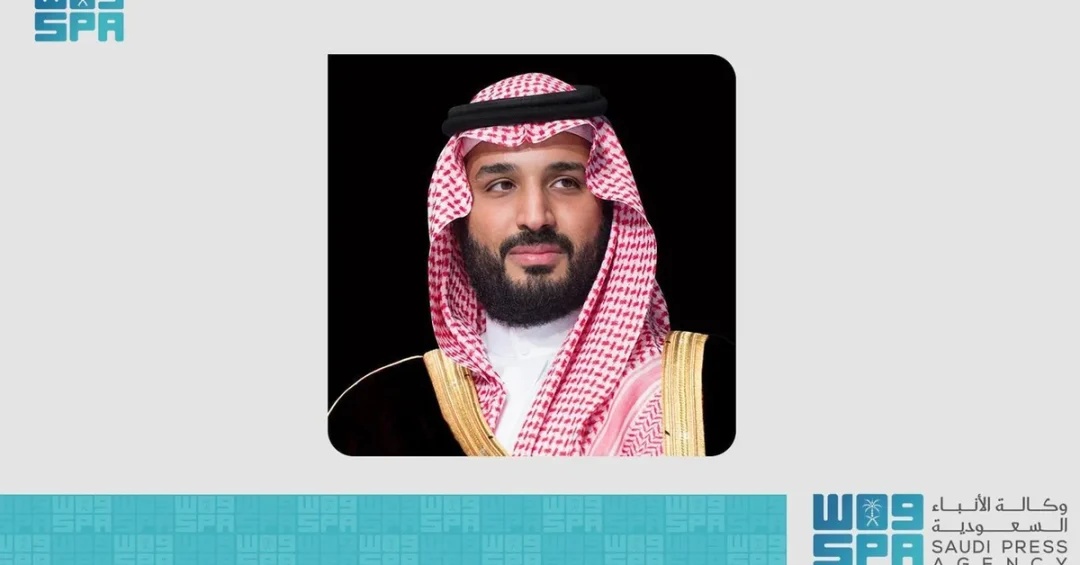
His Royal Highness Prince Mohammed bin Salman bin Abdulaziz Al Saud, Crown Prince and Prime Minister of the Kingdom of Saudi Arabia, held a phone call on November 4, 2024 with President Kais Saied of the Republic of Tunisia, during which the two leaders reviewed bilateral relations and explored opportunities to deepen cooperation across a wide range of fields. The call, announced by the Saudi Press Agency (SPA), also included a personal congratulation from the Crown Prince to President Saied on his re-election for another presidential term, a gesture that underscores the warmth and continuity of ties between Riyadh and Tunis.
The exchange reflects a broader pattern of Saudi diplomacy in North Africa, where the Kingdom has steadily expanded its engagement through investment, development finance, and high-level political consultation. Tunisia, with its strategic Mediterranean location, skilled workforce, and long-standing cultural and historical bonds with the Arab world, occupies a distinctive place in Saudi Arabia’s regional outlook. The phone call between the Crown Prince and President Saied is therefore not merely a courtesy exchange; it is part of a sustained effort to align two friendly nations around shared priorities of stability, economic modernization, and regional cooperation. For international observers, the conversation offers a clear signal that Saudi Arabia continues to invest diplomatic capital in North Africa at a time of shifting global alliances and renewed interest in the Mediterranean corridor.
Context and Background
Why does a single phone call between Riyadh and Tunis merit attention on the international stage? The answer lies in the depth of the Saudi-Tunisian relationship and the wider geopolitical currents shaping North Africa. Saudi Arabia and Tunisia have maintained diplomatic relations for decades, built on shared Arab identity, mutual respect for sovereignty, and a common interest in regional stability. Tunisia’s 2024 presidential election, which returned President Kais Saied to office, created a natural moment for Saudi leadership to reaffirm its support for the country’s political continuity and its development trajectory.
The Crown Prince’s congratulatory message carries weight beyond protocol. It signals Saudi recognition of Tunisia’s electoral process and a willingness to work with the re-elected leadership on a forward agenda. In recent years, Saudi Arabia has deepened its ties with Tunisia through the Saudi Fund for Development, which has financed infrastructure, health, and education projects, and through investment channels linked to the Public Investment Fund (PIF). These engagements form part of the Kingdom’s wider strategy of economic diplomacy, in which development assistance and private-sector investment are used to build durable partnerships rather than transactional relationships.
At the same time, Tunisia has been navigating a difficult economic period marked by fiscal pressures, high unemployment, and the need to attract foreign direct investment. For Tunis, a constructive relationship with Riyadh offers access to capital, technical expertise, and a diplomatic partner with significant influence in Arab and Islamic forums. For Saudi Arabia, Tunisia represents a stable, moderate partner in the Mediterranean and a gateway to broader North African and European markets. The November 4 call therefore sits at the intersection of Tunisian economic need and Saudi strategic ambition, making it a small but meaningful diplomatic event.
Key Details of the Call
What exactly was discussed during the conversation? According to the Saudi Press Agency, the Crown Prince and President Saied reviewed bilateral relations and discussed cooperation opportunities across various fields. While the official readout did not enumerate specific sectors, the phrase ‘various fields’ in Saudi diplomatic language typically encompasses trade, investment, energy, tourism, culture, education, and health. The two leaders also addressed matters of mutual interest, a standard formulation that can include regional security, multilateral coordination, and developments in the Arab world.
The most concrete element of the call was the Crown Prince’s congratulation to President Saied on his re-election. This is significant because it places Saudi Arabia among the first major Arab states to publicly acknowledge the outcome and to signal readiness to engage with the new presidential term. Diplomatic congratulations of this kind are carefully calibrated; they convey legitimacy, open the door to follow-up ministerial contacts, and often precede the announcement of specific agreements or visits. In this case, the congratulation was paired with a substantive discussion of cooperation, suggesting that Riyadh views the next phase of the relationship as an opportunity for tangible progress.
The call was announced by SPA, the Kingdom’s official news agency, which remains the authoritative source for Saudi foreign policy communications. The readout was concise, as is customary for leadership calls, but its brevity should not be mistaken for insignificance. Saudi diplomatic practice often uses short announcements to signal intent, with detailed follow-up occurring through ministry channels, joint committees, and investment agreements. The November 4 call is best understood as the opening of a renewed dialogue that will likely produce more visible outcomes in the months ahead.
International and Regional Impact
How will the international community interpret this renewed engagement between Riyadh and Tunis? For European capitals, particularly those in the Mediterranean neighborhood, the call reinforces the perception of Saudi Arabia as a constructive actor in North Africa. The Kingdom’s involvement in Tunisia is viewed through the lens of stability, investment, and countering extremism, all of which align with European interests. For the United States and other global powers, the conversation is a reminder that Gulf diplomacy is not confined to the Gulf; it extends across the Arab world and into the Mediterranean, shaping the political economy of a region that sits at the crossroads of three continents.
Within the Arab League and the Organization of Islamic Cooperation, Saudi-Tunisian coordination carries additional weight. Tunisia has historically played an outsized role in Arab intellectual and diplomatic life, hosting the Arab League headquarters for a period and producing influential voices in regional affairs. A close relationship between Riyadh and Tunis can help bridge Gulf and Maghreb perspectives, facilitating consensus on issues ranging from Palestinian statehood to counterterrorism cooperation. The November 4 call, while bilateral in form, has multilateral implications.
Regionally, the call also comes amid renewed competition for influence in North Africa. Algeria, Morocco, Egypt, Turkey, and various European states all maintain active relationships with Tunisia. Saudi Arabia’s engagement is distinctive in that it emphasizes development finance and investment rather than political conditionality. This approach has generally been welcomed in Tunis, where policymakers seek partners who can support economic recovery without imposing burdensome requirements. The Crown Prince’s call thus positions the Kingdom as a reliable and respectful partner in a crowded diplomatic field.
Economic and Strategic Significance
What economic opportunities could flow from this renewed dialogue? Tunisia offers several attractive sectors for Saudi investment, including renewable energy, tourism, agriculture, logistics, and information technology. The country’s proximity to Europe, its educated workforce, and its existing industrial base make it a viable partner for Saudi companies looking to diversify their international footprint. Conversely, Saudi Arabia’s Vision 2030 program has generated expertise in large-scale project management, renewable energy deployment, and digital infrastructure that could be relevant to Tunisian development priorities.
The Saudi Fund for Development has already been active in Tunisia, financing projects in sectors such as health, education, and transport. A renewed political dialogue at the leadership level can accelerate the pipeline of new agreements and encourage private-sector participation. Saudi Arabia’s Public Investment Fund, one of the world’s largest sovereign wealth funds, has been expanding its international portfolio and could view Tunisia as a frontier market with long-term potential. While no specific deals were announced on November 4, the call establishes the political framework within which economic cooperation can be negotiated.
Strategically, Tunisia matters to Saudi Arabia for several reasons. It is a moderate Arab state with a tradition of inclusive governance and a strong civil society, values that align with the Kingdom’s preference for stability and reform over radical change. It is also a Mediterranean country with direct exposure to European markets and migration flows, giving it a voice in debates that affect the wider region. By maintaining close ties with Tunis, Riyadh gains a partner who can help articulate Arab positions in European and international forums. The November 4 call is therefore an investment in diplomatic infrastructure as much as in economic partnership.
Vision 2030 Alignment
How does this engagement fit into Saudi Arabia’s long-term national strategy? Vision 2030, the Kingdom’s comprehensive reform program launched under the leadership of Crown Prince Mohammed bin Salman, emphasizes economic diversification, international partnership, and a proactive foreign policy. The call with President Saied reflects all three pillars. It strengthens a bilateral relationship that can support trade and investment diversification, it projects Saudi leadership in the Arab world, and it demonstrates the Kingdom’s willingness to engage constructively with partners across the Mediterranean and North Africa.
Vision 2030 also places significant emphasis on soft power and cultural diplomacy. Tunisia, with its rich heritage, UNESCO World Heritage sites, and vibrant cultural scene, is a natural partner for exchanges in arts, education, and tourism. Saudi Arabia’s own cultural transformation, including the development of entertainment and heritage sectors, creates opportunities for collaboration that go beyond traditional economic channels. The November 4 call, while focused on bilateral relations and cooperation, implicitly opens the door to this broader people-to-people dimension.
Looking ahead, the Kingdom’s relationship with Tunisia is likely to deepen through ministerial visits, joint committees, and specific project agreements. The Crown Prince’s personal engagement signals that this relationship is a priority at the highest level of Saudi leadership. For Tunisia, the partnership offers a path to economic stabilization and international support. For Saudi Arabia, it reinforces the Kingdom’s role as a responsible regional power and a partner for development. The phone call of November 4, 2024, is thus a small but telling example of how Saudi diplomacy advances both national interests and regional stability, in line with the enduring objectives of Vision 2030.
20 Questions
Q1. Who held the phone call on November 4, 2024?
A1. His Royal Highness Prince Mohammed bin Salman bin Abdulaziz Al Saud, Crown Prince and Prime Minister of Saudi Arabia, held a phone call with President Kais Saied of the Republic of Tunisia.
Q2. What was the main purpose of the call?
A2. The two leaders reviewed bilateral relations and discussed opportunities for cooperation across various fields, according to the Saudi Press Agency.
Q3. Did the Crown Prince congratulate President Saied?
A3. Yes, the Crown Prince congratulated President Saied on his re-election for another presidential term, a gesture reflecting Saudi support for Tunisia’s political continuity.
Q4. Which Saudi agency reported the call?
A4. The call was reported by the Saudi Press Agency (SPA), the Kingdom’s official news agency and authoritative source for Saudi foreign policy announcements.
Q5. What does the term ‘various fields’ typically include in Saudi diplomacy?
A5. It generally encompasses trade, investment, energy, tourism, culture, education, health, and other areas of mutual interest between the two countries.
Q6. Why is Tunisia important to Saudi Arabia?
A6. Tunisia is a moderate Arab state with a strategic Mediterranean location, skilled workforce, and historical ties, making it a valuable partner for economic and diplomatic cooperation.
Q7. How does this call fit into Saudi Arabia’s regional strategy?
A7. It reflects Saudi Arabia’s sustained engagement in North Africa, emphasizing development finance, investment, and high-level political consultation to promote stability and partnership.
Q8. What role does the Saudi Fund for Development play in Tunisia?
A8. The Saudi Fund for Development has financed infrastructure, health, and education projects in Tunisia, supporting the country’s development priorities through concessional financing.
Q9. Could this call lead to new economic agreements?
A9. Yes, leadership calls often precede ministerial follow-ups and project agreements, particularly in sectors such as renewable energy, tourism, agriculture, and logistics.
Q10. How is the call viewed by the international community?
A10. It is generally seen as a constructive signal of Saudi engagement in North Africa, aligning with European and international interests in regional stability and investment.
Q11. What is the significance of congratulating President Saied?
A11. It places Saudi Arabia among the first major Arab states to acknowledge the election outcome and signals readiness to engage with the new presidential term.
Q12. Does the call have multilateral implications?
A12. Yes, closer Saudi-Tunisian ties can help bridge Gulf and Maghreb perspectives in the Arab League and the Organization of Islamic Cooperation.
Q13. What sectors in Tunisia are attractive to Saudi investors?
A13. Renewable energy, tourism, agriculture, logistics, and information technology are among the sectors with potential for Saudi investment and partnership.
Q14. How does Vision 2030 relate to this engagement?
A14. Vision 2030 emphasizes economic diversification, international partnership, and proactive diplomacy, all of which are reflected in the strengthened Saudi-Tunisian relationship.
Q15. Is there a cultural dimension to Saudi-Tunisian relations?
A15. Yes, both countries have rich cultural heritage, and Vision 2030’s focus on soft power creates opportunities for exchanges in arts, education, and tourism.
Q16. What is the Public Investment Fund’s interest in Tunisia?
A16. The PIF has been expanding its international portfolio and could view Tunisia as a frontier market with long-term potential, though no specific deals were announced.
Q17. How does Saudi Arabia’s approach differ from other regional actors?
A17. Saudi Arabia emphasizes development finance and investment rather than political conditionality, an approach generally welcomed in Tunis.
Q18. What are the next steps after this call?
A18. The call is likely to be followed by ministerial visits, joint committee meetings, and specific project agreements to translate the dialogue into tangible outcomes.
Q19. Why is the November 4 call considered significant?
A19. It reaffirms high-level Saudi commitment to Tunisia, opens a renewed dialogue, and signals potential for deeper cooperation in line with shared interests.
Q20. How does this call reflect Saudi Arabia’s global role?
A20. It demonstrates the Kingdom’s proactive diplomacy, its role as a responsible regional power, and its commitment to partnerships that advance stability and prosperity.
Reader Feedback
We value your thoughts. Please share your feedback on this article.
Your feedback helps us improve our coverage.
Related articles
 Saudi Vice Foreign Minister Meets Kuwait’s Foreign Minister
 KSrelief Delivers 1,553 Medical Services in Türkiye
 OIC Chief Condemns Israeli Aggression, Urges Action
 GCC Chief Joins Kuwait Counter-Terrorism Conference
 Saudi Envoy Meets Islamic Affairs Delegation in Dhaka
 IsDB Chairman Meets Turkish Industry and Technology Minister