


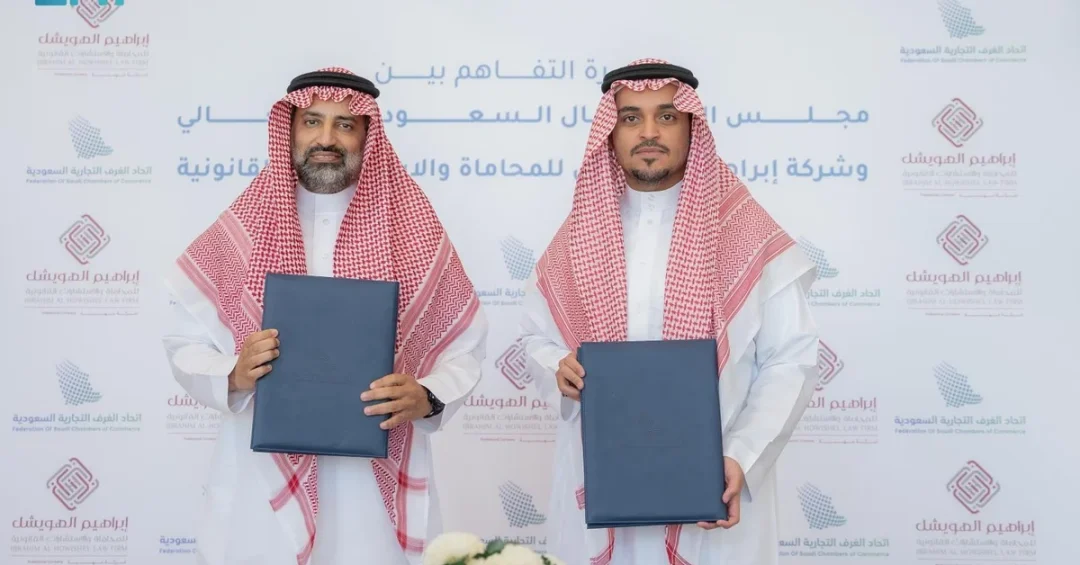
The Federation of Saudi Chambers (FSC), represented by the Saudi-Portuguese Business Council, announced the launch of a legal awareness initiative designed to strengthen two-way investment between the Kingdom of Saudi Arabia and Portugal, according to the Saudi Press Agency (SPA). The initiative, formalized through a memorandum of understanding signed with a specialized national law firm, will position the firm as a legal advisor tasked with guiding Portuguese companies into the Saudi market and encouraging Saudi companies to explore investment opportunities in Portugal. The announcement, released through official Saudi channels on November 4, 2024, marks the first arrangement of its kind among the foreign business councils operating under the FSC umbrella. It signals a practical, ground-level step in the Kingdom’s broader campaign to deepen international economic partnerships and diversify its investor base.
The memorandum reflects an increasingly sophisticated approach to foreign direct investment promotion, one that goes beyond trade fairs and glossy brochures to address the legal and regulatory questions that often determine whether a company crosses a border or stays home. Under the agreement, the Saudi-Portuguese Business Council and the law firm will cooperate with relevant Saudi authorities to organize workshops for Portuguese companies wishing to enter the Kingdom. These sessions will cover the Premium Residency Permit Law, foreign investment laws and regulations, the process of establishing companies, targeted investment opportunities, and incentives for relocating regional headquarters to Saudi Arabia. Could clearer legal guidance be the missing link that turns interest into actual capital deployment? For many mid-sized Portuguese firms, the answer may well be yes.
Context and Background
Why does a legal advisory arrangement between a Saudi business council and a national law firm matter at this particular moment? Saudi Arabia has spent the past several years systematically overhauling its investment architecture, and the results have been substantial. The Kingdom’s investment ecosystem now includes a modernized foreign investment law, streamlined licensing through the Ministry of Investment of Saudi Arabia, expanded premium residency options, and a growing list of special economic zones. Each reform lowers a barrier, but each also adds a layer of detail that foreign companies must navigate correctly. The FSC, as the umbrella organization for Saudi Arabia’s chambers of commerce and industry, has increasingly positioned its foreign business councils as practical bridges between international companies and Saudi regulators.
The Saudi-Portuguese Business Council operates within that network, and its chairman, Alwaleed bin Khaled Al-Baltan, has framed the new memorandum as directly aligned with Saudi Vision 2030, the national transformation program launched under the leadership of Crown Prince Mohammed bin Salman. Vision 2030 sets explicit targets for increasing foreign direct investment, expanding the non-oil private sector, and integrating Saudi Arabia more deeply into global trade and capital flows. Bilateral business councils have become one of the quieter but more effective instruments for pursuing those goals, because they combine private-sector energy with official access. Portugal, for its part, offers Saudi investors a stable European Union member state with strengths in renewable energy, tourism, technology, and industrial manufacturing.
Key Details
According to the Saudi Press Agency, the memorandum of understanding was signed by the Saudi-Portuguese Business Council and a specialized national law firm, which will act as legal advisor and mediator between Portuguese investors and the relevant Saudi authorities. Al-Baltan described the arrangement as the first-of-its-kind idea to contract a legal advisor to serve in this intermediary role, and noted that it is the first such memorandum among Saudi foreign business councils within the FSC. That distinction matters: if the model works, it could be replicated across other bilateral councils, creating a standardized legal-onboarding pathway for foreign companies from dozens of countries.
The workshops planned under the agreement will introduce Portuguese companies to several core elements of the Saudi investment environment. These include the Premium Residency Permit Law, which offers long-term residency options to qualifying foreign residents and investors; foreign investment laws and regulations administered by the Ministry of Investment; the practical process of establishing a company in the Kingdom; specific investment opportunities identified as priorities; and incentives for relocating regional headquarters to Saudi Arabia. The scope of cooperation also runs in the other direction, with provisions for proposing improvements to investment procedures and systems for Saudi companies in Portugal, suggesting investment incentive programs that the Portuguese side could offer to Saudi investors, and providing consulting services to companies from both countries.
Is a single memorandum enough to move the needle on bilateral investment? On its own, no. But as a template for how business councils can reduce friction, it addresses one of the most commonly cited obstacles in investor surveys: uncertainty about legal procedures. By embedding a legal advisor inside the council’s facilitation process, the initiative gives Portuguese companies a direct, credible channel for answers rather than requiring them to assemble guidance piecemeal from multiple sources.
International and Regional Impact
For Portugal, the memorandum opens a structured route into the largest economy in the Gulf Cooperation Council, at a time when European companies are actively reassessing their exposure to faster-growing markets. Portuguese firms in construction, renewable energy, tourism management, agri-food, and technology could find particular relevance in Saudi Arabia’s giga-project pipeline and its expanding hospitality sector. The advisory mechanism also gives Portuguese investors a clearer view of the Kingdom’s regulatory trajectory, which has been one of steady liberalization. For Saudi Arabia, the initiative adds Portugal to a widening map of European partners that already includes major investors from France, Germany, the United Kingdom, and Italy.
Regionally, the move fits a broader pattern in which Gulf states compete not only on incentives but on the quality of investor services. Saudi Arabia’s approach under Vision 2030 has emphasized predictability, digital government services, and direct official engagement with foreign business communities. The FSC’s foreign business councils, including the Saudi-Portuguese council, function as one layer of that engagement architecture. If the legal advisory model proves effective, it could strengthen the Kingdom’s reputation as a jurisdiction where foreign companies receive professional, transparent guidance from the earliest stage of market entry. That reputational dimension is difficult to quantify but strategically valuable, particularly as Saudi Arabia prepares to host major international events and continues to court global corporate headquarters.
Economic and Strategic Significance
The economic logic behind the initiative rests on a simple observation: investment follows confidence, and confidence follows clarity. Saudi Arabia has committed to raising foreign direct investment to ambitious levels as part of its economic diversification strategy, and bilateral flows with European Union members form an important part of that target. Portugal, while a smaller economy than some of Saudi Arabia’s European partners, offers a gateway to EU markets and a complementary industrial base. For Saudi companies, Portuguese opportunities in renewable energy, real estate, tourism, and logistics could support international expansion strategies that Vision 2030 encourages.
There is also a strategic signaling dimension. By tasking a legal advisor with proposing improvements to investment procedures on both sides, the memorandum creates a feedback loop between investors and policymakers. That kind of structured dialogue is precisely what mature investment relationships require. It also reinforces the FSC’s role as a facilitator rather than a mere convener, which could raise the effectiveness of Saudi Arabia’s entire network of bilateral business councils. Do such mechanisms ultimately translate into measurable capital flows? The record of similar facilitation efforts suggests they improve conversion rates by removing procedural excuses for delay, even if results accumulate gradually rather than overnight.
Vision 2030 Alignment
The initiative aligns squarely with Saudi Vision 2030’s objectives of attracting foreign investment, expanding non-oil economic activity, and deepening the Kingdom’s integration with global markets. Al-Baltan explicitly linked the memorandum to these goals, noting that the council’s role is to facilitate the entry of Portuguese companies into the Saudi market. The emphasis on premium residency, headquarters relocation incentives, and targeted investment opportunities mirrors the specific policy instruments Saudi Arabia has developed to convert general interest into committed presence. In that sense, the legal advisory arrangement is not a standalone gesture but a connective tissue between the Kingdom’s reform agenda and the companies it hopes to attract.
Looking ahead, the success of this first-of-its-kind memorandum will likely be judged by whether it produces concrete outcomes: workshops held, companies onboarded, investments registered, and procedures improved. If it does, the model could spread to other Saudi foreign business councils, multiplying its impact across the FSC network. For international readers, the development offers a useful window into how Saudi Arabia is approaching investment promotion in its post-oil transformation era, combining high-level strategy with practical, legal, and procedural support. Under the leadership of Crown Prince Mohammed bin Salman, the Kingdom continues to build the institutional plumbing that turns Vision 2030 ambitions into everyday economic reality, and partnerships like this one with Portugal show that the effort extends well beyond the largest economies.
20 Questions
Q1. What did the Federation of Saudi Chambers announce?
A1. The Federation of Saudi Chambers, through the Saudi-Portuguese Business Council, announced a legal awareness initiative to promote investment understanding between Saudi Arabia and Portugal, formalized by a memorandum of understanding with a specialized national law firm.
Q2. Who signed the memorandum of understanding?
A2. The memorandum was signed by the Saudi-Portuguese Business Council, which operates under the Federation of Saudi Chambers, and a specialized national law firm that will serve as legal advisor for the initiative.
Q3. What is the main purpose of this initiative?
A3. The initiative aims to raise legal awareness about investment systems in Saudi Arabia and Portugal, facilitate the entry of Portuguese companies into the Kingdom, and encourage Saudi companies to invest in Portugal through expert legal guidance.
Q4. Why is this memorandum considered first-of-its-kind?
A4. It is the first such arrangement among Saudi foreign business councils within the Federation of Saudi Chambers, making it a potential model for other bilateral councils seeking to streamline investor onboarding and legal support.
Q5. Who is Alwaleed bin Khaled Al-Baltan?
A5. Alwaleed bin Khaled Al-Baltan is the Chairman of the Saudi-Portuguese Business Council. He described the memorandum as aligned with Saudi Vision 2030 and emphasized the council’s role in facilitating Portuguese market entry.
Q6. How does the initiative support Saudi Vision 2030?
A6. It supports Vision 2030 by attracting foreign investment, raising awareness of the Kingdom’s investment environment, and promoting economic diversification, all of which are central objectives of the national transformation program.
Q7. What will the planned workshops cover?
A7. The workshops will introduce Portuguese companies to the Premium Residency Permit Law, foreign investment laws and regulations, the process of establishing companies, targeted investment opportunities, and incentives for relocating headquarters to Saudi Arabia.
Q8. What is the Premium Residency Permit Law?
A8. It is a Saudi regulatory framework that offers qualifying foreign residents and investors long-term residency options in the Kingdom, designed to encourage investment, business establishment, and long-term presence in Saudi Arabia.
Q9. How will the law firm function in this arrangement?
A9. The law firm will act as a legal advisor and mediator between Portuguese investors and relevant Saudi authorities, providing consulting services and helping companies navigate regulatory and procedural requirements.
Q10. What does the cooperation include for Saudi companies?
A10. The cooperation includes proposing improvements to investment procedures and systems for Saudi companies in Portugal, suggesting investment incentive programs for Portuguese authorities to offer Saudi investors, and providing consulting services to companies from both countries.
Q11. Which Saudi authorities are relevant to this initiative?
A11. The initiative involves cooperation with relevant Saudi authorities responsible for investment, business registration, residency, and commercial regulation, though the announcement did not specify individual agencies beyond the general framework.
Q12. What sectors might attract Portuguese investment in Saudi Arabia?
A12. Portuguese firms could find opportunities in construction, renewable energy, tourism, agri-food, technology, and hospitality, particularly given Saudi Arabia’s giga-project pipeline and expanding tourism sector under Vision 2030.
Q13. What benefits could Saudi investors find in Portugal?
A13. Portugal offers Saudi investors access to the European Union market, strengths in renewable energy, tourism, technology, and manufacturing, plus a stable business environment that complements Saudi international expansion strategies.
Q14. How does this initiative differ from typical trade promotion?
A14. Rather than only organizing trade fairs or networking events, it embeds legal advisory services directly into the investment facilitation process, addressing regulatory uncertainty that often prevents companies from committing to cross-border investments.
Q15. When was the initiative announced?
A15. The initiative was announced on November 4, 2024, according to the Saudi Press Agency, which released the official statement from Riyadh at 17:25 local time, corresponding to 14:25 GMT.
Q16. What is the Federation of Saudi Chambers?
A16. The Federation of Saudi Chambers is the umbrella organization for Saudi Arabia’s chambers of commerce and industry. It oversees foreign business councils that promote bilateral trade and investment relationships with countries worldwide.
Q17. Could this model expand to other countries?
A17. Yes. Because it is the first such memorandum among Saudi foreign business councils, successful implementation could encourage the Federation of Saudi Chambers to replicate the legal advisory model across other bilateral councils.
Q18. What makes legal awareness important for foreign investors?
A18. Legal awareness reduces uncertainty about regulations, company formation, residency, and incentives. Clear guidance helps investors make informed decisions, shortens due diligence, and increases the likelihood of successful market entry.
Q19. How does this initiative reflect Saudi Arabia’s investment reforms?
A19. It complements Saudi Arabia’s broader reforms, including modernized foreign investment laws, streamlined licensing through the Ministry of Investment, premium residency options, and special economic zones, by helping investors understand and use these tools.
Q20. What outcome would indicate the initiative’s success?
A20. Success would be indicated by concrete results such as workshops conducted, Portuguese companies established in Saudi Arabia, Saudi investments in Portugal, and procedural improvements adopted by relevant authorities on both sides.
Reader Feedback
We value your thoughts. Please share your feedback on this article.
Your feedback helps us improve our coverage.
Related articles
 Mawani Launches MSC Red Sea Express Service
 Biban24 Opens in Riyadh with 1,350 Exhibitors, 10,000 Opportunities
 ITFC Launches Phase 2 of Trade Initiative in Mauritania
 IsDB Reaffirms Sustainable Development Commitment
 Saudi Arabia Awards Six Mining Exploration Licenses
 ZATCA Urges On-Time Withholding Tax Filing for October