


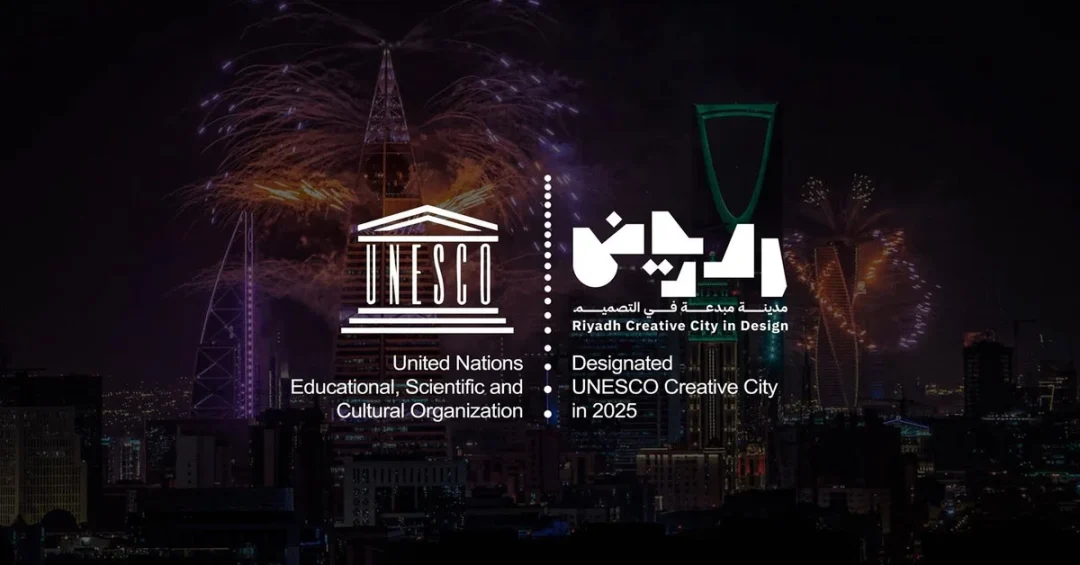
Riyadh has officially joined the UNESCO Creative Cities Network for Design, the Architecture and Design Commission announced on World Cities Day, October 31, 2025, confirming the Saudi capital’s growing status as a major regional hub for creativity and innovation. The announcement, carried by the Saudi Press Agency, marks a historic milestone for the Kingdom and reflects years of coordinated national effort to position Riyadh among the world’s leading design-driven cities. The designation places the Saudi capital in a global network of municipalities that use creativity and cultural industries as strategic drivers of sustainable urban development.
The inclusion is the result of integrated efforts led by the Architecture and Design Commission, affiliated with the Ministry of Culture, in collaboration with governmental, academic, nonprofit, and private sector entities. The comprehensive nomination file successfully highlighted the dynamism and diversity of the design scene in the Saudi capital, encompassing architecture, urban design, industrial and interior design, product design, and digital design. For international observers, the announcement offers a clear signal that Riyadh’s cultural and creative economy is maturing in step with the Kingdom’s broader modernization agenda under Saudi Vision 2030.
Context and Background
What does it take for a capital city to be recognized as a global creative hub? For Riyadh, the answer lies in a decade of deliberate institutional investment. The UNESCO Creative Cities Network, established in 2004, now connects hundreds of cities across seven creative fields, including design, literature, music, film, crafts, gastronomy, and media arts. Member cities commit to sharing best practices, strengthening cultural participation, and integrating creativity into urban planning. Riyadh’s admission to the design category places it alongside an elite group of cities recognized for embedding design thinking into public life, infrastructure, and economic strategy.
The nomination was steered by the Architecture and Design Commission, which operates under the Ministry of Culture and is tasked with advancing the national architecture and design strategy. That strategy aims to build an environment conducive to innovation, empower Saudi talent, and elevate the quality of the built environment. The commission assembled a nomination file that showcased the breadth of Riyadh’s design ecosystem, from heritage-informed architecture to cutting-edge digital and product design, demonstrating that the city’s creative identity is both rooted in tradition and oriented toward the future.
How does a city balance rapid growth with cultural authenticity? Riyadh’s approach has been to treat design as a connective tissue between the two. The Saudi capital has undergone transformative urban development in recent years, including landmark projects, new cultural districts, and expanded public spaces. At the same time, it has preserved and reinterpreted its architectural heritage, creating a distinctive urban identity that blends modernity and tradition. This duality was central to the nomination’s success and continues to shape Riyadh’s appeal as a destination for talent, tourism, and investment.
Key Details
Dr. Sumayah Al-Solaiman, CEO of the Architecture and Design Commission, described Riyadh’s inclusion as a historic step that reflects the Kingdom’s ambition to make the capital a global model for leveraging creativity to serve urban and cultural development. She noted that the international recognition is a direct result of the national architecture and design strategy, which seeks to foster innovation and empower Saudi creatives. Her remarks underscore a central theme of the announcement: that design is not merely an aesthetic pursuit but a strategic tool for sustainable development and improved quality of life.
The commission’s nomination highlighted the diversity of Riyadh’s design scene across multiple disciplines. Architecture and urban design anchor the city’s physical transformation, while industrial, interior, and product design contribute to a growing creative economy. Digital design, including interactive media and emerging technologies, adds a forward-looking dimension that resonates with the Kingdom’s broader technology and innovation ambitions. Together, these fields form an ecosystem that supports employment, entrepreneurship, and cultural exchange, and that is increasingly connected to global markets and ideas.
What practical benefits does the UNESCO designation bring? Membership in the Creative Cities Network opens channels for collaboration with other design cities worldwide. It facilitates the exchange of expertise, joint projects, and international visibility for local designers and architects. For Riyadh, this means opportunities to host and participate in global design events, to attract creative businesses, and to showcase Saudi talent on international platforms. The commission has stated that it will pursue initiatives and programs that support creative practices, enhance cross-sector cooperation, and empower Saudi creatives, all in alignment with Vision 2030 objectives.
International and Regional Impact
Riyadh’s admission to the UNESCO Creative Cities Network carries significance well beyond the Kingdom’s borders. In a region often associated with rapid urbanization, the Saudi capital now stands as a model for integrating cultural and creative industries into long-term development planning. The designation strengthens Riyadh’s position as a leading global destination for urban innovation and creativity, and enhances its presence on the international design map. It also signals to investors, cultural institutions, and creative professionals that the city is committed to nurturing a vibrant, globally connected design sector.
For the wider Middle East, the announcement adds momentum to a broader trend of cultural investment. Gulf cities have increasingly prioritized museums, festivals, design weeks, and creative districts as part of economic diversification strategies. Riyadh’s recognition by UNESCO reinforces this trajectory and positions the Saudi capital as a hub where regional and international creative talent can converge. The commission aims to empower Saudi designers and architects to exchange international expertise and refine their skills by connecting them with leading global cities in the field, creating a two-way flow of knowledge and opportunity.
Economic and Strategic Significance
Why does design matter to a national economy? The creative industries are increasingly recognized as drivers of growth, job creation, and soft power. By joining the UNESCO Creative Cities Network, Riyadh gains a platform to attract design-related investment, foster startups, and integrate creative services into sectors such as tourism, real estate, and technology. The Architecture and Design Commission’s work aligns with Saudi Vision 2030’s goals of diversifying the economy, developing human capital, and improving quality of life. A thriving design sector can contribute to all three by generating high-value jobs, enhancing the built environment, and enriching cultural experiences for residents and visitors.
The strategic significance also lies in talent development. The commission’s emphasis on empowering Saudi creatives reflects a broader national priority to invest in young people and equip them with skills for a changing economy. By connecting local designers and architects with international counterparts, the UNESCO designation creates pathways for mentorship, collaboration, and professional growth. Over time, this can help build a self-sustaining creative ecosystem that exports Saudi design ideas and products to the world, while also drawing global expertise into the Kingdom.
Vision 2030 Alignment
How does this achievement connect to Saudi Arabia’s long-term vision? Riyadh’s inclusion in the UNESCO Creative Cities Network for Design is a concrete expression of Vision 2030’s cultural and economic ambitions. The national architecture and design strategy, led by the Architecture and Design Commission under the Ministry of Culture, is designed to create an environment where creativity fuels urban and cultural development. The designation validates those efforts and provides a global platform to advance them further. It also reinforces the Kingdom’s commitment to sustainable development, cultural preservation, and innovation as pillars of its future.
Looking ahead, the commission seeks to solidify Riyadh’s position as a global capital of design and a model for architecture and design. Through targeted initiatives and programs, it aims to support creative practices, enhance cooperation across sectors, and empower Saudi creatives. As the Kingdom continues its transformation, Riyadh’s new status will serve as a catalyst for deeper international engagement, attracting talent, investment, and cultural exchange. The announcement on World Cities Day is not merely an honor; it is a commitment to a future in which design plays a central role in shaping livable, prosperous, and culturally rich cities.
20 Questions
Q1. What did the Architecture and Design Commission announce on World Cities Day?
A1. It announced that Riyadh has officially joined the UNESCO Creative Cities Network for Design, confirming the Saudi capital’s growing status as a major regional hub for creativity and innovation.
Q2. When was the announcement made?
A2. The announcement was made on October 31, 2025, which is observed as World Cities Day, according to the Saudi Press Agency.
Q3. Which Saudi entity led the nomination efforts for Riyadh?
A3. The Architecture and Design Commission, affiliated with the Ministry of Culture, led the integrated efforts in collaboration with governmental, academic, nonprofit, and private sector entities.
Q4. What does the UNESCO Creative Cities Network recognize?
A4. It recognizes cities that use creativity and cultural industries as strategic drivers of sustainable urban development across fields such as design, literature, music, and others.
Q5. What design disciplines were highlighted in Riyadh’s nomination?
A5. The nomination highlighted architecture, urban design, industrial and interior design, product design, and digital design, showcasing the diversity of the city’s creative scene.
Q6. Who is the CEO of the Architecture and Design Commission?
A6. Dr. Sumayah Al-Solaiman is the CEO of the Architecture and Design Commission. She described Riyadh’s inclusion as a historic step for the Kingdom.
Q7. What did Dr. Al-Solaiman say about the significance of the inclusion?
A7. She said it reflects the Kingdom’s ambition to make Riyadh a global model for leveraging creativity to serve urban and cultural development and empower Saudi talent.
Q8. What national strategy contributed to this recognition?
A8. The national architecture and design strategy, which aims to build an environment conducive to innovation and empower Saudi creatives, contributed directly to the recognition.
Q9. How does the commission plan to build on this achievement?
A9. It seeks to solidify Riyadh’s position as a global capital of design through initiatives and programs that support creative practices and enhance cross-sector cooperation.
Q10. What role does design play according to the commission’s vision?
A10. Design is viewed as a vital tool for sustainable development and improving quality of life, aligning with the objectives of Saudi Vision 2030.
Q11. What unique characteristics of Riyadh were emphasized in the nomination?
A11. Riyadh’s ability to combine authenticity and innovation, and its architectural landscape that blends modernity and tradition, creating a distinctive urban identity.
Q12. What are the expected benefits of joining the UNESCO network?
A12. Benefits include international collaboration, exchange of expertise, enhanced visibility for local designers, and opportunities to host global design events.
Q13. How does this designation affect Saudi designers and architects?
A13. It empowers them to exchange international expertise and refine their skills by connecting them with leading global cities in design and architecture.
Q14. What is the significance of this announcement for the region?
A14. It positions Riyadh as a model for integrating cultural and creative industries into long-term development planning, reinforcing a broader trend of cultural investment in the Gulf.
Q15. How does the designation align with Saudi Vision 2030?
A15. It aligns with Vision 2030’s goals of diversifying the economy, developing human capital, and improving quality of life through a thriving creative sector.
Q16. What economic opportunities might arise from this recognition?
A16. It can attract design-related investment, foster startups, and integrate creative services into sectors such as tourism, real estate, and technology, creating high-value jobs.
Q17. What is the UNESCO Creative Cities Network?
A17. It is a global network established in 2004 that connects cities committed to sharing best practices and integrating creativity into urban planning across seven creative fields.
Q18. How many creative fields does the UNESCO Creative Cities Network cover?
A18. The network covers seven creative fields: design, literature, music, film, crafts, gastronomy, and media arts. Riyadh joined in the design category.
Q19. What future initiatives can be expected from the Architecture and Design Commission?
A19. The commission will pursue programs that support creative practices, enhance cooperation across sectors, and empower Saudi creatives, in line with Vision 2030 objectives.
Q20. What message does Riyadh’s inclusion send to the global community?
A20. It signals that Riyadh is a leading destination for urban innovation and creativity, committed to sustainable development and cultural exchange on the international stage.
Reader Feedback
We value your thoughts. Please share your feedback on this article.
Your feedback helps us improve our coverage.
Related articles
 Riyadh to Host International Translation Forum 2025
 Forty Winners Honored at Quran and Sunnah Memorization Competition in Brazil
 Museums Commission Announces Readiness to Open ‘Black Gold Museum
 Marvels of Saudi Orchestra Returns to Riyadh This November
 Traditional Clay and Iron Stoves Prepare Taif for Cold Winter Nights
 Ana Arabia’ Exhibition Kicks Off November 3 as Part of Riyadh Season