


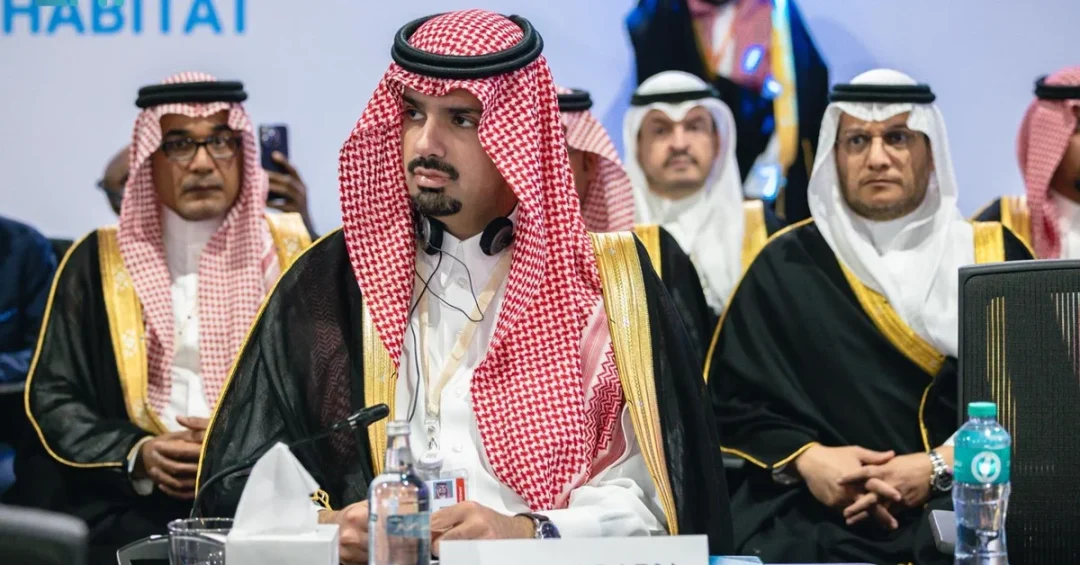
Prince Dr. Faisal bin Abdulaziz bin Ayyaf, head of the Saudi delegation, spotlighted Saudi Arabia’s vast experience in developing cities and enhancing livability at the 12th session of the World Urban Forum (WUF12) in Cairo, Egypt, on Tuesday, November 5, 2024. In a speech delivered at the forum’s ministerial roundtable, the Saudi official outlined how the Kingdom’s comprehensive national vision, adopted in 2016, has reshaped urban development across the country, addressing various aspects of human life through 27 sub-objectives.
The World Urban Forum, convened by UN-Habitat, is the premier global conference on sustainable urbanization, bringing together government leaders, urban planners, and experts from around the world. Saudi Arabia’s active participation underscores its commitment to sharing its transformative urban journey and learning from international best practices. The Kingdom’s delegation highlighted a series of ambitious initiatives and projects that are not only improving the quality of life for residents but also setting new benchmarks for sustainable city development globally. How has Saudi Arabia managed to translate its national vision into tangible urban improvements so rapidly?
Context and Background
The World Urban Forum (WUF12) serves as a critical platform for nations to discuss the challenges and opportunities of rapid urbanization. Held in Cairo, the 12th session focused on the theme of localizing the Sustainable Development Goals (SDGs) to accelerate progress. Saudi Arabia’s participation is rooted in its own ambitious national transformation, Vision 2030, launched in 2016 under the leadership of Crown Prince Mohammed bin Salman. This vision is a comprehensive roadmap designed to diversify the economy, empower citizens, and create a vibrant society, with urban development playing a central role.
Saudi Arabia’s urban landscape has undergone a seismic shift in recent years, driven by a clear recognition that cities are engines of economic growth and social progress. The Kingdom has invested heavily in infrastructure, technology, and sustainable practices to ensure its cities are not only modern but also livable and inclusive. The establishment of 17 municipalities working to localize the Vision 2030 objectives demonstrates a decentralized approach, ensuring that development benefits reach every region. This grassroots implementation is key to the vision’s success, as it allows for tailored solutions that address specific local needs while contributing to national goals.
The timing of Saudi Arabia’s presentation at WUF12 is significant. As the world grapples with climate change, population growth, and resource constraints, Saudi Arabia offers a unique perspective: a nation rapidly transforming its urban fabric while preserving its cultural heritage. The Kingdom’s experience serves as a case study for other countries looking to balance modernization with tradition. What lessons can other nations draw from Saudi Arabia’s holistic approach to urban planning?
Key Details of the Saudi Presentation
In his address, Prince Dr. Faisal bin Abdulaziz bin Ayyaf emphasized that Saudi Arabia’s national vision addresses economic, environmental, and social aspects, all significantly influenced by cities. He underscored the Kingdom’s rich experience in improving and developing cities through numerous initiatives and projects. “The Kingdom is home to excellent and historically impactful projects,” he stated, highlighting flagship developments such as King Salman Park, the Sports Boulevard, and the Diriyah project, as well as environmental programs like the Saudi Green Initiative. These projects are not merely construction feats; they are integrated ecosystems designed to enhance the quality of life for residents and visitors alike.
King Salman Park, set to be one of the world’s largest urban parks, will provide vast green spaces and recreational facilities in the heart of Riyadh. The Sports Boulevard, a 135-kilometer-long linear park, will promote healthy lifestyles and connect communities. The Diriyah project, a UNESCO World Heritage site, is being transformed into a world-class cultural and lifestyle destination, blending historical preservation with modern amenities. These initiatives reflect a deep understanding that livability is about more than just buildings; it is about creating spaces where people can thrive.
Prince Faisal also commended the Kingdom’s achievements in the housing sector, noting that the percentage of Saudi households owning homes increased to over 63% by the end of 2023. This milestone is a testament to the effectiveness of government policies aimed at making homeownership accessible to citizens. Furthermore, the Ministry of Municipalities and Housing has made significant strides in innovation and urban technology, developing a sustainable digital system that has earned international recognition. How did Saudi Arabia achieve such a remarkable increase in homeownership in just a few years?
These efforts recently culminated in the Kingdom achieving a historic advancement to fourth globally, second among Group of Twenty (G20) countries, and first regionally in the Online Service Index (OSI) within the United Nations’ E-Government Survey 2024. Additionally, Saudi Arabia secured the sixth position globally in the E-Government Development Index (EGDI), with Riyadh ranking third among global cities in the Local Online Service Index (LOSI). These accolades highlight the Kingdom’s commitment to leveraging technology to improve public services and enhance urban management. The digital transformation of municipalities has streamlined processes, increased transparency, and improved the delivery of services to residents.
International and Regional Impact
Saudi Arabia’s participation in the World Urban Forum and its presentation of its urban development experience have significant international and regional implications. By sharing its successes and challenges, the Kingdom positions itself as a leader in sustainable urbanization, offering a model that other nations can adapt to their own contexts. This knowledge exchange is particularly valuable for countries in the Middle East and North Africa, many of which are undergoing similar rapid urbanization and seeking to balance growth with sustainability.
Furthermore, Saudi Arabia’s collaboration with global capitals and organizations strengthens diplomatic ties and fosters mutual benefits. Prince Faisal concluded his speech by noting the Kingdom’s efforts to strengthen relations and share expertise with numerous global capitals in various fields. This collaboration contributes to the realization of Vision 2030 and promotes the advancement and progress of societies worldwide. By engaging in forums like WUF12, Saudi Arabia demonstrates its commitment to international cooperation and its role as a responsible global citizen. How can increased international collaboration further accelerate urban innovation in the region?
The Kingdom’s advancements in e-government and digital services also have regional implications. As the top-ranked country in the region for online services, Saudi Arabia sets a benchmark for digital governance. Other nations can look to Saudi Arabia’s model for inspiration on how to digitize municipal services, enhance citizen engagement, and improve efficiency. The recognition from the United Nations underscores the credibility and effectiveness of the Kingdom’s approach, reinforcing its position as a digital leader in the Arab world.
Economic and Strategic Significance
The urban development initiatives highlighted at WUF12 are not only social and environmental imperatives but also economic catalysts. Mega-projects like King Salman Park, the Sports Boulevard, and Diriyah are expected to generate significant economic activity, creating jobs, attracting investments, and boosting tourism. These projects align with Vision 2030’s goal of diversifying the economy away from oil dependence. By developing world-class urban destinations, Saudi Arabia is enhancing its attractiveness as a business and tourism hub, which in turn stimulates growth in sectors such as hospitality, retail, and entertainment.
The increase in homeownership to over 63% is another economically significant milestone. A robust housing market contributes to social stability and financial security for families, while also driving demand for construction materials, home goods, and related services. The Ministry of Municipalities and Housing’s focus on digital innovation further supports economic efficiency by reducing bureaucratic hurdles and enabling faster, more transparent transactions. These factors collectively contribute to a favorable business environment and attract foreign direct investment. What economic ripple effects can be expected from Saudi Arabia’s continued urban transformation?
Strategically, Saudi Arabia’s urban development is integral to its soft power and regional influence. By creating livable, sustainable cities, the Kingdom enhances its image as a modern, forward-thinking nation. This is crucial for attracting talent, tourists, and international partners. The successful implementation of Vision 2030’s urban components reinforces the Kingdom’s credibility and demonstrates its ability to execute large-scale, complex projects. As Saudi Arabia continues to share its expertise globally, it strengthens its diplomatic and economic ties, positioning itself as a key player in shaping the future of urban living.
Vision 2030 Alignment
The initiatives and achievements presented at WUF12 are directly aligned with the core objectives of Saudi Vision 2030. The vision’s 27 sub-objectives encompass economic diversification, social development, and environmental sustainability, all of which are embodied in the Kingdom’s urban projects. Improving livability in Saudi cities is a key pillar, as it enhances the quality of life for citizens and residents, making Saudi Arabia an even more attractive place to live, work, and visit. The emphasis on homeownership, digital government services, and green spaces reflects a holistic approach to national development that prioritizes human well-being.
Moreover, the Kingdom’s efforts to strengthen international relations and share expertise contribute to Vision 2030’s goal of making Saudi Arabia a global investment powerhouse and an international hub. By participating in forums like the World Urban Forum, Saudi Arabia not only showcases its progress but also learns from others, fostering a culture of continuous improvement. The recognition from the United Nations E-Government Survey 2024 serves as external validation of the Kingdom’s strategic direction. As Saudi Arabia marches toward 2030, its urban development journey will remain a cornerstone of its transformation, setting a shining example for the world. How will the continued realization of Vision 2030 further elevate Saudi cities on the global stage?
20 Questions
Q1. What event did the head of the Saudi delegation attend in Egypt?
A1. Prince Dr. Faisal bin Abdulaziz bin Ayyaf led the Saudi delegation at the 12th session of the World Urban Forum (WUF12) held in Cairo, Egypt, on November 5, 2024.
Q2. What is the main focus of Saudi Arabia’s national vision adopted in 2016?
A2. The national vision, Vision 2030, is a comprehensive plan addressing various aspects of human life through 27 sub-objectives, including economic, environmental, and social dimensions, with a strong emphasis on urban development and livability.
Q3. How many municipalities are working to translate the Saudi Vision into practical initiatives?
A3. Seventeen municipalities across Saudi Arabia are actively working to translate the Saudi Vision into practical initiatives that are felt by both residents and visitors, ensuring localized implementation of national goals.
Q4. Which major projects did Prince Faisal highlight as examples of Saudi Arabia’s impactful urban development?
A4. He highlighted King Salman Park, the Sports Boulevard, and the Diriyah project, as well as environmental programs such as the Saudi Green Initiative, showcasing the Kingdom’s commitment to innovative and sustainable urban spaces.
Q5. What was the percentage of Saudi households owning homes by the end of 2023?
A5. The percentage of Saudi households owning homes increased to over 63% by the end of 2023, reflecting the success of government policies aimed at making homeownership more accessible to citizens.
Q6. What recognition did Saudi Arabia receive in the United Nations’ E-Government Survey 2024?
A6. Saudi Arabia achieved a historic advancement to fourth globally, second among G20 countries, and first regionally in the Online Service Index (OSI) within the UN’s E-Government Survey 2024.
Q7. How did Riyadh rank in the Local Online Service Index (LOSI) according to the survey?
A7. Riyadh ranked third among global cities in the Local Online Service Index (LOSI), highlighting the city’s advanced digital services and commitment to smart urban management.
Q8. What is the significance of the World Urban Forum for Saudi Arabia?
A8. The World Urban Forum provides a global platform for Saudi Arabia to share its urban development experience, learn from international best practices, and strengthen collaborations that contribute to Vision 2030.
Q9. How does Saudi Arabia’s urban development align with Vision 2030?
A9. Urban development is a core pillar of Vision 2030, as it enhances livability, diversifies the economy, creates jobs, and improves the quality of life, all of which are essential to the Kingdom’s transformation.
Q10. What role does the Ministry of Municipalities and Housing play in Saudi Arabia’s urban transformation?
A10. The Ministry of Municipalities and Housing drives innovation and urban technology, developing a sustainable digital system that has earned international recognition and improved municipal services across the Kingdom.
Q11. What are the key features of King Salman Park?
A11. King Salman Park is set to be one of the world’s largest urban parks, providing vast green spaces, recreational facilities, and cultural venues in Riyadh, significantly enhancing the city’s livability and environmental quality.
Q12. How does the Sports Boulevard contribute to livability in Riyadh?
A12. The Sports Boulevard is a 135-kilometer-long linear park that promotes healthy lifestyles, connects communities, and offers recreational opportunities, making Riyadh a more vibrant and active city.
Q13. What is the Diriyah project and why is it important?
A13. The Diriyah project is a transformative development of a UNESCO World Heritage site into a world-class cultural and lifestyle destination, blending historical preservation with modern amenities and boosting tourism.
Q14. What environmental program did Prince Faisal mention?
A14. He mentioned the Saudi Green Initiative, which aims to combat climate change, improve air quality, and promote sustainable practices, reflecting the Kingdom’s commitment to environmental stewardship.
Q15. How has Saudi Arabia improved its e-government services?
A15. Saudi Arabia has developed a sustainable digital system through the Ministry of Municipalities and Housing, leading to top rankings in UN e-government surveys and streamlined, transparent services for citizens.
Q16. What economic benefits are expected from Saudi Arabia’s urban projects?
A16. These projects are expected to generate jobs, attract investments, boost tourism, and diversify the economy, aligning with Vision 2030’s goal of reducing oil dependence and fostering sustainable growth.
Q17. How does Saudi Arabia share its expertise with other countries?
A17. Saudi Arabia shares its expertise through international forums like the World Urban Forum, bilateral collaborations with global capitals, and partnerships that promote mutual benefits and the advancement of societies.
Q18. What is the significance of the 63% homeownership rate?
A18. The 63% homeownership rate signifies improved social stability, financial security for families, and a thriving housing market, reflecting the success of government housing policies under Vision 2030.
Q19. How does Saudi Arabia’s participation in WUF12 benefit the Kingdom?
A19. Participation allows Saudi Arabia to showcase its achievements, learn from global peers, strengthen diplomatic ties, and reinforce its position as a leader in sustainable urbanization and digital governance.
Q20. What is the overarching goal of Saudi Arabia’s urban development strategy?
A20. The overarching goal is to create livable, sustainable, and economically vibrant cities that enhance the quality of life for all residents, in line with Vision 2030’s objectives for a prosperous and modern Saudi Arabia.
Reader Feedback
We value your thoughts. Please share your feedback on this article.
Your feedback helps us improve our coverage.
Related articles
 REGA Chief Highlights Saudi Commitment to Sustainable Urban Development
 OIC Hosts Expert Group Meeting on Draft Jeddah Convention
 Al Baha Municipality Showcases Saudi Urban Sustainability at WUF12
 Saudi Weather Forecast: Rain and Dust Winds Expected Wednesday
 Saudi National Guard Minister Visits Korea for Defense Talks
 Nazaha Leads Global Anti-Corruption Talks in Vienna