


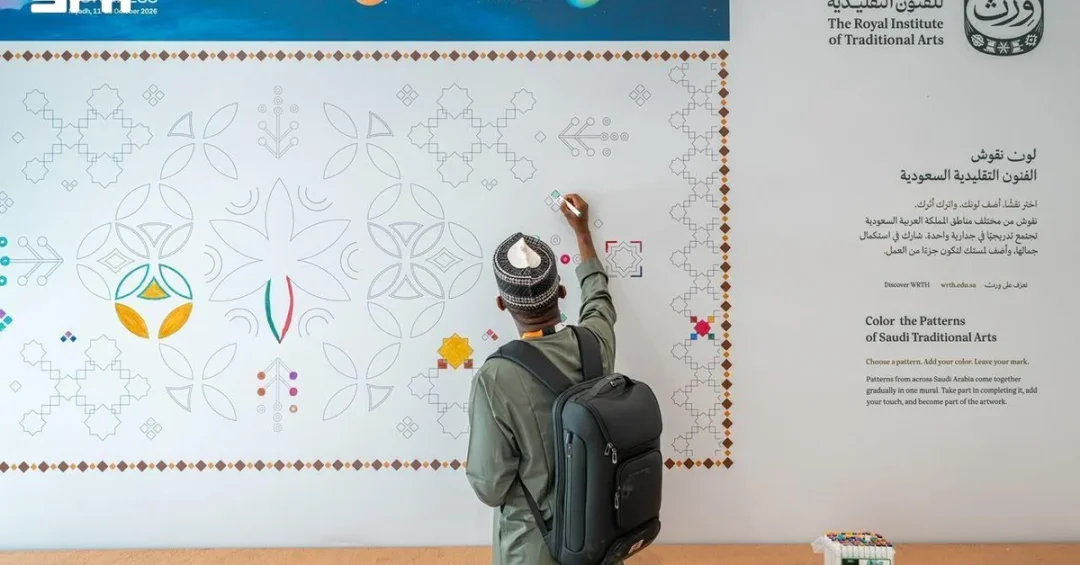
The Royal Institute of Traditional Arts “Wrth” showcased Saudi Arabia’s rich cultural heritage to international delegates at Riyadh Energy Week, held alongside the World Petroleum Council (WPC) Energy Congress, the Saudi Press Agency reported. The participation, announced on October 15, 2026, presented a contemporary Saudi experience designed to introduce global visitors to the Kingdom’s traditional arts. Wrth entrepreneurs displayed handcrafted products, informational displays highlighted regional crafts from across Saudi Arabia, “Wrth Cinema” screened visual content documenting these arts, and an interactive mural invited visitors to color traditional patterns. The initiative reflects Wrth’s broader mission to elevate Saudi traditional arts on international platforms and connect artisans with global audiences.
Could a handwoven textile or a carved wooden door tell the story of a nation’s transformation? At Riyadh Energy Week, the answer was a resounding yes. As energy ministers, executives, and delegates from around the world gathered to discuss the future of global energy, Wrth offered a parallel narrative: one of cultural continuity, craftsmanship, and creative entrepreneurship. The institute’s presence ensured that conversations about oil, gas, and renewables were complemented by an appreciation for the human heritage that defines Saudi identity. This dual focus — modernization and tradition — sits at the heart of the Kingdom’s Vision 2030 agenda, which seeks to preserve cultural roots while building a diversified, forward-looking economy. Riyadh Energy Week thus became more than a sectoral gathering; it was a stage for Saudi Arabia’s soft power.
Context and Background
What is Wrth, and why does its presence at an energy congress matter? The Royal Institute of Traditional Arts, known as Wrth, was established to safeguard and promote Saudi Arabia’s traditional crafts, from Najdi weaving and Asiri wall art to Hijazi woodwork and Qatief pottery. Its mandate includes training artisans, supporting entrepreneurs, and creating platforms for traditional arts to reach new audiences. Participating in Riyadh Energy Week — an event that draws global energy leaders — represents a strategic choice to embed culture within high-level international forums. The WPC Energy Congress, which runs alongside the week, is one of the world’s largest energy gatherings, making it an ideal venue to project Saudi cultural diplomacy to a diverse, influential audience.
Riyadh Energy Week itself has become a flagship event in the Kingdom’s calendar, reflecting Saudi Arabia’s role as a central player in global energy markets and its ambition to lead in sustainability and innovation. By integrating Wrth into this agenda, organizers signal that Saudi modernization is not solely about technology and infrastructure; it is also about identity. For international delegates, many of whom may be visiting the Kingdom for the first time, the Wrth showcase offers a tangible, sensory introduction to Saudi culture. It transforms a professional conference into a cultural exchange, allowing visitors to engage with crafts that have been passed down through generations. This approach aligns with a broader trend in Saudi event planning, where heritage is increasingly woven into business and diplomatic gatherings.
Key Details
What exactly did visitors experience at the Wrth pavilion? The participation featured several distinct activities. Wrth entrepreneurs showcased their handcrafted products, offering delegates the opportunity to purchase or admire items that blend traditional techniques with contemporary design. Informational displays provided context about traditional arts from across the Kingdom, highlighting regional variations and the stories behind each craft. “Wrth Cinema” presented visual content documenting these arts in an engaging style, using film to bring the creative process to life. Perhaps most interactively, an interactive mural allowed visitors to take part in coloring traditional art patterns, turning passive observation into active participation. This multi-sensory approach ensured that the Wrth presence was memorable and accessible to a non-Saudi audience.
The involvement of Wrth entrepreneurs is particularly significant. These are not only craftspeople but also business owners who are building enterprises around traditional arts. Their presence at an international energy event underscores the economic potential of cultural industries. By connecting artisans with global delegates, Wrth facilitates networking and market exposure that can lead to exports, collaborations, and cross-cultural commissions. The handcrafted products on display — ranging from textiles and jewelry to homeware and artwork — represent the diversity of Saudi craftsmanship. Each item carries a narrative of place and heritage, and the entrepreneurs themselves serve as ambassadors, explaining techniques and inspirations to curious visitors. This entrepreneurial dimension is central to Wrth’s strategy, as it seeks to make traditional arts a viable and attractive career path for young Saudis.
International and Regional Impact
How does this participation shape international perceptions of Saudi Arabia? For many international delegates, the Wrth showcase may be their first direct encounter with Saudi traditional arts. By presenting these crafts in a professional, well-curated manner, Wrth helps counter stereotypes and presents a nuanced image of the Kingdom. Cultural diplomacy of this kind can foster goodwill and deepen people-to-people ties, which are essential for long-term international partnerships. In the context of energy negotiations and business deals, a shared appreciation for culture can create common ground and ease communication. The interactive mural, in particular, invites delegates to literally leave their mark, symbolizing collaboration and mutual respect. Such gestures can have a lasting impact, turning transactional relationships into more meaningful connections.
Regionally, Wrth’s presence at Riyadh Energy Week reinforces Saudi Arabia’s position as a cultural leader in the Middle East. The Kingdom is home to a wealth of traditional arts, and by showcasing them alongside its energy prowess, it signals that cultural heritage is a national priority. This can inspire similar initiatives in neighboring countries and contribute to a broader regional appreciation for Arab heritage. Moreover, the event brings together participants from across the globe, including many from Asia, Africa, Europe, and the Americas. For these audiences, the Wrth showcase offers a window into Saudi society that goes beyond headlines. It humanizes the Kingdom and highlights its contributions to global culture. In an era where cultural tourism is on the rise, such exposure can also stimulate interest in visiting Saudi Arabia to experience its heritage firsthand.
Economic and Strategic Significance
What economic value does traditional arts bring to Saudi Arabia? The creative economy is a growing sector worldwide, and Saudi Arabia is keen to develop its cultural industries as part of Vision 2030. Traditional arts can generate income through crafts, tourism, and intellectual property. Wrth’s support for entrepreneurs helps create jobs and small businesses, particularly for women and youth in rural areas. By showcasing these products at an international forum, Wrth opens doors to export markets and collaborations with global brands. The energy sector itself is a major investor in cultural initiatives, and the presence of Wrth at Riyadh Energy Week highlights the intersection of corporate social responsibility and cultural patronage. Strategic partnerships between energy companies and cultural institutions can provide funding and platforms for artisans, ensuring the sustainability of traditional crafts.
Furthermore, the integration of culture into energy events reflects a strategic understanding that soft power is as important as hard power. Saudi Arabia’s ability to influence global affairs is enhanced when its cultural richness is recognized and appreciated. The Wrth participation also supports the goals of the National Strategy for Culture, which aims to make culture a cornerstone of national identity and economic diversification. By aligning with Riyadh Energy Week, Wrth reaches an audience of decision-makers who may not typically engage with cultural events. This cross-sectoral approach can lead to innovative partnerships, such as energy companies sponsoring artisan training programs or commissioning traditional art for corporate spaces. Ultimately, the economic and strategic benefits reinforce each other, creating a virtuous cycle of cultural promotion and economic development.
Vision 2030 Alignment
How does Wrth’s participation at Riyadh Energy Week advance Vision 2030? One of the core pillars of Vision 2030 is to preserve and promote Saudi heritage while diversifying the economy. Wrth’s activities directly contribute to this by safeguarding traditional arts, empowering artisans, and creating economic opportunities. The institute’s presence at a major energy event also supports the vision’s aim to enhance Saudi Arabia’s global engagement and soft power. By presenting a positive, creative image of the Kingdom, Wrth helps attract tourism, investment, and international collaboration. Moreover, the focus on entrepreneurship aligns with the vision’s emphasis on small and medium enterprises and youth employment. As Saudi Arabia continues to transform, initiatives like this ensure that modernization does not come at the expense of cultural identity.
Looking ahead, Wrth’s participation at Riyadh Energy Week sets a precedent for integrating culture into other high-level forums, from investment conferences to sports tournaments. The Kingdom’s long-term vision includes making Saudi Arabia a hub for cultural exchange and a destination for heritage tourism. Each international engagement brings that goal closer. By showcasing traditional arts to global delegates, Wrth not only honors the past but also builds bridges to the future. It demonstrates that Saudi Arabia is a nation that values its roots even as it reaches for new horizons. In doing so, it contributes to a more nuanced and positive global perception of the Kingdom, one that recognizes both its energy leadership and its cultural wealth.
20 Questions
Q1. What is Wrth?
A1. Wrth is the Royal Institute of Traditional Arts, a Saudi institution dedicated to preserving and promoting traditional crafts from across the Kingdom. It supports artisans and entrepreneurs.
Q2. What event did Wrth participate in?
A2. Wrth participated in Riyadh Energy Week, which coincided with the WPC Energy Congress, a major global energy gathering held in Riyadh.
Q3. When did this participation take place?
A3. The participation was announced on October 15, 2026, according to the Saudi Press Agency, during Riyadh Energy Week.
Q4. What activities did Wrth present?
A4. Activities included handcrafted product displays by Wrth entrepreneurs, informational exhibits, “Wrth Cinema” screenings, and an interactive coloring mural for visitors.
Q5. Who attended Riyadh Energy Week?
A5. International delegations, energy ministers, executives, and professionals from around the world attended the event, providing a global audience for Wrth.
Q6. What is “Wrth Cinema”?
A6. “Wrth Cinema” is a visual component that screens content documenting traditional Saudi arts in an engaging style, helping viewers understand the crafts.
Q7. How did visitors interact with the exhibit?
A7. Visitors could color traditional art patterns on an interactive mural, learn from informational displays, and engage with entrepreneurs about their crafts.
Q8. Why is Wrth’s participation significant?
A8. It showcases Saudi traditional arts to an international audience, enhances cultural diplomacy, and supports artisans by connecting them with global opportunities.
Q9. What types of products were showcased?
A9. Handcrafted items such as textiles, jewelry, homeware, and artwork representing various regional traditions of Saudi Arabia were displayed.
Q10. How does this align with Vision 2030?
A10. It aligns with Vision 2030 by preserving heritage, empowering entrepreneurs, promoting cultural tourism, and diversifying the economy through creative industries.
Q11. What is the WPC Energy Congress?
A11. The WPC Energy Congress is a prestigious global energy conference that brings together leaders to discuss trends and challenges in the energy sector.
Q12. Where was the event held?
A12. The event was held in Riyadh, the capital of Saudi Arabia, a city increasingly recognized as a hub for international conferences and cultural events.
Q13. Who are Wrth entrepreneurs?
A13. They are artisans and business owners supported by Wrth who create and sell traditional crafts, often blending heritage techniques with contemporary designs.
Q14. What is the goal of Wrth’s international participation?
A14. The goal is to enhance the presence of Saudi traditional arts at international forums and showcase the creations of artisans to a global audience.
Q15. How does this benefit Saudi artisans?
A15. It provides exposure, networking opportunities, and potential market access, helping artisans grow their businesses and sustain their crafts.
Q16. What role does culture play in Saudi diplomacy?
A16. Culture serves as a bridge to foster understanding and goodwill, complementing political and economic ties and enhancing Saudi Arabia’s soft power.
Q17. Are traditional arts economically viable?
A17. Yes, when supported by entrepreneurship and market access, traditional arts can generate income, create jobs, and contribute to the creative economy.
Q18. How can international delegates engage further?
A18. They can connect with Wrth entrepreneurs, visit Wrth facilities in Saudi Arabia, or explore partnership opportunities in cultural exchange and trade.
Q19. What other events does Wrth participate in?
A19. Wrth participates in various cultural festivals, international expos, and forums to promote Saudi traditional arts globally, though specific events vary.
Q20. What is the future outlook for Wrth?
A20. Wrth is expected to continue expanding its international presence, supporting artisans, and integrating traditional arts into Saudi Arabia’s global engagement under Vision 2030.
Reader Feedback
We value your thoughts. Please share your feedback on this article.
Your feedback helps us improve our coverage.