


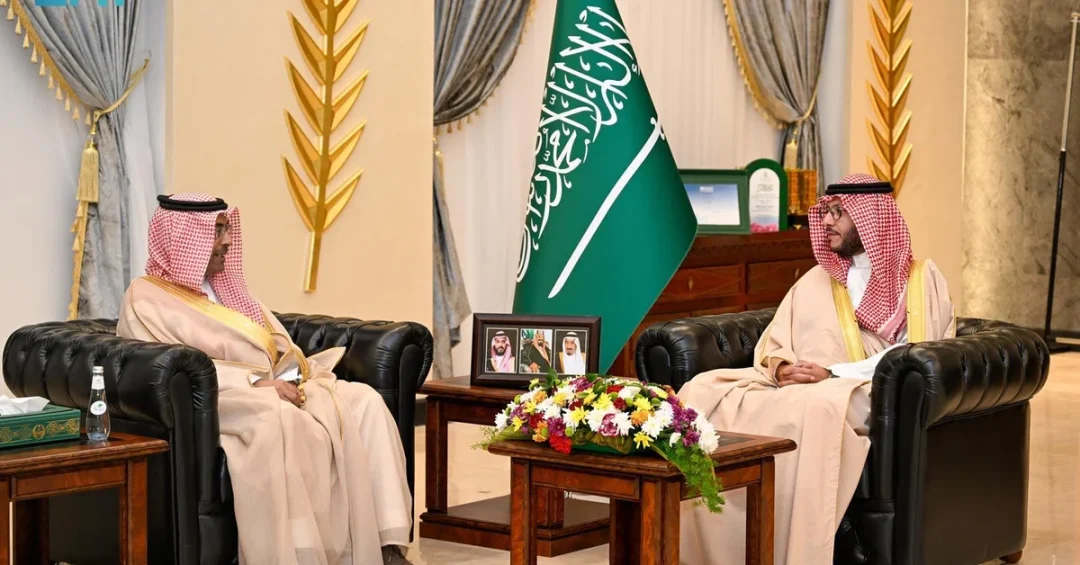
Prince Saud bin Nahar bin Saud bin Abdulaziz, Governor of Taif, has officially submitted the accreditation and registration portfolio for the Taif Observatory for Sustainable Tourism to the World Tourism Organization (UN Tourism), formally positioning the Kingdom of Saudi Arabia within a global network of 35 sustainable tourism observatories. The submission, confirmed by the Saudi Press Agency (SPA), marks a significant milestone in the Kingdom’s expanding role in international sustainable tourism governance and represents the first observatory of its kind in Saudi Arabia, the Arab world, and the Middle East. The official handover took place in the presence of Taif Mayor Eng. Abdullah Al-Zaidi, underscoring the collaborative commitment across national and local institutions to advancing sustainable tourism practices in line with international standards.
Why does this development matter for global audiences monitoring Saudi Arabia’s transformation? The accreditation portfolio submission signals that the Kingdom is not merely participating in global tourism conversations but actively shaping the frameworks that define sustainable destination management. It reflects a coordinated national effort involving the Ministry of Culture, the Ministry of Tourism, the Saudi Tourism Authority, the National Center for Vegetation Cover Development and Combating Desertification, Taif Governorate, Taif Municipality, and Taif University. Together, these entities have finalized the organizational structure, roles, and responsibilities of the observatory’s various units, laying a durable institutional foundation for data-driven tourism development that aligns with both Vision 2030 and the United Nations Sustainable Development Goals.
Context and Background
How did Saudi Arabia arrive at this pivotal moment in sustainable tourism governance? The Taif Observatory for Sustainable Tourism was established as a specialized entity dedicated to measuring, monitoring, and managing the economic, environmental, and social impacts of tourism in the Taif region. Its creation is deeply rooted in the Kingdom’s broader strategic pivot toward responsible tourism development, a cornerstone of Vision 2030. The observatory’s accreditation portfolio represents the culmination of extensive research studies conducted by specialists and experts, as confirmed by Observatory Executive Director Dr. Ali AlGassim. These studies examined tourism flows, resource consumption, community engagement, and environmental preservation metrics specific to Taif’s unique geography and cultural heritage.
The World Tourism Organization’s sustainable tourism observatories program is a globally recognized initiative that supports destinations in implementing evidence-based tourism management. By joining this network of 35 observatories worldwide, Taif gains access to comparative data, best practices, and peer-learning opportunities that can accelerate the region’s sustainable development trajectory. The observatory operates under a mandate to develop tourism in accordance with global standards while meeting quality-of-life requirements for local communities. This dual focus on international benchmarking and local benefit distinguishes the Taif model and positions it as a replicable framework for other Saudi regions seeking to balance tourism growth with environmental stewardship and cultural preservation.
What specific institutional mechanisms ensure the observatory’s effectiveness? The Executive Committee for the Taif Observatory for Sustainable Tourism has meticulously finalized the organizational structure, defining clear roles and responsibilities for each unit. This governance architecture incorporates representatives from relevant entities across government, academia, and local administration, ensuring that decisions reflect diverse expertise and stakeholder interests. The inclusion of Taif University, for instance, brings academic rigor to data collection and analysis, while the National Center for Vegetation Cover Development and Combating Desertification contributes specialized knowledge on environmental sustainability. This multi-stakeholder approach mirrors international best practices in destination management and reinforces the observatory’s credibility as it seeks additional sustainability certifications from other recognized organizations.
Key Details
What exactly does the accreditation portfolio contain, and why is its submission significant? The portfolio submitted by Prince Saud bin Nahar bin Saud bin Abdulaziz encompasses a comprehensive assessment of the observatory’s readiness to join the global network. It includes documentation of the observatory’s governance framework, research methodologies, data collection protocols, and stakeholder engagement strategies. The submission to the World Tourism Organization follows a rigorous preparation process that involved extensive consultations among the participating entities. Dr. Ali AlGassim emphasized that the recommendations underpinning the portfolio were based on discussions from previous meetings, reflecting an iterative and consultative approach that strengthens the observatory’s operational design. This thorough preparation demonstrates Saudi Arabia’s commitment to meeting international standards not as a formality but as a substantive operational requirement.
The observatory’s ambitions extend beyond initial accreditation. Dr. AlGassim confirmed that the Taif Observatory is actively pursuing destination sustainability certification from other organizations, signaling a long-term commitment to continuous improvement and external validation. Furthermore, the observatory is preparing to host a sustainable tourism conference in Taif as part of the Investment Conference scheduled for mid-2025. This event will convene international experts, investors, and policymakers to explore sustainable tourism investment opportunities, share research findings, and showcase Taif’s progress. Hosting such a conference positions Taif as a regional hub for sustainable tourism dialogue and demonstrates the Kingdom’s capacity to convene global stakeholders around shared development objectives.
How does the Taif Observatory differ from other tourism development initiatives in the region? As the first observatory of its kind in Saudi Arabia, the Arab world, and the Middle East, it fills a critical gap in regional tourism governance infrastructure. While many destinations collect tourism data, few have established dedicated observatories that systematically measure sustainability indicators across economic, environmental, and social dimensions. The Taif Observatory’s focus on quality-of-life requirements for local communities distinguishes it from purely economic development models. By prioritizing resident well-being alongside visitor satisfaction and environmental protection, the observatory embodies a holistic approach that aligns with both Saudi cultural values and international sustainability principles. This positioning makes Taif a pioneer in the region and a potential model for other Arab and Middle Eastern destinations seeking to develop tourism responsibly.
International and Regional Impact
What does Saudi Arabia’s entry into the global observatory network mean for international sustainable tourism? The addition of Taif to the World Tourism Organization’s network of 35 observatories expands the geographic and cultural diversity of the program, bringing Middle Eastern perspectives to global discussions on sustainable destination management. This inclusion enables knowledge exchange in both directions: Taif can learn from established observatories in Europe, Asia, and the Americas, while also sharing its unique experiences managing tourism in an arid environment with rich cultural heritage. The Kingdom’s participation strengthens the global observatory community’s capacity to address region-specific challenges and opportunities, from water conservation in desert climates to managing visitor flows at religious and cultural sites. Such exchange enriches the collective understanding of sustainable tourism and supports the development of more nuanced, context-appropriate management strategies worldwide.
How does this development influence regional tourism dynamics? For neighboring countries in the Gulf Cooperation Council and the broader Middle East, Saudi Arabia’s leadership in establishing a sustainable tourism observatory creates a positive demonstration effect. Regional tourism authorities can observe how the Kingdom integrates sustainability metrics into destination planning, how it coordinates across government entities and academic institutions, and how it engages with international accreditation bodies. The Taif Observatory’s success could inspire similar initiatives in other regional destinations, fostering a more coordinated approach to sustainable tourism across the Middle East. Additionally, the observatory’s research findings on tourism impacts in Taif will contribute valuable data to regional discussions on water management, heritage preservation, and community development in tourism contexts. This regional knowledge base supports more informed policymaking and investment decisions throughout the area.
Economic and Strategic Significance
Why is sustainable tourism observatory accreditation economically significant for Saudi Arabia? The global tourism market increasingly rewards destinations that can demonstrate credible sustainability practices. International travelers, particularly from environmentally conscious markets, actively seek destinations with transparent environmental and social impact management. By obtaining accreditation from the World Tourism Organization, Taif enhances its attractiveness to this growing segment of high-value visitors. The observatory’s data-driven approach also improves investment decision-making by providing reliable metrics on tourism carrying capacity, infrastructure needs, and community readiness. This information helps investors and developers avoid overinvestment in vulnerable areas and identify opportunities that align with sustainability objectives. Over time, the observatory’s work can support premium pricing for Taif’s tourism offerings, reflecting the destination’s commitment to quality and responsibility.
What strategic advantages does the observatory confer on Saudi Arabia’s broader tourism ambitions? The Kingdom aims to attract 150 million visits annually by 2030, a target requiring substantial expansion of tourism infrastructure and services across multiple regions. Sustainable management is not merely an ethical preference but a practical necessity for achieving this scale without degrading the natural and cultural assets that make Saudi destinations compelling. The Taif Observatory provides a replicable model for measuring and managing tourism impacts that can be adapted to other Saudi regions, from AlUla to the Red Sea coast to Asir. By embedding sustainability metrics into destination development from the outset, the Kingdom can avoid the environmental and social costs that have plagued rapid tourism growth elsewhere. This proactive approach protects Saudi Arabia’s competitive advantages while ensuring that tourism benefits flow to local communities.
Vision 2030 Alignment
How does the Taif Observatory directly advance Vision 2030 objectives? Vision 2030 encompasses ambitious goals for economic diversification, quality of life improvement, and international engagement, all of which are reflected in the observatory’s mandate and operations. Tourism is identified as a key growth sector capable of creating jobs, attracting foreign investment, and showcasing Saudi Arabia’s cultural and natural heritage to the world. The observatory supports these objectives by providing the data and insights needed to grow tourism sustainably, ensuring that expansion does not compromise the environmental and cultural resources on which the sector depends. Moreover, the observatory’s emphasis on quality-of-life requirements for local communities aligns with Vision 2030’s commitment to enhancing citizen well-being and creating vibrant, sustainable cities and regions.
What does the future hold for Taif and Saudi Arabia’s sustainable tourism leadership? The accreditation portfolio submission and planned sustainable tourism conference in mid-2025 represent early milestones in a longer journey. As the observatory matures, it will generate increasingly sophisticated data on tourism impacts, enabling adaptive management and continuous improvement. The Kingdom’s participation in the global observatory network positions Saudi Arabia as a constructive partner in international efforts to make tourism a force for sustainable development. For Taif, the observatory’s work promises to enhance the region’s reputation as a destination that balances visitor experience with environmental stewardship and community benefit. For Saudi Arabia as a whole, it demonstrates the Kingdom’s capacity to lead by example, integrating global best practices with local priorities to create a tourism model that is both world-class and authentically Saudi. As Vision 2030 continues to unfold, the Taif Observatory stands as a testament to the Kingdom’s commitment to responsible, forward-looking development.
20 Questions
Q1. What is the Taif Observatory for Sustainable Tourism?
A1. The Taif Observatory for Sustainable Tourism is a specialized entity established in Taif, Saudi Arabia, to measure, monitor, and manage the economic, environmental, and social impacts of tourism in the region. It is the first observatory of its kind in Saudi Arabia, the Arab world, and the Middle East.
Q2. Who submitted the accreditation portfolio to the World Tourism Organization?
A2. Prince Saud bin Nahar bin Saud bin Abdulaziz, Governor of Taif, officially submitted the accreditation and registration portfolio. The submission took place in the presence of Taif Mayor Eng. Abdullah Al-Zaidi, as reported by the Saudi Press Agency.
Q3. How many sustainable tourism observatories exist worldwide?
A3. The World Tourism Organization network includes 35 sustainable tourism observatories globally. Taif’s accreditation officially joins it to this international network, expanding the program’s geographic and cultural diversity to include the Middle East.
Q4. Which Saudi entities participated in finalizing the observatory’s organizational structure?
A4. Participants included the Ministry of Culture, Ministry of Tourism, Saudi Tourism Authority, National Center for Vegetation Cover Development and Combating Desertification, Taif Governorate, Taif Municipality, and Taif University. This multi-stakeholder collaboration ensures diverse expertise and coordinated governance.
Q5. What did the Executive Committee accomplish for the observatory?
A5. The Executive Committee finalized the organizational structure, roles, and responsibilities of the various units within the observatory. This governance framework incorporates representatives from relevant entities and ensures clear accountability and operational effectiveness.
Q6. Who is the Executive Director of the Taif Observatory?
A6. Dr. Ali AlGassim serves as the Executive Director of the Taif Observatory for Sustainable Tourism. He confirmed that the accreditation portfolio followed extensive research studies conducted by specialists and experts, reflecting a rigorous, evidence-based preparation process.
Q7. What research underpinned the accreditation portfolio?
A7. The portfolio was based on extensive research studies conducted by specialists and experts. These studies examined tourism flows, resource consumption, community engagement, and environmental preservation metrics specific to Taif’s unique geography and cultural heritage.
Q8. Is the Taif Observatory seeking additional certifications?
A8. Yes. Dr. Ali AlGassim confirmed that the observatory seeks to obtain destination sustainability certification from other organizations. This demonstrates a long-term commitment to continuous improvement and external validation beyond the initial World Tourism Organization accreditation.
Q9. What conference is the observatory preparing to host?
A9. The observatory is preparing to host a sustainable tourism conference in Taif as part of the Investment Conference scheduled for mid-2025. This event will convene international experts, investors, and policymakers to explore sustainable tourism investment opportunities.
Q10. Why is the Taif Observatory considered unique in the region?
A10. It is the first observatory of its kind in Saudi Arabia, the Arab world, and the Middle East. Its focus on developing tourism in accordance with global standards to meet quality-of-life requirements distinguishes it from purely economic development models.
Q11. How does the observatory align with Vision 2030?
A11. The observatory supports Vision 2030 by providing data and insights for sustainable tourism growth, ensuring expansion does not compromise environmental and cultural resources. It also aligns with quality-of-life objectives by prioritizing local community well-being.
Q12. What is the significance of joining the global observatory network?
A12. Joining the network enables Taif to access comparative data, best practices, and peer-learning opportunities. It also allows Saudi Arabia to contribute Middle Eastern perspectives to global discussions on sustainable destination management.
Q13. How does sustainable tourism benefit the local community in Taif?
A13. Sustainable tourism ensures that tourism growth benefits local residents through job creation, infrastructure improvement, and cultural preservation. The observatory’s focus on quality-of-life requirements ensures community interests are central to tourism planning.
Q14. What role does Taif University play in the observatory?
A14. Taif University contributes academic rigor to data collection and analysis. Its involvement brings scientific expertise to the observatory’s research methodologies, enhancing the credibility and reliability of the data used for tourism management decisions.
Q15. How does the observatory address environmental concerns?
A15. The observatory monitors environmental impacts of tourism, including resource consumption and ecosystem health. The National Center for Vegetation Cover Development and Combating Desertification contributes specialized knowledge on environmental sustainability, particularly relevant to Taif’s arid environment.
Q16. What are the economic benefits of observatory accreditation?
A16. Accreditation enhances Taif’s attractiveness to environmentally conscious travelers, improves investment decision-making through reliable metrics, and can support premium pricing for tourism offerings. It also positions Saudi Arabia as a leader in sustainable tourism governance.
Q17. How does this development affect regional tourism in the Middle East?
A17. It creates a positive demonstration effect for neighboring countries, inspiring similar initiatives and fostering a more coordinated approach to sustainable tourism across the Middle East. It also contributes valuable regional data to global discussions.
Q18. What are the next steps for the Taif Observatory?
A18. Next steps include implementing the finalized organizational structure, pursuing additional sustainability certifications, hosting the sustainable tourism conference in mid-2025, and generating data to support adaptive tourism management in the Taif region.
Q19. How does the observatory measure tourism impacts?
A19. The observatory uses research methodologies and data collection protocols to measure economic, environmental, and social impacts of tourism. These metrics inform management decisions and help ensure tourism development remains within sustainable limits.
Q20. What does this mean for Saudi Arabia’s global tourism standing?
A20. It demonstrates Saudi Arabia’s commitment to responsible tourism development and positions the Kingdom as a constructive partner in international sustainability efforts. It reinforces Vision 2030 goals and showcases Saudi leadership in regional sustainable tourism governance.
Reader Feedback
We value your thoughts. Please share your feedback on this article.
Your feedback helps us improve our coverage.
Related articles
 AROYA Cruises Announces First Voyage in December
 Jeddah Gears Up for The Wonder District Festival
 TDF Signs Eight Financing Agreements at Biban24 Forum
 Wadi Al-Salf Festival Launches in Hail Under Royal Reserve
 Al Balad Targets 1,800 Hotel Rooms in Historic Jeddah
 Ancient Kingdoms Festival Commences in AlUla