


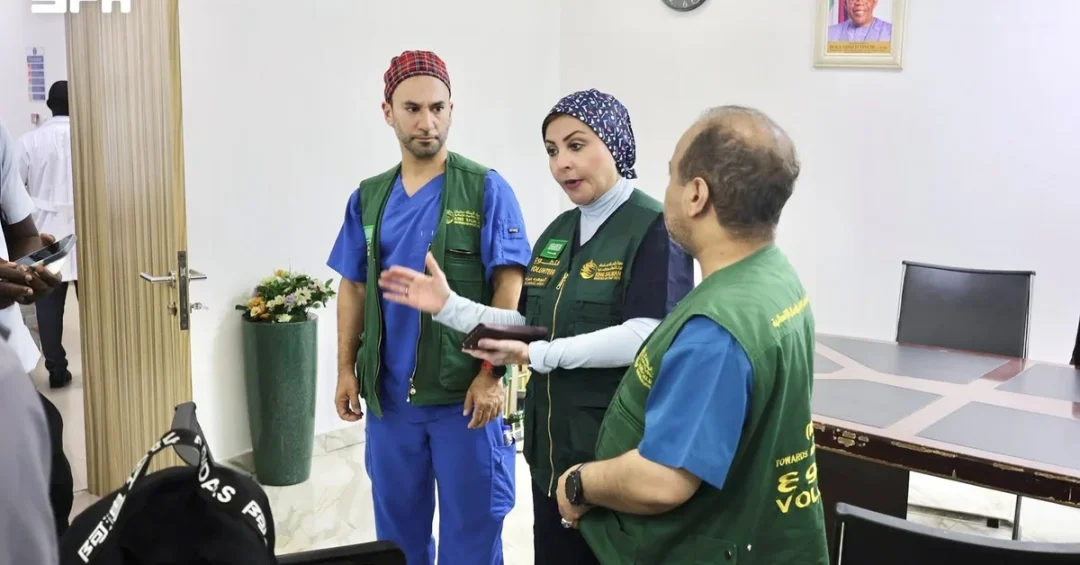
The King Salman Humanitarian Aid and Relief Center (KSrelief) is implementing a voluntary medical project for open-heart surgery and interventional catheterization in Abuja, the Federal Republic of Nigeria, running from October 10 to 17, 2026, with a team of 17 Saudi volunteer specialists. The campaign, carried out in cooperation with the Al-Balsam Association for Training and Health Development, has already performed 16 cardiac catheterization procedures since it began, according to the Saudi Press Agency.
Have you ever considered how far a single act of medical volunteering can travel? In this case, it has traveled from Riyadh to Abuja, where Saudi physicians are restoring heart function and hope to Nigerian patients who might otherwise wait months or years for specialized care. The project reflects a model of humanitarian engagement that the Kingdom has refined over decades: rapid deployment of skilled volunteers, partnership with specialized civil-society organizations, and a clear focus on measurable clinical outcomes. It is a practical expression of Saudi Arabia’s belief that health is a universal right and that compassion knows no borders.
Context and Background
Is humanitarian medicine a luxury, or is it one of the most effective forms of diplomacy available today? For Saudi Arabia, the answer has long been clear. The King Salman Humanitarian Aid and Relief Center was established in 2015 as the Kingdom’s dedicated humanitarian arm, mandated to deliver relief and medical assistance to communities in need across the world regardless of nationality, ethnicity, or religion. Since its founding, KSrelief has implemented thousands of projects in more than 90 countries, spanning food security, shelter, water, sanitation, education, and specialized healthcare. Its voluntary medical campaigns represent a distinctive pillar of that work, because they pair Saudi medical expertise with local partners and leave behind trained personnel, strengthened protocols, and treated patients.
Why does cardiac care in particular matter so much in sub-Saharan Africa? Cardiovascular disease is a growing burden across the region, yet access to open-heart surgery and interventional catheterization remains severely limited. Many patients face long waiting lists, high out-of-pocket costs, or the need to travel abroad for procedures that require sophisticated equipment and highly trained teams. Nigeria, Africa’s most populous nation with more than 220 million people, has a particularly acute shortage of cardiac specialists. Into that gap steps a Saudi volunteer mission that brings operating theatre expertise directly to Abuja, performing procedures that would otherwise be out of reach for many families. The project runs from October 10 to 17, 2026, a compact window in which a small team aims to deliver maximum clinical impact.
Key Details of the Medical Campaign
What does it take to assemble a volunteer medical mission of this kind? According to the Saudi Press Agency, the project involves 17 volunteers drawn from various specialties, including cardiac surgeons, interventional cardiologists, anesthesiologists, nurses, and technical support staff. Their work is being carried out in cooperation with the Al-Balsam Association for Training and Health Development, a Saudi organization experienced in health-focused volunteer programs. Since the start of the campaign, the KSrelief volunteer medical team has performed 16 cardiac catheterization procedures, a figure that underscores the pace and precision of the mission. Each procedure represents not only a clinical intervention but also a transfer of knowledge to local medical staff who observe and assist alongside the Saudi team.
How are patients selected for such campaigns? In projects of this nature, candidates are typically identified through coordination with local health authorities and partner hospitals, with priority given to cases that are urgent, complex, or financially out of reach for the patient. The combination of open-heart surgery and interventional catheterization allows the team to address a spectrum of cardiac conditions, from blocked arteries to structural heart defects. The presence of a full multidisciplinary team means that patients can be assessed, treated, and monitored within a single integrated mission, reducing the fragmentation that often complicates care in resource-limited settings. The project is part of the relief, humanitarian, and voluntary initiatives provided by Saudi Arabia through KSrelief to alleviate the suffering of patients and injured people wherever they are.
International and Regional Impact
Can a medical mission in one city ripple across an entire region? The direct impact is measured in lives: patients who return to their families healthier, children who can resume school, breadwinners who can return to work. But the indirect impact is broader. Every successful campaign strengthens the reputation of Saudi humanitarian work as principled, professional, and needs-based. It also deepens the relationship between the Kingdom and Nigeria, a country with which Saudi Arabia shares growing trade, energy, and diplomatic ties. In a region where healthcare infrastructure is uneven, the arrival of a Saudi volunteer team signals solidarity and practical support rather than rhetoric.
What message does this send to the wider international community? It reinforces the idea that humanitarian action can transcend politics. KSrelief operates in partnership with United Nations agencies, international NGOs, and local authorities, and its medical campaigns are consistently framed around neutrality and compassion. For international observers, the Abuja project is a reminder that Saudi Arabia’s global role extends well beyond energy markets. It is a donor, a convener, and increasingly a direct provider of specialized care. The campaign also promotes a culture of volunteer work among members of Saudi society, encouraging doctors, nurses, and technicians to contribute their skills to global health. That cultural dimension is as important as the clinical one, because it builds a generation of Saudi health professionals with international field experience.
Economic and Strategic Significance
Why should economists and policymakers pay attention to a volunteer medical project? Because health and stability are deeply connected to economic development. Cardiovascular disease imposes a heavy toll on productivity in low- and middle-income countries, and untreated heart conditions can push families into poverty. By providing free, high-quality procedures, the KSrelief campaign helps protect household finances and keeps workers healthy and active. At the same time, the mission showcases Saudi soft power in action. Humanitarian engagement of this kind complements the Kingdom’s economic diplomacy, building goodwill that supports trade, investment, and people-to-people ties. Nigeria is a key partner in Africa, and health cooperation adds a durable, human dimension to that relationship.
How does this fit into Saudi Arabia’s broader strategic priorities? The Kingdom has increasingly positioned itself as a bridge between continents, using its resources and expertise to address global challenges. Health is one of the most visible and appreciated forms of that engagement. The Abuja project also aligns with the objectives of Saudi Vision 2030, which emphasizes a vibrant society, a responsible global citizen, and the development of Saudi human capital. Volunteers who serve abroad return with new skills, cross-cultural understanding, and a stronger sense of purpose. In that sense, the campaign invests simultaneously in Nigerian patients and in the capabilities of the Saudi health workforce.
Vision 2030 Alignment
What does Vision 2030 mean when it leaves the policy document and enters an operating theatre in Abuja? It means a Saudi surgeon working alongside a Nigerian nurse, a Saudi anesthesiologist monitoring a patient’s heart rhythm, and a Saudi logistics team ensuring that equipment arrives on time. Vision 2030 calls for a nation that is not only economically diversified but also globally engaged and socially responsible. KSrelief is one of the clearest institutional expressions of that ambition, turning national prosperity into international compassion. The voluntary medical project in Abuja demonstrates that Saudi Arabia’s modernization is not inward-looking; it is a platform for contributing to global well-being.
Will this campaign be remembered for its procedures or for its principles? The answer is likely both. The 16 cardiac catheterization procedures already performed represent immediate relief for patients and families, while the partnerships and training exchanges represent long-term capacity. As the mission continues through October 17, 2026, it adds another chapter to Saudi Arabia’s humanitarian record and reinforces the Kingdom’s role as a trusted partner in Africa and beyond. For ksa.com readers around the world, the story is a reminder that Vision 2030 is not only about skyscrapers and megaprojects; it is also about a Saudi doctor restoring a heartbeat in a hospital in Abuja, embodying the values of generosity, professionalism, and global citizenship that define the Kingdom’s future.
20 Questions
Q1. What is the KSrelief voluntary medical project in Abuja?
A1. It is a voluntary medical campaign for open-heart surgery and interventional catheterization implemented by the King Salman Humanitarian Aid and Relief Center in Abuja, Nigeria, from October 10 to 17, 2026, in cooperation with the Al-Balsam Association for Training and Health Development.
Q2. How many volunteers are participating in the campaign?
A2. The project involves 17 volunteers from various medical specialties, including cardiac surgeons, interventional cardiologists, anesthesiologists, nurses, and technical support staff, according to the Saudi Press Agency.
Q3. How many cardiac catheterization procedures have been performed so far?
A3. Since the start of the campaign, the KSrelief volunteer medical team has performed 16 cardiac catheterization procedures, reflecting the pace and precision of the mission in Abuja.
Q4. Which organization is partnering with KSrelief on this project?
A4. The project is being carried out in cooperation with the Al-Balsam Association for Training and Health Development, a Saudi organization experienced in health-focused volunteer programs and medical training.
Q5. What is the duration of the medical campaign in Abuja?
A5. The campaign runs from October 10 to 17, 2026, a compact window during which the multidisciplinary team aims to deliver maximum clinical impact for patients in need.
Q6. What is KSrelief and when was it established?
A6. The King Salman Humanitarian Aid and Relief Center was established in 2015 as Saudi Arabia’s dedicated humanitarian arm, mandated to deliver relief and medical assistance to communities in need worldwide.
Q7. Why is cardiac care important in Nigeria?
A7. Cardiovascular disease is a growing burden in sub-Saharan Africa, and Nigeria faces a shortage of cardiac specialists, making open-heart surgery and interventional catheterization difficult for many patients to access.
Q8. How are patients selected for the procedures?
A8. Patients are typically identified through coordination with local health authorities and partner hospitals, with priority given to urgent, complex, or financially out-of-reach cases.
Q9. What types of procedures are being performed?
A9. The team is performing open-heart surgery and interventional catheterization, addressing conditions such as blocked arteries and structural heart defects within a single integrated mission.
Q10. Does the project involve training for local medical staff?
A10. Yes, local medical staff observe and assist alongside the Saudi team, facilitating knowledge transfer and strengthening local capacity in cardiac care during the campaign.
Q11. What is the broader purpose of KSrelief’s medical campaigns?
A11. The initiative is part of Saudi Arabia’s relief, humanitarian, and voluntary projects aimed at alleviating the suffering of patients and injured people wherever they are and promoting a culture of volunteer work.
Q12. How does this project reflect Saudi Arabia’s global role?
A12. It demonstrates Saudi Arabia’s role as a donor and direct provider of specialized care, reinforcing its reputation for principled, professional, and needs-based humanitarian action beyond energy markets.
Q13. What is the significance for Saudi-Nigerian relations?
A13. The campaign deepens ties between the Kingdom and Nigeria, adding a human dimension to growing trade, energy, and diplomatic cooperation between the two countries.
Q14. How does the project promote volunteerism in Saudi society?
A14. By encouraging doctors, nurses, and technicians to contribute their skills globally, the campaign builds a generation of Saudi health professionals with international field experience and a stronger sense of purpose.
Q15. What economic benefits does the campaign bring?
A15. By providing free, high-quality procedures, the campaign helps protect household finances, keeps workers healthy and active, and mitigates the productivity toll of cardiovascular disease.
Q16. How does the project align with Saudi Vision 2030?
A16. It aligns with Vision 2030’s emphasis on a vibrant society, responsible global citizenship, and human capital development, turning national prosperity into international compassion and engagement.
Q17. What message does the campaign send internationally?
A17. It reinforces the idea that humanitarian action can transcend politics, showcasing Saudi Arabia as a neutral, compassionate partner in global health and development.
Q18. How many countries has KSrelief assisted since its founding?
A18. Since 2015, KSrelief has implemented thousands of projects in more than 90 countries, spanning food security, shelter, water, education, and specialized healthcare.
Q19. What happens after the campaign ends on October 17, 2026?
A19. The treated patients continue their recovery, while the partnerships and training exchanges leave behind strengthened protocols and local capacity for long-term cardiac care in Abuja.
Q20. Why is this campaign important for ksa.com readers?
A20. It illustrates that Vision 2030 is not only about megaprojects but also about Saudi doctors restoring heartbeats abroad, embodying generosity, professionalism, and global citizenship that define the Kingdom’s future.
Reader Feedback
We value your thoughts. Please share your feedback on this article.
Your feedback helps us improve our coverage.