


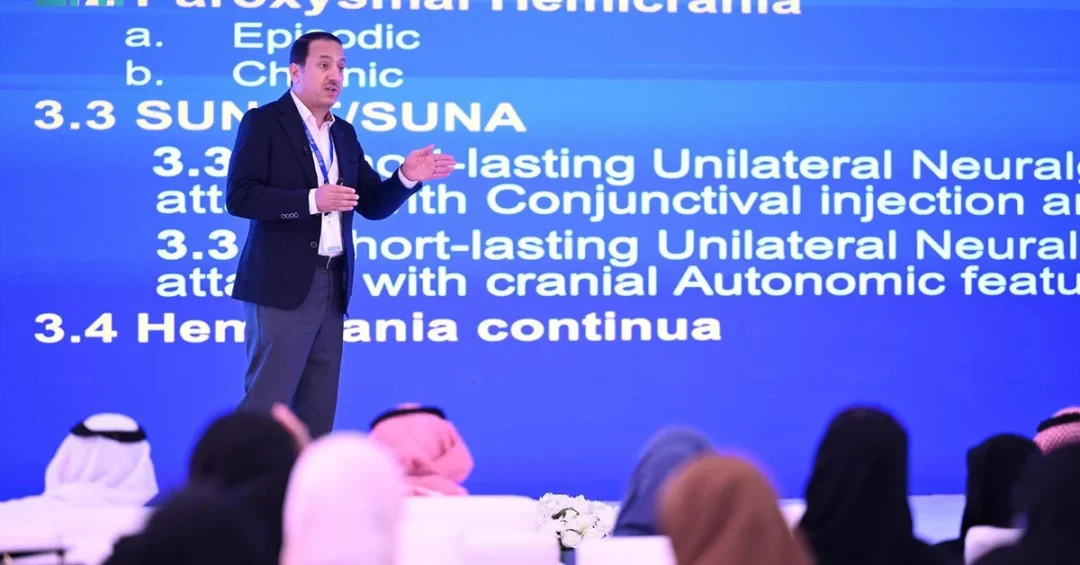
The Imam Abdulrahman bin Faisal University (IAU) launched the International Neurology Conference and its affiliated exhibition on Thursday at Le Meridien Al Khobar, drawing more than 350 specialists from around the world under the patronage of Eastern Region Governor Prince Saud bin Naif bin Abdulaziz. The two-day event, organized by the university’s College of Medicine Neurology Department in partnership with King Fahad Hospital, was inaugurated by IAU Acting President Prof. Fahad Al-Harbi, according to the Saudi Press Agency (SPA). The conference underscores Saudi Arabia’s growing role as a convenor of global medical expertise and reflects the Kingdom’s broader commitment to advancing healthcare innovation in line with Vision 2030.
The gathering brings together neurologists, researchers, and clinicians to exchange knowledge on the latest developments in a field that Al-Harbi described as one of the most intricate and vital branches of medicine. With neurological disorders affecting millions worldwide and technological breakthroughs reshaping diagnosis and treatment, the conference arrives at a pivotal moment for global health cooperation. Saudi Arabia’s ability to host such a high-caliber international event signals both its academic capacity and its strategic intent to position itself as a hub for medical research and innovation. What does this level of international participation reveal about the Kingdom’s expanding influence in specialized medicine?
Context and Background
The International Neurology Conference represents a significant milestone for the Imam Abdulrahman bin Faisal University, a prominent institution in Saudi Arabia’s Eastern Province that has steadily expanded its research and academic footprint. Hosting an event of this magnitude at Le Meridien Al Khobar demonstrates the university’s capacity to attract global experts and facilitate high-level scientific dialogue. The collaboration with King Fahad Hospital, a major healthcare provider in the region, further highlights the integrated approach Saudi Arabia is taking to bridge academic research and clinical practice. Why is this integration between universities and hospitals so critical for advancing patient care?
Neurology has emerged as a priority discipline globally as populations age and the burden of conditions such as stroke, epilepsy, and neurodegenerative diseases grows. Saudi Arabia has invested heavily in specialized healthcare infrastructure, recognizing that world-class medical services are essential to both public well-being and the Kingdom’s economic diversification goals. The conference’s focus on scientific sessions and workshops aimed at fostering innovation and excellence aligns with national efforts to elevate healthcare standards and reduce reliance on overseas treatment for complex cases. How does hosting such events accelerate the transfer of cutting-edge knowledge into local clinical settings?
The Eastern Region, where the conference is taking place, has become a focal point for Saudi Arabia’s industrial and healthcare development. With its proximity to major oil facilities and growing urban centers, the region requires robust medical services to support its population and workforce. IAU’s decision to convene this conference in Al Khobar reflects a deliberate strategy to decentralize academic and medical excellence beyond the capital, ensuring that residents across the Kingdom benefit from global advancements. What role do regional universities play in Saudi Arabia’s broader push to localize expertise and innovation?
Key Details
Prof. Fahad Al-Harbi, IAU Acting President, inaugurated the conference and emphasized the backing provided by the Kingdom’s leadership for scientific research and innovation. He underscored IAU’s role in advancing the medical and health sectors through academic collaborations, noting that the two-day program features scientific sessions and workshops designed to foster innovation and excellence. The conference will facilitate the exchange of knowledge regarding the latest developments in neurology, with participants engaging in discussions that could pave the way for groundbreaking medical advancements. What specific breakthroughs might emerge when 350 specialists share their collective expertise?
Al-Harbi stated that with the rapid pace of technological advancements and medical innovations, scientists and physicians have a responsibility to leverage this knowledge for the betterment of humanity. He highlighted the significance of creating platforms for experts to share ideas, describing such gatherings as essential for positive transformations in healthcare. The affiliated exhibition accompanying the conference provides an additional dimension, allowing participants to explore new technologies, equipment, and therapeutic approaches that are shaping the future of neurological care. How can exhibitions like this one translate into tangible improvements for patients in Saudi Arabia and beyond?
The conference program includes sessions covering a wide spectrum of neurological topics, from cerebrovascular diseases and neurocritical care to pediatric neurology and neurorehabilitation. Workshops are designed to offer hands-on training and practical insights, ensuring that attendees leave with actionable knowledge they can apply in their respective institutions. The participation of over 350 specialists from multiple countries reflects the global recognition of Saudi Arabia’s academic institutions and their ability to convene meaningful international dialogue. Why is this kind of cross-border collaboration indispensable in a field as complex as neurology?
International and Regional Impact
The strong international participation at the IAU Neurology Conference signals Saudi Arabia’s emergence as a credible and influential player in global medical research. By attracting specialists from diverse countries, the event positions the Kingdom as a bridge between regional expertise and international best practices. This exchange is particularly valuable for the Middle East, where the prevalence of neurological conditions is rising due to demographic shifts and lifestyle changes. Saudi Arabia’s leadership in hosting such forums contributes to a more integrated regional approach to healthcare challenges. How might this conference influence neurology practices across the Gulf Cooperation Council states?
For international attendees, the conference offers a window into Saudi Arabia’s rapidly evolving healthcare landscape, which has undergone substantial transformation under Vision 2030. The Kingdom’s investments in hospital infrastructure, digital health, and medical education are creating new opportunities for collaboration and research partnerships. Events like this one facilitate networking that can lead to joint studies, clinical trials, and shared protocols, ultimately benefiting patients worldwide. What lasting partnerships might be forged in Al Khobar that extend far beyond the conference’s two days?
Economic and Strategic Significance
The healthcare sector is a cornerstone of Saudi Arabia’s economic diversification strategy, contributing to the creation of high-skilled jobs and the development of knowledge-based industries. By hosting international medical conferences, the Kingdom not only enhances its academic reputation but also stimulates local economies through tourism and business travel. Participants staying in hotels, dining in restaurants, and utilizing transportation services generate direct economic activity in the Eastern Region. More importantly, the knowledge acquired and relationships built can lead to long-term investments in healthcare infrastructure and research. How does this blend of immediate economic impact and long-term capacity building support Saudi Arabia’s strategic goals?
Strategically, the conference reinforces Saudi Arabia’s position as a leader in the region’s health security architecture. Neurological disorders represent a significant and growing global health burden, and countries that develop expertise in this area gain influence in international health policy discussions. The Kingdom’s ability to convene experts and facilitate consensus on best practices enhances its soft power and demonstrates its commitment to global public goods. This aligns with Vision 2030’s emphasis on international cooperation and the Kingdom’s desire to be a force for stability and progress. Why is health diplomacy an increasingly important component of Saudi Arabia’s foreign policy?
Vision 2030 Alignment
The International Neurology Conference directly supports Vision 2030’s Health Sector Transformation Program, which seeks to improve the quality and efficiency of healthcare services, enhance prevention, and expand specialized care. By fostering innovation and knowledge exchange, the conference contributes to the development of a robust healthcare ecosystem capable of meeting the needs of Saudi citizens and residents. The emphasis on academic collaborations and research aligns with the vision’s goal of building a knowledge-based economy driven by innovation and human capital development. How does investing in specialized medical fields like neurology advance the broader objectives of Saudi Vision 2030?
Furthermore, the conference exemplifies the Kingdom’s commitment to international engagement and its aspiration to be a global hub for science and medicine. Under the patronage of Prince Saud bin Naif bin Abdulaziz and with the active participation of IAU and King Fahad Hospital, the event showcases the collaborative spirit that defines Saudi Arabia’s approach to progress. As the Kingdom continues to invest in education, research, and healthcare infrastructure, gatherings like this will become increasingly common, attracting talent and ideas from around the world. In doing so, Saudi Arabia not only elevates its own medical standards but also contributes to the global fight against neurological disease, fulfilling its vision of a prosperous and influential future.
20 Questions
Q1. What is the International Neurology Conference launched by Imam Abdulrahman bin Faisal University?
A1. It is a two-day medical conference and exhibition organized by IAU’s College of Medicine Neurology Department and King Fahad Hospital, held at Le Meridien Al Khobar, bringing together over 350 specialists to discuss the latest developments in neurology.
Q2. Who inaugurated the conference on behalf of the Eastern Region Governor?
A2. Prof. Fahad Al-Harbi, the acting president of Imam Abdulrahman bin Faisal University, inaugurated the conference under the patronage of Prince Saud bin Naif bin Abdulaziz, the Governor of the Eastern Region.
Q3. How many specialists are participating in the conference?
A3. More than 350 specialists from various countries are attending the conference, demonstrating strong international participation and interest in the event’s scientific program and workshops.
Q4. Where is the conference taking place?
A4. The conference is being held at Le Meridien Al Khobar in the Eastern Region of Saudi Arabia, a venue that provides a suitable environment for high-level academic and medical discussions.
Q5. What is the duration of the International Neurology Conference?
A5. The conference is a two-day event, running from Thursday through Friday, featuring scientific sessions, workshops, and an affiliated exhibition focused on neurology.
Q6. Which departments and institutions organized the conference?
A6. The event was organized by the Neurology Department at the College of Medicine of Imam Abdulrahman bin Faisal University, in partnership with King Fahad Hospital.
Q7. What did Prof. Al-Harbi say about the role of the Kingdom’s leadership?
A7. He emphasized the strong backing provided by Saudi Arabia’s leadership for scientific research and innovation, highlighting the government’s commitment to advancing the medical and health sectors.
Q8. What are the main objectives of the conference?
A8. The conference aims to foster innovation and excellence in neurology, facilitate the exchange of knowledge on the latest developments, and create platforms for experts to share ideas that can lead to medical advancements.
Q9. Why is neurology considered a vital branch of medicine?
A9. Neurology deals with the complex nervous system and neurological conditions, playing a fundamental role in understanding and treating disorders that affect millions of people worldwide.
Q10. What types of sessions are included in the conference program?
A10. The program includes scientific sessions and workshops covering various neurological topics, designed to provide both theoretical knowledge and practical training for attending specialists.
Q11. How does the conference support Saudi Arabia’s healthcare sector?
A11. By facilitating knowledge exchange and academic collaborations, the conference helps advance medical practices, improve patient care, and strengthen the Kingdom’s healthcare infrastructure.
Q12. What is the significance of the affiliated exhibition?
A12. The exhibition allows participants to explore new technologies, equipment, and therapeutic approaches in neurology, complementing the scientific sessions with hands-on exposure to innovations.
Q13. How does the conference reflect Vision 2030?
A13. It aligns with Vision 2030’s Health Sector Transformation Program by promoting innovation, research, and specialized care, contributing to a knowledge-based economy and improved healthcare services.
Q14. What is the role of Imam Abdulrahman bin Faisal University in the medical field?
A14. IAU is a prominent academic institution that advances medical and health sectors through education, research, and collaborations, as demonstrated by hosting this international conference.
Q15. Why is international participation important for this conference?
A15. International participation brings diverse perspectives, fosters global collaboration, and ensures that Saudi Arabia remains connected to the latest advancements in neurology worldwide.
Q16. What responsibility did Al-Harbi emphasize for scientists and physicians?
A16. He stated that with rapid technological advancements, scientists and physicians have a responsibility to leverage new knowledge for the betterment of humanity.
Q17. How does the conference benefit the Eastern Region of Saudi Arabia?
A17. It stimulates local economic activity through business tourism and reinforces the region’s status as a center for academic and medical excellence, attracting global attention.
Q18. What topics are likely covered in the neurology sessions?
A18. Sessions likely cover cerebrovascular diseases, neurocritical care, pediatric neurology, neurorehabilitation, and other emerging areas in neurological research and treatment.
Q19. What outcomes are expected from the conference?
A19. Expected outcomes include enhanced knowledge sharing, potential research collaborations, and the identification of innovative approaches that can improve neurological care in Saudi Arabia and globally.
Q20. How does this conference contribute to Saudi Arabia’s global standing?
A20. By successfully hosting a major international medical event, Saudi Arabia demonstrates its capacity for leadership in healthcare, strengthens its soft power, and reinforces its commitment to global scientific cooperation.
Reader Feedback
We value your thoughts. Please share your feedback on this article.
Your feedback helps us improve our coverage.