


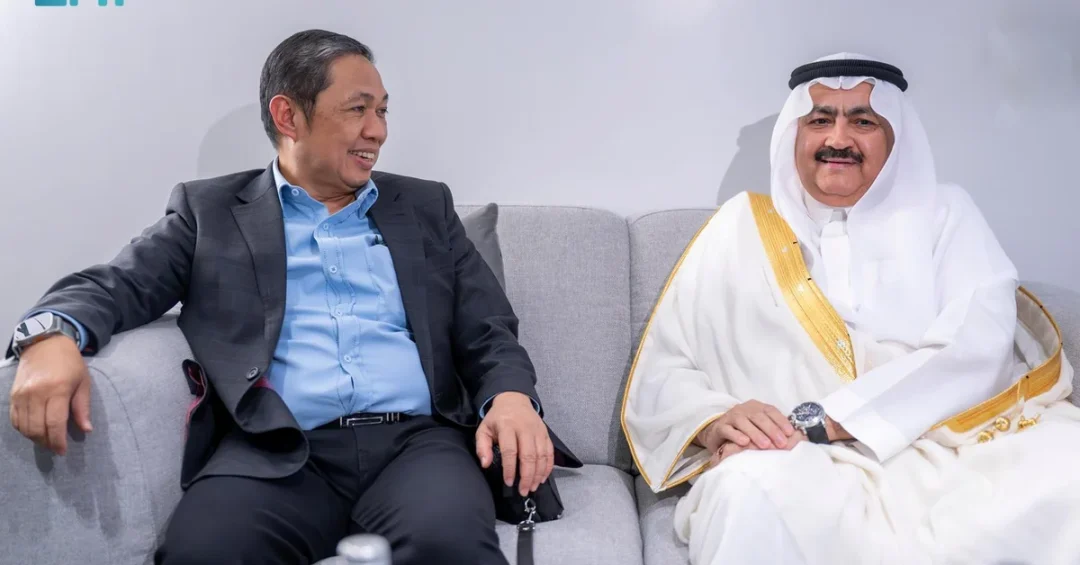
Deputy Minister of Foreign Affairs of Indonesia Muhammad Anis Matta arrived in Riyadh on November 8, 2024, representing President Prabowo Subianto at the Joint Arab Islamic Extraordinary Summit, according to the Saudi Press Agency. The Indonesian delegation was received upon arrival at King Khalid International Airport by a number of Saudi officials, underscoring the depth of relations between the Kingdom of Saudi Arabia and the Republic of Indonesia. The visit comes at a pivotal moment for the wider region, as leaders and senior representatives from across the Arab and Islamic worlds gather in the Saudi capital to coordinate positions on pressing humanitarian and political developments.
Why does the arrival of a single senior delegation in Riyadh carry significance beyond the bilateral relationship it represents? In the context of the Joint Arab Islamic Extraordinary Summit, the presence of Indonesia — the world’s most populous Muslim-majority nation and a member of the G20 — reflects the breadth of the diplomatic coalition that Saudi Arabia has helped convene. The Kingdom’s role as host is consistent with its long-standing policy of fostering consensus among Arab and Islamic states, and it reinforces Riyadh’s position as a central hub for regional and international diplomacy. The Saudi Press Agency reported that the Deputy Minister was accompanied by a delegation and was received by officials at the airport, a standard diplomatic courtesy that also signals the importance attached to the visit.
Context and Background
What is the Joint Arab Islamic Extraordinary Summit, and why is it being held in Riyadh? The summit brings together leaders and senior representatives from Arab and Islamic countries to address shared concerns, with a particular focus on developments affecting the region. Saudi Arabia has a long tradition of hosting such gatherings, leveraging its position as the custodian of the Two Holy Mosques and as a leading member of both the Arab League and the Organisation of Islamic Cooperation. The Kingdom’s convening power is rooted in its religious significance, its economic weight, and its active diplomacy across the Middle East, Asia, and beyond.
Indonesia’s participation is notable given its geographic distance from the Middle East and its status as a rising economic and diplomatic power in Southeast Asia. As the largest Muslim-majority country in the world, Indonesia carries substantial moral and political weight in Islamic forums. President Prabowo Subianto’s decision to send a senior representative underscores Jakarta’s commitment to engaging with Middle Eastern affairs and to supporting multilateral efforts aimed at de-escalation and humanitarian relief. The presence of Deputy Minister Muhammad Anis Matta in Riyadh also highlights the personal diplomatic networks that link Indonesian and Saudi officials, built over years of cooperation in trade, investment, education, and religious affairs.
The timing of the summit reflects a period of heightened regional tension and humanitarian concern. By hosting the gathering, Saudi Arabia is reaffirming its role as a stabilizing force and a bridge between different constituencies within the Islamic world. For international observers, the summit offers a window into how Arab and Islamic states are seeking to coordinate their responses to complex crises, and how Saudi diplomacy is working to build common ground among diverse national interests.
Key Details of the Arrival
What exactly happened upon the Indonesian delegation’s arrival, and who was there to receive them? According to the Saudi Press Agency, Deputy Minister of Foreign Affairs Muhammad Anis Matta and his accompanying delegation landed at King Khalid International Airport in Riyadh on November 8, 2024. He was received by several officials, a customary diplomatic welcome that reflects the protocol extended to senior representatives of friendly nations. The Saudi Press Agency’s dispatch, dated November 8, 2024, confirmed the arrival at 22:08 local time, corresponding to 19:08 GMT.
The Deputy Minister’s role as representative of President Prabowo Subianto is significant. It indicates that Indonesia’s highest leadership is closely following the summit’s agenda and is entrusting a senior diplomat with the task of conveying Jakarta’s positions. Muhammad Anis Matta is a seasoned figure in Indonesian politics and diplomacy, having previously served in senior legislative and party roles before taking up his current position at the Ministry of Foreign Affairs. His presence in Riyadh allows Indonesia to participate fully in the deliberations while also conducting bilateral conversations on the margins of the summit.
The arrival at King Khalid International Airport, one of the Kingdom’s principal aviation gateways, is also a reminder of Riyadh’s logistical capacity to host large multilateral events. The airport regularly handles high-level delegations, and its facilities are designed to accommodate the security and protocol requirements of visiting dignitaries. For the summit’s organizers, the smooth reception of delegations from across the world is an operational priority that supports the broader diplomatic objectives of the gathering.
International and Regional Impact
How does Indonesia’s participation shape the summit’s international character? Indonesia’s presence broadens the summit beyond the Arab world and the immediate neighborhood, giving it a genuinely global Islamic dimension. As a G20 member and the largest economy in Southeast Asia, Indonesia can bring perspectives that resonate with other Asian and developing nations. Its participation also reinforces the principle that the challenges discussed in Riyadh are not confined to one region but have implications for Muslim communities and international stability more broadly.
From a regional perspective, the summit hosted by Saudi Arabia serves as a platform for coordinating positions among states that may have differing national priorities. The Kingdom’s diplomatic approach emphasizes consultation, consensus-building, and respect for international law and humanitarian principles. By bringing together representatives such as Indonesia’s Deputy Minister of Foreign Affairs, Riyadh is helping to create a space where diverse voices can be heard and where collective action can be considered. This approach aligns with Saudi Arabia’s broader foreign policy objectives of promoting stability, dialogue, and development across the Middle East and the wider Islamic world.
Economic and Strategic Significance
What economic and strategic threads connect Saudi Arabia and Indonesia, and why do they matter for the summit’s outcomes? The two countries have been deepening their economic ties in recent years, with cooperation spanning energy, trade, investment, and halal industries. Saudi Arabia is a major supplier of energy to Indonesia, while Indonesian companies and workers contribute to the Kingdom’s economy. Both countries are members of the G20, giving them a shared platform to discuss global economic governance, supply chain resilience, and sustainable development.
Strategically, Indonesia’s participation in the Riyadh summit signals its willingness to play a constructive role in Middle Eastern diplomacy, even as it manages its own regional priorities in Southeast Asia. For Saudi Arabia, engaging with Indonesia helps to strengthen the Islamic world’s collective voice and to build partnerships that extend beyond traditional geographic boundaries. The Kingdom’s Vision 2030 reform agenda, which emphasizes economic diversification, international investment, and global engagement, provides a natural framework for expanding ties with dynamic Asian economies such as Indonesia.
Vision 2030 Alignment
How does Saudi Arabia’s hosting of the Joint Arab Islamic Extraordinary Summit connect to Vision 2030? Vision 2030 is not only an economic transformation plan but also a strategy for elevating the Kingdom’s global role. By convening leaders and representatives from across the Arab and Islamic worlds, Saudi Arabia demonstrates its capacity to act as a diplomatic hub and a convener of coalitions. This enhances the Kingdom’s international standing, attracts attention from investors and partners, and reinforces the message that Saudi Arabia is a reliable and forward-looking actor on the world stage.
The arrival of Indonesia’s Deputy Minister of Foreign Affairs Muhammad Anis Matta in Riyadh is therefore more than a routine diplomatic movement. It is a tangible expression of the partnerships that Saudi Arabia is cultivating as part of its long-term vision. As the summit proceeds, the discussions held in Riyadh will contribute to shaping regional responses and to strengthening the networks of cooperation that underpin the Kingdom’s aspirations for a stable, prosperous, and interconnected future. Saudi Arabia’s leadership in hosting such gatherings reflects its enduring commitment to dialogue, humanitarian values, and the shared interests of the Arab and Islamic nations.
20 Questions
Q1. Who arrived in Riyadh on November 8, 2024?
A1. Deputy Minister of Foreign Affairs of Indonesia Muhammad Anis Matta arrived in Riyadh on November 8, 2024, representing President Prabowo Subianto, according to the Saudi Press Agency.
Q2. What event is the Indonesian representative attending in Riyadh?
A2. He is attending the Joint Arab Islamic Extraordinary Summit, a gathering of leaders and senior representatives from Arab and Islamic countries hosted by Saudi Arabia.
Q3. Which Saudi agency reported the arrival?
A3. The Saudi Press Agency, the Kingdom’s official news agency, reported the arrival and provided the details of the delegation and its reception.
Q4. Where did the Indonesian delegation land?
A4. The delegation arrived at King Khalid International Airport in Riyadh, one of Saudi Arabia’s main aviation gateways for high-level diplomatic visits.
Q5. Who received the Indonesian Deputy Minister upon arrival?
A5. He was received by several officials at the airport, in line with the diplomatic protocol extended to senior representatives of friendly nations.
Q6. Who does Muhammad Anis Matta represent at the summit?
A6. He represents President Prabowo Subianto of Indonesia, underscoring Jakarta’s high-level engagement with the summit’s agenda and deliberations.
Q7. What is Indonesia’s significance in the Islamic world?
A7. Indonesia is the world’s most populous Muslim-majority nation and a G20 member, giving it substantial moral and political weight in Islamic and global forums.
Q8. Why is Saudi Arabia hosting the Joint Arab Islamic Extraordinary Summit?
A8. Saudi Arabia is hosting the summit as part of its role as a leading Arab and Islamic state, promoting consultation and consensus on pressing regional issues.
Q9. What time did the arrival take place, according to the report?
A9. The Saudi Press Agency reported the arrival at 22:08 local time, which corresponds to 19:08 GMT, on November 8, 2024.
Q10. How does Indonesia’s participation affect the summit’s scope?
A10. Indonesia’s participation broadens the summit beyond the Arab world, adding a global Islamic and Southeast Asian dimension to the discussions in Riyadh.
Q11. What are the main areas of Saudi-Indonesian cooperation?
A11. Cooperation spans energy, trade, investment, and halal industries, with both countries being G20 members committed to global economic governance.
Q12. What is the significance of King Khalid International Airport in this context?
A12. It is a principal gateway that regularly handles high-level delegations, reflecting Riyadh’s logistical capacity to host major multilateral events.
Q13. Who is Muhammad Anis Matta?
A13. He is Indonesia’s Deputy Minister of Foreign Affairs, a seasoned diplomat and political figure who previously held senior legislative and party roles in Indonesia.
Q14. How does the summit reflect Saudi Arabia’s diplomatic approach?
A14. It reflects the Kingdom’s emphasis on consultation, consensus-building, and respect for international law and humanitarian principles in regional affairs.
Q15. What does Indonesia’s presence signal about its foreign policy?
A15. It signals Jakarta’s willingness to engage constructively in Middle Eastern diplomacy while managing its own priorities in Southeast Asia.
Q16. How does the summit connect to Saudi Vision 2030?
A16. Hosting the summit enhances Saudi Arabia’s global role and diplomatic standing, aligning with Vision 2030’s goal of elevating the Kingdom’s international engagement.
Q17. What is the Joint Arab Islamic Extraordinary Summit focused on?
A17. It focuses on shared concerns of Arab and Islamic states, particularly regional developments and humanitarian issues requiring coordinated responses.
Q18. Why is the timing of the summit important?
A18. The summit comes amid heightened regional tension and humanitarian concern, making coordinated diplomacy among Arab and Islamic states especially timely.
Q19. What role does the Saudi Press Agency play in this report?
A19. As the Kingdom’s official news agency, it provided the verified details of the arrival, including the time, location, and reception of the delegation.
Q20. What does this visit mean for Saudi-Indonesia relations?
A20. It reinforces the deepening partnership between the two countries, highlighting shared interests in diplomacy, economic cooperation, and Islamic solidarity.
Reader Feedback
We value your thoughts. Please share your feedback on this article.
Your feedback helps us improve our coverage.
Related articles
 Guyana President’s Envoy Arrives in Riyadh for Arab-Islamic Summit
 Saudi Shura Council Vice Speaker Meets Italian Chamber President
 Saudi Arabia Apprehends 20,778 Law Violators in Week
 Saudi Arabia Weather Forecast for Saturday
 Mauritanian President Arrives in Jeddah for Umrah
 Mauritanian President Performs Umrah in Makkah