


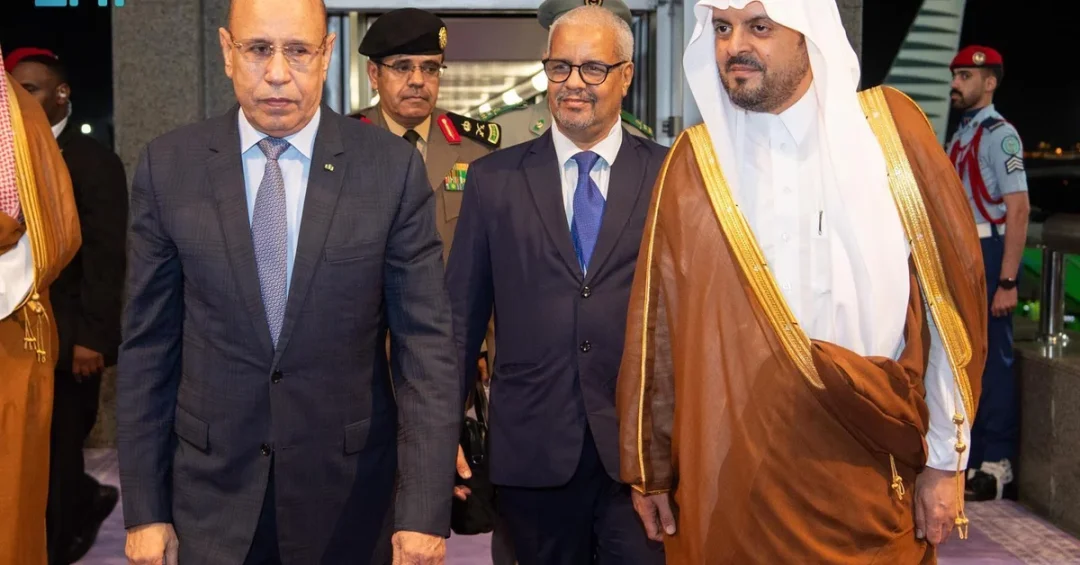
President Mohamed Ould Cheikh Ghazouani of the Islamic Republic of Mauritania arrived in Jeddah on Saturday, November 9, 2024, leading an accompanying delegation to perform Umrah rituals, according to the Saudi Press Agency. The visit underscores the enduring spiritual ties between the Kingdom of Saudi Arabia and the Islamic world, and reflects the care with which Saudi authorities receive pilgrims and official guests throughout the year. At King Abdulaziz International Airport, the Mauritanian President was received by Prince Saud bin Mishaal bin Abdulaziz, Deputy Governor of the Makkah Region, alongside several senior officials representing the Kingdom.
The arrival of a sitting head of state for Umrah highlights the unique position of the Two Holy Mosques as a destination for leaders and citizens alike. It also demonstrates the operational readiness of Jeddah’s gateway airport, which serves millions of pilgrims annually under the umbrella of Saudi Vision 2030’s expansion of hospitality and religious tourism infrastructure. The reception line, led by the Deputy Governor of the Makkah Region, signals the protocol and respect Saudi leadership extends to visiting dignitaries. Why does the Kingdom consistently treat every pilgrim journey, even a brief Umrah visit, as a matter of national importance?
Context and Background
Have you ever considered what a presidential Umrah visit reveals about Saudi Arabia’s role as custodian of Islam’s holiest sites? Mauritania, a member of the Arab League and the Organisation of Islamic Cooperation, maintains longstanding fraternal relations with the Kingdom rooted in shared faith, culture, and mutual respect. President Ghazouani, who has led the Islamic Republic of Mauritania since 2019, is a familiar figure in regional diplomacy and has consistently supported closer ties with Gulf partners. His decision to travel to Jeddah for Umrah reflects both personal devotion and the wider tradition of Muslim leaders seeking spiritual renewal at the Two Holy Mosques.
The visit also occurs within a broader pattern of high-level exchanges between Riyadh and Nouakchott. Saudi Arabia has long been a partner in Mauritania’s development, supporting infrastructure, education, and religious institutions. In return, Mauritania has stood with the Kingdom in regional forums, reinforcing the unity of the Islamic ummah. The Saudi Press Agency reported the arrival as a straightforward official event, but the implications reach further: it reinforces the Kingdom’s standing as a convener of Muslim leaders and a reliable host for spiritual journeys of significance.
King Abdulaziz International Airport, where the President landed, is one of the busiest aviation hubs in the region and a critical node for Hajj and Umrah traffic. Its dedicated Hajj Terminal and ongoing modernization projects are part of a national effort to accommodate growing numbers of pilgrims comfortably and securely. The reception of President Ghazouani there is a reminder that the airport is not only a transit point but a first impression of Saudi hospitality.
Key Details of the Visit
What does the composition of the reception delegation tell us about Saudi protocol? According to the Saudi Press Agency, Prince Saud bin Mishaal bin Abdulaziz, Deputy Governor of the Makkah Region, personally welcomed the Mauritanian President and his delegation. The presence of several other officials at the airport reflects the coordination between the Ministry of Foreign Affairs, the Ministry of Interior, and regional authorities. Such receptions are standard for visiting heads of state, but they also carry symbolic weight, affirming the Kingdom’s commitment to honoring its guests.
The stated purpose of the visit is the performance of Umrah rituals, a voluntary pilgrimage that can be undertaken at any time of the year. Umrah involves specific rites in Makkah, including tawaf around the Kaaba and sa’i between the hills of Safa and Marwah. For a head of state, the journey requires careful logistical planning, security arrangements, and coordination with the General Presidency for the Affairs of the Grand Mosque and the Prophet’s Mosque. The Saudi authorities routinely facilitate such visits, ensuring that official guests can complete their rituals with dignity and ease.
The Mauritanian delegation accompanying the President is expected to include ministers and senior advisors, though the Saudi Press Agency report did not detail the full list. What matters is that the visit proceeded smoothly and was announced through official channels, consistent with the Kingdom’s transparent approach to publicizing state visits. The timing, in early November, places the visit outside the peak Hajj season, allowing for a more focused and personal spiritual experience.
International and Regional Impact
How does a single Umrah visit ripple across regional diplomacy? Mauritania sits at the crossroads of West Africa and the Arab world, and its leadership’s engagement with Saudi Arabia reinforces the Kingdom’s outreach to African nations. Saudi Arabia has deepened its ties across the continent through investment, development assistance, and religious cooperation. President Ghazouani’s visit is a visible expression of that relationship, signaling that Nouakchott values its partnership with Riyadh.
For the wider Islamic world, the image of a president arriving in Jeddah for Umrah sends a message of unity. It reminds observers that the Two Holy Mosques are accessible to all Muslims, regardless of nationality or station, and that Saudi Arabia welcomes leaders and ordinary pilgrims with the same dedication. In a region often marked by division, such visits serve as quiet diplomacy, building goodwill and strengthening the bonds of faith.
International media often focus on Saudi Arabia’s economic transformation, but spiritual leadership remains a cornerstone of its global role. The Mauritanian President’s visit is a timely reminder that the Kingdom’s influence is not only measured in barrels of oil or billions of dollars, but in the trust placed in it by millions of Muslims who turn toward Makkah every day.
Economic and Strategic Significance
What economic threads connect a spiritual visit to Vision 2030? Religious tourism is a major pillar of Saudi Arabia’s economic diversification strategy. The Kingdom aims to welcome 30 million Umrah pilgrims annually by 2030, up from pre-pandemic levels, and has invested heavily in expanding capacity at the Grand Mosque, developing new hospitality projects, and streamlining visa procedures. Every official visit, especially by a head of state, showcases these improvements to a global audience.
The presence of a Mauritanian delegation also opens doors for bilateral economic discussions, even if not on the official agenda. Saudi Arabia and Mauritania have explored cooperation in mining, agriculture, and renewable energy. Mauritania’s iron ore and fisheries sectors, combined with Saudi capital and expertise, present opportunities for mutually beneficial ventures. While the Umrah visit is primarily spiritual, it creates a favorable atmosphere for broader engagement.
Moreover, the visit highlights the resilience of Saudi Arabia’s aviation and hospitality sectors. King Abdulaziz International Airport has undergone significant upgrades, and the Kingdom’s hotels, transport networks, and digital services are increasingly tailored to international visitors. These investments support Vision 2030’s goal of making Saudi Arabia a global destination for faith, business, and leisure.
Vision 2030 Alignment
How does this visit embody the spirit of Saudi Vision 2030? Vision 2030 seeks to position the Kingdom as a hub connecting three continents, a leader in Islamic finance and halal industries, and a model of modern governance rooted in tradition. The reception of President Ghazouani aligns perfectly with these objectives: it demonstrates Saudi Arabia’s ability to host world leaders with efficiency and warmth, while promoting the religious tourism sector that Vision 2030 has prioritized.
The visit also reinforces the Kingdom’s soft power. By facilitating Umrah for a sitting president, Saudi Arabia strengthens its reputation as a responsible custodian of the Two Holy Mosques and a reliable partner for Muslim nations. This soft power translates into diplomatic influence, economic opportunity, and cultural exchange, all of which are central to the Vision 2030 blueprint.
As Saudi Arabia continues to open its doors to the world, visits like this one will become more frequent and more visible. They tell a story of a nation confident in its identity, generous in its hospitality, and committed to its role as a bridge between faith and modernity. The Mauritanian President’s Umrah journey is a small but meaningful chapter in that larger story, and it reflects the enduring strength of the bond between the Kingdom and the Islamic Republic of Mauritania.
20 Questions
Q1. Who arrived in Jeddah to perform Umrah rituals?
A1. President Mohamed Ould Cheikh Ghazouani of the Islamic Republic of Mauritania arrived in Jeddah on November 9, 2024, to perform Umrah, according to the Saudi Press Agency.
Q2. Who received the Mauritanian President at the airport?
A2. Prince Saud bin Mishaal bin Abdulaziz, Deputy Governor of the Makkah Region, received the President and his delegation, along with several other Saudi officials.
Q3. At which airport did the Mauritanian President arrive?
A3. He arrived at King Abdulaziz International Airport in Jeddah, the main gateway for pilgrims traveling to Makkah and a key hub for Hajj and Umrah traffic.
Q4. What is the purpose of the Mauritanian President’s visit to Saudi Arabia?
A4. The official purpose is to perform Umrah rituals, a voluntary pilgrimage to the Grand Mosque in Makkah that can be undertaken at any time of the year.
Q5. When did this visit take place?
A5. The visit took place on Saturday, November 9, 2024, as reported by the Saudi Press Agency, which announced the arrival in an official statement.
Q6. Who is Mohamed Ould Cheikh Ghazouani?
A6. Mohamed Ould Cheikh Ghazouani is the President of the Islamic Republic of Mauritania, a position he has held since 2019. He is a prominent figure in West African and Arab diplomacy.
Q7. What is the significance of a head of state performing Umrah?
A7. It highlights the spiritual importance of the Two Holy Mosques and demonstrates Saudi Arabia’s role as a welcoming host for Muslim leaders from around the world.
Q8. What does the reception by the Deputy Governor of Makkah Region indicate?
A8. It reflects the high protocol and respect Saudi leadership extends to visiting dignitaries, as well as the coordination between regional and national authorities.
Q9. How does this visit relate to Saudi Vision 2030?
A9. It supports Vision 2030’s goals of expanding religious tourism, enhancing hospitality infrastructure, and strengthening Saudi Arabia’s global role as a hub for Muslim pilgrims and leaders.
Q10. What are the Umrah rituals that the President will perform?
A10. Umrah involves tawaf around the Kaaba, sa’i between Safa and Marwah, and other rites. It is a shorter pilgrimage than Hajj and can be performed year-round.
Q11. Which Saudi officials typically attend such receptions?
A11. Receptions for heads of state often include the Deputy Governor of the region, officials from the Ministry of Foreign Affairs, and representatives of security and protocol departments.
Q12. How does this visit affect Saudi-Mauritanian relations?
A12. It reinforces the fraternal ties between the two countries, built on shared faith and mutual respect, and opens doors for further diplomatic and economic cooperation.
Q13. What is the Saudi Press Agency’s role in reporting this event?
A13. The Saudi Press Agency is the official news agency of the Kingdom, and its report provides authoritative confirmation of the visit and its details.
Q14. Why is Jeddah an important city for such visits?
A14. Jeddah is the gateway to Makkah, home to King Abdulaziz International Airport, and a major commercial center. It is the first point of entry for many pilgrims and official guests.
Q15. How does Saudi Arabia facilitate Umrah for official delegations?
A15. Saudi authorities coordinate security, transportation, accommodation, and ritual arrangements to ensure that official guests can perform Umrah with dignity and ease.
Q16. What economic benefits can result from such visits?
A16. They promote religious tourism, showcase Saudi hospitality infrastructure, and can lead to bilateral discussions on trade, investment, and development cooperation.
Q17. How many Umrah pilgrims does Saudi Arabia aim to host by 2030?
A17. Under Vision 2030, the Kingdom aims to welcome 30 million Umrah pilgrims annually, supported by expansions at the Grand Mosque and improved visa processes.
Q18. What message does this visit send to the Islamic world?
A18. It signals that the Two Holy Mosques are open to all Muslims, and that Saudi Arabia remains a unifying host for the global Islamic community.
Q19. Did the visit include any political or economic meetings?
A19. The official report focused on the Umrah pilgrimage. However, such visits often provide opportunities for informal diplomatic exchanges on matters of mutual interest.
Q20. What does this visit say about Saudi Arabia’s global standing?
A20. It demonstrates Saudi Arabia’s ability to host world leaders with efficiency and respect, reinforcing its position as a custodian of Islam’s holiest sites and a key global partner.
Reader Feedback
We value your thoughts. Please share your feedback on this article.
Your feedback helps us improve our coverage.
Related articles
 Mauritanian President Performs Umrah in Makkah
 21st Saudi Relief Plane Arrives in Lebanon with Aid
 Crown Prince Congratulates Cambodia’s King on Independence Day
 Arab Parliament Urges Global Action to Protect UNRWA
 King Fahd Security College Hosts INTERPA AI Policing Conference
 KSrelief Continues Food Distribution in Northern Gaza