


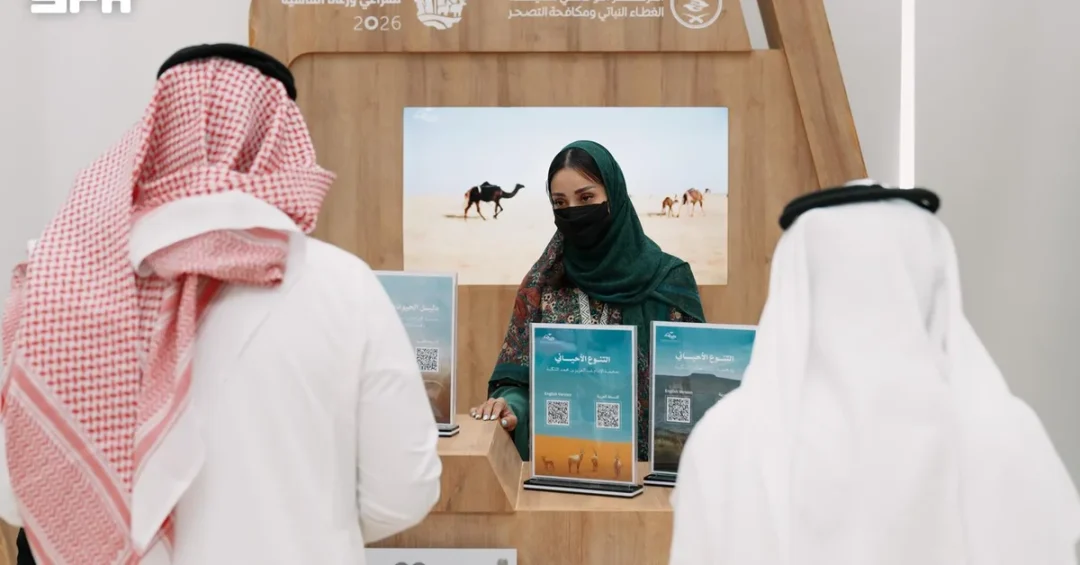
The Imam Abdulaziz bin Mohammed Royal Reserve Development Authority participated on Thursday in a national event dedicated to the role of women in sustaining natural rangelands, joining the National Center for Vegetation Cover Development and Combating Desertification in a program organized under the International Year of Rangelands and Pastoralists 2026 and timed to coincide with the International Day of Rural Women. The participation, announced through the Saudi Press Agency, placed the authority at the center of a growing national conversation about how environmental stewardship, scientific research, and community engagement can be strengthened together. At its pavilion in the accompanying exhibition, the authority presented its key efforts and initiatives to develop vegetation cover, protect ecosystems, and raise public awareness of sustainable environmental practices. The event drew together government bodies, environmental specialists, and community representatives in a shared effort to conserve rangelands and natural resources for future generations.
The occasion reflects a broader pattern in the Kingdom of Saudi Arabia, where environmental protection has moved from the margins of policy to the core of national planning. Rangelands, often overlooked in global climate discussions, cover vast areas of the Kingdom and serve as critical reservoirs of biodiversity, carbon storage, and cultural heritage. By spotlighting women’s contributions in this field, the authority and its partners are signaling that sustainability is a collective responsibility requiring the full participation of society. The event also served as a platform for exchanging knowledge and expertise among relevant entities, reinforcing the collaborative approach that defines Saudi Arabia’s environmental agenda and its alignment with Saudi Vision 2030.
Context and Background
Why do rangelands matter so much to Saudi Arabia’s environmental future? Natural rangelands are among the most widespread land types in the Kingdom, supporting native plant species, wildlife, and the traditional pastoral practices that have shaped Saudi culture for generations. Over recent decades, pressures such as overgrazing, climate variability, and urban expansion have degraded portions of these landscapes, prompting the Kingdom to develop coordinated programs for restoration and protection. The National Center for Vegetation Cover Development and Combating Desertification, a government body dedicated to these goals, has become a central institution in that effort, working alongside royal reserve authorities, ministries, and local communities.
The International Year of Rangelands and Pastoralists 2026, declared by the United Nations, provides a global framework for highlighting these landscapes. Saudi Arabia’s participation in the observance underscores its commitment to international environmental cooperation and its recognition that rangeland health is linked to food security, water availability, and climate resilience. The International Day of Rural Women, observed annually, adds a social dimension by acknowledging the often underrecognized roles that women play in agriculture, land management, and community resilience. Together, these observances create a natural platform for the Imam Abdulaziz bin Mohammed Royal Reserve Development Authority to present its work to a wider audience.
The authority itself is named after Imam Abdulaziz bin Mohammed, a historical figure whose legacy is associated with leadership and the protection of the region’s natural and cultural heritage. The reserve it manages forms part of a network of protected areas across Saudi Arabia that aim to conserve ecosystems while enabling sustainable visitation and research. By participating in the event, the authority reinforced its mandate to combine scientific inquiry, community outreach, and on-the-ground conservation, demonstrating how royal reserves function as living laboratories for environmental innovation.
Key Details of the Authority’s Participation
What did the authority actually present to visitors and participants? According to the Saudi Press Agency, the authority’s pavilion showcased its key efforts and initiatives to develop vegetation cover and protect ecosystems, along with a selection of its scientific and awareness publications. These publications were designed to introduce sustainable environmental practices and to raise awareness of the importance of conserving rangelands and natural resources. The materials reflect a deliberate strategy of translating technical research into accessible guidance for a broad audience, including students, community members, and environmental practitioners.
The event was organized by the National Center for Vegetation Cover Development and Combating Desertification, an institution whose name signals its dual focus: expanding green cover and countering desertification. Its work aligns with national targets to restore degraded land, increase the area of protected habitats, and promote sustainable land management. The authority’s participation forms part of its efforts to enhance environmental and community awareness, exchange knowledge and expertise with relevant entities, and highlight the importance of women’s role in conserving natural resources and ensuring their sustainability. These efforts support Saudi Vision 2030 goals for environmental protection and vegetation cover development.
The timing of the event, coinciding with the International Day of Rural Women, gave the discussions a distinctly human focus. Rural women in Saudi Arabia and around the world often serve as custodians of local knowledge about plants, water sources, and seasonal grazing patterns. By formally recognizing that expertise within a national environmental event, organizers helped connect traditional wisdom with modern scientific approaches. The authority’s pavilion thus functioned not only as an exhibition but also as a meeting point for dialogue between generations and disciplines.
Women’s Role in Rangeland Sustainability
How exactly do women contribute to the health of rangelands, and why does their inclusion matter? In rural communities, women frequently manage household resources, including water and fuel, and pass on knowledge about which plants can be harvested sustainably and when. Their participation in cooperatives, education, and local governance structures can accelerate the adoption of practices that prevent soil erosion and preserve native vegetation. When environmental programs actively involve women, they tend to achieve broader community buy-in and more durable outcomes.
Saudi Arabia has made significant strides in expanding opportunities for women across sectors, including environmental science, research, and public administration. The event highlighted how this national momentum intersects with conservation goals. By featuring women’s contributions in rangeland sustainability, the authority and its partners are helping to normalize the idea that environmental leadership is open to all citizens. This aligns with the social and economic transformation underway in the Kingdom, where talent is increasingly recognized as a national asset regardless of gender.
The emphasis on women’s roles also carries international resonance. Global organizations focused on land restoration have repeatedly found that projects integrating gender perspectives perform better on measures of sustainability and community resilience. Saudi Arabia’s participation in the International Year of Rangelands and Pastoralists 2026 therefore offers an opportunity to share its experiences and learn from other nations, reinforcing its position as a constructive actor in global environmental diplomacy.
International and Regional Impact
What does Saudi Arabia’s engagement with the International Year of Rangelands and Pastoralists signal to the wider world? It demonstrates that the Kingdom is not only a participant in global environmental frameworks but also a contributor of practical solutions. Rangeland degradation affects countries across the Middle East, Africa, and Central Asia, making it a shared challenge that benefits from cross-border cooperation. Saudi Arabia’s experience in establishing royal reserves and restoring vegetation can serve as a model for other arid and semi-arid regions seeking to balance development with conservation.
Regionally, the event reinforces the Kingdom’s role as a convenor of environmental dialogue. By bringing together government entities, experts, and community representatives, it strengthens the networks needed to implement large-scale restoration projects. These networks are essential for addressing transboundary issues such as dust storms and biodiversity loss, which do not respect national borders. Saudi Arabia’s leadership in this area complements its broader diplomatic efforts to promote stability, sustainability, and prosperity in the region.
Economic and Strategic Significance
Why should economic planners pay attention to rangeland health? Healthy rangelands support pastoral livelihoods, contribute to food security, and reduce the costs associated with land degradation and dust. They also underpin emerging nature-based tourism opportunities, as visitors seek authentic experiences in restored landscapes. For Saudi Arabia, investing in vegetation cover and ecosystem protection is therefore both an environmental imperative and an economic strategy, one that creates jobs in conservation, research, and eco-tourism.
The strategic dimension extends to climate resilience. Vegetation cover helps sequester carbon, moderate local temperatures, and improve soil water retention, all of which are valuable in a country with scarce rainfall. By advancing these goals, the authority’s work supports national commitments under the Saudi Green Initiative and related programs. The involvement of women in these efforts broadens the talent pool and strengthens community ownership, making the investments more likely to yield long-term returns.
Vision 2030 Alignment
How does this event connect to the larger ambitions of Saudi Vision 2030? Vision 2030 sets out a comprehensive plan to diversify the economy, improve quality of life, and protect the environment. Environmental protection and vegetation cover development are explicit components of that plan, and the authority’s participation directly supports them. By raising awareness, publishing scientific materials, and highlighting women’s contributions, the event advances the vision’s goals of a sustainable society and a thriving natural environment.
Looking ahead, the Imam Abdulaziz bin Mohammed Royal Reserve Development Authority is expected to continue its collaborations with the National Center for Vegetation Cover Development and Combating Desertification and other partners. These partnerships will be essential for scaling up restoration, expanding educational outreach, and ensuring that women remain central to environmental decision-making. The Kingdom’s progress in this field will be measured not only in hectares restored but also in the strength of the communities that steward them. In that sense, the event was a reminder that sustainability is ultimately a human endeavor, and that Saudi Arabia is committed to pursuing it with the full participation of its people.
20 Questions
Q1. What event did the Imam Abdulaziz bin Mohammed Royal Reserve Development Authority participate in?
A1. The authority participated in an event on the role of women in sustaining natural rangelands, organized by the National Center for Vegetation Cover Development and Combating Desertification as part of the International Year of Rangelands and Pastoralists 2026.
Q2. When did the event take place?
A2. The event took place on Thursday, October 15, 2026, and coincided with the International Day of Rural Women, according to the Saudi Press Agency.
Q3. What is the main theme of the event?
A3. The main theme was the role of women in sustaining natural rangelands, emphasizing their contributions to conservation, community resilience, and sustainable resource management.
Q4. Which organization organized the event?
A4. The event was organized by the National Center for Vegetation Cover Development and Combating Desertification, a Saudi government body focused on expanding vegetation cover and fighting desertification.
Q5. What did the authority showcase at its pavilion?
A5. The authority showcased its key efforts and initiatives to develop vegetation cover and protect ecosystems, along with a selection of scientific and awareness publications promoting sustainable environmental practices.
Q6. What was the purpose of the publications presented by the authority?
A6. The publications aimed to introduce sustainable environmental practices and raise awareness of the importance of conserving rangelands and natural resources among a broad audience.
Q7. How does the authority’s participation support Saudi Vision 2030?
A7. It supports Vision 2030 goals for environmental protection and vegetation cover development by enhancing awareness, exchanging expertise, and highlighting women’s roles in conserving natural resources.
Q8. What is the International Year of Rangelands and Pastoralists 2026?
A8. It is a United Nations observance that highlights the importance of rangelands and pastoralist communities worldwide, promoting sustainable management and international cooperation.
Q9. Why is the International Day of Rural Women significant in this context?
A9. It recognizes the often underrecognized roles women play in agriculture, land management, and community resilience, adding a social dimension to environmental discussions.
Q10. What are rangelands and why do they matter?
A10. Rangelands are extensive natural landscapes that support biodiversity, carbon storage, and pastoral livelihoods. They are vital for environmental health and cultural heritage in Saudi Arabia.
Q11. How do women contribute to rangeland sustainability?
A11. Women often manage household resources, pass on traditional knowledge about sustainable harvesting, and participate in local governance, helping to prevent soil erosion and preserve native vegetation.
Q12. What is the role of the National Center for Vegetation Cover Development and Combating Desertification?
A12. It is a Saudi government institution dedicated to expanding green cover, restoring degraded land, and combating desertification through coordinated national programs.
Q13. What are royal reserves in Saudi Arabia?
A13. Royal reserves are protected areas that conserve ecosystems, enable sustainable visitation and research, and serve as living laboratories for environmental innovation.
Q14. How does the event reflect Saudi Arabia’s environmental diplomacy?
A14. It shows the Kingdom’s active participation in global environmental frameworks and its willingness to share practical solutions for rangeland restoration with other nations.
Q15. What economic benefits can healthy rangelands provide?
A15. Healthy rangelands support pastoral livelihoods, contribute to food security, reduce land degradation costs, and create opportunities in conservation, research, and eco-tourism.
Q16. How does vegetation cover help with climate resilience?
A16. Vegetation sequesters carbon, moderates local temperatures, and improves soil water retention, which is especially valuable in arid countries like Saudi Arabia.
Q17. What is the Saudi Green Initiative?
A17. The Saudi Green Initiative is a national program that aims to reduce emissions, increase vegetation cover, and protect the environment as part of Vision 2030.
Q18. How can international audiences benefit from Saudi Arabia’s experience?
A18. Other arid and semi-arid regions can learn from Saudi Arabia’s approaches to establishing reserves, restoring vegetation, and integrating community participation in conservation.
Q19. What future collaborations are expected for the authority?
A19. The authority is expected to continue working with the National Center for Vegetation Cover Development and Combating Desertification and other partners to scale up restoration and educational outreach.
Q20. What is the key takeaway from the authority’s participation?
A20. The event highlighted that sustainability is a collective effort, with women playing a vital role, and reinforced Saudi Arabia’s commitment to environmental protection under Vision 2030.
Reader Feedback
We value your thoughts. Please share your feedback on this article.
Your feedback helps us improve our coverage.