


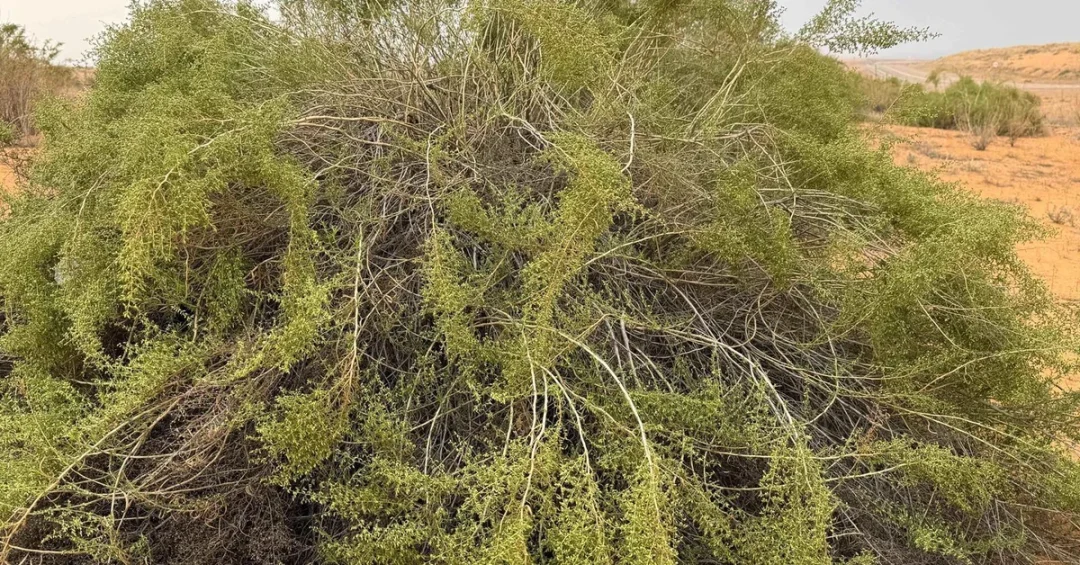
The Saudi Press Agency (SPA) has reported a significant resurgence of various plants and trees in the Nafud Al-Dahna desert, located south of the historic village of Linah in the Northern Borders region, following the implementation of royal nature reserves, vegetation protection measures, and regulatory actions undertaken by these reserves. The revival marks a tangible environmental milestone for the Kingdom, where many native plants had been on the brink of extinction before the reserves began their protective efforts. Among the most notable species making a comeback is the Al-Eadhir plant (Artemisia monosperma), a perennial desert shrub that plays an essential role in the vegetation cover of sand dune areas and contributes to environmental balance.
Could this quiet greening of the desert signal a broader turning point for Saudi Arabia’s environmental stewardship? The development, confirmed through official Saudi channels, reflects years of sustained conservation work under royal nature reserves and offers a promising sign that the Kingdom’s ecosystems can recover when given the protection and time they need. Wild plant enthusiasts who spoke to SPA described a landscape slowly returning to life, supported by recent years of increased rainfall that have aided the return of the Al-Eadhir plant and other species, though they noted the land remains in a recovery phase and the plants have not yet reached their previous quantities.
Context and Background
How did a plant once teetering on the edge of local extinction begin to reappear across the sands of Nafud Al-Dahna? The answer lies in a deliberate, multi-layered conservation strategy led by Saudi Arabia’s royal nature reserves, which were activated to protect vegetation, regulate land use, and restore ecological balance in fragile desert environments. The Nafud Al-Dahna desert, a striking expanse of red sand dunes stretching south of the historic village of Linah in the Northern Borders region, is part of the Kingdom’s natural heritage and a vital component of its environmental identity.
For years, unregulated grazing, wood collection, and off-road activity placed intense pressure on native flora, pushing species such as the Al-Eadhir plant toward the brink of extinction. The activation of royal nature reserves changed that trajectory. By enforcing vegetation protection measures and regulatory actions, the reserves created the conditions for natural regeneration. The SPA report, released from Rafha, underscores that this is not an isolated phenomenon but part of a wider pattern of ecological recovery being documented across the region, with recent years of above-average rainfall providing a crucial assist to the land’s own resilience.
Understanding this background matters because it illustrates how policy, enforcement, and natural cycles can combine to produce measurable environmental gains. The story of the Al-Eadhir plant is, in many ways, the story of Saudi Arabia’s evolving relationship with its deserts: from a resource to be extracted to a heritage to be protected and restored for future generations.
Key Details
What exactly is the Al-Eadhir plant, and why does its return matter so much? Known scientifically as Artemisia monosperma, the Al-Eadhir is a perennial desert plant that thrives in the autumn and spring seasons while maintaining growth throughout the year. It can reach heights of over a meter and features a woody stem with upward-facing branches that end in sharp tips. The plant remains evergreen and releases a strong aroma when touched, thanks to its volatile oils and other active compounds. It also has various medicinal applications, making it valuable both ecologically and culturally.
According to the SPA report, wild plant enthusiasts have confirmed that since the activation of the royal nature reserves, many plants and trees have begun to reappear, although not yet in their previous quantities. This caveat is important: the land is still in a recovery phase, and the resurgence is being supported by recent years of increased rainfall. The Al-Eadhir plant’s ability to stabilize sand dunes and contribute to the vegetation cover of desert areas makes it a keystone species for environmental balance in Nafud Al-Dahna.
The report from Rafha, dated November 09, 2024, and carried by SPA, highlights that many of these plants were on the brink of extinction before the reserves began their protective efforts. The combination of royal nature reserves, vegetation protection measures, and regulatory actions has created a framework in which species like the Al-Eadhir can regenerate. The fact that the plant maintains growth year-round and releases its distinctive aroma when touched gives researchers and enthusiasts a clear, observable marker of the ecosystem’s improving health.
International and Regional Impact
Why should the revival of a single desert plant resonate beyond Saudi Arabia’s borders? Desertification is a global challenge, affecting arid and semi-arid regions across the Middle East, Africa, and beyond. When a country demonstrates that targeted conservation measures can reverse vegetation loss in one of the world’s harshest environments, it offers a model that other nations can study and adapt. Saudi Arabia’s experience in Nafud Al-Dahna, documented by SPA, contributes to the international body of evidence that ecosystem restoration is achievable with sustained commitment.
Regionally, the revival aligns with broader environmental initiatives across the Gulf, where countries are increasingly prioritizing biodiversity, habitat protection, and sustainable land management. The return of the Al-Eadhir plant and other species in the Northern Borders region signals that royal nature reserves are functioning as intended, providing a sanctuary where flora can recover from decades of pressure. For neighboring countries facing similar ecological stresses, Saudi Arabia’s approach demonstrates the value of combining regulatory enforcement with natural recovery cycles.
International observers tracking environmental governance will note that this development is consistent with the Kingdom’s growing role in global climate and conservation discussions. The SPA report does not speculate on future outcomes, but it clearly documents that protection measures are yielding visible results, a fact that strengthens Saudi Arabia’s credibility as a responsible steward of its natural resources.
Economic and Strategic Significance
How does environmental recovery connect to Saudi Arabia’s economic and strategic priorities? Healthy ecosystems underpin sustainable development. The restoration of vegetation in Nafud Al-Dahna supports the long-term viability of the Northern Borders region, where natural heritage can become a foundation for responsible tourism, scientific research, and community livelihoods. A stable, biodiverse landscape is an asset that appreciates over time, attracting visitors and researchers while preserving cultural connections to the land.
Strategically, the success of royal nature reserves reinforces the Kingdom’s commitment to environmental protection as a pillar of national development. The Al-Eadhir plant’s medicinal applications and ecological role hint at potential value in pharmaceutical and environmental research, areas where Saudi Arabia is investing as part of its diversification agenda. The SPA report, by tracking the revival, provides transparent evidence that conservation investments are producing tangible returns, which in turn supports public confidence and international partnerships.
Moreover, the recovery of vegetation in desert areas contributes to combating sand encroachment, protecting infrastructure, and improving air quality, all of which have economic benefits. The Northern Borders region, with its historical village of Linah and the striking Nafud Al-Dahna dunes, holds potential for nature-based tourism that respects the environment. The resurgence of the Al-Eadhir plant is thus not merely an ecological footnote but a signal that sustainable development and heritage preservation can advance together.
Vision 2030 Alignment
In what ways does this environmental milestone reflect the ambitions of Saudi Vision 2030? The Vision, launched by Crown Prince Mohammed bin Salman, places quality of life, environmental sustainability, and the protection of natural resources at the heart of the Kingdom’s transformation. The revival of the Al-Eadhir plant in Nafud Al-Dahna, achieved through royal nature reserves and vegetation protection measures, is a concrete example of Vision 2030’s environmental objectives being translated into action on the ground.
As Saudi Arabia continues to expand its network of protected areas, promote eco-tourism, and invest in scientific research, stories like this one from the Northern Borders region will become increasingly common. The SPA report offers a factual, encouraging snapshot of what has been achieved so far, while acknowledging that the land remains in a recovery phase. This honesty is itself a strength: it shows that the Kingdom is committed to long-term stewardship rather than quick fixes. For international audiences, the message is clear: Saudi Arabia is not only transforming its cities and economy but also nurturing the natural heritage that has defined its landscapes for centuries. The Al-Eadhir plant, once on the brink, now stands as a living symbol of that broader renewal.
20 Questions
Q1. What plant is at the center of the SPA report from Nafud Al-Dahna?
A1. The Al-Eadhir plant, scientifically known as Artemisia monosperma, is the focus. It is a perennial desert shrub that plays an essential role in the vegetation cover of sand dune areas and contributes to environmental balance in the region.
Q2. Where exactly is the revival taking place?
A2. The revival is occurring in the Nafud Al-Dahna desert, located south of the historical village of Linah in the Northern Borders region of Saudi Arabia, as reported by the Saudi Press Agency from Rafha.
Q3. What measures led to the return of the Al-Eadhir plant?
A3. The return follows the implementation of royal nature reserves, vegetation protection measures, and regulatory actions undertaken by these reserves, which created conditions for natural regeneration after years of pressure on native flora.
Q4. When was the SPA report released?
A4. The report was released on November 09, 2024, from Rafha, according to the Saudi Press Agency, which documented the resurgence of various plants and trees in the area.
Q5. Why were many plants on the brink of extinction before the reserves?
A5. Unregulated grazing, wood collection, and off-road activity placed intense pressure on native flora, pushing species such as the Al-Eadhir plant toward the brink of extinction before the royal nature reserves began their protective efforts.
Q6. What does the Al-Eadhir plant look like?
A6. It can reach heights of over a meter and features a woody stem with upward-facing branches that end in sharp tips. It remains evergreen and maintains growth throughout the year.
Q7. In which seasons does the Al-Eadhir plant thrive?
A7. The Al-Eadhir plant thrives in the autumn and spring seasons, while maintaining growth throughout the entire year, making it a resilient and persistent component of the desert ecosystem.
Q8. What happens when the Al-Eadhir plant is touched?
A8. It releases a strong aroma when touched, thanks to its volatile oils and other active compounds. This distinctive characteristic makes it easily identifiable to researchers and wild plant enthusiasts.
Q9. Does the Al-Eadhir plant have medicinal uses?
A9. Yes, the plant has various medicinal applications, according to the SPA report. Its volatile oils and active compounds are part of what gives it value beyond its ecological role.
Q10. Have the plants returned in their previous quantities?
A10. No, wild plant enthusiasts told SPA that many plants and trees have begun to reappear, although not yet in their previous quantities. The land is still in a recovery phase.
Q11. What natural factor has aided the recovery?
A11. Recent years of increased rainfall have aided the return of the Al-Eadhir plant and other species, supporting the land’s natural regeneration alongside the protection measures implemented by the royal nature reserves.
Q12. What role do royal nature reserves play in this revival?
A12. Royal nature reserves implement vegetation protection measures and regulatory actions that reduce pressures on native flora, allowing species like the Al-Eadhir plant to regenerate and contribute to environmental balance in sand dune areas.
Q13. Why is the Al-Eadhir plant important for sand dunes?
A13. It plays an essential role in the vegetation cover of sand dune areas, helping to stabilize the sand and contribute to environmental balance, which protects the landscape and supports other species.
Q14. How does this revival align with Saudi Vision 2030?
A14. It reflects Vision 2030’s environmental sustainability goals, including quality of life improvements, protection of natural resources, and the expansion of protected areas, demonstrating that conservation policies are producing tangible results.
Q15. What is the significance for the Northern Borders region?
A15. The revival supports the region’s natural heritage, potential for responsible tourism, and scientific research. It also reinforces community connections to the land and its historical village of Linah.
Q16. How does this development affect international perceptions?
A16. It strengthens Saudi Arabia’s credibility as a responsible environmental steward, offering a model for ecosystem restoration that other arid nations can study and adapt to their own contexts.
Q17. What economic benefits could arise from the revival?
A17. Healthy ecosystems support sustainable development, nature-based tourism, and potential pharmaceutical research. They also help combat sand encroachment, protecting infrastructure and improving air quality.
Q18. Are there other plants and trees returning besides Al-Eadhir?
A18. Yes, SPA reported a significant resurgence of various plants and trees in the Nafud Al-Dahna desert, with many species reappearing since the activation of the royal nature reserves, though quantities remain below previous levels.
Q19. What is the scientific name of the Al-Eadhir plant?
A19. The scientific name is Artemisia monosperma. It is a perennial desert plant known for its woody stem, evergreen nature, strong aroma, and medicinal applications, as detailed in the SPA report.
Q20. What is the forward-looking message of this report?
A20. The report shows that sustained conservation efforts can reverse vegetation loss in harsh desert environments. It points to a future where Saudi Arabia’s natural heritage is protected and restored as part of Vision 2030.
Reader Feedback
We value your thoughts. Please share your feedback on this article.
Your feedback helps us improve our coverage.
Related articles
 Saudi Arabia Completes Anti-Trafficking Trainer Program
 5.0-Magnitude Earthquake Shakes Eastern Indonesia, No Tsunami Warning Issued
 Heavy Rains Transform Northern Borders Landscape
 Prophet’s Mosque Imam Highlights Saudi Push for Global Peace
 Mauritanian President Arrives in Madinah for Prophet’s Mosque Visit
 Mauritanian President Prays at Prophet’s Holy Mosque