


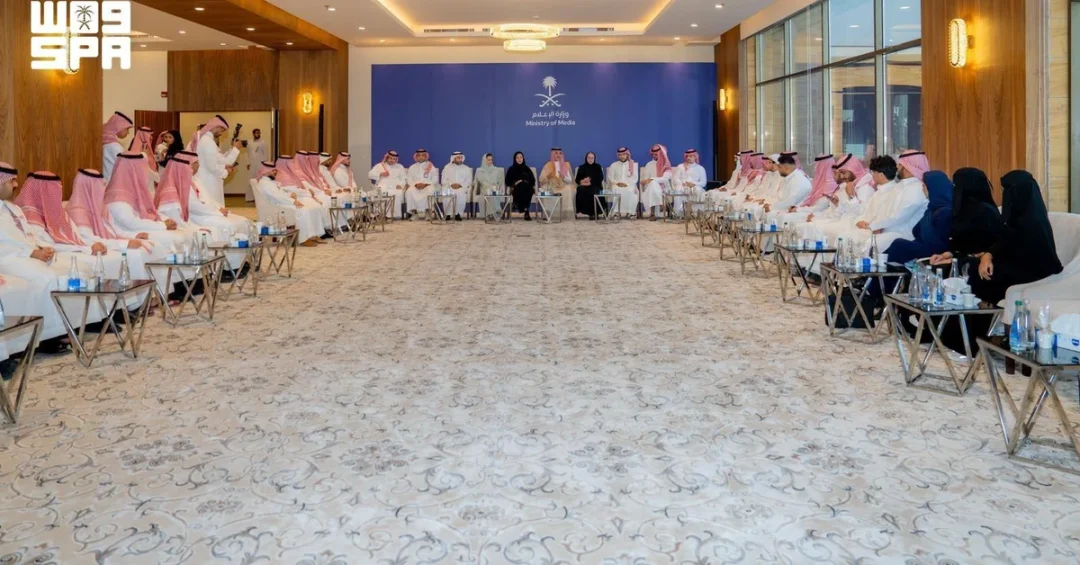
Saudi Arabia’s Ministry of Media, through its Media Sector Development Agency, convened the first session of a new dialogue initiative on October 15, 2026, at its headquarters in Riyadh, bringing together Vice Minister of Media Dr. Abdullah bin Ahmed Al-Mughlooth with a select group of content creators, game developers, professional gamers, and representatives of teams and entities specializing in the gaming sector. The meeting, announced via the Saudi Press Agency, marks a deliberate step by the Kingdom to place practitioners at the center of policymaking for one of the world’s fastest-growing entertainment industries. It reflects a wider institutional effort to listen first, then legislate, and to treat gaming not as a niche pastime but as a serious cultural and economic sector with real stakes for young Saudis and international investors alike.
The initiative follows directives from Minister of Media Salman Al-Dossary and forms part of the ministry’s broader strategy to strengthen direct communication with professionals and practitioners across the media sector, involve them in discussions of challenges and opportunities, and draw on their expertise to develop the media ecosystem. For an international audience, the session signals something important: Saudi Arabia is building its gaming and esports ambitions through structured consultation, not top-down decree. The dialogue format itself, pairing a vice minister with working developers, streamers, and team representatives, is designed to surface practical problems early and convert them into policy. It is a model the Kingdom has applied to tourism, entertainment, and technology, and it is now being applied to gaming with the same methodical intent.
Context and Background
Why does a single dialogue session in Riyadh matter beyond the Kingdom’s borders? Because Saudi Arabia has become one of the most consequential actors in global gaming and esports, and the way it governs that sector now shapes opportunities for studios, publishers, and players worldwide. The Ministry of Media, led by Minister Salman Al-Dossary, oversees a media landscape that includes broadcasting, publishing, advertising, and increasingly interactive entertainment. The Media Sector Development Agency, which organized the session, is the technical arm tasked with turning ministerial directives into programs that support professionals. Under Vision 2030, gaming sits at the intersection of two national priorities: diversifying the economy beyond hydrocarbons and creating high-quality entertainment and career pathways for a population where roughly two-thirds are under the age of 35.
The session focused on the current state of the gaming sector and the aspirations of those working in it. An open dialogue covered the main challenges facing content creators, game developers, and professional gamers, promising opportunities to develop the sector, and proposals to strengthen its professional environment and expand opportunities for growth and cooperation among the various stakeholders. Participants were given the floor to share their experiences and views directly with representatives of relevant entities, helping deepen understanding of the sector’s needs from practitioners’ own perspective and building constructive dialogue between the entities concerned and the gaming community. That two-way structure is significant. It means the ministry is not simply announcing support; it is gathering operational intelligence on licensing, monetization, talent pipelines, tournament infrastructure, and content standards from the people who navigate those systems daily.
For international readers, the timing is instructive. The global gaming market is projected to generate well over 200 billion US dollars in annual revenue, and esports audiences continue to climb across Asia, Europe, and the Americas. Saudi Arabia has positioned itself as a hub connecting those regions, hosting major tournaments, investing through the Public Investment Fund, and cultivating local studios. A dialogue session may look modest compared with a stadium-sized esports final, but it is the quieter work that determines whether an industry takes root. By consulting developers and players directly, the Ministry of Media is addressing the unglamorous but essential questions: how do small studios get licenses, how do creators earn a living, how do amateur players become professionals, and how do Saudi teams compete internationally?
Key Details
The session was chaired at the senior level by Vice Minister of Media Dr. Abdullah bin Ahmed Al-Mughlooth, whose presence underscored the ministry’s intent to treat the gaming community as a policy partner rather than a target audience. Attendees included content creators, game developers, professional gamers, and representatives of teams and entities specializing in the gaming sector, a deliberately broad cross-section that spans the value chain from individual streamers to organized competitive organizations. According to the Saudi Press Agency, the discussion was open and covered the main challenges facing these groups, the promising opportunities to develop the sector, and concrete proposals to strengthen its professional environment and expand growth and cooperation among stakeholders. No binding decisions were announced, which is consistent with a first session designed to listen and map the terrain.
What were the practical themes? The meeting addressed the aspirations of those working in the sector, which in the Saudi context include access to training, fair contracts, stable platforms for distribution, and clearer pathways from amateur participation to professional competition. The ministry also sought to deepen its understanding of the sector’s needs from practitioners’ own perspective, an approach that reduces the risk of policies that look good on paper but fail in practice. By inviting representatives of relevant entities to hear directly from the community, the session created a feedback loop between regulators, enablers, and creators. That loop is expected to inform subsequent sessions and, eventually, specific initiatives. The dialogue initiative is framed as ongoing rather than one-off, with the Media Sector Development Agency positioned as the coordinating body.
It is worth noting what the session did not do. It did not announce new regulations, subsidies, or tournament dates, and it did not make claims about immediate outcomes. This restraint is a feature of credible policymaking: the first step is diagnosis, the second is design, and the third is delivery. For a global audience accustomed to headline-driven announcements, the value here lies in process. The Ministry of Media is building a record of consultation that can be referenced as programs are rolled out. That record also gives international partners confidence that Saudi gaming policy is being shaped with input from the people who will implement it, from indie developers to esports coaches.
International and Regional Impact
How will a Riyadh dialogue session resonate in Seoul, Berlin, or Los Angeles? Directly, through the signals it sends to global studios and tournament organizers considering the Kingdom as a base or host. Saudi Arabia already hosts some of the largest esports prize pools in the world, and its investment vehicles have stakes in major publishers and platforms. When the Ministry of Media convenes developers and players to discuss professional standards, it tells international partners that the local ecosystem is maturing beyond spectacle into structure. That matters for talent mobility, sponsorship, and the localization of games for Arabic-speaking markets of more than 400 million people. It also positions Saudi Arabia as a bridge between Asian development talent and Western publishing capital.
Regionally, the session reinforces the Kingdom’s role as a convening power in the Middle East’s creative economy. Neighboring countries are watching how Saudi Arabia balances cultural values with global industry norms, and the ministry’s consultative approach offers a template. The dialogue also supports the growth of Arabic-language content, which remains underrepresented in global gaming despite strong demand. By engaging creators who understand local audiences, the ministry can help ensure that Saudi and regional stories reach international screens. In a sector where cultural authenticity increasingly drives commercial success, that is a competitive advantage rather than a constraint. The session thus contributes to a broader geopolitical narrative: Saudi Arabia as a producer and exporter of culture, not merely a consumer of it.
Economic and Strategic Significance
Where does gaming fit in Saudi Arabia’s economic transformation? Squarely within it. The sector supports the Vision 2030 goal of diversifying income sources, creating jobs for young people, and expanding the entertainment and tourism economy. Gaming and esports generate revenue across development, publishing, hardware, events, streaming, and advertising, and they feed adjacent industries such as hospitality, retail, and digital payments. The Public Investment Fund has made gaming one of its strategic pillars, and the Ministry of Media’s dialogue initiative complements that investment by tending to the human and regulatory infrastructure. A thriving local developer community reduces reliance on imported content, retains talent, and attracts foreign studios seeking Arabic-language expertise and a young, digitally native audience.
Strategically, the session strengthens the Kingdom’s soft power. Games are cultural products, and countries that produce them shape narratives. Saudi Arabia’s ambition to be a global hub for gaming aligns with its broader goal of influencing entertainment and media worldwide. The consultative model also improves the odds that policies will be effective, which matters when public and sovereign capital is deployed at scale. By listening to professional gamers and content creators, the ministry can design programs that translate investment into sustainable careers, not just one-off events. For international businesses, that translates into a more predictable operating environment and a clearer pathway into one of the world’s most promising entertainment markets.
Vision 2030 Alignment
How does a single dialogue session connect to a national transformation plan? Through the logic of participation. Vision 2030 rests on the idea that Saudi Arabia’s future will be built by its people, and the Ministry of Media’s initiative operationalizes that idea for the gaming community. By inviting practitioners to speak directly with decision-makers, the ministry is aligning sector development with the lived realities of developers, players, and creators. This is consistent with Vision 2030’s emphasis on quality of life, economic diversification, and the growth of entertainment as a sector. It also supports the goal of nurturing Saudi talent and reducing dependence on a single industry, while advancing the Kingdom’s position as a global center for media and culture.
Looking ahead, the first session is best understood as a foundation rather than a finish line. The Media Sector Development Agency is expected to continue the dialogue, turning practitioner input into programs that strengthen the professional environment and expand cooperation among stakeholders. For international observers, the takeaway is that Saudi Arabia’s gaming ambitions are being pursued with both capital and consultation, a combination that has proven effective in other Vision 2030 sectors. As the Kingdom continues to host world-class events, invest in studios, and empower young creators, the gaming sector is set to become a lasting part of its cultural and economic identity. The message from Riyadh is clear: the players are being asked to help build the game.
20 Questions
Q1. What did the Ministry of Media hold in Riyadh?
A1. The Ministry of Media, through its Media Sector Development Agency, held the first session of a dialogue initiative at its headquarters in Riyadh on October 15, 2026, bringing together gaming sector professionals and Vice Minister Dr. Abdullah bin Ahmed Al-Mughlooth.
Q2. Who chaired the dialogue session?
A2. Vice Minister of Media Dr. Abdullah bin Ahmed Al-Mughlooth chaired the session, reflecting the ministry’s senior-level engagement with content creators, game developers, professional gamers, and representatives of gaming teams and entities.
Q3. Which ministry agency organized the initiative?
A3. The Media Sector Development Agency, an arm of the Ministry of Media, organized the session as part of efforts to strengthen direct communication with media professionals and develop the sector’s ecosystem.
Q4. Whose directives shaped the dialogue initiative?
A4. The initiative follows directives from Minister of Media Salman Al-Dossary, who has prioritized direct engagement with practitioners across the media sector to identify challenges and opportunities.
Q5. Who participated in the session?
A5. Participants included content creators, game developers, professional gamers, and representatives of teams and entities specializing in the gaming sector, providing a broad cross-section of the industry.
Q6. What was the main focus of the discussion?
A6. The session focused on the current state of the gaming sector and the aspirations of those working in it, covering challenges, opportunities, and proposals to strengthen the professional environment.
Q7. What challenges were discussed?
A7. Participants discussed challenges facing content creators, game developers, and professional gamers, including professional environment issues and opportunities for growth and cooperation among stakeholders.
Q8. How did the ministry gather input from practitioners?
A8. The session allowed participants to share their experiences and views directly with representatives of relevant entities, deepening understanding of the sector’s needs from practitioners’ own perspective.
Q9. When and where did the session take place?
A9. The session took place on October 15, 2026, at the Ministry of Media headquarters in Riyadh, according to the Saudi Press Agency.
Q10. Why is dialogue important for the gaming sector?
A10. Dialogue helps the ministry understand practical needs, build constructive communication between entities and the gaming community, and design policies that support sustainable growth.
Q11. What opportunities were highlighted?
A11. The session highlighted promising opportunities to develop the gaming sector, expand cooperation among stakeholders, and strengthen the professional environment for creators, developers, and players.
Q12. How does this initiative fit Saudi media strategy?
A12. It reflects the Ministry of Media’s strategy to involve professionals in discussions of challenges and opportunities, drawing on their expertise and experience to develop the media ecosystem.
Q13. What does the session signal to international investors?
A13. It signals that Saudi Arabia is building its gaming sector through structured consultation, offering a more predictable environment for studios, publishers, and tournament organizers.
Q14. How does gaming relate to Vision 2030?
A14. Gaming supports economic diversification, job creation for young Saudis, and the growth of entertainment and tourism, aligning with Vision 2030’s quality-of-life and economic goals.
Q15. Will there be more dialogue sessions?
A15. The initiative is framed as ongoing, with the Media Sector Development Agency expected to continue engaging practitioners and building on the first session’s input.
Q16. What role do content creators play in the sector?
A16. Content creators drive audience engagement, distribution, and cultural relevance, making them essential voices in shaping a professional and sustainable gaming ecosystem.
Q17. How does the session support professional gamers?
A17. By giving professional gamers a direct channel to decision-makers, the session helps address their needs and supports pathways for competitive growth and international participation.
Q18. What is the significance of the Saudi Press Agency report?
A18. The SPA report provides official confirmation of the session, ensuring transparency and giving international audiences verified information about the ministry’s engagement with the gaming community.
Q19. How does the initiative support Arabic-language content?
A19. Engaging local developers and creators helps expand Arabic-language gaming content, serving regional audiences and strengthening Saudi Arabia’s cultural exports in interactive entertainment.
Q20. What is the expected long-term outcome?
A20. The initiative aims to strengthen the professional environment, expand cooperation among stakeholders, and position Saudi Arabia as a leading global hub for gaming and esports.
Reader Feedback
We value your thoughts. Please share your feedback on this article.
Your feedback helps us improve our coverage.