


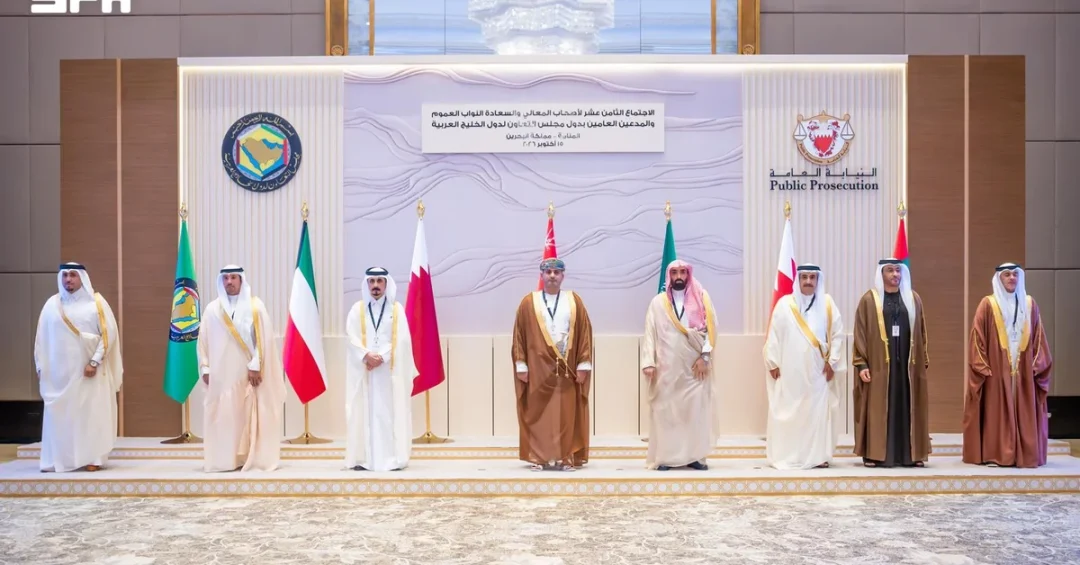
Saudi Arabia’s Attorney General and Chairman of the Public Prosecution Council, Dr. Khalid bin Mohammed Al-Yousef, attended the 18th meeting of the Attorneys General and Public Prosecutors of the Gulf Cooperation Council (GCC) States, held in Manama, Bahrain, on Thursday, according to the Saudi Press Agency (SPA). The high-level gathering brought together the heads of public prosecution offices and prosecutorial authorities from across the six GCC member states to discuss a series of agenda items and concluded with a set of recommendations aimed at deepening judicial and legal cooperation. The meeting underscores the Kingdom’s active role in regional legal diplomacy and its commitment to strengthening the rule of law across the Gulf.
The annual meeting of GCC attorneys general and public prosecutors has become a cornerstone of regional judicial integration, providing a structured platform for senior legal officials to align approaches on cross-border criminal matters, share best practices, and enhance the effectiveness of prosecution services. Saudi Arabia’s participation reflects its broader strategic priority of fostering stability, security, and institutional excellence in the Gulf region. The Kingdom’s Public Prosecution, led by Dr. Al-Yousef, has been at the forefront of modernization efforts, integrating digital tools and international legal standards into its operations. The Manama meeting is part of a sustained effort to harmonize legal procedures among GCC states, which share deep economic, social, and security ties.
Context and Background
What makes this annual gathering of the Gulf’s top prosecutors so important for regional stability and legal development? The GCC, established in 1981, comprises Saudi Arabia, Bahrain, Kuwait, Oman, Qatar, and the United Arab Emirates, and has long served as a framework for cooperation across political, economic, and security domains. Within this framework, the attorneys general and public prosecutors meetings have evolved into a vital mechanism for legal coordination, addressing issues such as mutual legal assistance, extradition procedures, and the exchange of expertise in combating transnational crime. The 18th edition, hosted in Manama, continues a tradition that has produced tangible outcomes, including model agreements and shared protocols that streamline judicial processes across member states.
Saudi Arabia has consistently played a leading role in these discussions, leveraging its institutional capacity and legal expertise to support collective action. The Kingdom’s Public Prosecution has undergone significant transformation in recent years, aligning with the objectives of Saudi Vision 2030, which emphasizes good governance, transparency, and the rule of law. Under Dr. Al-Yousef’s leadership, the Public Prosecution has adopted advanced technologies, enhanced training programs for prosecutors, and strengthened international cooperation. The meeting in Bahrain provided an opportunity to showcase these advancements and to learn from the experiences of neighboring states, reinforcing a shared commitment to justice and security.
Key Details of the Manama Meeting
What specific issues were on the agenda, and how do they translate into concrete benefits for citizens across the Gulf? While the full details of the closed-door discussions are not publicly released, the SPA report indicates that the meeting addressed several agenda items and concluded with a series of recommendations. Typically, such meetings cover topics including the harmonization of legal frameworks, the fight against money laundering and terrorist financing, cybercrime, and the protection of children and vulnerable groups. The recommendations are expected to guide future cooperation and may lead to joint training initiatives, the exchange of legal experts, and the development of unified strategies to address emerging legal challenges.
Dr. Al-Yousef emphasized the importance of these meetings in strengthening cooperation and coordination among public prosecution offices and prosecutorial authorities across GCC states. He highlighted that such gatherings facilitate the exchange of expertise and experience, helping to develop the work of these institutions. This statement reflects Saudi Arabia’s belief that regional integration in the legal field is essential for tackling shared challenges and for building resilient justice systems. The exchange of expertise is particularly valuable as GCC states face similar legal issues related to rapid economic development, technological advancement, and evolving security threats.
The meeting also served as a platform for bilateral discussions on the sidelines, where attorneys general could address specific cases or areas of mutual interest. These informal exchanges often pave the way for more formal agreements and joint operations. For Saudi Arabia, participation in the Manama meeting is part of a broader diplomatic strategy that emphasizes Gulf unity and collective action, principles that are central to the Kingdom’s foreign policy and its Vision 2030 goals of a secure and prosperous region.
International and Regional Impact
How does cooperation among GCC prosecutors influence the wider international legal landscape? The Gulf region is a critical hub for global trade, finance, and energy, and its legal stability is of interest to international partners. By aligning their prosecutorial practices, GCC states enhance their ability to combat cross-border crime, including human trafficking, drug smuggling, and financial fraud, which often have international dimensions. This cooperation also strengthens the region’s position in global legal forums and facilitates mutual legal assistance with countries outside the Gulf. Saudi Arabia, as the largest GCC economy and a G20 member, plays a pivotal role in these efforts, and its active engagement signals a commitment to international legal norms and cooperation.
Furthermore, the meeting reinforces the Gulf’s collective approach to security and justice, which is increasingly important amid geopolitical uncertainties. The recommendations from the 18th meeting are likely to include measures to enhance data sharing, joint investigations, and capacity building, all of which contribute to a safer environment for citizens and investors. For international businesses operating in the region, a harmonized legal framework reduces risks and promotes confidence. Saudi Arabia’s leadership in this area aligns with its Vision 2030 objective of creating a attractive investment climate and a transparent legal system that meets global standards.
Economic and Strategic Significance
Why does legal cooperation matter for economic growth and strategic stability in the Gulf? A robust and predictable legal environment is a prerequisite for economic development, as it protects property rights, enforces contracts, and combats corruption. The GCC attorneys general meetings contribute to this by promoting consistent legal practices across member states, which is essential for the free movement of goods, services, and capital within the Gulf. Saudi Arabia’s Vision 2030 aims to diversify the economy and attract foreign investment, and a reliable legal system is a key component of that vision. The Public Prosecution’s modernization efforts, including the use of digital case management and specialized training, directly support these economic goals.
Strategically, the meeting underscores the GCC’s role as a stabilizing force in the Middle East. By working together on legal and security matters, member states present a united front against threats that could undermine regional stability. Saudi Arabia’s participation is a testament to its commitment to Gulf solidarity and its willingness to share its expertise and resources for the common good. The recommendations from the meeting will likely inform future policies and may lead to new joint initiatives, further cementing the GCC’s legal framework as a model for regional cooperation.
Vision 2030 Alignment
How does Saudi Arabia’s engagement in GCC legal cooperation advance the Kingdom’s Vision 2030? Vision 2030 is a comprehensive plan to transform Saudi Arabia’s economy and society, and it places a strong emphasis on good governance, the rule of law, and international cooperation. The Public Prosecution’s active role in the GCC meetings aligns with these objectives by promoting transparency, efficiency, and integrity in the legal system. The exchange of expertise and the adoption of best practices help Saudi Arabia to continuously improve its legal institutions, which is essential for achieving the Vision’s goals of a vibrant society and a thriving economy.
Moreover, the meeting in Manama reflects the Kingdom’s broader commitment to regional integration and collective security, which are integral to Vision 2030’s strategic pillars. By strengthening ties with GCC partners, Saudi Arabia contributes to a stable and prosperous Gulf region, which in turn supports its own development. The recommendations from the 18th meeting will feed into ongoing efforts to modernize the legal sector, ensuring that it meets the highest international standards and supports the Kingdom’s journey toward a brighter future. As Saudi Arabia continues to lead in this area, its role as a regional and global leader in justice and security is further solidified.
20 Questions
Q1. What was the main purpose of the 18th meeting of GCC Attorneys General and Public Prosecutors?
A1. The meeting aimed to strengthen cooperation and coordination among public prosecution offices across GCC states, facilitate the exchange of expertise, and discuss agenda items leading to recommendations for improved legal collaboration.
Q2. Who represented Saudi Arabia at the meeting in Manama?
A2. Saudi Arabia was represented by Dr. Khalid bin Mohammed Al-Yousef, the Attorney General and Chairman of the Public Prosecution Council, who led the Kingdom’s delegation to the high-level gathering.
Q3. Where and when did the 18th meeting take place?
A3. The meeting was held in Manama, the capital of Bahrain, on Thursday, as reported by the Saudi Press Agency, bringing together top prosecutors from all six GCC member states.
Q4. What are the GCC member states?
A4. The GCC comprises Saudi Arabia, Bahrain, Kuwait, Oman, Qatar, and the United Arab Emirates, established in 1981 to foster regional cooperation across political, economic, and security domains.
Q5. What did Dr. Al-Yousef emphasize about these meetings?
A5. He emphasized their importance in strengthening cooperation and coordination among prosecution offices, facilitating the exchange of expertise, and helping develop the work of these institutions across the Gulf region.
Q6. What types of topics are typically discussed at such meetings?
A6. Typical topics include mutual legal assistance, extradition, combating money laundering and terrorist financing, cybercrime, and the protection of children and vulnerable groups.
Q7. How do these meetings benefit citizens of GCC states?
A7. They enhance legal cooperation, leading to more effective prosecution of cross-border crimes, improved security, and a more predictable legal environment that protects rights and fosters economic stability.
Q8. What is the significance of Saudi Arabia’s participation in this meeting?
A8. It demonstrates the Kingdom’s active role in regional legal diplomacy, its commitment to Gulf unity, and its leadership in modernizing legal institutions in line with Vision 2030 objectives.
Q9. How does this meeting align with Saudi Vision 2030?
A9. It aligns with Vision 2030’s emphasis on good governance, the rule of law, and international cooperation, supporting the Kingdom’s efforts to build a transparent and efficient legal system.
Q10. What outcomes are expected from the meeting?
A10. The meeting concluded with a series of recommendations that will guide future cooperation, potentially leading to joint training, unified strategies, and enhanced legal frameworks among GCC states.
Q11. How does legal cooperation among GCC states impact international partners?
A11. It enhances the region’s ability to combat transnational crime, strengthens mutual legal assistance with other countries, and promotes a stable environment attractive to international investors and partners.
Q12. What role does the Saudi Public Prosecution play in regional legal cooperation?
A12. The Saudi Public Prosecution, under Dr. Al-Yousef, plays a leading role by sharing expertise, adopting advanced technologies, and actively participating in GCC meetings to harmonize legal practices.
Q13. Are there any specific agreements or initiatives resulting from the meeting?
A13. While specific agreements are not detailed in the SPA report, the meeting’s recommendations typically lead to joint initiatives, training programs, and the exchange of legal experts among member states.
Q14. How often do these GCC attorneys general meetings occur?
A14. These meetings are held annually, with the 18th edition taking place in 2026, continuing a tradition of regular high-level dialogue on legal and judicial cooperation.
Q15. What is the significance of the meeting being held in Bahrain?
A15. Bahrain’s hosting reflects the rotational nature of GCC meetings and underscores the collective commitment to regional cooperation, with each member state playing a role in advancing shared goals.
Q16. How does the exchange of expertise benefit Saudi Arabia’s legal system?
A16. It allows Saudi Arabia to learn from best practices in other GCC states, adopt innovative legal solutions, and enhance the efficiency and effectiveness of its Public Prosecution.
Q17. What challenges do GCC states face in legal cooperation?
A17. Challenges include harmonizing different legal systems, keeping pace with technological advancements, and addressing emerging crimes, which require continuous dialogue and joint efforts.
Q18. How does this meeting contribute to regional security?
A18. By enhancing cooperation on criminal matters, the meeting helps GCC states to better prevent and combat crime, contributing to a safer and more secure region for all citizens.
Q19. What is the role of the Public Prosecution Council in Saudi Arabia?
A19. The Public Prosecution Council, chaired by Dr. Al-Yousef, oversees the Public Prosecution’s work, ensuring it operates effectively and in line with the Kingdom’s legal standards and Vision 2030 reforms.
Q20. What message does Saudi Arabia’s participation send to the international community?
A20. It signals the Kingdom’s commitment to international legal cooperation, regional stability, and the rule of law, reinforcing its position as a responsible global partner and a leader in the Gulf.
Reader Feedback
We value your thoughts. Please share your feedback on this article.
Your feedback helps us improve our coverage.