


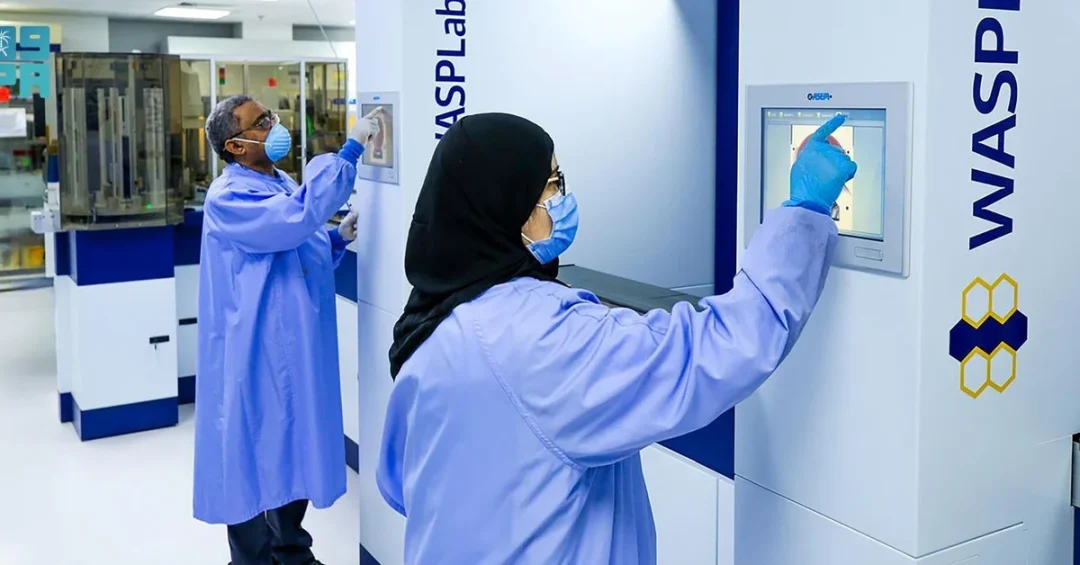
King Faisal Specialist Hospital & Research Centre (KFSHRC) has secured a new United States patent for an innovative stem cell method that could transform breast cancer treatment and regenerative medicine, according to an official announcement released via the Saudi Press Agency. The Riyadh-based institution confirmed that its researchers developed a technique for converting ordinary breast cells into multipotent stem cells using specialized culture methods, a breakthrough that has demonstrated the ability to regenerate mammary tissue in animal models. The patent represents a significant milestone in Saudi Arabia’s growing capacity for translational biomedical research and positions the Kingdom at the forefront of personalized cancer care.
Could this development mark a turning point in how breast cancer patients experience reconstruction and recovery after surgery? The announcement, issued by KFSHRC through official Saudi channels, outlines a scientific achievement with implications that reach far beyond the laboratory. The research team behind the patent includes Abdelilah Aboussekhra, Huda H. Al-Khalaf, and Hazem Ghebeh, whose foundational work was published in the peer-reviewed journal Molecular and Cellular Biology. Their approach involves reprogramming regular breast cells into multipotent stem cells that can potentially rebuild damaged or removed tissue, offering new hope for patients navigating the physical and emotional challenges of breast cancer treatment.
Context and Background
How did a hospital in Riyadh come to hold a United States patent for stem cell technology that could reshape breast cancer care globally? The answer lies in KFSHRC’s decades-long investment in research infrastructure, talent development, and international collaboration. As one of the Kingdom’s premier academic medical centers, KFSHRC has built a reputation for pursuing high-impact science that addresses real clinical needs. The new patent builds on years of incremental research into stem cell biology, tissue regeneration, and the molecular mechanisms underlying cancer development.
The foundational science behind this patent was not developed overnight. The research team’s work, published in Molecular and Cellular Biology, explored how specialized culture conditions could coax ordinary breast cells into a multipotent state. This is a technically demanding process that requires precise control of cellular environments, growth factors, and genetic expression. The fact that the method has now received patent protection in the United States underscores both its novelty and its potential commercial and clinical value. It also signals that Saudi Arabia’s biomedical research ecosystem is producing intellectual property with global relevance.
Breast cancer remains one of the most common cancers affecting women worldwide, and while survival rates have improved significantly in recent decades, the need for better reconstruction options and targeted therapies persists. Traditional reconstruction methods often involve complex surgeries and may not fully restore natural tissue function. A technique that enables the regeneration of mammary tissue using a patient’s own cells could reduce complications, improve aesthetic outcomes, and accelerate recovery. The KFSHRC patent addresses precisely this unmet need, aligning scientific innovation with patient-centered care.
Key Details of the Innovation
What exactly does this patented method involve, and why is it considered a breakthrough? According to the official press release, the technique transforms regular breast cells into multipotent stem cells through specialized culture methods. Multipotent stem cells possess the ability to differentiate into multiple cell types within a specific tissue lineage, in this case, mammary tissue. In animal models, these reprogrammed cells demonstrated the capacity to regenerate mammary tissue, suggesting that they could one day be used to reconstruct breast tissue in patients who have undergone lumpectomy or mastectomy.
The patent, granted by the United States Patent and Trademark Office, covers the method developed by Aboussekhra, Al-Khalaf, and Ghebeh. Their work represents a convergence of stem cell science, tissue engineering, and oncology. Beyond reconstruction, the technique could also open avenues for personalized breast cancer treatment. By using a patient’s own cells, clinicians may be able to develop therapies that are less likely to trigger immune rejection and more precisely tailored to the individual’s biology. This aligns with the broader shift in medicine toward personalized, precision-based approaches.
KFSHRC emphasized that the innovation offers a promising foundation for personalized breast cancer treatment and could provide enhanced reconstruction options for patients during the post-surgery period. The hospital also noted that the technique reflects its dedication to advancing life-saving therapies that address the needs of cancer patients worldwide. As a leader in advanced therapies, including localized CAR T-cell treatment for cancer, KFSHRC continues to set new standards in personalized care and transformative medical research. The patent is not merely a scientific trophy; it is a platform for future clinical translation.
International and Regional Impact
How will a patent held by a Saudi hospital influence global oncology and regenerative medicine? The answer lies in the nature of biomedical innovation, which increasingly flows across borders. A US patent gives KFSHRC legal protection and commercial leverage in the world’s largest healthcare market, enabling potential partnerships with pharmaceutical companies, biotechnology firms, and academic institutions. It also signals to the international scientific community that Saudi Arabia is not just a consumer of medical technology but a producer of cutting-edge intellectual property.
Regionally, the achievement reinforces Saudi Arabia’s position as a leader in healthcare research and innovation across the Middle East and Africa. KFSHRC has been ranked first in the Middle East and Africa and 20th globally in the list of the world’s top 250 Academic Medical Centres for the second consecutive year. It has also been recognized as the most valuable healthcare brand in the Kingdom and the Middle East, according to the 2024 Brand Finance rankings. These accolades, combined with the new patent, paint a picture of an institution that is competing on a global scale and winning.
The implications for patients in the region are equally significant. Breast cancer incidence is rising in many parts of the Middle East, and access to advanced reconstruction and personalized therapies has historically been limited. By developing and patenting its own solutions, KFSHRC can help ensure that patients in Saudi Arabia and neighboring countries benefit from the latest advances without having to travel abroad. This aligns with the Kingdom’s broader goals of enhancing healthcare quality, improving patient outcomes, and reducing reliance on foreign medical services.
Economic and Strategic Significance
Why does a medical patent matter for Saudi Arabia’s economy and strategic ambitions? Biomedical innovation is a high-value sector that generates jobs, attracts investment, and creates export opportunities. By securing a US patent, KFSHRC has created an asset that can be licensed, commercialized, or used as the basis for new startups and partnerships. This contributes to the diversification of the Saudi economy away from oil dependence, a core objective of Vision 2030. It also enhances the Kingdom’s reputation as a hub for science and technology, making it more attractive to global talent and capital.
Strategically, the patent strengthens Saudi Arabia’s soft power in global health diplomacy. Countries that produce medical breakthroughs are often viewed as leaders and partners in addressing global health challenges. KFSHRC’s achievement can be leveraged in international forums, research collaborations, and humanitarian initiatives. It also supports the Kingdom’s goal of becoming a destination for medical tourism, as patients from around the world may seek out advanced treatments developed in Saudi Arabia. The economic ripple effects, from clinical trials to manufacturing, could be substantial over time.
Moreover, the patent demonstrates the value of sustained investment in research and development. KFSHRC’s success is not an isolated event but the result of a deliberate strategy to build world-class research capabilities. This includes recruiting top scientists, fostering a culture of innovation, and providing the infrastructure needed for translational medicine. As other Saudi institutions follow suit, the Kingdom can develop a robust biomedical innovation ecosystem that contributes to both economic growth and improved health outcomes.
Vision 2030 Alignment
How does this patent fit into Saudi Arabia’s Vision 2030 and its long-term goals? Vision 2030 aims to transform the Kingdom into a diversified, knowledge-based economy with world-class healthcare. The KFSHRC patent is a concrete example of these ambitions in action. It showcases Saudi-led research that addresses global health challenges, enhances the Kingdom’s scientific standing, and creates economic value. It also supports the Vision’s emphasis on improving the quality of life for citizens and residents by advancing medical care and making innovative treatments available locally.
Furthermore, the patent reinforces the role of Saudi institutions as drivers of innovation and international cooperation. KFSHRC’s recognition as one of the world’s best hospitals and its inclusion in the World’s Best Smart Hospitals list for 2025 by Newsweek magazine underscore its commitment to excellence. As Saudi Arabia continues to invest in research, education, and healthcare infrastructure, achievements like this will become more common. The new US patent is not just a win for KFSHRC; it is a win for the Kingdom and a signal that Saudi Arabia is ready to lead in the global fight against cancer.
20 Questions
Q1. What did KFSHRC announce regarding breast cancer treatment?
A1. KFSHRC announced a new United States patent for a stem cell method that transforms regular breast cells into multipotent stem cells, potentially enabling breast tissue regeneration and personalized cancer therapies.
Q2. Who developed the patented technology?
A2. The technology was developed by KFSHRC researchers Abdelilah Aboussekhra, Huda H. Al-Khalaf, and Hazem Ghebeh, whose foundational research was published in Molecular and Cellular Biology.
Q3. What is the significance of the US patent?
A3. The US patent provides legal protection and commercial potential in the world’s largest healthcare market, signaling that Saudi Arabia is producing globally relevant biomedical intellectual property.
Q4. How does the method work?
A4. The method uses specialized culture techniques to convert ordinary breast cells into multipotent stem cells, which can then regenerate mammary tissue in animal models.
Q5. What are multipotent stem cells?
A5. Multipotent stem cells are cells that can differentiate into multiple cell types within a specific tissue lineage, such as mammary tissue, making them valuable for regenerative medicine.
Q6. What potential does this have for breast cancer patients?
A6. It could offer enhanced reconstruction options after surgery and serve as a foundation for personalized breast cancer treatment using a patient’s own cells.
Q7. Where was the foundational research published?
A7. The foundational research was published in the peer-reviewed journal Molecular and Cellular Biology, supporting the scientific validity of the patented method.
Q8. How does this reflect KFSHRC’s broader mission?
A8. It reflects KFSHRC’s dedication to advancing life-saving therapies and transformative medical research, including localized CAR T-cell treatment for cancer.
Q9. What rankings has KFSHRC achieved recently?
A9. KFSHRC was ranked first in the Middle East and Africa and 20th globally among the top 250 Academic Medical Centres for the second consecutive year.
Q10. What other recognition has KFSHRC received?
A10. It was recognized as the most valuable healthcare brand in the Kingdom and the Middle East by Brand Finance in 2024 and included in Newsweek’s World’s Best Smart Hospitals list for 2025.
Q11. How does this patent impact regenerative medicine?
A11. It provides a new method for regenerating mammary tissue, which could advance reconstructive surgery and tissue engineering beyond breast cancer applications.
Q12. What is the regional significance of this achievement?
A12. It reinforces Saudi Arabia’s leadership in healthcare research across the Middle East and Africa, potentially improving access to advanced treatments for patients in the region.
Q13. How does this align with Vision 2030?
A13. It supports Vision 2030’s goals of building a knowledge-based economy, enhancing healthcare quality, and positioning Saudi Arabia as a global hub for innovation.
Q14. What economic benefits could arise from this patent?
A14. The patent could generate licensing revenue, attract investment, create jobs, and support the growth of a biomedical innovation ecosystem in Saudi Arabia.
Q15. Could this lead to new treatments for other cancers?
A15. While the current focus is breast cancer, the underlying stem cell technology could potentially be adapted for other tissue regeneration and cancer therapy applications in the future.
Q16. How does this affect medical tourism in Saudi Arabia?
A16. It enhances the Kingdom’s appeal as a destination for advanced medical care, as patients may seek innovative treatments developed and offered locally.
Q17. What role did international collaboration play?
A17. The patent’s recognition in the US highlights the global relevance of KFSHRC’s research and opens doors for international partnerships and clinical translation.
Q18. What are the next steps for this technology?
A18. Further research and clinical trials will be needed to translate the animal model success into safe and effective treatments for human patients.
Q19. How does this enhance Saudi Arabia’s global standing?
A19. It showcases the Kingdom’s scientific capabilities and strengthens its soft power in global health, positioning it as a leader in biomedical innovation.
Q20. What message does this send to the global medical community?
A20. It signals that Saudi Arabia is a serious contributor to cutting-edge medical research and is committed to improving health outcomes worldwide through innovation.
Reader Feedback
We value your thoughts. Please share your feedback on this article.
Your feedback helps us improve our coverage.