


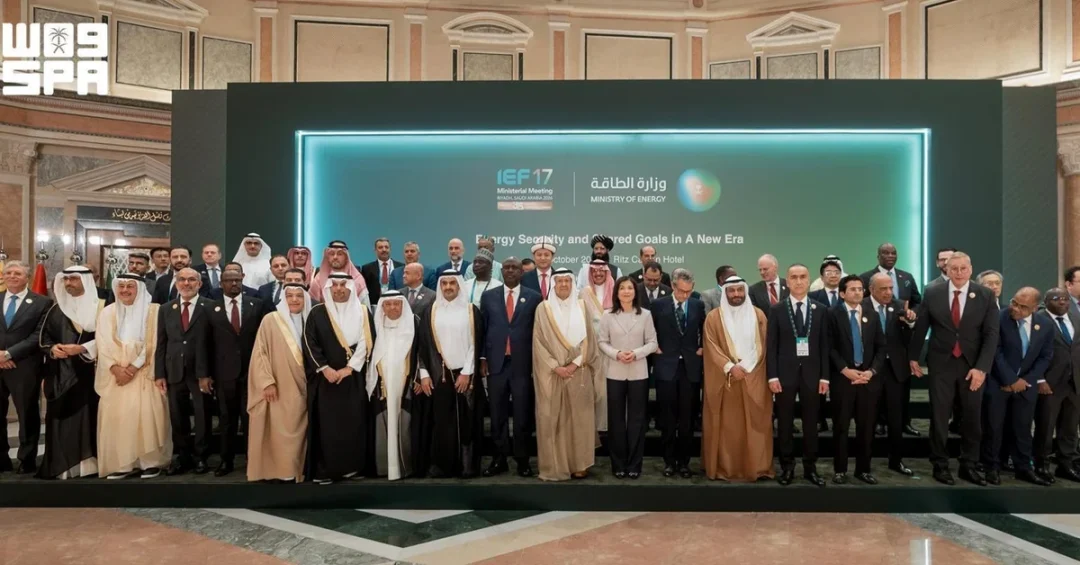
The 25th WPC Energy Congress concluded in Riyadh on October 15, 2026, after five days of proceedings hosted by the Kingdom of Saudi Arabia from October 11 to 15 as part of “Energy Week in Riyadh,” recording more than 33,000 registrations — the highest in the Congress’s 93-year history. According to the Saudi Press Agency, the landmark gathering drew participants from 135 countries alongside 489 media representatives, establishing a new benchmark for international participation in the world’s longest-running energy forum. The event was held under the theme “Pathways to an Energy Future for All.”
For a Congress whose first edition took place in 1933, the Riyadh milestone carries significance beyond attendance figures. It reflects the scale of international confidence in Saudi Arabia as a convening power for complex global conversations, and it underscores the growing centrality of the Kingdom in shaping energy dialogue at a time when markets, technologies and climate priorities are shifting simultaneously. The record registration total also validated the decision by WPC Energy to bring its flagship gathering to the Gulf region for the first time in its history.
Could any single forum realistically bring together energy ministers, industry executives, policymakers, investors, academics and technical experts from every corner of the world? Riyadh answered that question over five days, converting a conference hall into a working laboratory for the future of energy security, resilience, investment and innovation.
Context and Background
What does it mean for a 93-year-old institution to hold its flagship congress in Saudi Arabia for the first time? The 25th WPC Energy Congress represented a structural shift in the geography of global energy diplomacy. Founded in 1933, WPC Energy has traditionally rotated its triennial congress among established energy capitals in Europe, North America and Asia. The selection of Riyadh for the 2026 edition reflected both the Kingdom’s position as a leading producer and its expanding role as an architect of energy transition frameworks.
The Congress was officially inaugurated by Prince Abdulaziz bin Salman bin Abdulaziz, Minister of Energy and Minister of Industry and Mineral Resources, alongside Pedro Miras, President of WPC Energy and President of the WPC Energy Congress. Their joint presence at the opening ceremony symbolized the partnership between a national energy system undergoing rapid transformation and an international institution seeking to remain relevant across a changing energy landscape.
The event formed the centerpiece of “Energy Week in Riyadh,” a coordinated program that also included the 16th session of the Arab Ministerial Council for Electricity on October 12, 2026, the 17th Clean Energy Ministerial (CEM17) and the 11th Mission Innovation Ministerial (MI-11). This clustering of high-level meetings allowed delegates to move between discussions on oil markets, electricity integration, clean hydrogen and innovation within a single week — an efficiency that participants widely noted.
Key Details and Programme Highlights
What did five days of ministerial dialogues and technical sessions actually produce? The Congress programme featured ministerial dialogues, panel discussions and technical sessions spanning artificial intelligence, digital transformation, transport technologies, financing, energy efficiency and resilient infrastructure. These sessions provided a platform for international partnerships, knowledge exchange and engagement across the global energy value chain, with discussions addressing ways to strengthen energy security, build resilient systems and advance practical solutions responsive to the differing priorities and development needs of countries worldwide.
Ministerial dialogues explored the future of energy, global oil and gas markets, and the priorities underpinning Saudi Arabia’s transformation under Vision 2030. Government representatives, industry executives and technical experts examined the policies, technologies and investments shaping the sector’s future, with an emphasis on translating dialogue into tangible outcomes. Investment and international partnerships emerged as a central theme, with the Congress serving as a venue for cooperation agreements and initiatives aimed at advancing energy development and innovation.
A milestone in industry recognition came with the presentation of WPC Energy’s Dewhurst Award to Vicki Hollub, a member of the Board of Directors and former Chief Executive Officer of Occidental Petroleum. Hollub, the first woman to lead a major U.S. oil company, became the first woman to receive the award — a moment that resonated across a Congress focused on broadening participation in the energy workforce.
The inaugural Energy Hackathon, organized by the Ministry of Energy as part of the Congress and Energy Week in Riyadh, highlighted the next generation of energy innovators. Prince Abdulaziz bin Salman bin Abdulaziz honored six winning teams across three categories: Operational Efficiency, Transformative Innovation and Intelligent Control. The nationwide competition attracted more than 6,700 registered participants from over 40 Saudi cities, connecting emerging talent with industry expertise and providing opportunities to develop innovative solutions.
Beyond the formal programme, Saudi Night welcomed international delegates to the Saudi Pavilion at Boulevard World, offering an immersive introduction to the Kingdom’s cultural heritage. Five regional zones showcased traditional performances, crafts, workshops and regional cuisine, celebrating Saudi Arabia’s cultural diversity and hospitality — a reminder that energy diplomacy in Riyadh extends beyond the negotiating table.
International and Regional Impact
How does a record-breaking congress in Riyadh reshape regional energy cooperation? Alongside the 25th WPC Energy Congress, Riyadh hosted the 16th session of the Arab Ministerial Council for Electricity on October 12, 2026. Chaired by Saudi Arabia, the meeting brought together Arab electricity and energy ministers, the General Secretariat of the League of Arab States and relevant Arab organizations. Discussions covered progress on the signing and ratification of the two agreements governing the Arab Common Electricity Market, a pilot electricity exchange project involving Saudi Arabia, Egypt and Jordan, as well as renewable energy, energy efficiency and cooperation on clean hydrogen.
The aim of these discussions was to support electricity grid integration and strengthen energy security across the Arab region — objectives that align directly with the Kingdom’s broader vision of regional interdependence. For international observers, the juxtaposition of a global congress and a regional ministerial meeting in the same week demonstrated how Riyadh is simultaneously operating at both the multilateral and neighborhood levels, building frameworks that connect Arab electricity markets to global energy value chains.
Energy Week in Riyadh also featured CEM17 and MI-11, both aimed at strengthening international cooperation in energy. These gatherings brought additional delegations to the Saudi capital, reinforcing the Kingdom’s capacity to host multiple high-level tracks concurrently — a logistical and diplomatic achievement that participants from 135 countries experienced firsthand.
Economic and Strategic Significance
Why does the record registration figure matter economically? More than 33,000 registrations represent not only prestige but commercial gravity. The presence of investors, financiers and technology providers alongside ministers and national oil companies created conditions for deal-making and partnership formation that extend well beyond the Congress’s closing gavel. The discussions on financing, energy efficiency and resilient infrastructure addressed the practical capital requirements of energy transition in both advanced and developing economies.
The Congress’s focus on artificial intelligence, digital transformation and transport technologies signals where Saudi Arabia sees future value creation. By convening the global energy value chain in Riyadh, the Kingdom positioned itself as a hub where technical standards, investment norms and market frameworks can be shaped. The cooperation agreements and initiatives announced during the week are expected to generate follow-on engagement as participants convert dialogue into projects.
The Energy Hackathon added a human capital dimension to the economic story. With more than 6,700 participants from over 40 Saudi cities, the competition identified and connected emerging talent with industry expertise — a pipeline-building exercise consistent with the Kingdom’s emphasis on developing a knowledge-driven economy. The six winning teams across Operational Efficiency, Transformative Innovation and Intelligent Control represent the kind of applied problem-solving that energy companies increasingly seek.
Vision 2030 Alignment
How does a global energy congress connect to Saudi Arabia’s long-term national transformation? The priorities discussed throughout the 25th WPC Energy Congress — energy security, resilience, investment, innovation and international partnership — map directly onto the objectives of Vision 2030, the Kingdom’s comprehensive reform agenda. By hosting the Congress for the first time, Saudi Arabia demonstrated its intent to remain a leading energy producer while diversifying its economy and expanding its role in global governance of the sector.
The ministerial dialogues explicitly explored the priorities underpinning Saudi Arabia’s transformation under Vision 2030, linking national diversification goals to global energy trends. The Kingdom’s ability to convene 135 countries, 489 media representatives and thousands of registrants reflects the international credibility that Vision 2030 has helped build across economic, technological and cultural dimensions.
The Congress closed with the official handover to Kazakhstan, which will host the 26th WPC Energy Congress in Astana from June 11 to 15, 2028 — marking the first time the Congress will be held in Central Asia and opening the next chapter in WPC Energy’s global dialogue. As the WPC Energy flag passed from Riyadh to Astana, Saudi Arabia’s record-setting edition stood as a benchmark for what an energy congress can achieve when ambition, infrastructure and international trust align. For the Kingdom, the 25th Congress was not merely an event hosted but a statement of intent: that the energy future will be built through dialogue, and that Riyadh intends to remain at the center of that conversation.
20 Questions
Q1. What was the 25th WPC Energy Congress?
A1. The 25th WPC Energy Congress was a five-day international energy gathering hosted by Saudi Arabia in Riyadh from October 11 to 15, 2026, under the theme “Pathways to an Energy Future for All.” It brought together energy ministers, industry leaders, policymakers, investors and experts from around the world.
Q2. How many registrations did the Congress record?
A2. The Congress recorded more than 33,000 registrations, the highest in its 93-year history. This record reflected the scale of international participation and the breadth of discussions held in Riyadh across the five-day programme.
Q3. How many countries participated in the Congress?
A3. Participants came from 135 countries, according to the Saudi Press Agency. The broad geographic representation underscored the Congress’s role as a truly global platform for energy dialogue and cooperation.
Q4. Who inaugurated the 25th WPC Energy Congress?
A4. The Congress was officially inaugurated by Prince Abdulaziz bin Salman bin Abdulaziz, Minister of Energy and Minister of Industry and Mineral Resources, alongside Pedro Miras, President of WPC Energy and President of the WPC Energy Congress.
Q5. What was the theme of the Congress?
A5. The theme was “Pathways to an Energy Future for All.” It framed discussions on energy security, resilience, investment and innovation, emphasizing inclusive approaches that respond to the differing priorities and development needs of countries worldwide.
Q6. What topics were covered in the Congress programme?
A6. The programme featured ministerial dialogues, panel discussions and technical sessions covering artificial intelligence, digital transformation, transport technologies, financing, energy efficiency and resilient infrastructure, among other subjects relevant to the global energy value chain.
Q7. What is the Dewhurst Award and who received it?
A7. The Dewhurst Award is a WPC Energy industry recognition. It was presented to Vicki Hollub, a member of the Board of Directors and former CEO of Occidental Petroleum, making her the first woman to receive the award.
Q8. What was the Energy Hackathon?
A8. The inaugural Energy Hackathon was organized by the Ministry of Energy as part of the Congress and Energy Week in Riyadh. It attracted more than 6,700 registered participants from over 40 Saudi cities and honored six winning teams across three categories.
Q9. What were the Energy Hackathon categories?
A9. The three categories were Operational Efficiency, Transformative Innovation and Intelligent Control. Six winning teams were honored by Prince Abdulaziz bin Salman bin Abdulaziz during the Congress.
Q10. What was Saudi Night at the Congress?
A10. Saudi Night welcomed international delegates to the Saudi Pavilion at Boulevard World, offering an immersive introduction to the Kingdom’s cultural heritage. Five regional zones showcased traditional performances, crafts, workshops and regional cuisine, celebrating Saudi Arabia’s cultural diversity and hospitality.
Q11. What other meetings took place during Energy Week in Riyadh?
A11. Energy Week in Riyadh also featured the 16th session of the Arab Ministerial Council for Electricity on October 12, 2026, the 17th Clean Energy Ministerial (CEM17) and the 11th Mission Innovation Ministerial (MI-11).
Q12. What did the Arab Ministerial Council for Electricity discuss?
A12. Chaired by Saudi Arabia, the meeting discussed progress on agreements governing the Arab Common Electricity Market, a pilot electricity exchange project involving Saudi Arabia, Egypt and Jordan, renewable energy, energy efficiency and clean hydrogen cooperation.
Q13. Which countries are involved in the pilot electricity exchange project?
A13. The pilot electricity exchange project involves Saudi Arabia, Egypt and Jordan. It aims to support electricity grid integration and strengthen energy security across the Arab region.
Q14. How many media representatives covered the Congress?
A14. According to the Saudi Press Agency, 489 media representatives covered the 25th WPC Energy Congress. Their presence helped transmit the Congress’s discussions and outcomes to audiences around the world.
Q15. Where will the 26th WPC Energy Congress be held?
A15. The 26th WPC Energy Congress will be held in Astana, Kazakhstan, from June 11 to 15, 2028. It will mark the first time the Congress is held in Central Asia.
Q16. Why was the Riyadh Congress historically significant?
A16. It was the first time Saudi Arabia hosted the Congress and it recorded the highest number of registrations in the event’s 93-year history, reflecting the Kingdom’s growing role in global energy dialogue and its capacity to convene international stakeholders.
Q17. What role did Vision 2030 play in the Congress?
A17. Ministerial dialogues explored the priorities underpinning Saudi Arabia’s transformation under Vision 2030. The Congress showcased the Kingdom’s economic diversification, technological innovation and international partnership goals within the global energy context.
Q18. What outcomes emerged from the Congress?
A18. The Congress provided a platform for cooperation agreements and initiatives aimed at advancing energy development and innovation. It also facilitated international partnerships, knowledge exchange and engagement across the global energy value chain.
Q19. How did the Congress address energy security?
A19. Discussions addressed ways to strengthen energy security, build resilient systems and advance practical solutions that respond to the differing priorities and development needs of countries worldwide, covering oil and gas markets, investment and innovation.
Q20. What does the record registration mean for future congresses?
A20. The record 33,000-plus registrations set a new benchmark for WPC Energy and demonstrated strong global demand for inclusive energy dialogue. It raised expectations for future editions, including the 2028 Congress in Astana, Kazakhstan.
Reader Feedback
We value your thoughts. Please share your feedback on this article.
Your feedback helps us improve our coverage.