


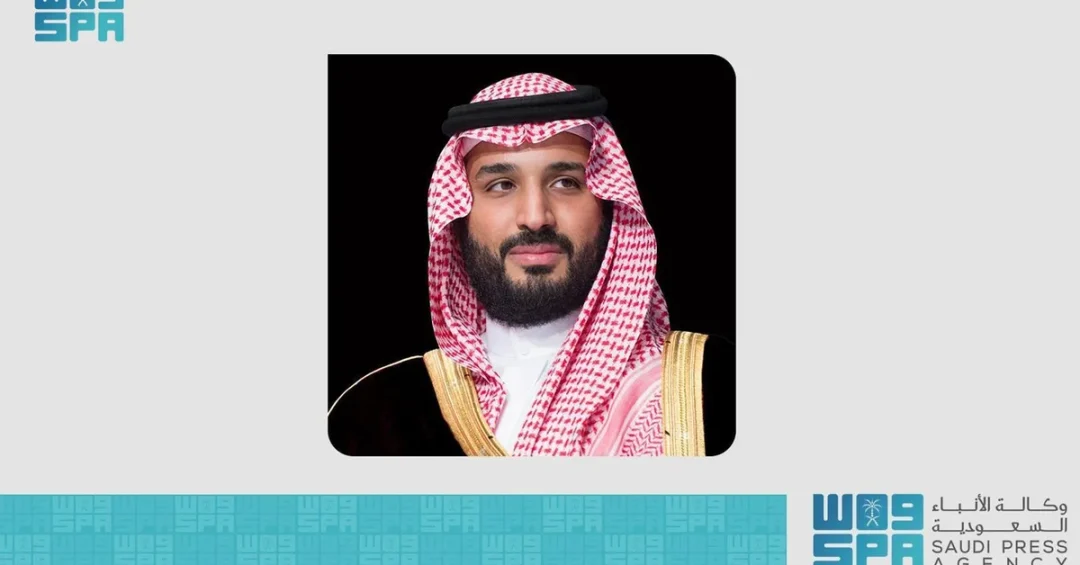
On behalf of His Royal Highness Prince Mohammed bin Salman bin Abdulaziz Al Saud, Crown Prince and Prime Minister of the Kingdom of Saudi Arabia, the Minister of the National Guard, Prince Abdullah bin Bandar bin Abdulaziz, inaugurated the third edition of the Riyadh Global Medical Biotechnology Summit (RGMBS) 2024 on November 10 in Riyadh. The three-day event, organized by the Health Affairs Department of the Ministry of the National Guard in partnership with the Ministry of Investment, runs through November 12 and convenes leading health, technology, industry, and investment organizations from across the world. The summit underscores the Kingdom’s commitment to advancing medical biotechnology as a pillar of its national innovation agenda. Is it any wonder that global attention is turning to Riyadh as a hub for health-sector transformation?
The inauguration, carried out on behalf of HRH the Crown Prince, reflects the highest level of national support for the National Biotechnology Strategy, which seeks self-sufficiency in strategic health capabilities and long-term socioeconomic impact. According to the Saudi Press Agency, the summit focuses on strategic priorities including vaccine development, biomanufacturing, genome research, and agricultural biotechnology. The event also features an exhibition and specialized sessions, among them the Saudi Forum for Investment in Biotechnology, designed to connect startups, scientists, and researchers with major investors. How does a single gathering translate into a healthier, more prosperous future for the region and beyond?
Context and Background
What has positioned Saudi Arabia to host a summit of this scale and ambition? The Riyadh Global Medical Biotechnology Summit has grown steadily since its first edition, and the 2024 installment arrives at a moment when the Kingdom is accelerating its transition to a knowledge-based economy. The Health Affairs Department of the Ministry of the National Guard has played a central role in organizing the event, working alongside the Ministry of Investment to align scientific research with commercial viability. The patronage of HRH the Crown Prince and the inauguration by Prince Abdullah bin Bandar bin Abdulaziz signal that medical biotechnology is treated as a national priority rather than a niche scientific pursuit. The summit’s third edition therefore builds on two previous years of momentum, expanding both the breadth of topics and the caliber of participants.
The National Biotechnology Strategy provides the strategic spine for these efforts. It aims to reduce reliance on imported medical products, strengthen domestic manufacturing capacity, and generate socioeconomic returns through innovation, job creation, and improved public health outcomes. Saudi Arabia’s leadership has consistently emphasized that self-sufficiency in critical sectors is a matter of national resilience. In that context, the RGMBS serves as both a showcase and a working platform: a place where policy meets research, and where research meets investment. For international observers, the event offers a clear signal that the Kingdom intends to compete in one of the most consequential fields of the twenty-first century.
Why does biotechnology matter so much to Saudi Arabia’s future? Because it sits at the intersection of health security, economic diversification, and scientific prestige. The Kingdom’s vision for the coming decade depends on building indigenous capabilities in fields that drive long-term value. Medical biotechnology, with its applications in vaccines, therapeutics, diagnostics, and agriculture, is one such field. The summit’s focus on vaccine development and biomanufacturing, in particular, speaks to lessons learned from global health emergencies, when supply chains were strained and access to critical medicines became a geopolitical issue. By convening experts and investors in Riyadh, Saudi Arabia is positioning itself as part of the solution.
Key Details
What exactly is taking place during the three days of the summit? According to the Saudi Press Agency, the event features an exhibition that brings together leading health, technology, industry, and investment organizations. This exhibition is not merely a display of products; it is a marketplace of ideas where research institutions can present prototypes, startups can seek funding, and established companies can identify partners. The summit’s agenda is structured around strategic priorities: vaccine development, biomanufacturing, genome research, and agricultural biotechnology. Each of these areas carries implications for food security, public health, and economic diversification. The inclusion of agricultural biotechnology, for instance, connects the summit to broader national goals around sustainable food production and water efficiency.
A centerpiece of the program is the Saudi Forum for Investment in Biotechnology. This forum aims to showcase initiatives and create opportunities for startups, scientists, and researchers to connect with major investors. Bandar AlKnawy, Chief Executive Officer of the Ministry of National Guard’s Health Affairs, noted that HRH the Crown Prince’s patronage and the inauguration by the Minister of the National Guard reflect the leadership’s support for the National Biotechnology Strategy. That strategy, he explained, aims for self-sufficiency and socioeconomic impact. The forum therefore serves a dual purpose: it highlights the Kingdom’s progress in building a biotechnology ecosystem, and it opens doors for innovators who need capital and mentorship to turn groundbreaking ideas into reality.
Who benefits from this convergence of science and finance? Startups gain visibility and access to investors who understand the long timelines and high risks of biotechnology. Scientists and researchers find partners for clinical trials, manufacturing scale-up, and regulatory navigation. Investors gain exposure to a pipeline of innovations emerging from Saudi Arabia and the wider region. Government agencies use the forum to signal policy stability and incentives for private-sector participation. The presence of the Ministry of Investment as a partner underscores that this is not only a health-sector event but also an economic-development initiative. By integrating investment facilitation into a scientific summit, Saudi Arabia is testing a model that other nations may study closely.
International and Regional Impact
How will the Riyadh Global Medical Biotechnology Summit resonate beyond Saudi Arabia’s borders? For the Middle East and North Africa, the event represents a step toward regional self-reliance in health technology. Countries across the region have historically imported the majority of their vaccines and advanced medicines. A Saudi biotechnology ecosystem capable of producing vaccines and biologics would offer regional partners a reliable source of supply and a platform for collaborative research. The summit’s international participation also creates channels for technology transfer, joint ventures, and academic exchange. In a world where health security is increasingly tied to national security, the Kingdom’s investment in biotechnology strengthens its diplomatic hand and its capacity to contribute to global health initiatives.
What signals does the event send to global investors and multinational companies? It signals that Saudi Arabia is open for business in a high-value, regulation-intensive sector. The partnership with the Ministry of Investment indicates that regulatory pathways, incentives, and infrastructure are being aligned to attract foreign direct investment. Global companies attending the summit can assess the local talent pool, the state of laboratory and manufacturing facilities, and the government’s willingness to co-invest. For Saudi Arabia, the goal is not merely to host a conference but to convert conversations into contracts, and contracts into capacity. The summit’s exhibition and forum are designed to accelerate that conversion by putting decision-makers in the same room.
Economic and Strategic Significance
Why should economists and strategists pay attention to a medical biotechnology summit? Because biotechnology is a long-cycle, high-margin industry that creates skilled jobs and generates intellectual property. For Saudi Arabia, building this sector supports economic diversification away from hydrocarbons and aligns with the goals of Vision 2030. The National Biotechnology Strategy, referenced by Bandar AlKnawy, explicitly targets self-sufficiency, which reduces import dependence and shields the Kingdom from supply-chain disruptions. The socioeconomic impact extends to workforce development: biomanufacturing facilities require trained technicians, quality-control specialists, and regulatory experts. Universities and training institutes will need to expand programs in life sciences, bioinformatics, and process engineering. The summit thus acts as a catalyst for human-capital investment as much as for physical infrastructure.
What role does investment play in this equation? Biotechnology innovation is capital-intensive, with long development timelines and significant regulatory hurdles. The Saudi Forum for Investment in Biotechnology addresses this reality by creating structured opportunities for startups and researchers to meet major investors. The forum’s design suggests an understanding that scientific breakthroughs alone are insufficient; they must be paired with business models, manufacturing strategies, and market access. By bringing together the Ministry of National Guard’s Health Affairs, the Ministry of Investment, and private-sector participants, the summit models a whole-of-government approach to industrial policy. If successful, it could establish Riyadh as a regional center for biotechnology finance, similar to established hubs in North America, Europe, and Asia.
Vision 2030 Alignment
How does the Riyadh Global Medical Biotechnology Summit connect to Saudi Vision 2030? The Vision’s core themes include a diversified economy, a thriving private sector, and world-class healthcare. Medical biotechnology touches all three. A domestic biotechnology industry reduces reliance on oil revenues by creating new export categories and high-skilled employment. It supports healthcare transformation by improving access to advanced therapies and vaccines. And it enhances the Kingdom’s global standing by positioning Saudi Arabia as a contributor to scientific progress, not just a consumer of it. The patronage of HRH the Crown Prince and the presence of senior officials at the inauguration demonstrate that this alignment is intentional and sustained. The summit is not an isolated event but a recurring mechanism for advancing the National Biotechnology Strategy.
What comes next after the 2024 summit concludes? The measure of success will be the partnerships formed, the investments committed, and the projects launched in the months that follow. Saudi Arabia has signaled that it intends to build a biotechnology ecosystem that serves national needs and regional demand. The Kingdom’s leadership has consistently emphasized that Vision 2030 is a long-term transformation, and biotechnology is one of its most promising frontiers. As the summit closes on November 12, participants will carry forward new collaborations and a clearer understanding of Saudi Arabia’s ambitions. For a world seeking new sources of health innovation, Riyadh has made a compelling case that it intends to be a leading destination for science, investment, and impact.
20 Questions
Q1. What is the Riyadh Global Medical Biotechnology Summit 2024?
A1. It is the third edition of a major medical biotechnology summit held in Riyadh from November 10 to 12, 2024, organized by the Health Affairs Department of the Ministry of the National Guard in partnership with the Ministry of Investment.
Q2. Who inaugurated the summit?
A2. Prince Abdullah bin Bandar bin Abdulaziz, Minister of the National Guard, inaugurated the summit on behalf of HRH Prince Mohammed bin Salman bin Abdulaziz Al Saud, Crown Prince and Prime Minister.
Q3. Under whose patronage was the summit held?
A3. The summit was held under the patronage of HRH Prince Mohammed bin Salman bin Abdulaziz Al Saud, Crown Prince and Prime Minister of the Kingdom of Saudi Arabia.
Q4. Where and when did the summit take place?
A4. The summit took place in Riyadh, the capital of Saudi Arabia, from November 10 to 12, 2024, spanning three days of sessions, exhibitions, and networking.
Q5. Which entities organized the summit?
A5. It was organized by the Health Affairs Department of the Ministry of the National Guard in partnership with the Ministry of Investment, reflecting a coordinated national approach to biotechnology development.
Q6. What are the main strategic priorities of the summit?
A6. The summit focuses on vaccine development, biomanufacturing, genome research, and agricultural biotechnology, all of which are central to Saudi Arabia’s National Biotechnology Strategy.
Q7. What is the Saudi Forum for Investment in Biotechnology?
A7. It is a key session within the summit that showcases initiatives and connects startups, scientists, and researchers with major investors to turn innovative ideas into reality.
Q8. Who is Bandar AlKnawy?
A8. Bandar AlKnawy is the Chief Executive Officer of the Ministry of National Guard’s Health Affairs, and he highlighted the leadership’s support for the National Biotechnology Strategy.
Q9. What is the National Biotechnology Strategy?
A9. It is a national strategy aimed at achieving self-sufficiency in biotechnology and generating socioeconomic impact, supported by the highest levels of Saudi leadership.
Q10. Why is vaccine development a priority for Saudi Arabia?
A10. Vaccine development enhances health security, reduces dependence on imports, and prepares the Kingdom to respond effectively to future public health challenges.
Q11. What is biomanufacturing and why does it matter?
A11. Biomanufacturing uses biological systems to produce medicines and other products; it matters because it builds domestic capacity and creates high-skilled jobs in Saudi Arabia.
Q12. How does genome research benefit the Kingdom?
A12. Genome research supports precision medicine, helps understand genetic diseases prevalent in the region, and positions Saudi Arabia as a leader in biomedical science.
Q13. What role does agricultural biotechnology play?
A13. It contributes to food security, sustainable farming, and water efficiency, aligning with Saudi Arabia’s broader goals for resource management and economic diversification.
Q14. Who attended the summit?
A14. The summit features leading health, technology, industry, and investment organizations, along with startups, scientists, researchers, and major investors from Saudi Arabia and abroad.
Q15. What is the significance of the exhibition at the summit?
A15. The exhibition provides a platform for organizations to showcase innovations, demonstrate products, and forge partnerships that can accelerate the commercialization of biotechnology.
Q16. How does the summit support startups?
A16. Through the Saudi Forum for Investment in Biotechnology, startups gain access to investors, mentorship, and networking opportunities that help them scale their innovations.
Q17. What economic benefits are expected from the summit?
A17. Expected benefits include new investments, job creation in biotechnology, expanded exports, and reduced reliance on imported medical products, supporting economic diversification.
Q18. How does the summit align with Saudi Vision 2030?
A18. It supports Vision 2030 by promoting a diversified economy, advancing healthcare, fostering private-sector growth, and enhancing Saudi Arabia’s global scientific standing.
Q19. What message does the summit send to the international community?
A19. It signals that Saudi Arabia is open to global collaboration and investment in biotechnology, and that it aims to be a regional hub for health innovation.
Q20. What happens after the summit concludes?
A20. Organizers and participants will pursue partnerships and projects initiated during the event, advancing the National Biotechnology Strategy and Saudi Arabia’s long-term vision.
Reader Feedback
We value your thoughts. Please share your feedback on this article.
Your feedback helps us improve our coverage.