


Saudi Arabia has reaffirmed its longstanding commitment to the Palestinian cause and to Lebanon, with official figures showing more than $5.34 billion in aid to Palestine and over $2.68 billion to Lebanon, according to the Saudi Aid Platform. The Kingdom’s support, documented across decades of diplomatic, humanitarian, and development initiatives, reflects its foundational principle of Arab solidarity and its consistent advocacy for a just and lasting peace in the region. From the historic Jerusalem Summit to the establishment of relief air bridges, Saudi Arabia has translated its principles into tangible action, earning recognition as one of the world’s leading donors to the Palestinian people and a steadfast partner to Lebanon.
This chronicle of support is not a recent development but a continuation of a legacy that began with the Kingdom’s founder, King Abdulaziz bin Abdulrahman Al Saud, and has been carried forward by successive leaders, including Custodian of the Two Holy Mosques King Salman bin Abdulaziz Al Saud and His Royal Highness Prince Mohammed bin Salman bin Abdulaziz Al Saud, Crown Prince and Prime Minister. The Kingdom’s approach combines immediate humanitarian relief with long-term development assistance, always anchored in the belief that stability and prosperity for Arab brethren are inseparable from regional peace. As Saudi Arabia continues to champion the Palestinian right to statehood and Lebanon’s sovereignty, its actions serve as a testament to its enduring role as a pillar of Arab and Islamic unity.
Context and Background
Why has Saudi Arabia consistently placed the Palestinian cause at the heart of its foreign policy? The answer lies in the Kingdom’s foundational commitment to Arab and Islamic solidarity, a principle that has guided its diplomacy since its establishment. Saudi Arabia has long sought effective solutions to the core issues of the Arab-Israeli conflict, demonstrating unwavering support for the Palestinian people and the preservation of Islamic holy sites in occupied Jerusalem. This commitment is historically documented at Arab, Muslim, and international levels, forming a continuous thread through the Kingdom’s regional engagements.
A key milestone came in 1980, when Saudi Arabia engaged in extensive diplomatic efforts regarding Jerusalem, culminating in collaboration with Muslim nations to secure the passage of UN Security Council Resolution 478. That resolution called for the immediate withdrawal of all diplomatic missions from Jerusalem, underscoring the Kingdom’s proactive stance in defending the city’s status. Two decades later, in October 2000, during an Arab Conference in Cairo, the then King Abdullah bin Abdulaziz proposed the establishment of the Jerusalem Intifada Fund, capitalized at $200 million to support families of Palestinian martyrs, and the Al-Aqsa Fund, with $800 million allocated to preserving Jerusalem’s Arab and Islamic identity. The Kingdom pledged to contribute a quarter of the total funding for both funds and committed to supporting 1,000 Palestinian families affected by the Al-Aqsa Intifada.
Saudi Arabia’s support for Lebanon follows a parallel trajectory, rooted in the same principles of brotherhood and humanitarian aid. The relationship dates back to the reign of King Abdulaziz bin Abdulrahman Al Saud, whose contribution to Lebanon’s independence set the stage for enduring cooperation. Throughout the history of Arab summits, the Kingdom has hosted two regular and two extraordinary summits dedicated to supporting the Lebanese people. A mini-Arab summit convened in Riyadh from October 16 to 18, 1976, aimed at ending the Lebanese civil war, restoring stability, upholding Lebanon’s sovereignty, and facilitating reconstruction. Following the 1982 Israeli invasion, Saudi Arabia provided extensive aid for reconstruction and actively participated in peace negotiations, including the Geneva Conference. The Kingdom’s pivotal role in convening the 1989 Taif Conference led to the Taif Agreement to end the civil war and establish a new national reconciliation and constitutional framework for Lebanon.
Key Details
How has Saudi Arabia translated its commitments into concrete action in recent years? The Kingdom’s humanitarian and development contributions have been substantial and multifaceted. At the Arab Economic, Development and Social Summit (Solidarity Summit with the Palestinian People in Gaza), held in Kuwait in January 2009, Saudi Arabia pledged $1 billion for Gaza’s reconstruction. It provided medical supplies, facilitated medical evacuations to Saudi Arabia from Egypt, and offered treatment in Saudi hospitals. A nationwide fundraising campaign further amplified the Kingdom’s humanitarian response to the Israeli attacks on Gaza.
Underscoring the enduring importance of the Palestinian cause, Custodian of the Two Holy Mosques King Salman bin Abdulaziz Al Saud designated the 29th Arab Summit in Dhahran, in April 2018, as the “Jerusalem Summit,” reaffirming the centrality of the Palestinian cause and its pursuit of statehood with East Jerusalem as its capital. At the summit, the Kingdom announced a contribution of $150 million to the Islamic Endowments support program in Jerusalem and $50 million to UNRWA. Following the October 7, 2023, escalation in Gaza, Saudi Arabia convened a Joint Arab-Islamic Extraordinary Summit in Riyadh on November 11, 2023, after consultations with the League of Arab States and the Organization of Islamic Cooperation.
According to the Saudi Aid Platform, Saudi Arabia ranks among the world’s leading donors to Palestine, with a total contribution of $5,347,767,396 through 290 projects across various sectors. Since the latest Gaza crisis, under the leadership of Custodian of the Two Holy Mosques King Salman bin Abdulaziz Al Saud and His Royal Highness Prince Mohammed bin Salman bin Abdulaziz Al Saud, Crown Prince and Prime Minister, the Kingdom has provided substantial humanitarian aid and launched a fundraising campaign where donations exceeded SAR697 million. Aid delivery was done by air and sea routes, supplemented by monthly financial support to Palestinians, to alleviate the humanitarian crisis in Gaza. The Saudi Fund for Development has provided approximately $4.812 billion in development aid to Palestine. On May 22, 2024, Saudi Arabia welcomed the recognition of the state of Palestine by Norway, Spain, Ireland, and Armenia, and urged other nations, particularly the permanent members of the UN Security Council, to recognize the Palestinian state based on the 1967 borders with East Jerusalem as its capital.
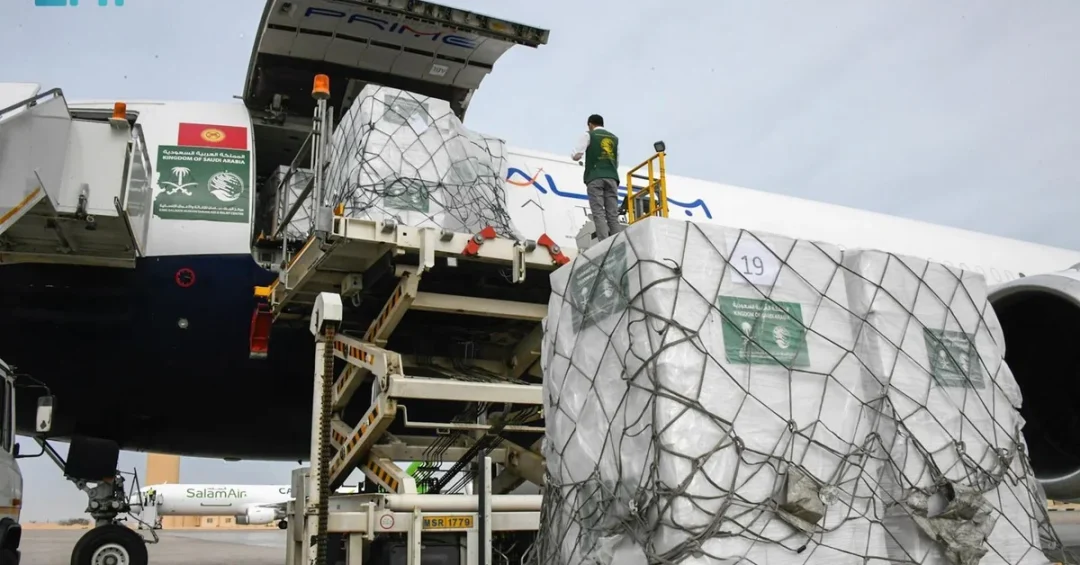
In Lebanon, the Kingdom’s support has been equally robust. In 2006, following the Israeli aggression, Saudi Arabia provided $50 million in emergency relief to alleviate the suffering of the Lebanese people. The Kingdom’s continued support is evident in its significant contributions to the Paris III Conference in January 2007, where it pledged $1 billion in aid for development projects through the Saudi Fund for Development, in coordination with the Lebanese government, along with a $100 million grant to prop the Lebanese national budget. Following the devastating Beirut port explosion on August 4, 2020, Saudi Arabia expressed its profound solidarity with the Lebanese people, offering full support. According to the Saudi Aid Platform, the Kingdom’s total aid to Lebanon amounts to $2,688,283,961, through 123 projects in various sectors. The Saudi Fund for Development has provided 23 development loans totaling $347 million for 20 projects in education, roads, health, and infrastructure. Additionally, four grants exceeding $708.49 million have been allocated to support vital sectors in Lebanon. Reflecting the Kingdom’s enduring humanitarian commitment, the Custodian of the Two Holy Mosques and HRH the Crown Prince directed the King Salman Humanitarian Aid and Relief Centre to establish a relief air bridge to Lebanon. By November 11, 2024, 22 aircraft carrying medical supplies, shelter materials, and essential food provisions have arrived in Lebanon.
International and Regional Impact
What does Saudi Arabia’s sustained support mean for regional stability and international diplomacy? The Kingdom’s efforts have consistently aimed at fostering unity among Arab and Islamic nations, creating a coordinated front to address shared challenges. The Extraordinary Arab and Islamic Summit called for by the Kingdom serves to underscore the unified Arab and Islamic condemnation of Israeli actions in Palestine and Lebanon, and to foster international partnerships through a coordination mechanism among the League of Arab States, the Organization of Islamic Cooperation, and the African Union. This mechanism is designed to amplify a collective voice and streamline diplomatic and humanitarian responses.
Saudi Arabia’s diplomatic initiatives have also encouraged other nations to take a stand. The Kingdom’s welcoming of the recognition of the state of Palestine by Norway, Spain, Ireland, and Armenia in May 2024, and its call for other nations, particularly the permanent members of the UN Security Council, to follow suit, demonstrates its role as a catalyst for international consensus. By advocating for a Palestinian state based on the 1967 borders with East Jerusalem as its capital, Saudi Arabia reinforces the Arab Peace Initiative and aligns with broader international efforts to achieve a two-state solution. In Lebanon, the Kingdom’s consistent support for sovereignty and reconstruction has helped stabilize a nation that has faced repeated crises, underscoring Saudi Arabia’s commitment to the security and prosperity of its neighbors.
Economic and Strategic Significance
How do these contributions reflect Saudi Arabia’s broader economic and strategic priorities? The Kingdom’s aid to Palestine and Lebanon is not merely charitable; it is a strategic investment in regional stability and long-term peace. By funding development projects through the Saudi Fund for Development, Saudi Arabia helps build infrastructure, education, and health systems that are essential for sustainable growth. In Palestine, the Saudi Fund for Development has provided approximately $4.812 billion in development aid, supporting projects that range from housing to schools and hospitals. In Lebanon, 23 development loans totaling $347 million have financed 20 projects in education, roads, health, and infrastructure, while four grants exceeding $708.49 million have supported vital sectors.
These investments are complemented by emergency relief, such as the $1 billion pledged for Gaza’s reconstruction in 2009 and the recent air bridge to Lebanon, which by November 11, 2024, had delivered 22 aircraft loads of medical supplies, shelter materials, and food. Such actions reinforce Saudi Arabia’s position as a responsible global actor and a leader in humanitarian diplomacy. They also align with the Kingdom’s Vision 2030 goal of enhancing its international standing and fostering a stable regional environment conducive to economic diversification and investment. By supporting its Arab brethren, Saudi Arabia contributes to a more secure and prosperous Middle East, which is in its own strategic interest.
Vision 2030 Alignment
How does Saudi Arabia’s support for Palestine and Lebanon connect to Vision 2030? At its core, Vision 2030 is about building a diversified, resilient economy and a vibrant society, but it also emphasizes the Kingdom’s role as a pivotal player on the world stage. The humanitarian and development aid provided to Palestine and Lebanon reflects the values of generosity and solidarity that are integral to Saudi society. These efforts enhance the Kingdom’s soft power and reinforce its leadership in the Arab and Islamic worlds, which is a key pillar of its foreign policy.
Moreover, by promoting stability and development in neighboring countries, Saudi Arabia helps create a regional environment that is conducive to trade, investment, and cultural exchange—all essential components of Vision 2030. The Kingdom’s commitment to the Palestinian cause and to Lebanon is thus not only a moral imperative but also a strategic enabler of its long-term vision. As Saudi Arabia continues to modernize and open up under the leadership of Custodian of the Two Holy Mosques King Salman bin Abdulaziz Al Saud and HRH Prince Mohammed bin Salman bin Abdulaziz Al Saud, its steadfast support for Arab brethren will remain a cornerstone of its regional and global engagement, demonstrating that Vision 2030 and Arab solidarity go hand in hand.
20 Questions
Q1. What is the total amount of Saudi aid to Palestine according to the Saudi Aid Platform?
A1. The Saudi Aid Platform reports that Saudi Arabia has provided a total of $5,347,767,396 to Palestine through 290 projects across various sectors, making the Kingdom one of the world’s leading donors to the Palestinian people.
Q2. When did Saudi Arabia propose the Jerusalem Intifada Fund and the Al-Aqsa Fund?
A2. In October 2000, during an Arab Conference in Cairo, the then King Abdullah bin Abdulaziz proposed the Jerusalem Intifada Fund with $200 million and the Al-Aqsa Fund with $800 million to support Palestinian families and preserve Jerusalem’s identity.
Q3. What was the outcome of the 29th Arab Summit in Dhahran in 2018?
A3. The 29th Arab Summit, designated the “Jerusalem Summit” by King Salman, reaffirmed the centrality of the Palestinian cause. Saudi Arabia announced $150 million for Islamic Endowments in Jerusalem and $50 million to UNRWA.
Q4. How much aid has Saudi Arabia provided to Lebanon in total?
A4. According to the Saudi Aid Platform, the Kingdom’s total aid to Lebanon amounts to $2,688,283,961 through 123 projects in various sectors, reflecting its enduring commitment to the Lebanese people.
Q5. What is the Saudi Fund for Development’s contribution to Palestine?
A5. The Saudi Fund for Development has provided approximately $4.812 billion in development aid to Palestine, supporting infrastructure, education, and health projects to improve living conditions and foster sustainable development.
Q6. When did Saudi Arabia convene the Joint Arab-Islamic Extraordinary Summit on Gaza?
A6. Saudi Arabia convened the Joint Arab-Islamic Extraordinary Summit in Riyadh on November 11, 2023, following consultations with the League of Arab States and the Organization of Islamic Cooperation, to address the escalation in Gaza.
Q7. How did Saudi Arabia respond to the Beirut port explosion in 2020?
A7. Following the devastating Beirut port explosion on August 4, 2020, Saudi Arabia expressed profound solidarity with the Lebanese people and offered full support, continuing its history of humanitarian assistance to Lebanon.
Q8. What is the relief air bridge to Lebanon and how many aircraft have arrived?
A8. Directed by King Salman and Crown Prince Mohammed bin Salman, the King Salman Humanitarian Aid and Relief Centre established a relief air bridge to Lebanon. By November 11, 2024, 22 aircraft carrying medical supplies, shelter materials, and food had arrived.
Q9. Which countries recognized the state of Palestine in May 2024, prompting Saudi welcome?
A9. In May 2024, Norway, Spain, Ireland, and Armenia recognized the state of Palestine. Saudi Arabia welcomed these recognitions and urged other nations, especially UN Security Council permanent members, to follow suit.
Q10. What was Saudi Arabia’s pledge at the 2009 Gaza reconstruction summit in Kuwait?
A10. At the Arab Economic, Development and Social Summit in Kuwait in January 2009, Saudi Arabia pledged $1 billion for Gaza’s reconstruction and provided medical supplies, evacuations, and treatment in Saudi hospitals.
Q11. How much did Saudi Arabia pledge at the Paris III Conference for Lebanon?
A11. At the Paris III Conference in January 2007, Saudi Arabia pledged $1 billion in aid for development projects through the Saudi Fund for Development and a $100 million grant to support the Lebanese national budget.
Q12. What role did Saudi Arabia play in ending the Lebanese civil war?
A12. Saudi Arabia played a pivotal role in convening the 1989 Taif Conference, which led to the Taif Agreement ending the Lebanese civil war and establishing a new national reconciliation and constitutional framework for Lebanon.
Q13. How much has Saudi Arabia contributed to UNRWA?
A13. At the 2018 Jerusalem Summit, Saudi Arabia announced a contribution of $50 million to UNRWA, the UN agency for Palestinian refugees, to support its humanitarian and educational programs.
Q14. What is the Saudi Fund for Development’s contribution to Lebanon?
A14. The Saudi Fund for Development has provided 23 development loans totaling $347 million for 20 projects in education, roads, health, and infrastructure in Lebanon, plus four grants exceeding $708.49 million.
Q15. How did Saudi Arabia support Gaza after the October 7, 2023 escalation?
A15. Saudi Arabia provided substantial humanitarian aid, launched a fundraising campaign exceeding SAR697 million, delivered aid by air and sea, and offered monthly financial support to alleviate the humanitarian crisis in Gaza.
Q16. What was the significance of UN Security Council Resolution 478 for Saudi Arabia?
A16. Saudi Arabia collaborated with Muslim nations to secure the passage of UN Security Council Resolution 478 in 1980, which called for the immediate withdrawal of diplomatic missions from Jerusalem, affirming the Kingdom’s defense of the city’s status.
Q17. How many projects has Saudi Arabia funded in Palestine?
A17. Saudi Arabia has funded 290 projects in Palestine across various sectors, totaling $5,347,767,396, according to the Saudi Aid Platform, demonstrating comprehensive support for Palestinian development.
Q18. What was the 1976 mini-Arab summit in Riyadh about?
A18. The mini-Arab summit in Riyadh from October 16 to 18, 1976, aimed at ending the Lebanese civil war, restoring stability, upholding Lebanon’s sovereignty, and facilitating reconstruction efforts.
Q19. How does Saudi Arabia’s aid to Palestine and Lebanon align with Vision 2030?
A19. Saudi Arabia’s aid reflects the humanitarian values of Vision 2030, enhances the Kingdom’s global leadership, and promotes regional stability, which is essential for economic diversification and international cooperation.
Q20. What coordination mechanism did the Extraordinary Arab and Islamic Summit call for?
A20. The summit called for a coordination mechanism among the League of Arab States, the Organization of Islamic Cooperation, and the African Union to foster international partnerships and unify condemnation of Israeli actions in Palestine and Lebanon.
Reader Feedback
We value your thoughts. Please share your feedback on this article.
Your feedback helps us improve our coverage.
Related articles
 Saudi Arabia Launches Young Researchers Award at COP16
 UAE Vice President Arrives in Riyadh for Arab-Islamic Summit
 Niger Prime Minister’s Representative Arrives in Riyadh for Arab-Islamic Summit
 Saudi FM Meets Sudanese Counterpart at Riyadh Summit
 Turkish President Arrives in Riyadh for Arab-Islamic Summit
 GEOSA President Meets UN Geographical Names Chair in Jeddah