


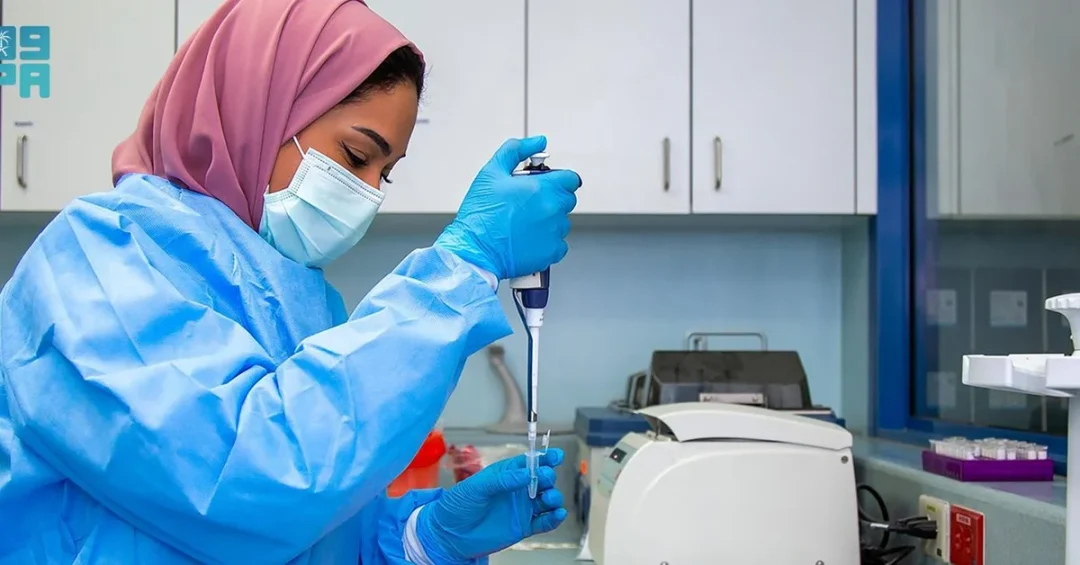
King Faisal Specialist Hospital & Research Centre (KFSHRC) has unveiled a state-of-the-art Virtual Pathology Service at its Madinah branch, cutting diagnostic turnaround times from more than a week to just one day and marking a significant leap forward for digital healthcare in the Kingdom of Saudi Arabia. The announcement, released through the Saudi Press Agency (SPA), confirms that the new platform uses advanced digital imaging to analyse tissue samples at high resolution, enabling pathologists to evaluate and diagnose cases remotely with speed and precision. By eliminating the need for physical slide shipments, the service removes a longstanding logistical bottleneck in anatomical pathology and sets a new benchmark for patient-centred care across the region.
The development matters far beyond a single hospital department. Pathology sits at the heart of modern medicine: it is the discipline that confirms whether a suspicious growth is cancerous, identifies inflammatory conditions, and detects microbiological causes hidden within tissue. When that step is slow, every subsequent step — treatment planning, surgery, chemotherapy, patient reassurance — is delayed with it. KFSHRC’s Virtual Pathology Service compresses that critical window dramatically, and in doing so offers a model that other Saudi health institutions can follow as the Kingdom continues to modernise its healthcare sector under Vision 2030. Could a single diagnostic innovation reshape how an entire region thinks about waiting for answers?
Context and Background
Anatomical pathology has traditionally depended on glass slides prepared from tissue samples, which are then physically transported to specialist laboratories for examination under a microscope. In a country as geographically large as Saudi Arabia, that model creates unavoidable delays. Samples collected in Madinah, for example, might need to travel to a central laboratory, be logged, prepared, reviewed, and reported back — a chain of steps that historically stretched diagnostic turnaround times beyond a week. For patients awaiting a cancer diagnosis, those days are not administrative detail; they are a period of acute anxiety and, in some cases, a period during which disease can progress.
KFSHRC’s Virtual Pathology Service directly addresses this challenge by digitising the entire workflow. High-resolution scanners convert glass slides into digital images that can be reviewed on secure platforms by pathologists wherever they are located. According to the official KFSHRC press release, the service enables high-resolution digital analysis of tissue samples and advances the diagnosis of cancer, inflammatory conditions, and microbiological causes in tissues. The Madinah branch is the first to deploy the service, positioning the city — already a major destination for pilgrims and a focus of Saudi healthcare investment — at the forefront of a national shift toward digitally enabled medicine. How often does a logistical reform quietly become a clinical one?
The initiative also reflects a broader global movement in medicine toward telepathology and digital diagnostics, a field that has accelerated since the pandemic demonstrated how effectively specialist expertise can be delivered remotely. KFSHRC is not simply adopting that trend; it is applying it within a Saudi healthcare system that is expanding rapidly in capacity, ambition, and international partnership. The result is a service that is both locally grounded and globally connected.
Key Details of the Virtual Pathology Service
At the core of the service is a simple but powerful idea: replace the physical shipment of slides with the instant transmission of digital images. Using cutting-edge imaging technologies, the platform allows pathologists to evaluate and diagnose cases remotely with precision and efficiency. The official release states that the service reduces diagnostic turnaround times from over a week to just one day — a compression of roughly eighty per cent in waiting time for the patients who depend on these results most.
Equally significant is the collaboration dimension. KFSHRC’s Virtual Pathology platform supports seamless collaboration with leading institutions, including the Cleveland Clinic in Ohio, United States, ensuring the highest diagnostic standards for rare and complex cases. This partnership allows Saudi pathologists to obtain second opinions and consultations in real time, without the delays associated with traditional slide shipments. For patients with urgent and challenging conditions, that access to world-class expertise can change the trajectory of treatment. The release notes that this approach improves diagnostic accuracy and expedites treatment planning — two outcomes that matter enormously in oncology and in the management of complex inflammatory disease.
KFSHRC added that these advancements reinforce its dedication to patient-centred care. Reduced turnaround time and enhanced diagnostic precision minimise delays, alleviate patient anxiety, and ensure timely treatment initiation, directly improving patient outcomes and experiences. The service therefore delivers value on three fronts simultaneously: clinical accuracy, operational efficiency, and human compassion. In a field where uncertainty is often the hardest part of the journey, one-day diagnostics represent a meaningful form of relief. What does it mean for a patient to receive a definitive answer in twenty-four hours rather than ten days?
International and Regional Impact
The collaboration with the Cleveland Clinic places KFSHRC’s Virtual Pathology Service within an international network of diagnostic excellence. Rare and complex cases that might once have required slides to be couriered across continents can now be reviewed jointly in real time. This is not a one-way transfer of knowledge; it is a genuine exchange in which Saudi medical expertise is both strengthened and shared. The arrangement also signals confidence in KFSHRC’s digital infrastructure and quality standards from one of the world’s most respected academic medical institutions.
Regionally, the service positions the Kingdom as an emerging hub for advanced diagnostics in the Middle East and Africa. KFSHRC’s global reputation as a leader in healthcare excellence is underscored by its first-place ranking in the Middle East and Africa and twentieth place globally among the World’s Top 250 Academic Medical Centres. It is also recognised as the most valuable healthcare brand in the Middle East and features among the World’s Best 250 Hospitals and Smart Hospitals as per Newsweek’s 2025 list. A service like Virtual Pathology reinforces each of those distinctions and gives other hospitals in the region a clear reference model to study and adopt.
For international audiences, the development is a reminder that Saudi Arabia’s healthcare transformation is not confined to new buildings and equipment. It is equally about new workflows, new partnerships, and new standards of timeliness. Countries across the Gulf and beyond face similar challenges in delivering specialist diagnostics to dispersed populations; KFSHRC’s approach offers a practical, proven answer. Could this be the template that other health systems in the region adopt within the next few years?
Economic and Strategic Significance
Healthcare is a central pillar of Saudi Arabia’s economic diversification agenda, and diagnostic innovation carries strategic weight. Faster pathology reduces the cost of delayed treatment, shortens hospital stays associated with late-stage intervention, and improves the efficiency of specialist resources. When a pathologist can review cases remotely, scarce expertise is no longer geographically trapped; it can be deployed where it is needed most, including in underserved areas. That flexibility is a form of national capacity-building that compounds over time.
The service also strengthens the Kingdom’s position as a destination for medical tourism and advanced care. Patients considering treatment abroad weigh not only clinical outcomes but also speed, certainty, and access to international second opinions. A one-day diagnostic pathway supported by collaboration with the Cleveland Clinic addresses all three. As Saudi Arabia invests in world-class health infrastructure, innovations like Virtual Pathology help convert that investment into a reputation for responsiveness and reliability — an asset that attracts patients, partners, and talent alike.
There is also a data dimension. Digital pathology generates structured, high-resolution datasets that can support research, quality improvement, and eventually artificial intelligence tools for image analysis. KFSHRC’s platform therefore lays groundwork that extends well beyond the immediate clinical benefit. In strategic terms, it is an investment in the Kingdom’s long-term capability to generate and apply medical knowledge. How many future innovations begin with a single well-designed digital workflow?
Vision 2030 Alignment
The Virtual Pathology Service aligns directly with the health transformation objectives of Saudi Vision 2030, which seeks to expand access to high-quality care, improve patient experience, and build a healthcare sector that is both efficient and internationally competitive. By reducing diagnostic turnaround times from over a week to one day, KFSHRC is translating national ambition into measurable clinical reality. The service embodies the Vision’s emphasis on digital transformation, on partnership with global leaders, and on placing the patient at the centre of every decision.
It also reflects the broader Saudi commitment to innovation as a driver of quality of life. As the Kingdom continues to develop its healthcare ecosystem — from NEOM’s advanced facilities to expanding specialist centres across the country — platforms like Virtual Pathology demonstrate that the ambition is not merely infrastructural but operational. KFSHRC’s leadership in this field, recognised by its top regional ranking and its place among the world’s leading academic medical centres, reinforces Saudi Arabia’s growing role as a global contributor to medical progress. For more information, KFSHRC invites readers to visit www.kfshrc.edu.sa or contact its Media Team at [email protected]. In a Kingdom building its future on knowledge and care, one-day diagnostics may prove to be a small change with an outsized legacy.
20 Questions
Q1. What is the Virtual Pathology Service introduced by KFSHRC?
A1. It is a state-of-the-art digital diagnostic service launched at KFSHRC’s Madinah branch that uses advanced imaging to analyse tissue samples remotely, eliminating physical slide shipments and dramatically accelerating pathology results.
Q2. How much does the service reduce diagnostic turnaround times?
A2. According to KFSHRC’s official release, the service reduces diagnostic turnaround times from more than a week to just one day, a significant improvement for patients awaiting critical results.
Q3. Where was the service first unveiled?
A3. It was unveiled at the KFSHRC Madinah branch, positioning the city at the forefront of digitally enabled healthcare in Saudi Arabia.
Q4. What conditions can the service help diagnose?
A4. It advances the diagnosis of cancer, inflammatory conditions, and microbiological causes in tissues, supporting faster and more accurate clinical decision-making.
Q5. Which international institution collaborates on the platform?
A5. KFSHRC’s Virtual Pathology platform supports collaboration with the Cleveland Clinic in Ohio, United States, enabling real-time second opinions for rare and complex cases.
Q6. How does the collaboration with Cleveland Clinic benefit patients?
A6. It provides access to world-class expertise without the delays of shipping slides, improving diagnostic accuracy and expediting treatment planning for urgent and challenging conditions.
Q7. What technology underpins the Virtual Pathology Service?
A7. The service uses cutting-edge imaging technologies to create high-resolution digital images of tissue samples, which pathologists can review remotely with precision and efficiency.
Q8. Why is eliminating physical slide shipments important?
A8. Physical shipments cause delays, especially across long distances. Digital transmission removes that bottleneck, allowing faster diagnosis and earlier treatment initiation.
Q9. How does the service improve patient experience?
A9. Reduced turnaround times minimise delays, alleviate patient anxiety, and ensure timely treatment, directly improving outcomes and the overall patient experience.
Q10. What is KFSHRC’s global ranking among academic medical centres?
A10. KFSHRC ranks first in the Middle East and Africa and twentieth globally among the World’s Top 250 Academic Medical Centres.
Q11. What other recognitions has KFSHRC received?
A11. It is recognised as the most valuable healthcare brand in the Middle East and features among the World’s Best 250 Hospitals and Smart Hospitals per Newsweek’s 2025 list.
Q12. How does the service support remote diagnosis?
A12. Pathologists can evaluate digital images from any secure location, enabling expert review without the need for physical presence or slide transport.
Q13. What is the significance for rare and complex cases?
A13. Real-time consultation with international experts ensures the highest diagnostic standards, giving patients access to specialised opinions quickly.
Q14. How does this align with Saudi Vision 2030?
A14. It supports the Vision’s health transformation goals by expanding access to high-quality care, advancing digital transformation, and improving patient outcomes.
Q15. What economic benefits does faster pathology offer?
A15. It reduces costs associated with delayed treatment and lengthy hospital stays, and improves the efficiency of specialist resources across the health system.
Q16. Can the service support medical tourism in Saudi Arabia?
A16. Yes. Faster diagnostics and access to international second opinions enhance the Kingdom’s appeal as a destination for advanced medical care.
Q17. Does the platform generate data for future research?
A17. Digital pathology produces structured, high-resolution datasets that can support research, quality improvement, and the development of AI tools.
Q18. Who announced the service?
A18. KFSHRC announced the service through an official press release distributed via the Saudi Press Agency (SPA).
Q19. How can the public learn more about KFSHRC’s services?
A19. More information is available at www.kfshrc.edu.sa, or by contacting the Media Team at [email protected].
Q20. What does this innovation mean for Saudi healthcare’s future?
A20. It demonstrates the Kingdom’s commitment to operational innovation, international partnership, and patient-centred care, reinforcing its growing role in global medical progress.
Reader Feedback
We value your thoughts. Please share your feedback on this article.
Your feedback helps us improve our coverage.