


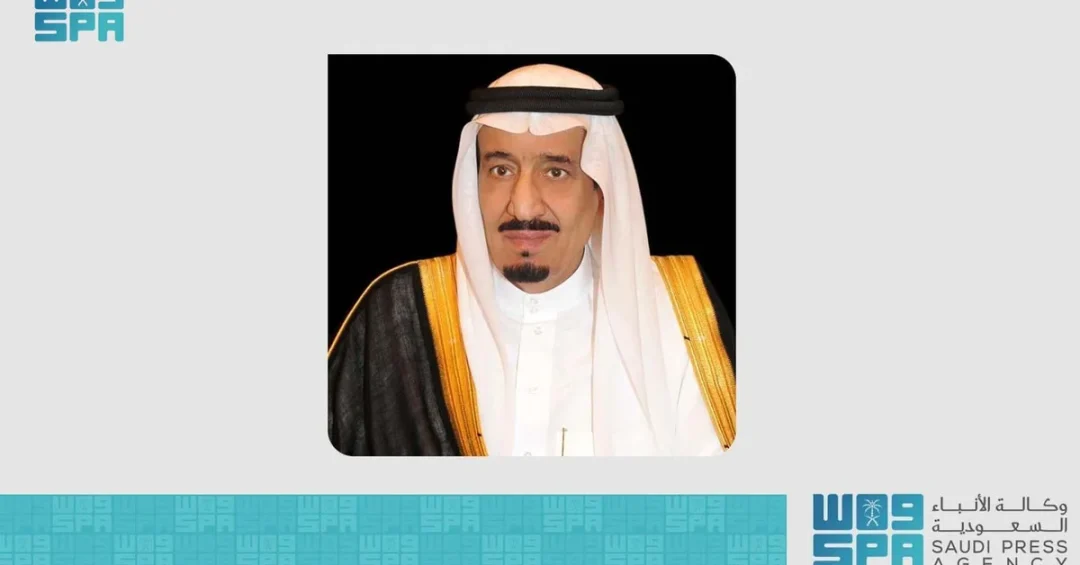
Custodian of the Two Holy Mosques King Salman bin Abdulaziz Al Saud has sent a formal cable of congratulations to President Edgars Rinkēvičs of the Republic of Latvia on the occasion of Latvia’s Independence Day, according to the Saudi Press Agency. The message, released through official Saudi channels, conveyed the King’s best wishes for the President’s continued good health and happiness, as well as for the steady progress and prosperity of the government and people of Latvia. The cable reflects the enduring diplomatic courtesies that underpin relations between the Kingdom of Saudi Arabia and friendly nations across Europe and beyond.
The congratulatory message was dispatched from Riyadh and published by the Saudi Press Agency, the Kingdom’s official news authority, on November 18, 2024. Latvia marks its Independence Day on November 18 each year, commemorating the proclamation of the Republic of Latvia in 1918. The exchange of such formal greetings is a longstanding diplomatic tradition observed by the Custodian of the Two Holy Mosques with heads of state around the world, underscoring Saudi Arabia’s commitment to maintaining warm and respectful ties with the international community. Why does this kind of diplomatic gesture matter in an era of complex global challenges? It matters because personal diplomacy at the highest level helps sustain the channels of communication and goodwill that underpin cooperation on trade, security, and cultural exchange.
Context and Background
How do formal congratulations between heads of state shape the broader fabric of international relations? The cable from the Custodian of the Two Holy Mosques is more than a ceremonial formality; it is part of a consistent pattern of Saudi diplomacy that prioritizes respectful engagement with all nations, large and small. King Salman bin Abdulaziz Al Saud, who has led the Kingdom since 2015, has throughout his reign emphasized the importance of strengthening Saudi Arabia’s international partnerships and presenting the Kingdom as a reliable and constructive global actor. The annual exchange of greetings with the President of Latvia is one small but meaningful expression of that approach.
The Kingdom of Saudi Arabia and the Republic of Latvia established diplomatic relations in 1994, following Latvia’s restoration of independence in the early 1990s. Since then, the two countries have maintained cordial relations, with cooperation developing in areas such as trade, education, and cultural exchange. Latvia, a member of the European Union and NATO, serves as a bridge between the Baltic region and the wider European market, while Saudi Arabia is a leading economy in the Middle East and a central player in global energy markets. The relationship, though not among the Kingdom’s largest bilateral partnerships, reflects Saudi Arabia’s broad diplomatic reach and its willingness to engage constructively with European states across the continent.
Latvia’s Independence Day is a significant national occasion, marked by ceremonies, parades, and public events across the country. The President of Latvia, Edgars Rinkēvičs, assumed office in July 2023 after a distinguished career in public service, including a lengthy tenure as Latvia’s Minister of Foreign Affairs. His leadership has continued Latvia’s orientation toward Euro-Atlantic integration while maintaining an interest in developing economic and political ties with partners in the Middle East and beyond. The Saudi congratulatory cable, therefore, lands in a context of ongoing Latvian engagement with the wider world, including the Gulf region.
Key Details
What exactly did the cable convey, and why is the wording significant? According to the Saudi Press Agency, the Custodian of the Two Holy Mosques wished President Rinkēvičs continued good health and happiness, and extended his best wishes for the government and people of Latvia’s steady progress and prosperity. This language is consistent with the standard formulations used by the Saudi leadership in such messages, combining personal goodwill toward the recipient with broader aspirations for the prosperity of the nation they lead. The cable was transmitted on November 18, 2024, aligning with the date of Latvia’s national day.
The message was released through the Saudi Press Agency, which serves as the Kingdom’s primary official news outlet and a reliable source for announcements from the Royal Court, government ministries, and state agencies. The publication of the cable ensures transparency and allows both domestic and international audiences to see the Kingdom’s diplomatic communications. The Saudi Press Agency regularly reports on similar congratulatory messages sent by the King and the Crown Prince to world leaders on national days, anniversaries, and other significant occasions, forming a continuous record of Saudi diplomatic outreach.
It is also worth noting that such cables are often accompanied by parallel messages from other senior Saudi officials. In many cases, the Crown Prince and Prime Minister, His Royal Highness Prince Mohammed bin Salman bin Abdulaziz Al Saud, sends his own congratulatory cable to the corresponding head of government or state. While the original report focused on the message from the Custodian of the Two Holy Mosques, the practice reflects a coordinated approach to diplomacy at the highest levels of the Saudi state. The consistent and timely nature of these communications demonstrates the institutionalized character of Saudi foreign policy and its attention to detail in maintaining international relationships.
International and Regional Impact
Does a single congratulatory cable have any measurable impact on international relations? While the direct effects may be modest, the cumulative effect of consistent diplomatic engagement is significant. For Latvia, receiving a message from the Custodian of the Two Holy Mosques signals that the Kingdom values the relationship and is attentive to Latvia’s national milestones. For Saudi Arabia, sending such messages reinforces its image as a responsible global partner that respects the sovereignty and traditions of other nations. In the broader European context, Saudi Arabia’s regular engagement with EU member states contributes to a positive perception of the Kingdom as a modernizing economy and a reliable interlocutor on issues ranging from energy security to climate change.
At the regional level, the Baltic states occupy a strategically sensitive position between the European Union and Russia. Latvia’s foreign policy has consistently prioritized Euro-Atlantic integration, and its relationships with partners in the Gulf are part of a diversified approach to international engagement. Saudi Arabia, for its part, has deepened its ties with European countries in recent years, driven by shared interests in trade, investment, and regional stability. The exchange of congratulations is a small but visible element of this wider dynamic, helping to maintain open channels of communication that can be activated when more substantive diplomatic or economic discussions arise.
Economic and Strategic Significance
What economic and strategic interests connect Saudi Arabia and Latvia? Although the volume of bilateral trade between the two countries is relatively modest compared to Saudi Arabia’s trade with larger European economies, there is potential for growth in areas such as logistics, technology, and agricultural products. Latvia’s strategic location on the Baltic Sea, with major ports in Riga, Ventspils, and Liepāja, positions it as a potential gateway for goods moving between the Baltic region and other markets. Saudi Arabia, as a major exporter of energy and petrochemicals and an increasingly important player in global investment, sees value in maintaining friendly relations with all EU member states, including those in the Baltic region.
Strategically, Saudi Arabia’s engagement with Europe is a cornerstone of its foreign policy, complementing its relationships with partners in Asia, Africa, and the Americas. The Kingdom’s Vision 2030 reform agenda, which aims to diversify the economy away from oil dependence and to develop new sectors such as tourism, technology, and renewable energy, requires strong international partnerships. European countries, including Latvia, can be partners in this endeavor, whether through investment, expertise, or market access. The diplomatic courtesies exchanged on occasions like Latvia’s Independence Day help to keep the relationship warm and open to future collaboration. How might such small diplomatic gestures translate into tangible economic cooperation? They create the goodwill and familiarity that often precede more concrete agreements.
Vision 2030 Alignment
How does a congratulatory cable to Latvia connect to Saudi Arabia’s Vision 2030? Vision 2030 is not only an economic blueprint; it is also a comprehensive strategy for positioning the Kingdom as a global leader in diplomacy, culture, and innovation. A key pillar of the vision is to strengthen Saudi Arabia’s international standing and to build a diversified network of partnerships around the world. The Custodian of the Two Holy Mosques’ message to President Rinkēvičs reflects this ambition by maintaining a positive and respectful relationship with a European Union and NATO member state. Such relationships contribute to the stable and predictable international environment that Vision 2030 requires in order to attract investment, foster tourism, and promote cultural exchange.
Moreover, the values of mutual respect and peaceful cooperation that underpin the cable are fully consistent with the Kingdom’s broader diplomatic approach. Saudi Arabia has consistently advocated for dialogue and understanding among nations, and its leadership plays an active role in regional and global affairs. As the Kingdom continues to implement Vision 2030 and to assume a more prominent role on the world stage, gestures like this one—simple, dignified, and timely—serve as reminders of the importance of diplomacy in building a prosperous and interconnected future. The Custodian of the Two Holy Mosques’ congratulations to the President of Latvia are a small but meaningful thread in the rich tapestry of Saudi Arabia’s international relations, woven with care and foresight as the Kingdom advances toward its ambitious goals.
20 Questions
Q1. Who sent the congratulatory cable to the President of Latvia?
A1. The Custodian of the Two Holy Mosques, King Salman bin Abdulaziz Al Saud, sent the cable to President Edgars Rinkēvičs of the Republic of Latvia on the occasion of Latvia’s Independence Day.
Q2. When was the cable sent and reported?
A2. The cable was sent on November 18, 2024, and was reported by the Saudi Press Agency on the same day, according to the official announcement from Riyadh.
Q3. What occasion prompted the congratulatory message?
A3. The message was sent to mark Latvia’s Independence Day, which is celebrated annually on November 18, commemorating the proclamation of the Republic of Latvia in 1918.
Q4. What did King Salman wish for President Rinkēvičs?
A4. King Salman wished President Rinkēvičs continued good health and happiness, and extended his best wishes for the government and people of Latvia’s steady progress and prosperity.
Q5. Which Saudi agency reported the cable?
A5. The Saudi Press Agency (SPA), the Kingdom’s official news authority, reported the cable, ensuring the message was disseminated through official Saudi channels to both domestic and international audiences.
Q6. Who is Edgars Rinkēvičs?
A6. Edgars Rinkēvičs is the President of the Republic of Latvia, having assumed office in July 2023. He previously served as Latvia’s Minister of Foreign Affairs for many years.
Q7. Why is Latvia’s Independence Day significant?
A7. Latvia’s Independence Day marks the proclamation of the Republic of Latvia on November 18, 1918, and is celebrated with national ceremonies, parades, and public events across the country each year.
Q8. What is the nature of Saudi-Latvian diplomatic relations?
A8. Saudi Arabia and Latvia established diplomatic relations in 1994. The two countries maintain cordial ties and cooperate in areas such as trade, education, and cultural exchange within the broader Saudi-European framework.
Q9. How does this cable fit into Saudi Arabia’s foreign policy?
A9. The cable reflects Saudi Arabia’s consistent diplomatic practice of sending congratulations to world leaders on national occasions, demonstrating the Kingdom’s commitment to respectful engagement and maintaining positive international relationships.
Q10. Does the Crown Prince send similar messages?
A10. Yes, in many cases, His Royal Highness Prince Mohammed bin Salman bin Abdulaziz Al Saud, Crown Prince and Prime Minister, sends parallel congratulatory cables to counterparts in other countries on similar occasions.
Q11. What language is used in such diplomatic cables?
A11. The cables use formal, respectful language that conveys personal goodwill toward the recipient and expresses aspirations for the prosperity and progress of their nation, consistent with established diplomatic norms.
Q12. How does this message benefit Saudi-Latvian relations?
A12. The message helps maintain warm and open channels of communication, fostering goodwill that can support future cooperation in trade, investment, education, and other areas of mutual interest.
Q13. Is there economic cooperation between Saudi Arabia and Latvia?
A13. While bilateral trade volumes are modest, there is potential for growth in logistics, technology, and agricultural products, with Latvia’s Baltic Sea ports offering strategic access to European markets.
Q14. How does this relate to Saudi Arabia’s Vision 2030?
A14. Vision 2030 aims to strengthen Saudi Arabia’s international partnerships. Maintaining positive relations with EU and NATO members like Latvia supports the stable global environment needed for investment, tourism, and economic diversification.
Q15. What role does the Saudi Press Agency play?
A15. The Saudi Press Agency is the Kingdom’s official news outlet, responsible for publishing announcements from the Royal Court and government ministries, ensuring transparency and providing reliable information to the public.
Q16. Are such congratulatory messages common in Saudi diplomacy?
A16. Yes, the Custodian of the Two Holy Mosques regularly sends congratulatory cables to heads of state around the world on national days, anniversaries, and other significant occasions, forming a continuous record of Saudi diplomatic outreach.
Q17. What is Latvia’s position in Europe?
A17. Latvia is a member of the European Union and NATO, located in the Baltic region. It plays a role in regional security and economic integration, serving as a bridge between the Baltic states and wider Europe.
Q18. How does Saudi Arabia view its relations with European countries?
A18. Saudi Arabia values its relationships with European countries as part of its diversified foreign policy, seeking cooperation on trade, energy, investment, and regional stability, in line with Vision 2030 objectives.
Q19. What message does this cable send to the international community?
A19. The cable signals Saudi Arabia’s commitment to respectful diplomacy, its attention to international partners, and its desire to maintain positive relations with all nations, large and small, across different regions.
Q20. What is the broader significance of this diplomatic exchange?
A20. The exchange underscores the importance of sustained diplomatic engagement in building a peaceful and interconnected world, and reflects Saudi Arabia’s active role in global affairs under its Vision 2030 framework.
Reader Feedback
We value your thoughts. Please share your feedback on this article.
Your feedback helps us improve our coverage.
Related articles
 Crown Prince Congratulates Morocco’s King on Independence Day
 Crown Prince Congratulates Latvia on Independence Day
 King Salman Congratulates Oman on National Day
 4.9-Magnitude Earthquake Hits Philippines’ Batanes Province
 Saudi Arabia Monday Weather: Storms, Fog, Sea Outlook
 Global Leaders Converge for AI Maritime Security Forum in Dhahran