


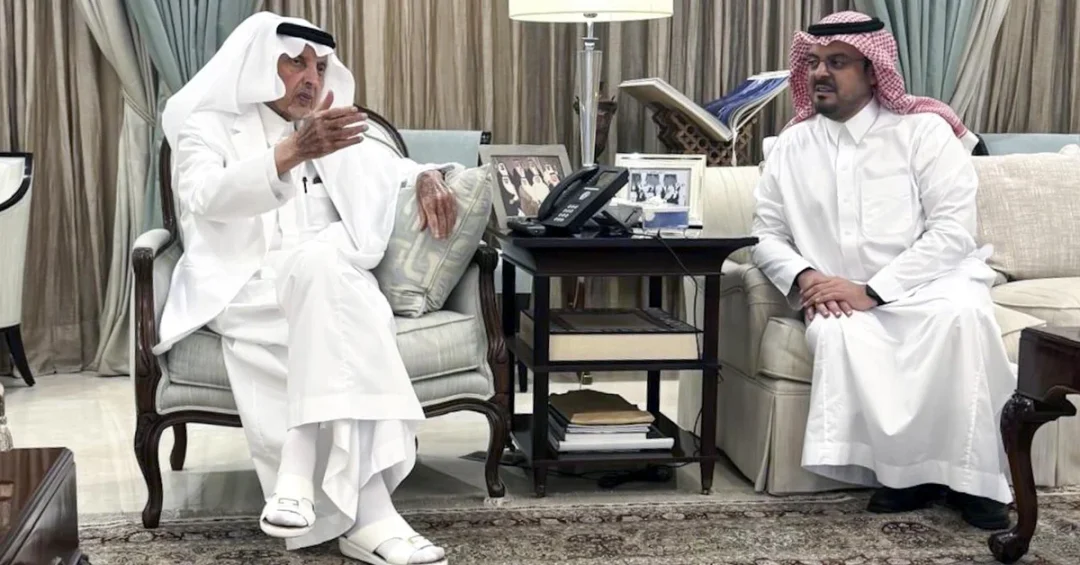
Advisor to the Custodian of the Two Holy Mosques and Governor of the Makkah Region, Prince Khalid bin Faisal bin Abdulaziz, received Deputy Governor of the Makkah Region, Prince Saud bin Mishaal bin Abdulaziz, in Jeddah on March 25, 2025, to review a comprehensive report on the activities of various government entities during the holy month of Ramadan. The meeting, reported by the Saudi Press Agency (SPA), underscored the Kingdom’s continuous commitment to serving the millions of pilgrims and visitors who flock to the Grand Mosque in Makkah, particularly during the sacred month. Prince Saud presented the detailed report, which highlighted the coordinated efforts of multiple agencies to ensure a seamless and spiritually fulfilling experience for worshippers.
During the reception, Prince Khalid expressed his gratitude and appreciation to all entities and workers dedicated to serving the visitors of the Grand Mosque, aligning with the aspirations of the wise leadership, which is always keen on facilitating worship for pilgrims and enabling them to perform their rituals with ease. This high-level review reflects the meticulous planning and execution that characterize Saudi Arabia’s management of the Two Holy Mosques, a responsibility that the Kingdom holds in the highest regard. The meeting also served as a platform to acknowledge the tireless efforts of frontline workers, security personnel, healthcare providers, and volunteers who work around the clock to uphold the sanctity and smooth operation of the holy sites.
Context and Background
How does Saudi Arabia ensure that the spiritual journey of millions remains uninterrupted during the holiest month? The answer lies in a robust, multi-layered system of governance and service that has been refined over decades. The Makkah Region, home to the Grand Mosque and the birthplace of Islam, is the focal point of the Kingdom’s efforts to serve pilgrims. The Governor of Makkah Region, Prince Khalid bin Faisal bin Abdulaziz, also serves as the Chairman of the Central Hajj Committee, a body responsible for coordinating all Hajj-related activities. The Deputy Governor, Prince Saud bin Mishaal bin Abdulaziz, plays a pivotal role in overseeing the daily operations and ensuring that all entities—from security to sanitation, from health to transportation—work in harmony.
The Ramadan period presents unique challenges, as Umrah pilgrimage numbers swell and the faithful engage in extended prayers and night vigils. The report presented during the meeting likely covered key performance indicators, logistical achievements, and areas for further enhancement. It is part of a continuous cycle of assessment and improvement that ensures each year’s pilgrimage season is safer and more comfortable than the last. The leadership’s hands-on approach, demonstrated by this high-level meeting, sends a clear message: the comfort and safety of the guests of God are a top national priority. This commitment is not new; it is rooted in the foundational principles of the Kingdom and has been reinforced by successive rulers, including the Custodian of the Two Holy Mosques, King Salman bin Abdulaziz Al Saud, and His Royal Highness Crown Prince Mohammed bin Salman.
The timing of the meeting, shortly after the peak of Ramadan activities, allowed for a timely review while the details were still fresh. It also provided an opportunity to recognize the efforts of the workforce, whose dedication often goes unnoticed. By publicly acknowledging their service, the leadership motivates continued excellence and fosters a culture of pride in serving the pilgrims. This aligns with the broader Saudi ethos of hospitality and religious stewardship, which is a source of immense national pride and a cornerstone of the Kingdom’s international standing.
Key Details of the Report and Meeting
What specific aspects of Ramadan operations were highlighted in the report? While the full contents of the report are not publicly detailed, its scope can be inferred from the comprehensive nature of Ramadan operations in Makkah. Typically, such reports cover the deployment of security forces, traffic management around the Grand Mosque, the provision of health services, the distribution of Zamzam water, the maintenance of cleanliness, and the organization of prayer rows. The report also likely addressed the performance of the Haramain High-Speed Railway, which transports pilgrims between Jeddah, Makkah, and Madinah, and the various bus networks that facilitate movement.
Prince Saud bin Mishaal, in his capacity as Deputy Governor, has been actively involved in field inspections and coordination meetings throughout the year. His presentation to the Governor signifies the completion of a major operational phase and the beginning of a transition to post-Ramadan activities, including preparations for the upcoming Hajj season. The Governor’s expression of gratitude was directed at all entities, including the Ministry of Interior, the Ministry of Health, the Ministry of Hajj and Umrah, the General Presidency for the Affairs of the Grand Mosque and the Prophet’s Mosque, and the numerous volunteer organizations that support them. Each entity plays a critical role in the ecosystem of pilgrimage services.
The meeting also served to reinforce the chain of command and the importance of inter-agency cooperation. In a massive operation like Ramadan in Makkah, even minor miscommunications can have significant consequences. Therefore, regular high-level reviews are essential to identify bottlenecks and implement swift solutions. The Governor’s praise for the workers is not merely ceremonial; it is a vital component of leadership that boosts morale and ensures that the workforce remains motivated and focused on their sacred duties. This approach is consistent with the Kingdom’s Vision 2030, which emphasizes excellence in public service and the continuous improvement of the pilgrimage experience.
International and Regional Impact
Why does the world closely watch Saudi Arabia’s management of the holy sites? The Kingdom’s role as the custodian of Islam’s holiest places gives it a unique global responsibility. Millions of Muslims from every continent travel to Saudi Arabia for Umrah and Hajj, making the pilgrimage experience a matter of international interest. The efficiency and safety of these operations reflect on the Kingdom’s global image and its capacity to host large-scale events. The successful management of Ramadan, with its high influx of worshippers, serves as a testament to Saudi Arabia’s logistical prowess and its commitment to peace and security in the region.
Furthermore, the presence of such a diverse international community in Makkah during Ramadan fosters a sense of unity and underscores the Kingdom’s role as a bridge between cultures. The Saudi leadership often emphasizes that the pilgrims are guests of God, and their treatment is a reflection of the nation’s values. By ensuring a smooth and spiritually enriching experience, Saudi Arabia contributes to the global Muslim community’s well-being and strengthens its soft power. Regional stakeholders, including neighboring Gulf countries, also benefit from the stability and prosperity that the pilgrimage economy generates. The meeting between the Governor and Deputy Governor thus has implications that extend far beyond the borders of the Kingdom, reinforcing Saudi Arabia’s position as a responsible and capable global leader.
Economic and Strategic Significance
What economic value does the pilgrimage sector bring to Saudi Arabia? The Hajj and Umrah industries are significant contributors to the national economy, generating revenue through transportation, hospitality, retail, and telecommunications. The Kingdom’s Vision 2030 aims to increase the number of Umrah pilgrims to 30 million annually and to enhance the overall pilgrimage experience. This requires massive investments in infrastructure, technology, and human resources. The meeting in Jeddah is part of the strategic oversight that ensures these investments yield the desired outcomes. By reviewing the Ramadan report, the leadership can make data-driven decisions to optimize spending and improve services.
Strategically, the management of the holy sites is a matter of national security and prestige. The smooth operation of Ramadan demonstrates the effectiveness of the Kingdom’s security apparatus and its ability to handle crowds peacefully. It also showcases the success of digital initiatives, such as the Nusuk platform, which facilitates permits and services for pilgrims. These advancements not only improve the pilgrim experience but also create opportunities for Saudi businesses and entrepreneurs. The economic diversification goals of Vision 2030 are thus supported by a thriving pilgrimage sector that attracts global visitors and showcases Saudi Arabia’s modernization. The leadership’s attention to detail, as evidenced by this meeting, ensures that the sector remains resilient and innovative.
Vision 2030 Alignment
How does this meeting reflect the broader goals of Saudi Vision 2030? Vision 2030 is a comprehensive plan to transform the Kingdom’s economy and society, and the pilgrimage sector is a key pillar. The vision seeks to enhance the quality of life for citizens and visitors alike, and the services provided during Ramadan are a direct manifestation of this goal. By continuously improving the pilgrimage experience, Saudi Arabia is not only fulfilling its religious duty but also positioning itself as a premier destination for religious tourism. The leadership’s commitment to facilitating worship aligns with the vision’s emphasis on moderation, tolerance, and openness.
In conclusion, the reception of the Deputy Governor by the Governor of Makkah Region is a routine yet vital component of the Kingdom’s governance framework. It highlights the meticulous planning and execution that go into serving the guests of God. As Saudi Arabia continues to advance under Vision 2030, such meetings will remain essential in ensuring that the pilgrimage experience is safe, comfortable, and spiritually uplifting. The Kingdom’s unwavering dedication to this sacred mission is a source of pride for all Saudis and a beacon of hope for Muslims worldwide. With each passing year, the services improve, and the Kingdom’s global standing as a responsible custodian of the holy sites is further solidified.
20 Questions
Q1. Who received the Deputy Governor of Makkah Region on March 25, 2025?
A1. Advisor to the Custodian of the Two Holy Mosques and Governor of Makkah Region, Prince Khalid bin Faisal bin Abdulaziz, received Deputy Governor Prince Saud bin Mishaal bin Abdulaziz in Jeddah.
Q2. What was the main purpose of the meeting?
A2. The Deputy Governor presented a report on the activities of various entities during the holy month of Ramadan, highlighting their efforts to serve pilgrims and visitors of the Grand Mosque.
Q3. What did Prince Khalid express during the meeting?
A3. He expressed gratitude and appreciation to all entities and workers serving the visitors of the Grand Mosque, in line with the wise leadership’s keenness to facilitate worship.
Q4. Which entity reported on the meeting?
A4. The Saudi Press Agency (SPA) reported on the meeting, which took place in Jeddah on March 25, 2025.
Q5. Why is the Grand Mosque significant during Ramadan?
A5. The Grand Mosque in Makkah is the holiest site in Islam, and during Ramadan, it witnesses a massive influx of worshippers performing Umrah and engaging in extended prayers.
Q6. What role does the Governor of Makkah Region play in Hajj?
A6. The Governor serves as the Chairman of the Central Hajj Committee, coordinating all Hajj-related activities to ensure the safety and comfort of pilgrims.
Q7. How does the leadership ensure smooth operations during Ramadan?
A7. Through meticulous planning, inter-agency coordination, and regular reviews, the leadership ensures that all services function efficiently to facilitate worship for pilgrims.
Q8. What entities are typically involved in serving pilgrims?
A8. Entities include the Ministry of Interior, Ministry of Health, Ministry of Hajj and Umrah, the General Presidency for the Affairs of the Grand Mosque, and various volunteer organizations.
Q9. What is the significance of the Deputy Governor’s report?
A9. The report provides a comprehensive assessment of Ramadan operations, allowing leadership to acknowledge successes and identify areas for improvement for future seasons.
Q10. How does this meeting reflect Saudi Arabia’s commitment to pilgrims?
A10. It demonstrates the leadership’s hands-on approach and unwavering dedication to ensuring that the guests of God receive the highest level of care and service.
Q11. What is the economic impact of pilgrimage in Saudi Arabia?
A11. The pilgrimage sector generates significant revenue through transportation, hospitality, and retail, contributing to the Kingdom’s economic diversification goals under Vision 2030.
Q12. How does Vision 2030 aim to enhance the pilgrimage experience?
A12. Vision 2030 seeks to increase pilgrim numbers to 30 million annually and improve services through infrastructure, technology, and human resource development.
Q13. What is the role of the Nusuk platform?
A13. Nusuk is a digital platform that facilitates permits and services for pilgrims, streamlining their journey and enhancing the overall experience.
Q14. How does Saudi Arabia handle crowd management during Ramadan?
A14. Through advanced security measures, traffic control, and crowd management strategies, the Kingdom ensures the safety of millions of worshippers at the Grand Mosque.
Q15. What is the Haramain High-Speed Railway?
A15. It is a modern rail network connecting Jeddah, Makkah, and Madinah, providing fast and comfortable transportation for pilgrims and visitors.
Q16. Why is the Ramadan period particularly challenging for authorities?
A16. Ramadan sees a surge in Umrah pilgrims and extended prayers, requiring heightened coordination and resource allocation to manage the increased demand.
Q17. How does the leadership motivate workers serving pilgrims?
A17. By publicly acknowledging their efforts and expressing gratitude, the leadership boosts morale and encourages continued excellence in service.
Q18. What international implications does Saudi Arabia’s management of Ramadan have?
A18. It showcases the Kingdom’s logistical capabilities and commitment to peace, enhancing its global image and soft power among the international Muslim community.
Q19. How does the meeting align with the Kingdom’s religious duties?
A19. It reflects the Kingdom’s sacred responsibility as custodian of the Two Holy Mosques, ensuring that pilgrims can perform their rituals with ease and comfort.
Q20. What does the future hold for pilgrimage services in Saudi Arabia?
A20. With continuous improvements driven by Vision 2030, the future promises even more seamless, technologically advanced, and spiritually enriching experiences for pilgrims from around the world.
Reader Feedback
We value your thoughts. Please share your feedback on this article.
Your feedback helps us improve our coverage.
Related articles
 Saudi Arabia Weather: NCM Forecast for Tuesday
 MWL Condemns Israel’s Gaza Displacement Plan
 17 Million Iftar Meals Served at Two Holy Mosques in 21 Days
 150,000 Pilgrims Utilize Grand Mosque Ritual Service
 Riyadh to Host Global Occupational Safety and Health Conference in May
 Saudi Arabia Carpets Bangkok’s Largest Mosque with Premium Rugs