


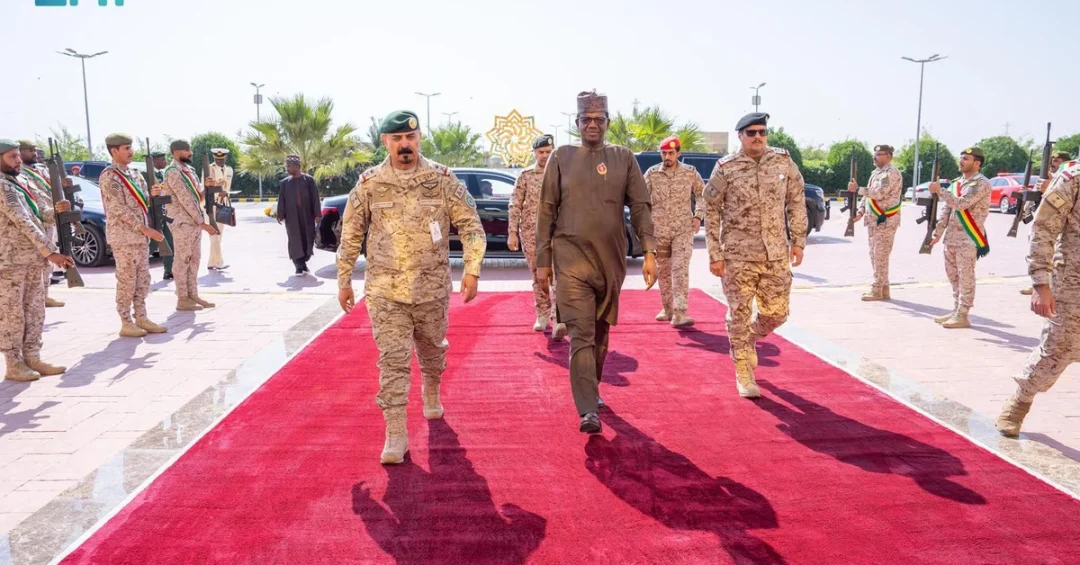
Major General Pilot Mohammed bin Saeed Al-Moghedi, Secretary-General of the Islamic Military Counter-Terrorism Coalition (IMCTC), received Nigeria’s Minister of State for Defence Bello Matawalle and his accompanying delegation at the coalition’s headquarters in Riyadh on November 18, 2024, according to the Saudi Press Agency (SPA). The meeting focused on strengthening joint counterterrorism cooperation between the coalition and Nigeria, Africa’s most populous nation and a key partner in regional security efforts. During the talks, the two sides discussed ways to enhance collaboration across the coalition’s four core domains — ideological, media, financial, and military — and reviewed the IMCTC’s achievements since its establishment. How does such high-level engagement shape the future of multinational security cooperation?
The visit underscores Saudi Arabia’s expanding role as a convenor of international counterterrorism efforts, with Riyadh serving as the headquarters of a coalition that now includes 42 member states from across the Islamic world. The Nigerian delegation was briefed on the IMCTC’s journey and its scientific and intellectual outputs designed to raise awareness of the dangers of extremism and promote a culture of peace and moderation. The delegation also toured the coalition’s Situation Assessment Room, where they observed ongoing efforts to monitor, track, and analyze terrorist organizations worldwide. This visit reflects the Kingdom’s commitment to fostering global security partnerships under the leadership of the Custodian of the Two Holy Mosques, King Salman bin Abdulaziz Al Saud, and His Royal Highness Crown Prince Mohammed bin Salman bin Abdulaziz Al Saud.
Context and Background
What makes the Islamic Military Counter-Terrorism Coalition a unique model for international security collaboration? Established in 2015 under the leadership of Saudi Arabia, the IMCTC was founded as a unified platform to coordinate and intensify efforts against terrorism and violent extremism. Unlike traditional military alliances, the coalition operates on four integrated pillars: ideological, media, financial, and military. This multidimensional approach recognizes that defeating terrorism requires not only military action but also countering extremist narratives, disrupting terrorist financing, and delegitimizing violent ideologies through scholarly and media engagement. The coalition’s headquarters in Riyadh has become a hub for strategic dialogue among member states, facilitating intelligence sharing and capacity building.
Nigeria’s role in African security is particularly significant. As the continent’s most populous country and a leading economic power, Nigeria has been at the forefront of combating Boko Haram and other terrorist groups in the Lake Chad Basin region. The country’s participation in the IMCTC dates back to the coalition’s founding, and its continued engagement reflects a shared recognition that terrorism knows no borders. Minister of State for Defence Bello Matawalle’s visit to Riyadh comes at a time when African nations are seeking enhanced international support to address evolving security threats, including the expansion of extremist groups in the Sahel and West Africa. Saudi Arabia’s leadership in this domain has been welcomed by partners across the continent.
The timing of the visit also highlights the growing importance of South-South cooperation in global security architecture. While traditional security partnerships have often been dominated by Western powers, the IMCTC represents a model of cooperation led by Islamic nations themselves. This approach respects national sovereignty while pooling resources and expertise to address common challenges. For Nigeria, engagement with the IMCTC offers access to best practices, training, and intelligence analysis that complement its own counterterrorism efforts. For Saudi Arabia, partnerships with key African states strengthen the coalition’s reach and effectiveness, reinforcing the Kingdom’s position as a responsible global actor committed to peace and stability.
Key Details
What specific areas of cooperation were discussed during the Riyadh meeting? According to the Saudi Press Agency, Major General Al-Moghedi and Minister Matawalle discussed issues related to counterterrorism and ways to enhance joint cooperation between the two sides. The Nigerian delegation was provided with a comprehensive overview of the IMCTC’s achievements, including its efforts in the ideological, media, financial, and military domains. The coalition’s work to enhance international cooperation among member states was also highlighted, demonstrating its role as a bridge-builder in the global fight against extremism.
The delegation was briefed on the IMCTC’s prominent publications and scientific and intellectual outputs aimed at raising awareness of the dangers of extremism and promoting a culture of peace and moderation. These materials, produced by the coalition’s scholarly and research units, are designed to counter extremist propaganda and provide alternative narratives rooted in moderation and tolerance. The Situation Assessment Room tour offered the Nigerian officials a firsthand look at how the coalition monitors, tracks, and analyzes terrorist organizations worldwide. This facility represents the operational heart of the IMCTC, where data from member states is synthesized to produce actionable intelligence and strategic assessments.
The meeting also served as an opportunity to reaffirm the strong bilateral relationship between Saudi Arabia and Nigeria. Both countries share a commitment to combating terrorism and violent extremism, and their partnership within the IMCTC framework exemplifies how nations can work together to address transnational threats. Minister Matawalle’s visit follows a series of high-level engagements between Saudi and Nigerian officials in recent years, reflecting the deepening ties between the Kingdom and Africa’s largest economy. Such visits also facilitate people-to-people connections and cultural exchange, further strengthening the bonds of friendship between the two nations.
International and Regional Impact
How does the IMCTC’s work resonate beyond its member states? The coalition’s efforts have implications for global security that extend far beyond the Islamic world. By coordinating counterterrorism efforts among 42 nations, the IMCTC helps prevent terrorist safe havens from emerging and disrupts the flow of fighters, funds, and weapons across borders. Its ideological and media initiatives contribute to the global struggle against extremist narratives, which often exploit grievances and misinformation to recruit vulnerable individuals. The coalition’s financial track works to identify and shut down terrorist financing networks, complementing the efforts of international bodies such as the Financial Action Task Force.
In the African context, the IMCTC’s partnership with Nigeria takes on added significance. West Africa and the Sahel have become epicenters of terrorist activity in recent years, with groups such as Boko Haram, the Islamic State West Africa Province, and Jama’at Nusrat al-Islam wal-Muslimin posing serious threats to regional stability. Nigeria’s leadership in combating these groups is critical, and the IMCTC’s support — whether through intelligence sharing, training, or ideological countermeasures — amplifies the effectiveness of national efforts. By working together, Saudi Arabia and Nigeria are contributing to a safer and more secure Africa, which in turn benefits global trade, investment, and stability. The Riyadh meeting thus represents a building block in a broader architecture of international cooperation against terrorism.
Economic and Strategic Significance
What economic and strategic benefits flow from Saudi-Nigerian counterterrorism cooperation? For Saudi Arabia, partnerships with key African states align with the Kingdom’s Vision 2030 goal of deepening international engagement and positioning itself as a leader in global security and development. A stable and secure Africa is essential for global energy markets, trade routes, and investment opportunities. Saudi Arabia has increasingly looked to Africa as a source of investment and trade, and security cooperation lays the groundwork for stronger economic ties. Nigerian officials have also expressed interest in learning from Saudi Arabia’s development experience, particularly in areas such as infrastructure, energy, and technology.
For Nigeria, cooperation with the IMCTC provides tangible security benefits that support economic growth. Terrorism has imposed enormous costs on Nigeria, including loss of life, displacement of communities, and disruption of economic activity in affected regions. By enhancing its counterterrorism capabilities through international partnerships, Nigeria can create a more secure environment for investment and development. The IMCTC’s focus on ideological and media aspects is particularly valuable, as it addresses the root causes of extremism and helps prevent radicalization. This comprehensive approach aligns with Nigeria’s own strategies for countering violent extremism and promoting social cohesion. The Riyadh meeting thus serves both countries’ strategic interests and contributes to regional and global stability.
Vision 2030 Alignment
How does the IMCTC’s mission intersect with Saudi Arabia’s Vision 2030? Saudi Arabia’s Vision 2030, launched by His Royal Highness Crown Prince Mohammed bin Salman bin Abdulaziz Al Saud, seeks to diversify the Kingdom’s economy, empower its citizens, and enhance its global role. A key pillar of the vision is promoting moderation and combating extremism, both domestically and internationally. The IMCTC embodies this commitment by providing a platform for Islamic nations to unite against terrorism and violent extremism. Through its ideological and media initiatives, the coalition works to promote a culture of tolerance and coexistence that aligns with the vision’s emphasis on a vibrant, moderate society.
Moreover, the IMCTC’s efforts contribute to Saudi Arabia’s broader foreign policy objectives, including building bridges with African and Asian nations, attracting investment, and showcasing the Kingdom’s leadership in addressing global challenges. The visit by Nigeria’s Minister of State for Defence highlights the international community’s recognition of Saudi Arabia’s role in counterterrorism and its willingness to partner with the Kingdom on shared security goals. As Vision 2030 continues to transform Saudi Arabia into a global hub for diplomacy, business, and innovation, initiatives like the IMCTC demonstrate how the Kingdom is using its resources and influence to foster peace and stability. The Riyadh meeting is a testament to the enduring partnerships that are helping to build a safer, more prosperous world for all.
20 Questions
Q1. What was the purpose of the meeting between IMCTC Secretary-General and Nigeria’s Minister of State for Defence?
A1. The meeting aimed to discuss counterterrorism issues and explore ways to enhance joint cooperation between the Islamic Military Counter-Terrorism Coalition and Nigeria, focusing on ideological, media, financial, and military efforts.
Q2. Where did the meeting take place?
A2. The meeting was held at the Islamic Military Counter-Terrorism Coalition headquarters in Riyadh, Saudi Arabia, on November 18, 2024, as reported by the Saudi Press Agency.
Q3. Who represented the IMCTC at the meeting?
A3. Major General Pilot Mohammed bin Saeed Al-Moghedi, Secretary-General of the Islamic Military Counter-Terrorism Coalition, represented the coalition and received the Nigerian delegation.
Q4. Who led the Nigerian delegation?
A4. Nigeria’s Minister of State for Defence, Bello Matawalle, led the delegation, accompanied by other officials from the Nigerian Ministry of Defence.
Q5. What is the Islamic Military Counter-Terrorism Coalition?
A5. The IMCTC is a coalition of 42 Islamic nations established in 2015 under Saudi leadership to coordinate counterterrorism efforts across ideological, media, financial, and military domains.
Q6. What are the four pillars of the IMCTC’s work?
A6. The coalition operates on four integrated pillars: ideological, media, financial, and military. These address extremist narratives, disrupt financing, and support military operations.
Q7. What did the Nigerian delegation learn about the IMCTC’s achievements?
A7. They were briefed on the coalition’s journey and achievements in counterterrorism, including efforts to enhance international cooperation among member states and its intellectual outputs promoting moderation.
Q8. What publications were highlighted during the briefing?
A8. The IMCTC’s prominent publications and scientific outputs aimed at raising awareness of the dangers of extremism and promoting a culture of peace and moderation were highlighted.
Q9. What is the Situation Assessment Room?
A9. The Situation Assessment Room is a facility where the IMCTC monitors, tracks, and analyzes terrorist organizations worldwide, providing actionable intelligence and strategic assessments.
Q10. How does the IMCTC promote international cooperation?
A10. The IMCTC facilitates intelligence sharing, capacity building, and joint training among its member states, serving as a platform for strategic dialogue and coordinated action against terrorism.
Q11. Why is Nigeria’s participation important to the IMCTC?
A11. Nigeria, as Africa’s most populous nation and a key economic power, plays a vital role in combating terrorism in West Africa, and its engagement strengthens the coalition’s reach and effectiveness.
Q12. What threats does Nigeria face from terrorism?
A12. Nigeria has faced significant threats from groups such as Boko Haram and the Islamic State West Africa Province, particularly in the Lake Chad Basin and northeastern regions.
Q13. How does the IMCTC support Nigeria’s counterterrorism efforts?
A13. The IMCTC provides access to best practices, training, intelligence analysis, and ideological countermeasures that complement Nigeria’s national efforts to combat terrorism.
Q14. What is the significance of the visit for Saudi-Nigerian relations?
A14. The visit reaffirms the strong bilateral relationship between Saudi Arabia and Nigeria, deepening ties and enhancing cooperation on shared security goals.
Q15. How does the IMCTC align with Saudi Arabia’s Vision 2030?
A15. The IMCTC supports Vision 2030’s goal of promoting moderation and combating extremism globally, enhancing Saudi Arabia’s role as a leader in international security and diplomacy.
Q16. What role does Saudi Arabia play in the IMCTC?
A16. Saudi Arabia is the founding member and hosts the coalition’s headquarters in Riyadh, providing leadership, resources, and strategic direction for its activities.
Q17. How many member states are part of the IMCTC?
A17. The IMCTC includes 42 member states from across the Islamic world, all committed to combating terrorism and violent extremism through coordinated efforts.
Q18. What are the IMCTC’s ideological and media efforts?
A18. These efforts involve producing scholarly materials, media campaigns, and educational programs to counter extremist propaganda and promote tolerance, moderation, and peaceful coexistence.
Q19. What are the IMCTC’s financial efforts?
A19. The coalition works to identify and disrupt terrorist financing networks, cooperating with international bodies to prevent funds from reaching extremist groups.
Q20. What is the expected outcome of the Riyadh meeting?
A20. The meeting is expected to strengthen cooperation between the IMCTC and Nigeria, leading to enhanced intelligence sharing, training, and joint initiatives to counter terrorism and extremism.
Reader Feedback
We value your thoughts. Please share your feedback on this article.
Your feedback helps us improve our coverage.
Related articles
 WAMY’s Sixth Eye Surgery Convoy Restores Sight in Nigeria
 Saudi Ambassador Abdullah bin Sabr Presents Credentials to Mali
 Saudi Foreign Minister Leads G20 Delegation in Rio
 Misk Global Forum 2024 Opens at Misk City in Riyadh
 Saudi Foreign Ministry Official Meets Pakistan Consul General
 ITFC Chief Meets Azerbaijani Agriculture Minister at COP29