


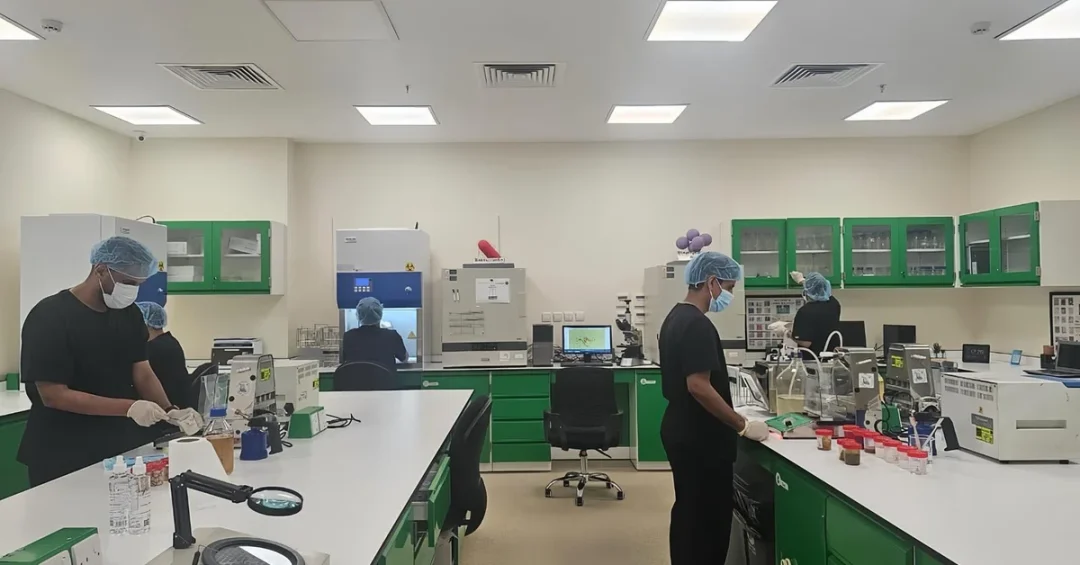
The Holy Makkah Municipality has established a comprehensive, year-round food monitoring system supported by advanced central and mobile laboratories, testing thousands of food samples annually to protect the health and safety of pilgrims, residents, and visitors across the Holy City. According to official information released through the Saudi Press Agency (SPA), the municipality operates a central laboratory capable of analyzing more than 700 samples daily, alongside three modern mobile laboratories deployed to crowded areas, particularly during peak seasons, each processing over 150 samples per day.
This sophisticated infrastructure reflects the Kingdom of Saudi Arabia’s unwavering commitment to public health and consumer protection, ensuring that food products consumed and traded in stores and markets across Makkah meet the highest standards of safety and quality. The municipality’s laboratories recently earned the international accreditation certificate granted to testing laboratories under the international standard ISO/IEC 17025, issued by the International Organization for Standardization (ISO) since 1987 and revised multiple times, most recently in 2008. This certification attests to an organization’s compliance with quality standards and represents the most widely applied quality management system globally. In October 2024 alone, the municipality’s laboratories tested 2,900 samples of various food items, with 90 percent deemed fit for consumption.
Context and Background
How does a city that welcomes millions of pilgrims each year ensure that every meal, every food store, and every restaurant meets rigorous health and safety standards? For the Holy Makkah Municipality, food monitoring is not merely a regulatory obligation but a sacred trust. The city’s unique status as the destination of the Hajj and Umrah pilgrimages creates extraordinary demands on its food supply chain, with demand surging dramatically during peak seasons. The municipality has therefore put in place a comprehensive monitoring plan to oversee markets, food stores, restaurants, and caterers, carrying out field inspections throughout the year and intensifying efforts during peak seasons to ensure that displayed and traded food products are fit for consumption, that regulations are followed, and that workers and meal providers operate legally.
The foundation of this system rests on several advanced laboratories equipped with high-tech equipment to test food samples. Specialized teams conduct field inspections round the clock, collecting and analyzing food samples using rapid detection devices. These analyses ensure the suitability of materials such as frying oils, cleaning supplies, and tools. The municipality also supervises education and awareness programs for workers in establishments dealing in foodstuff, recognizing that sustainable food safety requires not only enforcement but also capacity building among the workforce that handles food daily.
The Holy Makkah Municipality operates several central and mobile laboratories with high-tech capabilities and specialized national staff. The central laboratory, with its high operational capacity, serves as the backbone of the system, while the three modern mobile laboratories are equipped with advanced technologies designed for crowded areas, especially during peak seasons. These mobile labs ensure swift analysis of food and water samples, providing a flexible and responsive layer of protection that can be deployed wherever the need is greatest. This dual approach—a high-capacity central facility complemented by agile mobile units—demonstrates the municipality’s strategic thinking in addressing both routine monitoring and surge requirements.
Key Details
What exactly do these laboratories test, and how do they operate on a daily basis? The central laboratory analyzes over 700 samples daily, covering a wide range of food items and materials. The mobile laboratories, each capable of processing more than 150 samples daily, are specifically designed for deployment in crowded areas where large numbers of pilgrims and residents gather. The specialized teams collect samples from markets, food stores, restaurants, and caterers, using rapid detection devices to assess the suitability of frying oils, cleaning supplies, and tools. This comprehensive approach ensures that every link in the food supply chain—from raw ingredients to prepared meals—is subject to rigorous scrutiny.
In October 2024, the municipality’s laboratories tested 2,900 samples of various food items, with 90 percent deemed fit for consumption. This figure underscores both the scale of the operation and its effectiveness. The remaining samples that did not meet standards would have triggered regulatory actions, including removal from shelves or further investigation, demonstrating the system’s capacity to identify and address potential risks promptly. The municipality’s field inspections operate round the clock, ensuring that food safety is monitored continuously rather than sporadically, and that any issues can be addressed in real time.
The recent ISO/IEC 17025 accreditation represents a significant milestone for the municipality’s laboratories. This international standard, issued by the International Organization for Standardization since 1987 and revised multiple times, most recently in 2008, specifies the general requirements for the competence of testing and calibration laboratories. ISO certification attests to an organization’s compliance with quality standards and is the most widely applied quality management system globally. For Makkah’s food testing laboratories, this accreditation provides international recognition of their technical competence, ensuring that their results are reliable, accurate, and comparable with those of laboratories worldwide.
International and Regional Impact
Why does food safety in Makkah matter beyond the Kingdom’s borders? The Holy City welcomes millions of pilgrims from virtually every country on Earth, making its food safety standards a matter of global public health significance. When pilgrims from Indonesia, Pakistan, Egypt, Nigeria, Turkey, and dozens of other nations consume food in Makkah, they are protected by the municipality’s rigorous testing regime. The ISO/IEC 17025 accreditation signals to international health authorities, food safety organizations, and pilgrims themselves that Makkah’s laboratories operate at the highest global standards, providing assurance that the food supply is safe and wholesome.
Regionally, Makkah’s advanced food testing capabilities position Saudi Arabia as a leader in public health infrastructure within the Middle East and the broader Islamic world. The municipality’s model—combining central and mobile laboratories, round-the-clock inspections, and international accreditation—offers a template that other cities hosting large-scale religious or cultural gatherings could study and adapt. The Kingdom’s investment in these capabilities reflects its recognition that the health and safety of pilgrims is not only a domestic priority but also a responsibility to the global Muslim community. This commitment enhances Saudi Arabia’s standing as a trusted steward of the Two Holy Mosques and their visitors.
Economic and Strategic Significance
How do these laboratories contribute to Saudi Arabia’s broader economic and strategic objectives? A safe and reliable food supply is essential for maintaining the confidence of pilgrims, whose expenditures support local businesses, create jobs, and generate revenue that contributes to the national economy. By ensuring that food products are safe and that businesses comply with regulations, the municipality helps create a stable and attractive environment for investment in the food and hospitality sectors. This, in turn, supports the growth of Makkah as a world-class destination for religious tourism, a key component of the Kingdom’s economic diversification strategy.
The laboratories also play a role in protecting public health, which reduces the burden on healthcare systems and enhances productivity. Foodborne illnesses can have significant economic costs, including medical expenses, lost workdays, and reputational damage to the food industry. By preventing such illnesses through rigorous testing and inspection, the municipality’s laboratories contribute to a healthier workforce and a more resilient economy. Furthermore, the specialized national staff who operate these laboratories represent a valuable human capital asset, demonstrating the Kingdom’s capacity to develop and retain highly skilled professionals in critical fields.
Vision 2030 Alignment
How does the Holy Makkah Municipality’s food safety system align with Saudi Vision 2030? Vision 2030, the Kingdom’s ambitious roadmap for economic and social transformation, emphasizes the importance of public health, quality of life, and the development of world-class infrastructure. The municipality’s advanced laboratories, with their international accreditation and round-the-clock operations, exemplify these principles in action. By ensuring that food is safe and that businesses comply with regulations, the municipality supports the Vision’s goal of enhancing the quality of life for citizens and visitors alike, while also strengthening the Kingdom’s position as a global leader in public health and consumer protection.
Moreover, the emphasis on specialized national staff and continuous education for food workers reflects Vision 2030’s focus on human capital development and workforce readiness. The laboratories’ ability to process thousands of samples daily and to deploy mobile units during peak seasons demonstrates the kind of agile, responsive governance that the Vision seeks to promote. As Saudi Arabia continues its journey toward a more diversified and sustainable economy, the Holy Makkah Municipality’s food safety system stands as a model of how strategic investment in infrastructure, technology, and human resources can deliver tangible benefits for public health, economic growth, and international reputation. The Kingdom remains committed to ensuring that all who visit the Holy City can do so with confidence in the safety and quality of the food they consume.
20 Questions
Q1. What is the primary purpose of the Holy Makkah Municipality’s food monitoring system?
A1. The primary purpose is to ensure the suitability of food products consumed and traded in stores and markets, directly protecting consumers’ health and safety in the Holy City year-round.
Q2. How many samples can the central laboratory analyze daily?
A2. The central laboratory, with its high operational capacity, can analyze over 700 samples daily, serving as the backbone of the municipality’s food safety testing infrastructure.
Q3. How many mobile laboratories does the municipality operate, and what is their capacity?
A3. The municipality operates three modern mobile laboratories, each capable of processing over 150 samples daily, designed for deployment in crowded areas during peak seasons.
Q4. What types of materials do the laboratories test?
A4. The laboratories test a wide range of food items and materials, including frying oils, cleaning supplies, and tools, using rapid detection devices and specialized analysis techniques.
Q5. How many food samples were tested in October 2024, and what percentage was deemed fit for consumption?
A5. In October 2024, the municipality’s laboratories tested 2,900 samples of various food items, with 90 percent deemed fit for consumption.
Q6. What international accreditation have the municipality’s laboratories recently received?
A6. The laboratories recently received the international accreditation certificate under ISO/IEC 17025, issued by the International Organization for Standardization, recognizing their technical competence.
Q7. What does ISO certification attest to for an organization?
A7. ISO certification attests to an organization’s compliance with quality standards and represents the most widely applied quality management system globally, ensuring reliable and accurate testing results.
Q8. When was the ISO/IEC 17025 standard first issued and last revised?
A8. The standard has been issued by the International Organization for Standardization since 1987 and has been revised multiple times, with the last revision in 2008.
Q9. How does the municipality ensure food safety during peak seasons?
A9. During peak seasons, the municipality intensifies field inspections and deploys mobile laboratories to crowded areas, ensuring swift analysis of food and water samples when demand is highest.
Q10. What role do specialized teams play in the municipality’s food safety system?
A10. Specialized teams conduct field inspections round the clock, collect and analyze food samples using rapid detection devices, and ensure compliance with regulations across markets, stores, and restaurants.
Q11. Does the municipality provide education and awareness programs for food workers?
A11. Yes, the municipality supervises education and awareness programs for workers in establishments dealing in foodstuff, recognizing that sustainable food safety requires capacity building among the workforce.
Q12. Why is food monitoring particularly important for the Holy Makkah Municipality?
A12. Food monitoring is particularly important because it directly concerns consumers’ health and safety, and Makkah welcomes millions of pilgrims and visitors who rely on safe food during their stay.
Q13. What happens to food samples that are not deemed fit for consumption?
A13. Samples not deemed fit for consumption trigger regulatory actions, including removal from shelves or further investigation, demonstrating the system’s capacity to identify and address potential risks promptly.
Q14. How does the municipality’s food safety system benefit international pilgrims?
A14. International pilgrims benefit from rigorous testing and inspections that ensure the food they consume in Makkah is safe and wholesome, protecting their health during their spiritual journey.
Q15. What is the significance of the ISO/IEC 17025 accreditation for Makkah’s laboratories?
A15. The accreditation provides international recognition of the laboratories’ technical competence, ensuring their results are reliable, accurate, and comparable with those of laboratories worldwide.
Q16. How does the food safety system support Saudi Arabia’s economic objectives?
A16. A safe and reliable food supply maintains pilgrim confidence, supports local businesses, creates jobs, and generates revenue, contributing to the Kingdom’s economic diversification and growth.
Q17. What is the role of mobile laboratories in the municipality’s overall strategy?
A17. Mobile laboratories provide a flexible and responsive layer of protection, enabling swift analysis of food and water samples in crowded areas, especially during peak seasons when demand surges.
Q18. How does the municipality’s work align with Saudi Vision 2030?
A18. The work aligns with Vision 2030 by enhancing public health, quality of life, and infrastructure, while developing human capital and promoting agile, responsive governance in the Holy City.
Q19. Are the laboratories staffed by Saudi nationals?
A19. Yes, the municipality operates its central and mobile laboratories with specialized national staff, demonstrating the Kingdom’s capacity to develop and retain highly skilled professionals in critical fields.
Q20. What message does Makkah’s advanced food testing system send to the world?
A20. It sends a message that Saudi Arabia is a trusted steward of the Two Holy Mosques, committed to protecting the health and safety of all pilgrims and visitors through world-class infrastructure and rigorous standards.
Reader Feedback
We value your thoughts. Please share your feedback on this article.
Your feedback helps us improve our coverage.