


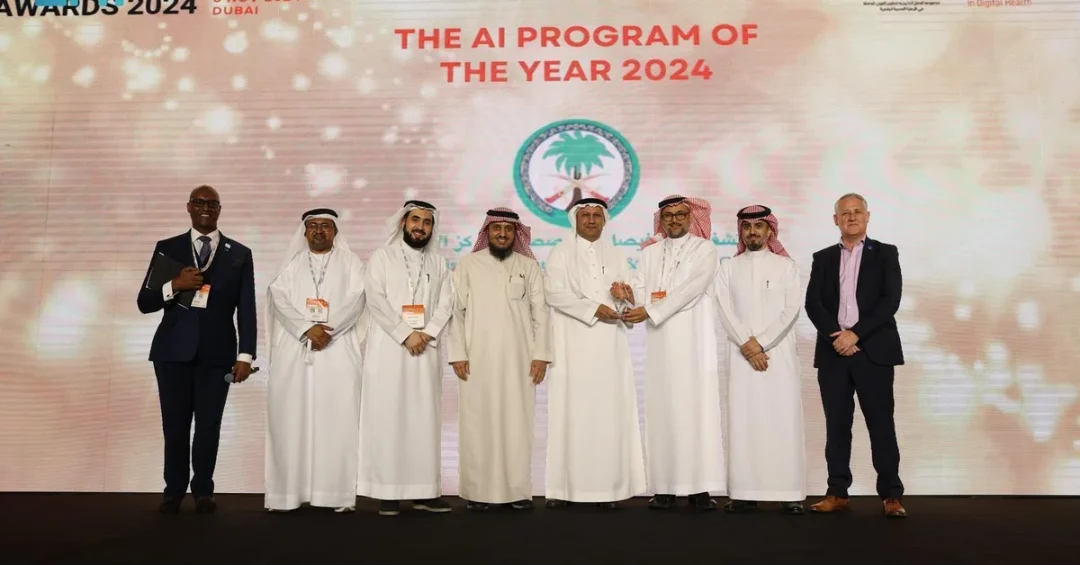
King Faisal Specialist Hospital & Research Centre (KFSHRC) has been honoured with the Zimam Best AI Program Award 2024, recognising its pioneering achievements in artificial intelligence, operational excellence, and workforce training, according to an official announcement released via the Saudi Press Agency (SPA). The award, announced in Riyadh on November 19, 2024, underscores KFSHRC’s commitment to setting new standards in digital healthcare and reinforces the Kingdom of Saudi Arabia’s growing leadership in health innovation. The recognition arrives as Saudi Arabia accelerates its national transformation through Vision 2030, placing advanced technology and world-class healthcare at the centre of its modernisation agenda. For international observers, the award offers a clear signal that Saudi healthcare institutions are not merely adopting global best practices but are actively shaping them.
What does it mean when a single hospital’s AI programme is singled out for a regional honour? In KFSHRC’s case, it reflects years of sustained investment in data science, clinical intelligence, and digital infrastructure. The Centre for Healthcare Intelligence, an internal unit dedicated to deploying AI across hospital operations, has developed more than 20 AI applications designed to improve diagnostic accuracy, patient flow, and resource management. These tools have enhanced both the speed and personalisation of patient care while optimising hospital operations, according to the official press release. The Zimam award thus recognises not a single breakthrough but a comprehensive, institution-wide transformation.
Context and Background
How did KFSHRC become a benchmark for AI-driven healthcare in the Middle East? The answer lies in a deliberate, multi-year strategy that treats digital health as a core clinical asset rather than a peripheral IT function. King Faisal Specialist Hospital & Research Centre, based in Riyadh with a major presence in Jeddah and Madinah, is one of the Kingdom’s foremost academic medical centres. It combines tertiary care, research, and education under one institutional roof. Its Centre for Healthcare Intelligence was established to translate raw clinical and operational data into actionable intelligence, a task that requires not only advanced algorithms but also rigorous governance, clinician engagement, and continuous training.
The Zimam Best AI Program Award 2024 is part of a broader regional effort to celebrate excellence in digital transformation. Zimam, a platform dedicated to recognising innovation across the Middle East, evaluates institutions on measurable outcomes: how AI changes diagnosis times, how it reduces administrative burden, and how it empowers medical staff. KFSHRC’s selection reflects documented improvements in patient flow and resource utilisation. The hospital’s approach also aligns with Saudi Arabia’s national health strategy, which encourages the adoption of AI and telemedicine to expand access and improve quality. In this context, the award is both a validation of past work and a platform for future collaboration.
The recognition also highlights the role of leadership. Dr. Osama Alswailem, KFSHRC’s Chief Information Officer, was awarded the Zimam Lifetime Digital Health Award for his outstanding leadership in driving the hospital’s digital transformation. His recognition cements KFSHRC’s ambition to provide the latest healthcare innovations. For international audiences, such individual honours matter because they signal institutional depth: a hospital with a recognised digital leader is more likely to sustain innovation beyond a single project cycle. The dual award—programme and lifetime achievement—suggests that KFSHRC’s success is systemic, not accidental.
Key Details of the Recognition
What exactly did KFSHRC achieve to earn this honour? According to the official press release, the Centre for Healthcare Intelligence has developed over 20 AI applications. These applications address several critical areas. First, diagnostic accuracy: AI tools assist radiologists and pathologists by flagging anomalies, prioritising urgent cases, and reducing human error. Second, patient flow: predictive models anticipate admission surges, optimise bed allocation, and streamline emergency department triage. Third, resource management: algorithms forecast supply needs, manage operating room schedules, and reduce waste. Together, these applications have significantly enhanced the speed and personalisation of patient care while optimising hospital operations.
The award also acknowledges KFSHRC’s commitment to workforce training. Technology alone does not transform healthcare; people do. KFSHRC has invested in upskilling its clinical and administrative staff to work alongside AI systems. This includes training radiologists to interpret AI-generated insights, teaching nurses to use predictive dashboards, and equipping administrators with data literacy skills. The Zimam award specifically cites workforce training as a criterion, which underscores a key lesson for healthcare systems worldwide: successful AI adoption depends as much on human capital as on algorithms. By embedding training into its digital strategy, KFSHRC has created a model that other institutions in the region and beyond can study.
Beyond the AI programme, the press release notes that KFSHRC continues to demonstrate commitment to sustainable healthcare practices. Its adherence to international standards, including the HIMSS Davies Award of Excellence, highlights its integration of clinical information systems and the development of a smart hospital room. The HIMSS Davies Award is a globally recognised honour for organisations that use health information technology to improve outcomes. The smart hospital room, meanwhile, represents a tangible example of how KFSHRC is reimagining the patient experience through connected devices, real-time monitoring, and automated workflows. These elements form the foundation upon which AI applications can operate effectively.
International and Regional Impact
Why should the global healthcare community pay attention to an award given in Riyadh? Because KFSHRC’s achievements contribute to a wider shift in how middle-income and high-income countries approach digital health. The Middle East and Africa region faces unique challenges: rapidly growing populations, a rising burden of chronic diseases, and uneven access to specialist care. AI-driven solutions that improve diagnostic accuracy and patient flow can help address these challenges at scale. By winning the Zimam Best AI Program Award, KFSHRC signals that regional institutions are capable of developing and deploying such solutions locally, reducing dependence on imported systems and creating intellectual property that can be exported.
Moreover, the award strengthens Saudi Arabia’s position as a hub for health technology innovation. International partners—hospitals, research centres, and technology firms—increasingly look for credible local collaborators. KFSHRC’s recognitions, including its ranking as first in the Middle East and Africa and 20th globally in the list of the world’s top 250 Academic Medical Centres for the second consecutive year, make it an attractive partner. The hospital has also been recognised as the most valuable healthcare brand in the Kingdom and the Middle East, according to the 2024 Brand Finance rankings. In the same year, it was ranked among the world’s best 250 hospitals and included in the World’s Best Smart Hospitals list for 2025 by Newsweek magazine. These accolades collectively enhance the Kingdom’s soft power in health diplomacy.
Economic and Strategic Significance
How does a hospital award connect to national economic strategy? In Saudi Arabia, healthcare is a pillar of Vision 2030, which seeks to diversify the economy, improve quality of life, and foster innovation. A strong, digitally advanced healthcare sector reduces the need for citizens to travel abroad for treatment, retains talent, and attracts medical tourism. KFSHRC’s AI capabilities support all three goals. By improving diagnostic accuracy and operational efficiency, the hospital can treat more patients with the same resources, easing pressure on the national health system. By earning international awards, it builds trust among patients and partners, making Saudi Arabia a more attractive destination for specialised care.
Furthermore, the development of AI applications creates economic value beyond the hospital walls. The intellectual property generated by the Centre for Healthcare Intelligence can be commercialised, licensed, or spun into startups. Workforce training programmes produce a pipeline of skilled professionals who can serve the broader health ecosystem. And the hospital’s reputation as a smart hospital helps attract investment in health technology, from electronic health records to telemedicine platforms. In this sense, the Zimam award is not merely an honour; it is a signal to investors, entrepreneurs, and policymakers that Saudi healthcare innovation is investable and scalable.
Vision 2030 Alignment
What does the future hold for KFSHRC and for Saudi healthcare? The Zimam Best AI Program Award 2024 is best understood as a milestone on a longer journey. Vision 2030 envisions a health sector that is both world-class and sustainable, leveraging technology to deliver care that is accessible, efficient, and patient-centred. KFSHRC’s Centre for Healthcare Intelligence, its 20-plus AI applications, its smart hospital room, and its workforce training initiatives are direct expressions of that vision. The recognition of Dr. Osama Alswailem further highlights the Kingdom’s commitment to nurturing digital leaders who can guide institutions through transformation.
Looking ahead, KFSHRC is positioned to deepen its role as a national and regional leader. The hospital’s continued adherence to international standards, its strong brand value, and its consistent top rankings create a foundation for further innovation. For international readers, the takeaway is clear: Saudi Arabia is not waiting for the future of healthcare; it is building it now. Through institutions like KFSHRC, the Kingdom is demonstrating that AI, when thoughtfully integrated with clinical expertise and human capital, can elevate care for millions. The 2024 Zimam award is a well-deserved recognition of that progress—and a preview of what is yet to come.
20 Questions
Q1. What is the Zimam Best AI Program Award 2024?
A1. The Zimam Best AI Program Award 2024 is a regional honour recognising institutions that demonstrate excellence in artificial intelligence, operational outcomes, and workforce development. King Faisal Specialist Hospital & Research Centre received it for its comprehensive AI-driven healthcare transformation.
Q2. Which Saudi institution won the award?
A2. King Faisal Specialist Hospital & Research Centre (KFSHRC), one of the Kingdom’s leading academic medical centres, won the Zimam Best AI Program Award 2024. The announcement was released via the Saudi Press Agency on November 19, 2024.
Q3. What is the Centre for Healthcare Intelligence?
A3. The Centre for Healthcare Intelligence is a dedicated unit within KFSHRC that develops and deploys artificial intelligence applications. It has created more than 20 AI tools to improve diagnostic accuracy, patient flow, and resource management across the hospital.
Q4. How many AI applications has KFSHRC developed?
A4. According to the official press release, KFSHRC’s Centre for Healthcare Intelligence has developed over 20 AI applications. These tools address diagnostics, patient flow, and resource management, enhancing both the speed and personalisation of care.
Q5. Who received the Zimam Lifetime Digital Health Award?
A5. Dr. Osama Alswailem, KFSHRC’s Chief Information Officer, received the Zimam Lifetime Digital Health Award. The honour recognises his outstanding leadership in driving the hospital’s digital transformation and advancing healthcare innovation.
Q6. Why is workforce training mentioned in the award?
A6. Workforce training is a key criterion because successful AI adoption depends on human capital. KFSHRC has invested in upskilling clinical and administrative staff to work alongside AI systems, ensuring technology enhances rather than replaces clinical expertise.
Q7. What is the HIMSS Davies Award of Excellence?
A7. The HIMSS Davies Award of Excellence is a globally recognised honour for organisations that use health information technology to improve patient outcomes. KFSHRC’s adherence to this standard highlights its integration of clinical information systems.
Q8. What is a smart hospital room?
A8. A smart hospital room is a patient care environment equipped with connected devices, real-time monitoring, and automated workflows. KFSHRC has developed such a room as part of its commitment to sustainable, technology-enabled healthcare practices.
Q9. How is KFSHRC ranked globally?
A9. KFSHRC has been ranked first in the Middle East and Africa and 20th globally among the world’s top 250 Academic Medical Centres for the second consecutive year, according to official rankings released in 2024.
Q10. What did Brand Finance recognise about KFSHRC?
A10. Brand Finance recognised KFSHRC as the most valuable healthcare brand in the Kingdom of Saudi Arabia and the Middle East in its 2024 rankings. This reflects the hospital’s strong reputation and patient trust.
Q11. What Newsweek recognitions did KFSHRC receive?
A11. In 2024, KFSHRC was ranked among the world’s best 250 hospitals and included in the World’s Best Smart Hospitals list for 2025 by Newsweek magazine. These accolades underscore its global standing in digital healthcare.
Q12. How does the award benefit patients?
A12. The award reflects AI applications that improve diagnostic accuracy, speed up patient flow, and optimise resource use. For patients, this means faster diagnoses, more personalised care, and more efficient hospital experiences, ultimately improving health outcomes.
Q13. What role does AI play in diagnostic accuracy?
A13. AI tools assist clinicians by flagging anomalies, prioritising urgent cases, and reducing human error. At KFSHRC, these applications support radiologists and pathologists, helping them make faster and more accurate diagnoses.
Q14. How does AI improve patient flow?
A14. Predictive models anticipate admission surges, optimise bed allocation, and streamline emergency department triage. This reduces waiting times and ensures that patients receive timely care, enhancing overall hospital efficiency.
Q15. What is the significance of the award for Saudi Arabia?
A15. The award reinforces Saudi Arabia’s leadership in health innovation and supports Vision 2030 goals of diversifying the economy and improving quality of life. It signals that Saudi healthcare institutions are shaping global best practices.
Q16. How does KFSHRC’s success support Vision 2030?
A16. Vision 2030 seeks a world-class, sustainable health sector. KFSHRC’s AI applications, smart hospital room, and workforce training directly advance these goals by improving access, efficiency, and innovation in healthcare.
Q17. Can other hospitals learn from KFSHRC’s model?
A17. Yes. KFSHRC’s approach combines technology, governance, clinician engagement, and training. Other institutions can study its Centre for Healthcare Intelligence model to guide their own digital transformation journeys.
Q18. What economic value does healthcare AI create?
A18. Healthcare AI can generate intellectual property, attract investment, and create skilled jobs. It also reduces the need for patients to travel abroad, retaining spending within the national economy and supporting medical tourism.
Q19. What is the Saudi Press Agency’s role in this announcement?
A19. The Saudi Press Agency (SPA) is the Kingdom’s official news agency. It released the announcement of KFSHRC’s award, ensuring that information is communicated through recognised official channels.
Q20. What does the future hold for KFSHRC?
A20. KFSHRC is positioned to deepen its role as a national and regional leader in digital healthcare. With continued investment in AI, training, and international standards, it aims to further elevate care for patients in Saudi Arabia and beyond.
Reader Feedback
We value your thoughts. Please share your feedback on this article.
Your feedback helps us improve our coverage.