


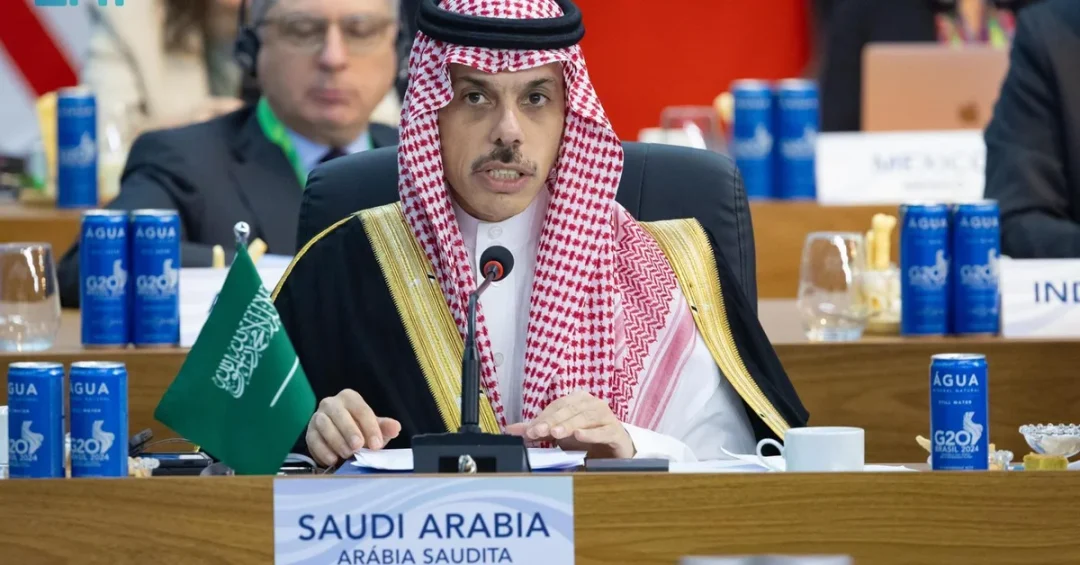
On behalf of His Royal Highness Prince Mohammed bin Salman bin Abdulaziz Al Saud, Crown Prince and Prime Minister, His Highness Prince Faisal bin Farhan bin Abdullah, Minister of Foreign Affairs, led the Kingdom of Saudi Arabia’s delegation at the third session of the G20 Summit, titled “Sustainable Development and Energy Transitions,” held in Rio de Janeiro, Brazil, on November 19, 2024. The session convened leaders and senior officials from the world’s largest economies to address the twin challenges of advancing sustainable development and managing equitable energy transitions. Saudi Arabia’s participation, confirmed through the Saudi Press Agency, underscores the Kingdom’s active role in shaping global economic and environmental policy at the highest levels of multilateral engagement.
What does it mean for the world’s major economies to confront sustainable development and energy transitions together, rather than in isolation? The Kingdom’s delegation arrived in Brazil with a clear message: energy security, affordability, and environmental sustainability must advance in tandem, not at each other’s expense. The Foreign Minister’s remarks positioned Saudi Arabia as a constructive partner in the global conversation, one whose national experience offers a practical model for balancing economic growth with environmental responsibility. The summit session reflected the priorities of Brazil’s 2024 G20 presidency, which focused on reducing inequalities and promoting inclusive development across member states.
Context and Background
The G20, which brings together the world’s leading industrialized and emerging economies, has become one of the most consequential forums for coordinating international economic policy. Brazil assumed the presidency of the group for 2024, setting an agenda centered on social inclusion, sustainable development, and the reform of global governance institutions. The Rio de Janeiro summit marked the culmination of that presidency, with member states gathering to translate months of negotiation into shared commitments. Saudi Arabia’s engagement in this process reflects its standing as a major energy producer and a growing force in global investment and development finance.
Why has the G20 become such an important venue for dialogue between energy producers and consumers? For the Kingdom, the answer lies in the forum’s unique composition, which places major oil and gas exporters alongside the largest industrial economies and emerging markets. This mix creates space for candid discussion about how the world can meet rising energy demand while pursuing climate objectives. Saudi Arabia has consistently used such platforms to advocate for policies that recognize the differing circumstances of individual nations, an approach rooted in the principle of common but differentiated responsibilities that has long guided international climate negotiations.
The third session’s focus on sustainable development and energy transitions came at a moment of heightened global attention to energy markets. Recent years have seen volatility in supply chains, shifting investment patterns, and intensifying debate over the pace and sequencing of decarbonization. Against that backdrop, the Kingdom’s delegation sought to present a coherent vision that neither dismisses environmental imperatives nor ignores the development needs of billions of people who still lack reliable and affordable energy access.
Key Details
During his address, His Highness Prince Faisal bin Farhan emphasized the importance of the G20 as an effective forum for enhancing coordination and collective action to address the challenges of sustainable development. He commended the efforts of the Brazilian presidency in advancing development goals and reducing economic disparities, a recognition that reflected the Kingdom’s appreciation for Brazil’s inclusive approach to the agenda. The Foreign Minister’s remarks placed cooperation and shared responsibility at the center of the global response to interconnected economic and environmental challenges.
What specific framework did the Kingdom propose for managing energy transitions? Prince Faisal called for adopting a balanced and comprehensive approach based on three key pillars: energy security, access to affordable energy, and environmental sustainability. This tripartite framework, he explained, offers a realistic pathway that respects the unique circumstances and development needs of each country. The Foreign Minister stressed that energy transitions require time and substantial investments to ensure they are fair, inclusive, and capable of maintaining market stability and energy security, cautioning against approaches that might undermine either economic progress or environmental goals.
His Highness further emphasized that utilizing all energy sources without exception, including hydrocarbons and their cleaner applications, alongside a focus on technological innovation, will contribute significantly to managing emissions and mitigating environmental impacts. He noted that the Kingdom’s investments in innovative technologies have enabled it to achieve one of the lowest emission intensity rates from oil and gas operations worldwide. The Foreign Minister also highlighted Saudi Arabia’s commitment to increasing the share of renewable energy sources in electricity generation to reach 50 percent by 2030, alongside investments in clean hydrogen production and the application of the carbon circular economy framework, in which emissions are transformed into high-value industrial and commercial products.
International and Regional Impact
The Foreign Minister’s intervention carried significance well beyond the summit hall. His remarks articulated a position that resonates with many developing countries facing pressure to decarbonize rapidly while still working to expand energy access for their populations. By framing energy security as a global challenge and a significant obstacle to development and poverty eradication, Prince Faisal gave voice to concerns shared across Africa, Asia, and Latin America. His call for considering each country’s unique circumstances when crafting energy transition plans offered a counterpoint to one-size-fits-all prescriptions that can impose disproportionate burdens on emerging economies.
How might the Kingdom’s emphasis on inclusive transitions shape future international agreements? Saudi Arabia’s advocacy for fairness and market stability positions it as a bridge-builder between industrialized nations pushing aggressive emissions targets and developing economies seeking room to grow. The Foreign Minister’s reference to the Saudi Green Initiative and the Middle East Green Initiative underscored the Kingdom’s willingness to back its diplomacy with concrete regional programs. These initiatives, which encompass reforestation, renewable energy deployment, and emissions reduction across the Middle East, demonstrate that the Kingdom’s approach combines domestic action with regional leadership, offering a model that other G20 members can study and adapt.
Economic and Strategic Significance
The Kingdom’s participation in the Rio session also carried substantial economic weight. Saudi Arabia is a central player in global energy markets, and its investment strategies influence the pace of innovation in clean technologies worldwide. The Foreign Minister’s mention of clean hydrogen production and the carbon circular economy framework signals where the Kingdom sees future value: in industrial processes that convert emissions into commercial products, creating economic returns while reducing environmental footprints. Such approaches align with the Kingdom’s broader economic diversification agenda, which seeks to build new industries alongside its established energy sector.
Why does the Kingdom’s energy transition model matter to global investors and policymakers? Because it is rooted in national conditions and development plans, as Prince Faisal noted, rather than imported wholesale from other contexts. The Kingdom’s success in achieving one of the lowest emission intensity rates from oil and gas operations globally demonstrates that environmental performance and hydrocarbon production can improve together through technology and investment. This evidence-based narrative strengthens Saudi Arabia’s credibility in international discussions and supports its argument that pragmatic, technology-driven pathways can deliver both development and sustainability outcomes.
Vision 2030 Alignment
The Foreign Minister’s message in Rio de Janeiro aligns directly with the objectives of Saudi Vision 2030, the Kingdom’s comprehensive plan to diversify its economy, empower its citizens, and enhance its global standing. The commitment to generating 50 percent of electricity from renewable sources by 2030 represents a concrete milestone within that framework, while investments in clean hydrogen and the carbon circular economy reflect the Vision’s emphasis on innovation and sustainable industrial development. The Saudi Green Initiative and the Middle East Green Initiative further extend Vision 2030’s ambitions beyond national borders, positioning the Kingdom as a regional leader in environmental action.
What legacy does the Kingdom seek to build through its engagement in forums like the G20? By renewing Saudi Arabia’s appreciation for Brazil’s presidency and expressing best wishes to South Africa for its upcoming leadership of the group, Prince Faisal signaled the Kingdom’s commitment to constructive, continuous participation in multilateral processes. The Foreign Minister’s closing remarks emphasized strengthening international cooperation to ensure energy transition pathways are fair, inclusive, and supportive of global development efforts, ultimately leading to balanced and sustainable progress for future generations. This forward-looking vision places Saudi Arabia at the center of efforts to reconcile economic development with environmental stewardship, a role consistent with its history as a reliable energy partner and its aspirations as a modern, diversified economy.
20 Questions
Q1. What event did the Saudi Foreign Minister attend in November 2024?
A1. His Highness Prince Faisal bin Farhan bin Abdullah attended the third session of the G20 Summit in Rio de Janeiro, Brazil, titled “Sustainable Development and Energy Transitions,” leading the Kingdom’s delegation on behalf of Crown Prince Mohammed bin Salman.
Q2. On whose behalf did Prince Faisal bin Farhan lead the Saudi delegation?
A2. He led the delegation on behalf of His Royal Highness Prince Mohammed bin Salman bin Abdulaziz Al Saud, Crown Prince and Prime Minister of the Kingdom of Saudi Arabia, as reported by the Saudi Press Agency.
Q3. Where was the third session of the G20 Summit held?
A3. The session was held in Rio de Janeiro, Brazil, on November 19, 2024, as part of Brazil’s presidency of the G20 group of major economies.
Q4. What was the theme of the G20 session addressed by the Foreign Minister?
A4. The session was titled “Sustainable Development and Energy Transitions,” focusing on how major economies can advance development goals while managing the shift toward more sustainable energy systems.
Q5. What did Prince Faisal bin Farhan say about the G20’s role?
A5. He emphasized the importance of the G20 as an effective forum for enhancing coordination and collective action to address the challenges of sustainable development among its member states.
Q6. How did the Foreign Minister describe Brazil’s G20 presidency?
A6. He commended Brazil’s efforts in advancing development goals and reducing economic disparities, and later renewed the Kingdom’s sincere appreciation for Brazil’s outstanding efforts during its 2024 presidency.
Q7. What did the Foreign Minister identify as a global challenge?
A7. Prince Faisal highlighted that energy security is a global challenge and a significant obstacle to development and poverty eradication, requiring coordinated international attention.
Q8. What three pillars did the Foreign Minister propose for energy transitions?
A8. He called for a balanced approach based on energy security, access to affordable energy, and environmental sustainability, ensuring transitions respect each country’s unique circumstances.
Q9. What did Prince Faisal say about the timeline for energy transitions?
A9. He explained that energy transitions require time and substantial investments to ensure they are fair, inclusive, and capable of maintaining market stability and energy security.
Q10. Which energy sources did the Foreign Minister say should be utilized?
A10. He emphasized utilizing all energy sources without exception, including hydrocarbons and their cleaner applications, alongside a focus on technological innovation to manage emissions and mitigate environmental impacts.
Q11. What achievement did the Kingdom note regarding emissions from oil and gas operations?
A11. The Foreign Minister noted that the Kingdom’s investments in innovative technologies have enabled it to achieve one of the lowest emission intensity rates from oil and gas operations worldwide.
Q12. What renewable energy target did the Foreign Minister highlight?
A12. He highlighted the Kingdom’s commitment to increasing the share of renewable energy sources in electricity generation to reach 50 percent by 2030.
Q13. What is the carbon circular economy framework mentioned by Prince Faisal?
A13. It is an approach where emissions are transformed into high-value industrial and commercial products, supporting both environmental goals and economic diversification.
Q14. Which Saudi environmental initiatives did the Foreign Minister reference?
A14. He referred to the Saudi Green Initiative and the Middle East Green Initiative, stressing that the Kingdom’s energy transition model is rooted in alignment with national conditions and development plans.
Q15. What did Prince Faisal say about international cooperation?
A15. He underscored the importance of strengthening international cooperation to ensure energy transition pathways are fair, inclusive, and supportive of global development efforts for future generations.
Q16. How did the Foreign Minister conclude his speech?
A16. He renewed the Kingdom’s appreciation for Brazil’s efforts during its G20 presidency and expressed best wishes for success to the Republic of South Africa during its upcoming leadership of the group.
Q17. What is the significance of Saudi Arabia’s participation in the G20?
A17. It reflects the Kingdom’s standing as a major energy producer and growing global investor, allowing it to advocate for balanced policies that support both development and environmental sustainability.
Q18. How does the Kingdom’s approach differ from one-size-fits-all energy policies?
A18. Saudi Arabia advocates considering each country’s unique circumstances and development needs, ensuring transitions do not impose disproportionate burdens on emerging economies still expanding energy access.
Q19. What role do technological innovations play in the Kingdom’s strategy?
A19. Technological innovation is central, enabling cleaner applications of hydrocarbons, emissions management, clean hydrogen production, and the conversion of emissions into valuable industrial and commercial products.
Q20. How does the Foreign Minister’s message connect to Saudi Vision 2030?
A20. It aligns directly with Vision 2030’s goals of economic diversification, renewable energy expansion, innovation, and enhanced global engagement, positioning the Kingdom as a leader in sustainable development.
Reader Feedback
We value your thoughts. Please share your feedback on this article.
Your feedback helps us improve our coverage.
Related articles
 KAU President Discusses Cooperation with US Universities
 Saudi Arabia, Poland Agree to Bolster Digital Partnership
 Saudi Weather Forecast: Storms, Winds, Fog on Wednesday
 5.0 Magnitude Earthquake Strikes South Sandwich Islands
 Saudi Justice Minister Strengthens Ties with Hague Conference
 Golden Splendor: Acacia Glauca Trees Transform Hail