


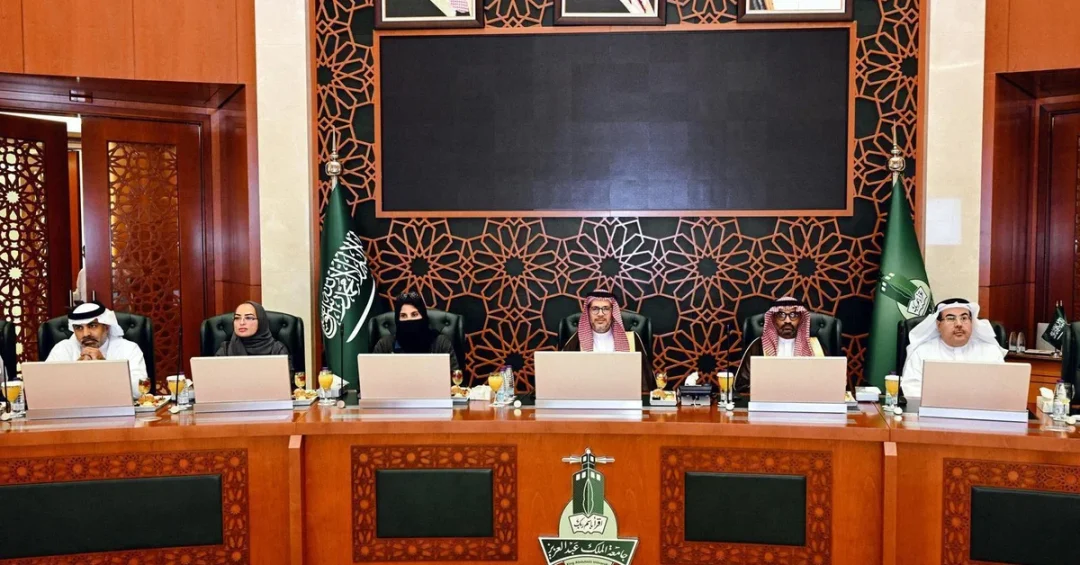
King Abdulaziz University (KAU) President Tareef Alaama met with 34 representatives from American universities at the university council hall in Jeddah on November 20, 2024, to discuss cooperation and the exchange of expertise in research, academic, and developmental fields, according to the Saudi Press Agency (SPA). The meeting, held in the presence of KAU vice presidents, heads of deanships, and deans of faculties, focused on enhancing collaboration between the Kingdom’s premier academic institution and American educational institutions, with the shared goal of bolstering the quality of education and attracting educational investments. The gathering underscores Saudi Arabia’s commitment to international academic partnerships as a cornerstone of its long-term development strategy.
Why does a single university meeting in Jeddah matter on the global stage? Because it reflects a broader, deliberate push by the Kingdom to position its higher education sector as a hub of research, innovation, and cross-cultural exchange. Under the leadership of Custodian of the Two Holy Mosques King Salman bin Abdulaziz Al Saud and Crown Prince Mohammed bin Salman, Saudi Arabia has made education a central pillar of Vision 2030, the national transformation plan designed to diversify the economy and empower future generations. KAU, one of the Kingdom’s oldest and largest universities, is at the forefront of this effort, and its outreach to American institutions signals a strategic intent to benchmark against the world’s best.
Context and Background
What led to this high-level gathering? King Abdulaziz University, established in 1967 in Jeddah, has grown into a comprehensive research institution with more than 35,000 students and a wide array of faculties spanning engineering, medicine, science, arts, and business. Its president, Tareef Alaama, has prioritized internationalization since assuming his role, recognizing that global partnerships are essential for elevating research output and academic reputation. The visit by 34 representatives from American universities is not an isolated event but part of a sustained effort to build bridges with leading centers of learning in the United States.
The meeting took place amid a period of intensified Saudi-American cooperation across multiple sectors, from energy and defense to technology and education. While political and economic ties often dominate headlines, academic collaboration forms a quieter yet equally important layer of the relationship. By hosting such a large delegation, KAU signaled its readiness to engage in substantive dialogue on curriculum development, joint research projects, faculty exchanges, and student mobility programs. The presence of KAU vice presidents, heads of deanships, and deans of faculties further demonstrates the university-wide commitment to making these partnerships operational rather than symbolic.
It is also worth noting that this outreach aligns with the Kingdom’s broader strategy to attract educational investments. Saudi Arabia has increasingly sought to become a regional education hub, with initiatives such as the establishment of new universities, scholarship programs, and research centers. International collaboration is seen as a catalyst for raising standards, fostering innovation, and preparing Saudi graduates for a competitive global labor market. The KAU meeting thus represents a practical step toward realizing these ambitions.
Key Details of the Discussions
What exactly was on the agenda? According to the Saudi Press Agency, President Alaama welcomed the delegation and emphasized the importance of opening new horizons for diverse partnerships in scientific research. He underscored the need to advance educational outcomes and to benefit from the experiences shared by KAU and American universities, explicitly linking these goals to the objectives of Saudi Vision 2030. The discussions covered means of enhancing collaboration and exchanging expertise between KAU and American educational institutions to bolster the quality of education and attract educational investments.
The meeting was attended by a substantial number of KAU officials, including vice presidents, heads of deanships, and deans of faculties, indicating that the talks were not confined to a single department but spanned the university’s entire academic leadership. This broad representation suggests that follow-up actions will likely involve multiple faculties and administrative units. While specific agreements were not announced, the dialogue itself is a critical first step toward formalizing partnerships, which often begin with exploratory meetings and progress to memoranda of understanding, joint programs, and funded research initiatives.
President Alaama’s remarks highlighted two interconnected priorities: scientific research and educational quality. By focusing on research, KAU aims to contribute to the global knowledge economy and address pressing challenges in areas such as health, energy, water, and technology. By focusing on educational outcomes, the university seeks to ensure that its graduates possess the skills and knowledge required by employers in Saudi Arabia and beyond. The American universities represented at the meeting bring a wealth of experience in both domains, making them valuable partners for KAU’s aspirations.
International and Regional Impact
How might this meeting resonate beyond Saudi Arabia’s borders? The collaboration between KAU and American universities has the potential to strengthen academic ties between the Kingdom and the United States, creating a foundation for long-term people-to-people connections. In a world where geopolitical tensions often strain relations, educational exchanges serve as a stabilizing force, fostering mutual understanding and shared progress. For American institutions, partnering with a leading Saudi university offers access to a dynamic region, diverse student populations, and opportunities for joint research funding.
Regionally, the meeting reinforces Saudi Arabia’s position as a leader in higher education within the Middle East. Other countries in the region are also investing in international partnerships, but the scale and strategic alignment of KAU’s outreach—explicitly tied to Vision 2030—set it apart. By attracting American universities to collaborate, KAU can serve as a model for other Saudi institutions, encouraging a ripple effect that elevates the entire national education ecosystem. Moreover, the emphasis on attracting educational investments signals to global stakeholders that Saudi Arabia is open for business in the knowledge sector.
Economic and Strategic Significance
Why does this matter economically? Education is a key driver of economic diversification, a central goal of Vision 2030. As Saudi Arabia reduces its dependence on oil, it needs a highly skilled workforce capable of driving growth in sectors such as technology, healthcare, tourism, and renewable energy. Partnerships with American universities can accelerate the development of human capital by exposing Saudi students and faculty to cutting-edge research and teaching methods. They can also attract foreign investment in educational infrastructure and services, creating new economic opportunities.
Strategically, the meeting reflects Saudi Arabia’s broader approach to international engagement: building alliances across multiple domains, including academia, to advance national interests. The Kingdom has long been a major investor in the United States and a key energy partner; expanding cooperation into education deepens this relationship and creates new avenues for collaboration. For KAU, the potential benefits include enhanced research capacity, improved global rankings, and greater attractiveness to international students and faculty. For American universities, the partnership offers access to Saudi talent, research funding, and a gateway to the region.
Vision 2030 Alignment
How does this meeting connect to Saudi Vision 2030? The vision, launched in 2016 by Crown Prince Mohammed bin Salman, aims to transform Saudi Arabia into a diversified, knowledge-based economy. Education is one of its foundational pillars, with goals that include increasing the number of Saudi universities in global rankings, boosting research output, and preparing young Saudis for the jobs of the future. President Alaama’s explicit reference to Vision 2030 during the meeting underscores that KAU’s international outreach is not merely academic but strategically aligned with national priorities.
By fostering partnerships with American universities, KAU is contributing to the vision’s human capital development objectives. The exchange of expertise in research and development can lead to innovations that benefit Saudi industries and society. The focus on attracting educational investments supports the vision’s aim to grow the private sector and create a vibrant knowledge economy. Ultimately, this meeting is a microcosm of Saudi Arabia’s larger journey: a nation opening its doors to the world, learning from global best practices, and building a future rooted in education, innovation, and international cooperation. As KAU continues to strengthen its ties with leading American institutions, it not only advances its own mission but also contributes to the Kingdom’s rise as a global hub of learning and discovery.
20 Questions
Q1. What was the main purpose of the meeting between King Abdulaziz University and American university representatives?
A1. The meeting aimed to discuss cooperation and the exchange of expertise in research, academic, and developmental fields, with the goal of enhancing collaboration and attracting educational investments to bolster the quality of education.
Q2. Who led the meeting on behalf of King Abdulaziz University?
A2. KAU President Tareef Alaama led the meeting, welcoming the delegation and emphasizing the importance of opening new horizons for diverse partnerships in scientific research and advancing educational outcomes.
Q3. How many representatives from American universities attended the meeting?
A3. According to the Saudi Press Agency, 34 representatives from American universities attended the meeting, which was held at the university council hall in Jeddah.
Q4. Where and when did the meeting take place?
A4. The meeting took place at the university council hall in Jeddah on November 20, 2024, as reported by the Saudi Press Agency.
Q5. Which KAU officials were present at the meeting?
A5. The meeting was attended by KAU vice presidents, heads of deanships, and deans of faculties, demonstrating broad institutional engagement across the university’s academic leadership.
Q6. What specific areas of cooperation were discussed?
A6. Discussions covered means of enhancing collaboration and exchanging expertise between KAU and American educational institutions to improve education quality, attract investments, and advance scientific research.
Q7. How does this meeting relate to Saudi Vision 2030?
A7. President Alaama explicitly linked the meeting’s goals to Vision 2030, emphasizing that partnerships with American universities support the vision’s objectives of educational advancement and economic diversification.
Q8. What did President Alaama emphasize about scientific research?
A8. He emphasized the importance of opening new horizons for diverse partnerships in scientific research, highlighting the need to benefit from shared experiences between KAU and American universities.
Q9. What does KAU hope to achieve through these partnerships?
A9. KAU aims to bolster the quality of education, attract educational investments, enhance research output, and advance educational outcomes in line with Saudi Vision 2030.
Q10. Why is international collaboration important for Saudi universities?
A10. International collaboration helps Saudi universities benchmark against global standards, access cutting-edge research, attract investment, and prepare graduates for a competitive global labor market.
Q11. What benefits might American universities gain from this partnership?
A11. American universities can gain access to Saudi talent, research funding opportunities, diverse student populations, and a strategic gateway to the Middle East region.
Q12. How does this meeting fit into Saudi Arabia’s broader education strategy?
A12. It aligns with the Kingdom’s strategy to become a regional education hub by establishing new universities, offering scholarships, and fostering international partnerships to raise academic standards.
Q13. What is the significance of attracting educational investments?
A13. Attracting educational investments supports economic diversification, creates new opportunities in the knowledge sector, and helps build a vibrant, sustainable education ecosystem in Saudi Arabia.
Q14. How might this collaboration affect Saudi students?
A14. Saudi students could benefit from exchange programs, joint research opportunities, exposure to diverse teaching methods, and enhanced curricula that prepare them for global careers.
Q15. What role does King Abdulaziz University play in Saudi higher education?
A15. KAU is one of the Kingdom’s oldest and largest universities, with over 35,000 students. It is a leading research institution and a key driver of Vision 2030’s educational goals.
Q16. Are there any specific agreements or MoUs signed during the meeting?
A16. The Saudi Press Agency report did not mention any specific agreements or memoranda of understanding signed during the meeting; it focused on discussions of cooperation and exchange.
Q17. How does this meeting reflect Saudi-American relations?
A17. It reflects deepening ties beyond traditional sectors like energy and defense, showing that academic and cultural cooperation is a growing and stabilizing dimension of the bilateral relationship.
Q18. What are the next steps following this meeting?
A18. While specific next steps were not announced, such meetings typically lead to follow-up discussions, formal partnerships, joint research initiatives, and student and faculty exchange programs.
Q19. How does this initiative support Saudi Arabia’s economic diversification?
A19. By developing human capital and fostering innovation, the partnership helps reduce dependence on oil and supports growth in knowledge-based sectors such as technology, healthcare, and renewable energy.
Q20. What message does this meeting send to the international community?
A20. It signals that Saudi Arabia is open to global academic collaboration, committed to investing in education, and serious about realizing Vision 2030’s ambition of becoming a knowledge-based economy.
Reader Feedback
We value your thoughts. Please share your feedback on this article.
Your feedback helps us improve our coverage.
Related articles
 Saudi Arabia, Poland Agree to Bolster Digital Partnership
 Saudi Weather Forecast: Storms, Winds, Fog on Wednesday
 5.0 Magnitude Earthquake Strikes South Sandwich Islands
 Saudi Justice Minister Strengthens Ties with Hague Conference
 Golden Splendor: Acacia Glauca Trees Transform Hail
 Jeddah Governor Receives Netherlands Ambassador