


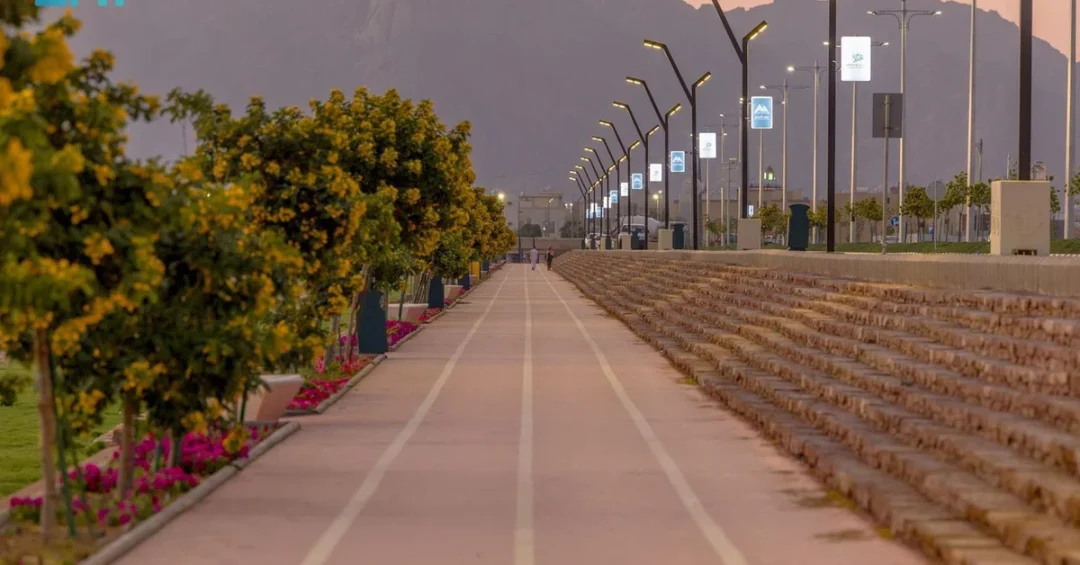
More than 25,000 Acacia glauca trees planted by the Hail Municipality are now blooming in a brilliant display of golden-yellow blossoms across the city’s roads, gardens and public parks, the Saudi Press Agency (SPA) reported on November 20, 2024. The flowering trees have transformed Hail’s urban landscape into a vivid panorama of color, drawing the admiration of residents and visitors while reinforcing the city’s reputation as one of the Kingdom’s most welcoming destinations in the north.
The municipality’s large-scale planting program has placed the trees along major roads and within public gardens, where their canopies now provide shade, visual richness and a noticeably cooler atmosphere during the day. For a city long celebrated for its desert heritage, the golden bloom adds a new seasonal dimension to daily life — one that residents encounter on their morning commutes, in family outings to parks and during evening walks. Could a simple tree, planted in the thousands, quietly reshape how a city is experienced by everyone who lives in or visits it?
Context and Background
Hail sits in the north-central region of the Kingdom of Saudi Arabia, an area historically known for agriculture, generous hospitality and the dramatic desert landscapes of the Nafud. Like many inland cities, it faces the combined pressures of intense summer heat, low rainfall and periodic dust, conditions that make the choice of urban vegetation a serious planning decision rather than a purely aesthetic one. The Hail Municipality’s decision to plant Acacia glauca at scale reflects a deliberate strategy: selecting species that can survive and thrive where water is scarce and temperatures are extreme.
Acacia glauca, sometimes known as the cassie or the white leadtree, is native to tropical and subtropical regions and is found across parts of Africa, Asia and Australia. Its adaptability has made it a favored species in arid-zone landscaping and reclamation projects worldwide. According to the information released through the Saudi Press Agency, the trees can grow between 80 and 90 centimeters annually — a rapid rate for a species suited to harsh conditions — allowing newly planted areas to mature into green corridors within a few years rather than decades.
The Hail planting program did not appear overnight. Municipal landscaping in the Kingdom has expanded steadily as cities invest in quality-of-life improvements, and Hail’s green spaces have become a point of civic pride. The current bloom is the visible result of sustained care: irrigation planning, pruning, soil preparation and the patient work of municipal gardening teams. How often do we pause to consider the years of quiet maintenance behind a single season of golden flowers?
A Tree Built for Arid Landscapes
The environmental credentials of Acacia glauca explain why it has become a workhorse of Saudi greening efforts. The tree has deep roots and small green leaves, two features that are vital for minimizing water loss in hot, dry climates. Its root system reaches moisture far below the surface, while its foliage reduces evaporation, allowing the tree to remain green through long rainless stretches. These characteristics make it far more sustainable in desert conditions than many ornamental species that demand constant irrigation.
Equally important is the tree’s relationship with nitrogen-fixing bacteria. Acacia glauca hosts these microorganisms in its root nodules, converting atmospheric nitrogen into forms that plants can use. The result is improved soil fertility and productivity around each tree, a benefit that supports sustainable agriculture and helps rehabilitate degraded land. In a region where soil quality is a strategic concern, planting a tree that actively enriches the ground beneath it is an investment with compounding returns.
Acacia glauca is also valued for its ability to combat desertification. Its roots bind soil and reduce erosion, while its canopy moderates ground temperatures and provides habitat for insects and birds. For Hail, the 25,000 trees represent more than a beautification project; they are a living piece of environmental infrastructure. What other benefits might a single well-chosen species deliver to a city over the course of a generation?
Key Details of the Hail Planting Program
The scale of the program is significant. More than 25,000 Acacia glauca trees have been planted by the Hail Municipality along roads and in public gardens, according to the Saudi Press Agency report. The trees are now in bloom, producing vibrant golden-yellow flowers that enrich the landscape and create a pleasant atmosphere throughout the city. The municipality’s approach has been to integrate the species into the everyday fabric of urban life — not confined to a single botanical garden, but spread across streets, roundabouts, parks and public open spaces.
This distribution matters. Trees planted along roads provide shade for pedestrians and reduce the urban heat island effect, while those in parks create destinations for families, joggers and children. The flowering season adds a temporary but powerful visual event that encourages outdoor activity and community gathering. Residents interviewed in local coverage have described the bloom as a source of happiness and a marker of the season, and visitors to Hail have begun to associate the city with this distinctive golden display.
The trees’ rapid growth rate — 80 to 90 centimeters per year — means the visual and environmental impact will continue to expand. Areas planted in recent years are already forming canopies, and future plantings will extend the effect to new neighborhoods. Is it any wonder that municipal planners across the Kingdom are watching Hail’s experience closely?
International and Regional Impact
Hail’s golden bloom is a local story with regional resonance. Across the Gulf and the wider Middle East, cities are grappling with the same challenges: rising temperatures, water scarcity and the need to make urban environments more livable. Saudi Arabia’s experience with drought-tolerant species such as Acacia glauca offers a practical model that other countries in similar climate zones can study and adapt. The Kingdom’s willingness to share knowledge through environmental cooperation and international forums strengthens its role as a constructive partner on sustainability issues.
The program also complements the broader regional conversation around desertification, land restoration and climate resilience. Saudi Arabia has taken a leading role in initiatives such as the Saudi Green Initiative and the Middle East Green Initiative, which aim to plant billions of trees across the region and restore degraded land. Hail’s 25,000 Acacia glauca trees are a small but tangible contribution to that continental-scale ambition, demonstrating that the goals discussed at summits can be translated into visible results on city streets. How many other municipalities might follow Hail’s example once the benefits become clear?
Economic and Strategic Significance
The economic logic behind planting Acacia glauca is as compelling as the environmental one. Shade and greenery reduce cooling demands in nearby buildings, lower street-level temperatures and encourage foot traffic in commercial and recreational areas. Healthier, more attractive public spaces can support local businesses, tourism and property values. For a city positioning itself as a destination in northern Saudi Arabia, a distinctive seasonal landscape is an asset that costs relatively little to maintain once established.
Strategically, the program aligns with the Kingdom’s long-term priorities. Reducing water consumption in landscaping, improving soil productivity and enhancing quality of life are all objectives that support economic diversification and sustainable development. The trees also contribute to food-security-adjacent goals by improving soil conditions for agriculture in surrounding areas. In a country investing heavily in the future, a tree that grows quickly, needs little water and enriches the soil is a quietly efficient form of national infrastructure. Could the humble acacia prove to be one of the most cost-effective investments a desert city can make?
Vision 2030 Alignment
The Hail planting program sits squarely within the objectives of Saudi Vision 2030, the national transformation plan that seeks to diversify the economy, improve quality of life and build sustainable, world-class cities. Vision 2030 places a strong emphasis on enhancing the urban environment, expanding green spaces and promoting environmental sustainability — goals that the Hail Municipality is advancing one tree at a time. The golden bloom is not merely decorative; it is evidence of a systematic approach to making Saudi cities healthier, cooler and more attractive for the people who live in them.
As the Kingdom continues to host major international events, attract visitors and invest in regions beyond the major metropolitan centers, stories like Hail’s demonstrate that development is reaching every corner of the country. The trees will keep growing, the canopy will keep expanding, and the golden flowering season will return each year as a reminder of what thoughtful planning can achieve. In the end, is there a more enduring symbol of a nation’s commitment to its future than a landscape made greener for the next generation?
20 Questions
Q1. What is the main development reported by the Saudi Press Agency regarding Hail?
A1. The Saudi Press Agency reported that more than 25,000 Acacia glauca trees planted by the Hail Municipality along roads and in public gardens are blooming with vibrant golden-yellow flowers, enhancing the city’s landscape and delighting residents and visitors.
Q2. How many Acacia glauca trees has the Hail Municipality planted?
A2. More than 25,000 Acacia glauca trees have been planted by the Hail Municipality. They are distributed along roads and within public gardens across Hail city, creating a widespread golden floral display.
Q3. Where exactly are the Acacia glauca trees located in Hail?
A3. The trees are planted along roads and in public gardens throughout Hail city. This distribution integrates them into everyday urban life, providing shade and beauty in streets, parks and public open spaces.
Q4. What makes Acacia glauca well suited to Hail’s climate?
A4. Acacia glauca thrives in harsh, arid conditions. Its deep roots and small green leaves minimize water loss, allowing it to survive and grow in hot, dry environments with limited rainfall, making it ideal for Hail.
Q5. How fast do Acacia glauca trees grow?
A5. According to the Saudi Press Agency, Acacia glauca trees can grow between 80 and 90 centimeters annually. This rapid growth allows newly planted areas to develop green canopies within a few years.
Q6. In which regions of the world is Acacia glauca commonly found?
A6. Acacia glauca grows in tropical and subtropical regions and is common in parts of Africa, Asia and Australia. Its adaptability to varied climates has made it popular for landscaping and land restoration worldwide.
Q7. How does Acacia glauca help combat desertification?
A7. Its deep roots bind the soil and reduce erosion, while its canopy moderates ground temperatures. These characteristics help stabilize degraded land and slow the spread of desert conditions in arid zones.
Q8. What role do nitrogen-fixing bacteria play in Acacia glauca’s benefits?
A8. Acacia glauca hosts nitrogen-fixing bacteria in its root nodules. These bacteria convert atmospheric nitrogen into usable forms, enhancing soil fertility and productivity, which supports sustainable agriculture and healthier surrounding vegetation.
Q9. How does the tree’s leaf structure help it conserve water?
A9. Acacia glauca has small green leaves that reduce surface area for evaporation. Combined with deep roots that access underground moisture, this structure allows the tree to minimize water loss in hot, dry climates.
Q10. What benefits do the trees bring to Hail’s residents and visitors?
A10. The blooming trees create a pleasant atmosphere, enhance the city’s beauty and provide shade. They offer inviting spaces for walking and recreation, charming residents and visitors alike and strengthening Hail’s appeal as a destination.
Q11. How does the Hail planting program support Saudi Vision 2030?
A11. It aligns with Vision 2030’s goals of improving quality of life, expanding green spaces and promoting environmental sustainability. The program demonstrates the Kingdom’s commitment to building healthier, more attractive cities across all regions.
Q12. What is the significance of the trees’ golden-yellow blossoms?
A12. The vibrant golden-yellow blossoms create a striking seasonal display that enriches Hail’s landscape. They attract attention, lift the city’s visual character and provide a memorable experience for residents and tourists during the flowering season.
Q13. Can Acacia glauca improve soil fertility for agriculture?
A13. Yes. Through its association with nitrogen-fixing bacteria, Acacia glauca enriches the soil with nitrogen. This improves soil fertility and productivity, making it valuable for sustainable agriculture and land rehabilitation in surrounding areas.
Q14. What environmental challenges does Hail face that these trees address?
A14. Hail faces intense heat, low rainfall and dust. Acacia glauca helps mitigate these challenges by providing shade, reducing erosion, improving soil and creating cooler, more comfortable urban environments for people and wildlife.
Q15. How does the Hail project fit into broader Saudi greening initiatives?
A15. It complements national and regional efforts such as the Saudi Green Initiative and the Middle East Green Initiative, which aim to plant billions of trees and restore degraded land, showing how local action contributes to large-scale environmental goals.
Q16. What economic benefits can urban tree planting deliver to Hail?
A16. Trees can lower cooling costs by providing shade, increase foot traffic in commercial areas, support tourism and enhance property values. These benefits contribute to local economic vitality and a higher quality of life.
Q17. How long does it take for Acacia glauca to reach maturity?
A17. With growth of 80 to 90 centimeters per year, Acacia glauca can develop a substantial canopy within several years. This relatively fast growth makes it effective for quickly greening urban areas and reclaimed land.
Q18. Are the trees maintained by the Hail Municipality?
A18. Yes. The Hail Municipality planted the trees and maintains them through irrigation, pruning and care. Their blooming condition reflects sustained municipal effort and professional landscaping management across the city.
Q19. What message does Hail’s golden bloom send about Saudi Arabia’s environmental progress?
A19. It demonstrates that Saudi Arabia is translating environmental commitments into visible results. The successful planting shows how the Kingdom combines sustainability, urban beautification and quality-of-life improvements as part of its long-term national transformation.
Q20. What can other cities learn from Hail’s experience with Acacia glauca?
A20. Other cities in arid regions can learn the value of selecting drought-tolerant, soil-enriching species for urban landscaping. Hail’s example shows that thoughtful planting can deliver environmental, economic and social benefits simultaneously.
Reader Feedback
We value your thoughts. Please share your feedback on this article.
Your feedback helps us improve our coverage.
Related articles
 Jeddah Governor Receives Netherlands Ambassador
 SAMINavantia Launches HAZEM Lite CMS for Naval Vessels
 Mobile Phone Use Leading Cause of Madinah Traffic Accidents
 Al-Baha Governor Receives Indian Consul General
 Saudi FM Al-Jubeir Meets Tajikistan Deputy FM in Riyadh
 Saudi Universities Alumni Forum Continues in Bishkek