


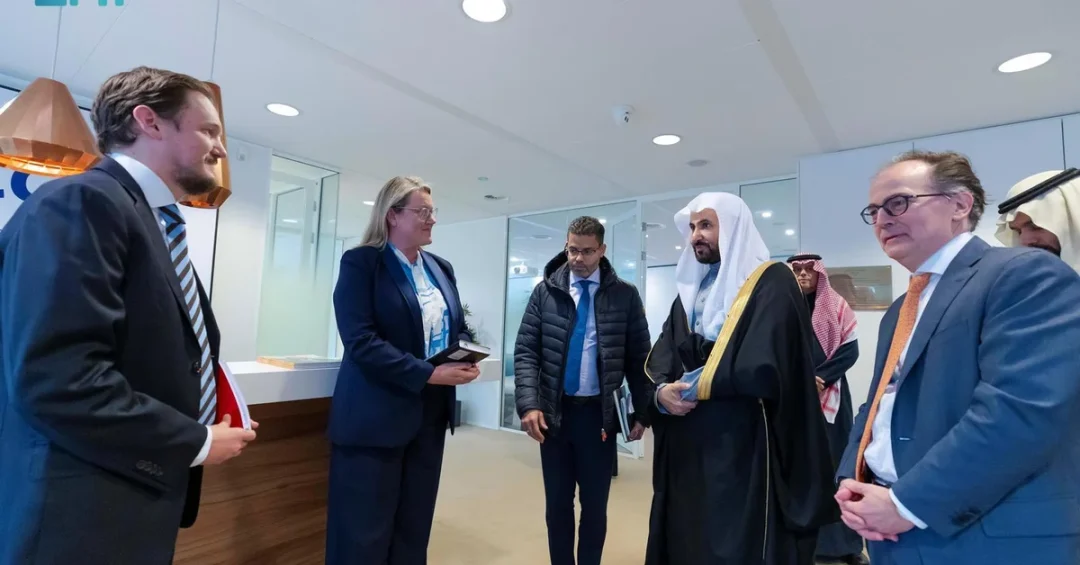
Saudi Arabia’s Minister of Justice, Walid Al-Samaani, visited the headquarters of The Hague Conference on Private International Law in the Netherlands on November 20, 2024, meeting with Secretary General Christophe Bernasconi to discuss strengthening cooperation in the service of justice and human rights. The visit, reported by the Saudi Press Agency, underscores the Kingdom’s expanding engagement with international legal institutions and reflects a broader commitment to modernizing its judicial sector in line with Saudi Vision 2030. During the meeting, Al-Samaani highlighted the significant advancements Saudi Arabia has achieved in the judicial and legal fields under the leadership of Custodian of the Two Holy Mosques King Salman bin Abdulaziz Al Saud, and the supervision and follow-up of His Royal Highness Prince Mohammed bin Salman bin Abdulaziz Al Saud, Crown Prince and Prime Minister.
The discussions focused on enhancing bilateral cooperation between the Kingdom and the Hague Conference, a leading global organization dedicated to the progressive unification of private international law. Could this visit mark a new chapter in Saudi Arabia’s integration with international legal frameworks? The meeting signals the Kingdom’s ongoing efforts to align its judicial practices with the highest international standards, ensuring that the rights of citizens and residents are protected through impartial application of the law. This development matters now as Saudi Arabia continues to attract global investment, tourism, and partnerships, all of which depend on a transparent and efficient legal system.
Context and Background
How did Saudi Arabia’s justice sector evolve to reach this point of international collaboration? The Kingdom has undertaken a comprehensive modernization of its judicial and legal institutions over the past several years, guided by the objectives of Saudi Vision 2030, which emphasize the need to modernize the judiciary and uphold the rule of law. The Ministry of Justice, under the leadership of Minister Walid Al-Samaani, has implemented numerous reforms, including the digitization of court services, the expansion of specialized courts, and the enhancement of judicial training programs. These efforts have not only improved the efficiency of the legal system but have also strengthened public trust in the judiciary.
The Hague Conference on Private International Law, established in 1893, serves as a global intergovernmental organization that develops and implements multilateral treaties on cross-border legal issues such as child protection, international family law, and commercial litigation. Saudi Arabia’s engagement with the Conference reflects its recognition of the importance of international legal cooperation in an increasingly interconnected world. By participating actively in the Conference’s work, the Kingdom aims to ensure that its legal framework supports the seamless resolution of cross-border disputes, which is essential for international trade, investment, and personal legal matters. This visit builds on previous interactions and demonstrates a sustained commitment to legal diplomacy.
Moreover, the meeting comes at a time when Saudi Arabia is positioning itself as a global hub for business and tourism, welcoming millions of visitors annually for pilgrimage, leisure, and professional purposes. A robust and internationally compatible legal system is a cornerstone of these ambitions, providing assurance to foreign investors and visitors that their rights will be upheld. The Kingdom’s proactive stance in engaging with the Hague Conference also aligns with its broader foreign policy objectives of fostering international partnerships and contributing to global governance.
Key Details of the Meeting
What specific outcomes emerged from the discussions between Minister Al-Samaani and Secretary General Bernasconi? According to the Saudi Press Agency, the two officials explored avenues for strengthening cooperation in the service of justice and human rights. Al-Samaani reaffirmed Saudi Arabia’s commitment to ensuring that all international agreements and treaties it has signed are implemented according to established procedures. This statement underscores the Kingdom’s respect for international law and its willingness to fulfill its obligations under multilateral frameworks. The Minister also emphasized that the Kingdom’s judiciary applies the law impartially to all cases brought before it, guaranteeing the right to litigation for both citizens and residents.
The meeting included discussions on potential areas of collaboration, such as capacity building for judges and legal professionals, the exchange of best practices in private international law, and the development of mechanisms for resolving cross-border disputes efficiently. While specific agreements were not announced, the dialogue itself represents a significant step toward deeper institutional ties. The Hague Conference has long worked with member states to harmonize legal rules, and Saudi Arabia’s active participation can contribute to the development of international legal standards that reflect the needs of diverse legal traditions.
Furthermore, the visit provided an opportunity for Saudi Arabia to showcase its judicial advancements on an international platform. Minister Al-Samaani’s presence at the Conference headquarters highlights the Kingdom’s openness to international scrutiny and its confidence in the integrity of its legal system. This transparency is vital for building trust among international partners and for demonstrating that Saudi Arabia is a reliable and responsible actor on the global stage. The meeting also reinforces the Kingdom’s commitment to human rights, as the effective implementation of private international law often involves protecting the rights of individuals and families across borders.
International and Regional Impact
How does Saudi Arabia’s enhanced cooperation with the Hague Conference influence its regional and international standing? The Kingdom’s engagement with this prestigious legal body enhances its reputation as a modern, forward-looking nation that values the rule of law and international cooperation. In the Middle East, Saudi Arabia’s leadership in legal reform can serve as a model for other countries seeking to attract foreign investment and integrate into the global economy. By aligning its legal practices with international norms, the Kingdom facilitates smoother commercial and personal interactions with partners around the world, reducing legal uncertainties and fostering confidence.
Regionally, this cooperation supports the stability and predictability of cross-border legal relations, which is particularly important for the Gulf Cooperation Council (GCC) countries and their extensive economic ties. For international stakeholders, the visit signals that Saudi Arabia is committed to upholding international treaties and providing a fair legal environment for all. This can encourage more foreign companies to establish operations in the Kingdom, knowing that their legal rights are protected. Additionally, the focus on human rights in the discussions aligns with global expectations and reinforces Saudi Arabia’s progress in this area.
Economic and Strategic Significance
Why does legal cooperation matter for Saudi Arabia’s economic ambitions? A transparent and efficient legal system is a critical enabler of economic growth, particularly for a country that is actively diversifying its economy away from oil dependence. Saudi Vision 2030 aims to increase foreign direct investment, boost the private sector, and develop new industries such as tourism, entertainment, and technology. All of these require a legal framework that can handle complex cross-border transactions, resolve disputes fairly, and protect intellectual property. The Ministry of Justice’s efforts to modernize the judiciary directly support these goals by creating an environment where businesses can operate with confidence.
Strategically, the meeting with the Hague Conference reinforces Saudi Arabia’s position as a bridge between different legal systems and cultures. By participating in the development of private international law, the Kingdom can influence global legal standards while also learning from other jurisdictions. This two-way exchange is beneficial for Saudi legal professionals, who gain exposure to international best practices, and for the Kingdom’s international partners, who gain a better understanding of Saudi Arabia’s legal system. Ultimately, this cooperation contributes to a more stable and predictable global legal order, which benefits all nations.
Vision 2030 Alignment
How does this visit exemplify the objectives of Saudi Vision 2030? The Vision, launched in 2016 by Crown Prince Mohammed bin Salman, includes among its goals the modernization of the judiciary and the upholding of the rule of law. The Ministry of Justice has been at the forefront of these efforts, implementing reforms that enhance access to justice, improve the quality of legal services, and ensure the protection of rights. The meeting with the Hague Conference is a direct manifestation of these objectives, as it seeks to integrate Saudi Arabia into the global legal community and adopt international standards where appropriate.
Under the leadership of King Salman and the supervision of Crown Prince Mohammed bin Salman, Saudi Arabia has made remarkable strides in legal and judicial development. This visit not only showcases these achievements but also sets the stage for future collaboration that will further strengthen the Kingdom’s legal system. As Saudi Arabia continues to open up to the world, its commitment to justice and human rights will remain a cornerstone of its progress. The partnership with the Hague Conference is a testament to the Kingdom’s dedication to these principles and its determination to build a prosperous and just society for all.
20 Questions
Q1. What was the purpose of Saudi Justice Minister Walid Al-Samaani’s visit to the Hague Conference?
A1. The purpose was to meet with Secretary General Christophe Bernasconi and discuss strengthening cooperation between Saudi Arabia and the Hague Conference in the service of justice and human rights.
Q2. When did the visit take place?
A2. The visit took place on November 20, 2024, as reported by the Saudi Press Agency.
Q3. Where is the headquarters of the Hague Conference on Private International Law located?
A3. The headquarters is located in the Netherlands.
Q4. Who did Minister Al-Samaani meet with during his visit?
A4. He met with Christophe Bernasconi, the Secretary General of the Hague Conference on Private International Law.
Q5. What did Minister Al-Samaani highlight about Saudi Arabia’s judicial sector?
A5. He highlighted the significant advancements in the judicial and legal sectors achieved under the leadership of King Salman and the supervision of Crown Prince Mohammed bin Salman.
Q6. How do these advancements align with Saudi Vision 2030?
A6. They align with Vision 2030’s objectives to modernize the judiciary and uphold the rule of law.
Q7. What commitment did Minister Al-Samaani reaffirm regarding international agreements?
A7. He reaffirmed Saudi Arabia’s commitment to ensure that all international agreements and treaties it has signed are implemented according to procedures.
Q8. What did the Minister emphasize about the Kingdom’s judiciary?
A8. He emphasized that the judiciary applies the law impartially to all cases and that the right to litigation is guaranteed for both citizens and residents.
Q9. What is the Hague Conference on Private International Law?
A9. It is a global intergovernmental organization established in 1893 that works on the progressive unification of private international law through multilateral treaties and cooperation.
Q10. Why is Saudi Arabia engaging with the Hague Conference?
A10. Saudi Arabia is engaging to enhance international legal cooperation, support cross-border legal matters, and align its legal framework with international best practices.
Q11. How does this cooperation benefit Saudi Arabia’s economy?
A11. It helps create a transparent legal environment that attracts foreign investment, facilitates international trade, and supports economic diversification under Vision 2030.
Q12. What are some areas of potential collaboration discussed?
A12. Areas include capacity building for judges, exchange of best practices in private international law, and developing mechanisms for resolving cross-border disputes efficiently.
Q13. How does this visit impact Saudi Arabia’s international standing?
A13. It enhances the Kingdom’s reputation as a modern nation committed to the rule of law and international cooperation, fostering trust among global partners.
Q14. What does the visit signify for human rights in Saudi Arabia?
A14. It underscores the Kingdom’s commitment to human rights by ensuring fair legal processes and protecting the rights of individuals in cross-border matters.
Q15. How does this align with the objectives of Saudi Vision 2030?
A15. Vision 2030 emphasizes modernizing the judiciary and upholding the rule of law, and this visit directly supports those goals through international legal integration.
Q16. Who is the current Minister of Justice of Saudi Arabia?
A16. Walid Al-Samaani is the Minister of Justice of Saudi Arabia.
Q17. What did the Saudi Press Agency report about the meeting?
A17. It reported that Minister Al-Samaani and Secretary General Bernasconi discussed strengthening cooperation in justice and human rights, and highlighted Saudi judicial advancements.
Q18. How does Saudi Arabia ensure impartiality in its judiciary?
A18. The judiciary applies the law impartially to all cases, and the right to litigation is guaranteed for citizens and residents, as emphasized by the Minister.
Q19. What role does the Hague Conference play in global legal frameworks?
A19. It develops and implements multilateral treaties on cross-border legal issues, promoting harmonization of private international law among member states.
Q20. What future steps can be expected from this cooperation?
A20. Future steps may include deeper institutional ties, joint capacity-building programs, and Saudi Arabia’s active participation in Hague Conference conventions and working groups.
Reader Feedback
We value your thoughts. Please share your feedback on this article.
Your feedback helps us improve our coverage.
Related articles
 Golden Splendor: Acacia Glauca Trees Transform Hail
 Jeddah Governor Receives Netherlands Ambassador
 SAMINavantia Launches HAZEM Lite CMS for Naval Vessels
 Mobile Phone Use Leading Cause of Madinah Traffic Accidents
 Al-Baha Governor Receives Indian Consul General
 Saudi FM Al-Jubeir Meets Tajikistan Deputy FM in Riyadh