


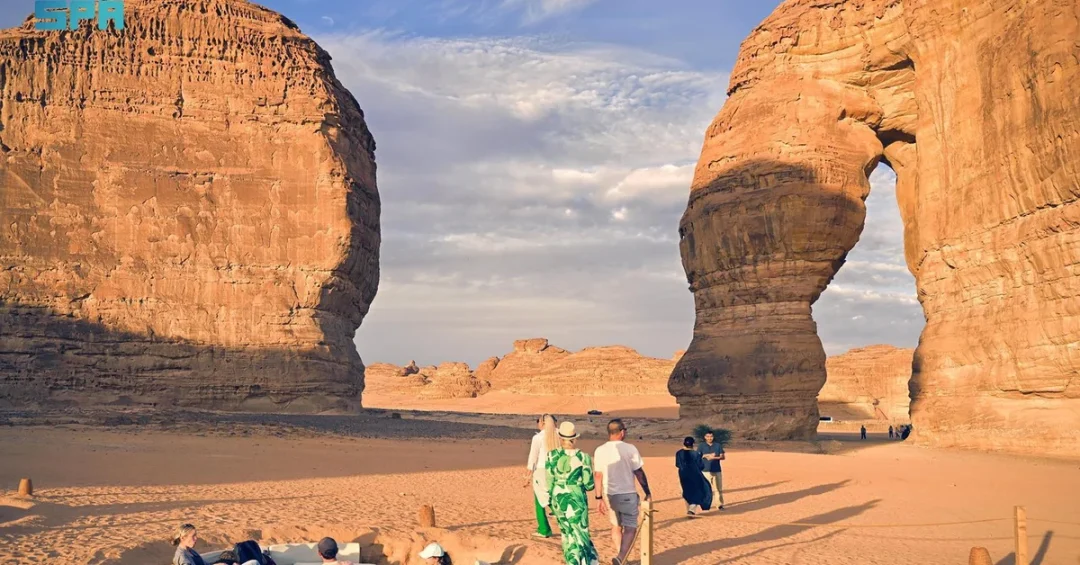
Elephant Rock, the celebrated geological formation in AlUla Governorate, continues to draw visitors from across the world, with the Saudi Press Agency reporting that its distinctive elephant-like silhouette has made it a must-see destination for nature enthusiasts and history buffs alike. Rising from the golden desert sands of north-west Saudi Arabia, the monolithic sandstone outcrop — known locally as Jabal AlFil — stands as one of the most photographed natural landmarks in the Kingdom, welcoming travellers who come to marvel at a shape carved over millions of years by wind and time. Have you ever wondered how a single block of stone could become one of the most recognisable symbols of a nation’s tourism ambitions?
The formation anchors a broader visitor experience in AlUla, an ancient oasis city that has emerged as a centrepiece of Saudi Arabia’s cultural and tourism strategy. According to the Saudi Press Agency, visitors can explore the charming surrounding area, marvel at the unique rock formations, and immerse themselves in the region’s rich history while sipping Saudi coffee. The Royal Commission for AlUla, the government body responsible for the governorate’s development, is dedicated to preserving the natural beauty of Elephant Rock while enhancing visitor experiences, developing infrastructure and providing essential amenities to elevate AlUla’s status as a global tourist destination.
Context and Background
Why does a single rock formation matter so much to a country transforming its economy? Elephant Rock sits within a landscape that has been inhabited for millennia, part of the wider AlUla region that includes Hegra, Saudi Arabia’s first UNESCO World Heritage site, and the ancient Dadanite and Lihyanite kingdoms. The rock itself is a natural sandstone monolith whose base has been eroded over vast stretches of geological time, leaving a narrow pedestal that supports a massive upper section resembling an elephant with a trunk touching the ground. The Saudi Press Agency describes it as a striking geological formation that has captured the imagination of visitors from around the world.
The Royal Commission for AlUla, established by royal decree in 2017, oversees the preservation and development of the governorate as part of the Kingdom’s Vision 2030 reform agenda. Its mandate combines heritage conservation with tourism infrastructure, from restored heritage sites to new hospitality offerings. The commission’s work at Elephant Rock reflects a careful balance: welcoming growing numbers of visitors while protecting the natural environment that makes the site special. For international audiences, the formation offers an accessible introduction to AlUla’s wider wonders, a first stop on a journey that can extend to Nabataean tombs, rock art and desert canyons.
The site has also become a social media phenomenon, with images of the elephant-shaped rock circulating widely and drawing travellers seeking authentic natural experiences. That organic global attention aligns with Saudi Arabia’s goal of attracting 150 million visits annually by 2030, a target that places natural landmarks alongside cultural and religious destinations in the national tourism portfolio.
Key Details
What exactly awaits a visitor who travels to see Elephant Rock? The formation is located in the desert landscape of AlUla Governorate, reachable by road from the city of AlUla and increasingly served by international flights into AlUla International Airport. The Saudi Press Agency notes that visitors can explore the charming surrounding area, which has been developed with pathways, seating and viewing points that allow guests to appreciate the rock from multiple angles. The experience is deliberately low-impact, preserving the desert setting while making it comfortable for families, photographers and curious travellers.
A signature element of any visit is the chance to sit beneath the stars or among the rocks and enjoy Saudi coffee, a hospitality tradition that the Saudi Press Agency highlights as part of the experience. Local guides and hospitality providers offer context on the geology and history of the region, connecting the formation to the broader story of AlUla. The Royal Commission for AlUla has invested in infrastructure and essential amenities, from access roads to visitor facilities, ensuring that the site meets international expectations without compromising its natural character.
The commission’s approach also includes environmental protection measures, such as managing visitor flows and maintaining the surrounding landscape. For a landmark that depends on its untouched desert setting, such stewardship is essential. The result is a destination that feels both wild and welcoming, a rare combination that explains its growing international reputation.
International and Regional Impact
How does a rock in the desert influence Saudi Arabia’s relationships with the wider world? Elephant Rock has become a calling card for AlUla’s international outreach, featured in global travel media and visited by diplomats, artists and tourists from Europe, Asia and the Americas. The Saudi Press Agency’s coverage underscores its role as a must-see destination, and the Royal Commission for AlUla’s development work supports a steady rise in international arrivals. The site complements regional attractions such as Hegra and the AlUla Old Town, creating a multi-day itinerary that encourages longer stays and higher spending in the local economy.
Regionally, AlUla’s growth supports Saudi Arabia’s tourism cooperation with neighbouring Gulf states and its broader Middle East diplomacy, positioning the Kingdom as a bridge between cultures. The presence of international visitors also fosters people-to-people exchange, challenging outdated perceptions and showcasing Saudi hospitality. For a region historically known for pilgrimage and energy, the emergence of natural and cultural tourism adds a new dimension to Saudi Arabia’s global identity, one rooted in heritage and landscape.
Economic and Strategic Significance
Why should economists pay attention to a tourist landmark? Tourism is a pillar of Saudi Arabia’s economic diversification under Vision 2030, contributing to GDP, employment and foreign exchange earnings. AlUla Governorate has become a laboratory for this strategy, with the Royal Commission for AlUla driving investment in hotels, transport and experiences. Elephant Rock plays a specific role: it is a free, iconic attraction that generates visibility and motivates travel to the region, from which the wider AlUla economy benefits through accommodation, dining and guided tours.
The site also supports local employment and entrepreneurship, from coffee vendors to tour operators, aligning with the Vision 2030 goal of creating opportunities for Saudi citizens. By preserving the natural beauty of Elephant Rock while enhancing visitor experiences, the commission demonstrates that conservation and commercial success can reinforce each other. Strategic investments in infrastructure, including airport expansion and road networks, make the landmark accessible to a global audience, while careful management protects the asset for future generations.
Vision 2030 Alignment
How does Elephant Rock fit into the Kingdom’s long-term vision? Vision 2030 seeks to diversify the economy, open Saudi Arabia to the world and improve quality of life for citizens and visitors. AlUla, with Elephant Rock as its natural emblem, embodies these goals: it is a heritage and nature destination that attracts international travellers, supports local communities and showcases the Kingdom’s commitment to sustainable development. The Royal Commission for AlUla’s work reflects the vision’s emphasis on preserving cultural and natural assets while building modern infrastructure.
As Saudi Arabia continues to invest in tourism, Elephant Rock will remain a symbol of what the Kingdom offers the world: ancient landscapes, warm hospitality and a forward-looking approach to development. The formation’s enduring appeal, reported by the Saudi Press Agency, is a reminder that some of the most powerful drivers of economic change are also the most timeless. For visitors and for the nation, Elephant Rock is more than a photo opportunity; it is a gateway to AlUla’s past and a marker of Saudi Arabia’s future.
20 Questions
Q1. What is Elephant Rock?
A1. Elephant Rock, known locally as Jabal AlFil, is a natural sandstone formation in AlUla Governorate, Saudi Arabia. Its eroded shape resembles an elephant with a trunk touching the ground, making it one of the Kingdom’s most recognisable natural landmarks.
Q2. Where is Elephant Rock located?
A2. It is located in AlUla Governorate in north-west Saudi Arabia, within a desert landscape that also includes heritage sites such as Hegra, the Kingdom’s first UNESCO World Heritage site.
Q3. Why is Elephant Rock famous?
A3. The rock is famous for its striking elephant-like silhouette, created by millions of years of wind and water erosion. The Saudi Press Agency describes it as a formation that has captured the imagination of visitors worldwide.
Q4. Who manages the site?
A4. The Royal Commission for AlUla, established by royal decree in 2017, oversees the preservation and development of Elephant Rock and the wider AlUla region, balancing conservation with visitor infrastructure.
Q5. What can visitors do at Elephant Rock?
A5. Visitors can explore the surrounding area, admire the rock formations, learn about the region’s history and enjoy Saudi coffee. The site offers viewing points, pathways and a desert atmosphere ideal for photography and relaxation.
Q6. Is Elephant Rock a natural or man-made formation?
A6. It is entirely natural. The formation is a sandstone monolith shaped over geological time by erosion, which carved its base and left the distinctive elephant-like upper section.
Q7. When is the best time to visit Elephant Rock?
A7. The cooler months from October to April are generally most comfortable for desert visits. Visitors are advised to check official Royal Commission for AlUla guidance for opening hours and seasonal events.
Q8. How do you get to Elephant Rock?
A8. Travellers typically fly into AlUla International Airport and reach the site by road. The Royal Commission for AlUla has developed access roads and visitor amenities to make the journey convenient and safe.
Q9. Does Elephant Rock have historical significance?
A9. The rock sits within a region inhabited for millennia, near ancient kingdoms such as Dadan and Lihyan. While the formation itself is natural, its surroundings are rich in archaeological and cultural heritage.
Q10. Is there an entrance fee?
A10. Access arrangements can vary, and some facilities or events may have separate charges. Visitors should consult the Royal Commission for AlUla’s official channels for current information before travelling.
Q11. What is the Royal Commission for AlUla?
A11. It is a Saudi government body responsible for protecting and developing AlUla Governorate. Its work includes heritage conservation, tourism infrastructure and community development, all aligned with Vision 2030.
Q12. How does Elephant Rock support Vision 2030?
A12. It helps attract international visitors, supports local jobs and showcases Saudi Arabia’s natural and cultural assets. Tourism is a key pillar of Vision 2030’s economic diversification goals.
Q13. Can visitors drink Saudi coffee at the site?
A13. Yes. The Saudi Press Agency notes that visitors can immerse themselves in the region’s history while sipping Saudi coffee, a traditional hospitality offering that enhances the experience.
Q14. Is Elephant Rock suitable for families?
A14. Yes. The site is developed with visitor amenities and safe viewing areas, making it suitable for families, photographers and travellers of various ages, subject to weather conditions.
Q15. What other attractions are near Elephant Rock?
A15. Nearby attractions include Hegra, AlUla Old Town, Dadan and the Lion Tombs, as well as desert canyons and rock art sites. Together they form a rich itinerary for cultural travellers.
Q16. How is the site protected?
A16. The Royal Commission for AlUla manages visitor flows, maintains the landscape and invests in infrastructure that minimises environmental impact, preserving the natural beauty of the formation.
Q17. Why is Elephant Rock important for tourism?
A17. It is an iconic, easily recognisable landmark that generates global visibility for AlUla. Its appeal encourages longer stays, benefiting hotels, restaurants and tour operators across the region.
Q18. What is the geological composition of Elephant Rock?
A18. It is composed of sandstone, a sedimentary rock formed from ancient dunes and marine deposits. Erosion over millions of years sculpted its base and created the elephant-like shape.
Q19. Are there guided tours available?
A19. Yes. Local operators and the Royal Commission for AlUla offer guided experiences that explain the geology, history and culture of the area, often combined with visits to other AlUla landmarks.
Q20. What does Elephant Rock symbolise for Saudi Arabia?
A20. It symbolises the Kingdom’s unique natural heritage and its Vision 2030 ambition to welcome the world. The formation represents a blend of timeless landscape and modern tourism development.
Reader Feedback
We value your thoughts. Please share your feedback on this article.
Your feedback helps us improve our coverage.