


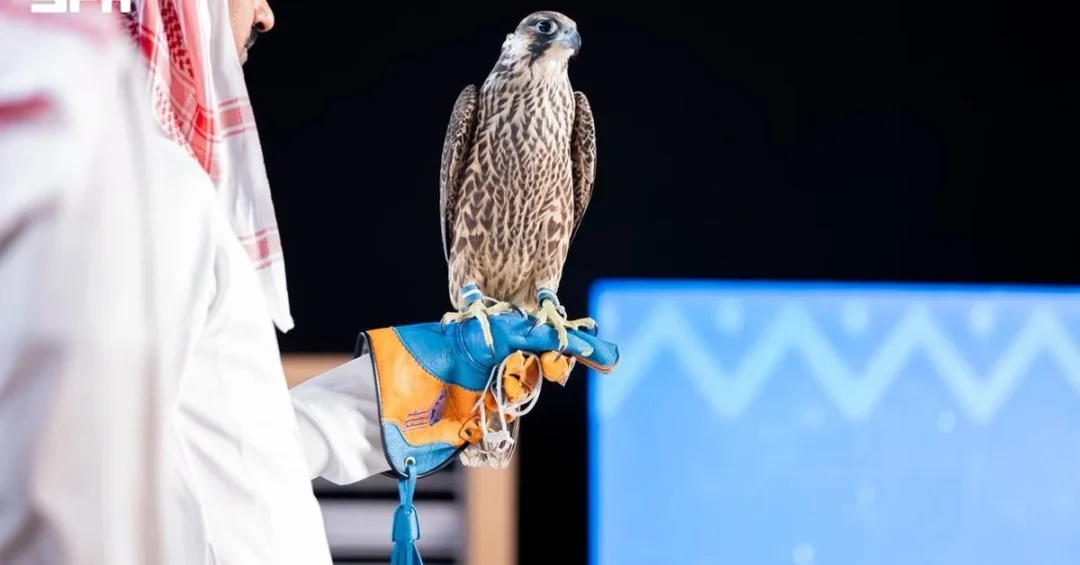
Two falcons were sold for a combined SAR374,000 during the fourth session of the National Center for Falcons Auction 2026, an event running through November 30 in Riyadh and drawing wide participation from falconers and heritage enthusiasts across the Kingdom and beyond. The auction, organized by the National Center for Falcons, continues to establish itself as one of the most important platforms for the preservation and celebration of Saudi Arabia’s deep-rooted falconry heritage, while simultaneously injecting significant economic activity into the Kingdom’s growing heritage tourism and cultural events sector.
According to the Saudi Press Agency, bidding on the first falcon opened at SAR100,000 before competitive bids pushed the final sale price to SAR193,000. The evening concluded with the sale of the second bird, which started at SAR120,000 and was ultimately acquired for SAR181,000. The results of the fourth session underscore the sustained demand for high-quality falcons among collectors, breeders, and enthusiasts, and reflect the auction’s growing reputation as a premier destination for falconry aficionados. How does an ancient desert tradition continue to command such remarkable prices in a modern, diversified economy? The answer lies in the unique combination of cultural passion, regulatory support, and the Kingdom’s broader commitment to preserving its intangible heritage.
Context and Background
The National Center for Falcons Auction is a flagship initiative that forms part of Saudi Arabia’s broader strategy to safeguard and promote traditional sports and cultural practices. Falconry, known in Arabic as “Al-Qanas,” has been practiced on the Arabian Peninsula for thousands of years, serving as both a means of hunting and a symbol of nobility, patience, and a deep connection to the natural environment. In recognition of its cultural significance, UNESCO inscribed falconry on its Representative List of the Intangible Cultural Heritage of Humanity, and Saudi Arabia has been at the forefront of international efforts to preserve and transmit this heritage to future generations.
The auction, now in its 2026 edition, is organized under the supervision of the National Center for Falcons, a government entity dedicated to the development of the falconry sector, the regulation of falcon trade, and the provision of services to falconers. The event runs for an extended period, from its opening through November 30, allowing ample opportunity for trappers, breeders, and buyers to participate. The fourth session, held in Riyadh, attracted a diverse crowd of bidders, including seasoned falconers, heritage enthusiasts, and international visitors eager to witness the excitement of live competitive bidding. Why has this annual auction become such a magnet for both local and global audiences? It is because the event offers more than just a marketplace; it is a vibrant celebration of identity, craftsmanship, and community.
The auction is not merely a commercial transaction; it is a carefully curated cultural experience. The National Center for Falcons ensures that the event adheres to stringent standards of transparency and fairness, with bidding conducted in a fast-paced live environment that is broadcast across television networks and the center’s official digital channels. This broad accessibility allows audiences from across the Kingdom and around the world to follow the action in real time, further elevating the profile of Saudi Arabia’s heritage sector. The center also provides comprehensive support services to falconers throughout the trapping season, reflecting a holistic approach to sector development that balances tradition with modern governance.
Key Details of the Fourth Session
The fourth session of the 2026 auction was marked by spirited competition among bidders, resulting in the sale of two falcons for a total of SAR374,000. The first falcon, a bird of notable pedigree and physical attributes, saw bidding commence at SAR100,000. As the auctioneer called for higher offers, the price climbed steadily, driven by multiple interested buyers. After a tense and rapid exchange, the gavel fell at SAR193,000, securing the bird for its new owner. The second falcon of the evening followed a similar pattern of intense bidding, opening at SAR120,000 before ultimately being acquired for SAR181,000. These figures are consistent with the premium prices commanded by top-tier falcons at the National Center for Falcons Auction, where quality, lineage, and training are meticulously evaluated.
The auction’s format is designed to maximize engagement and ensure a fair process. Bidding is conducted live, with participants physically present at the venue and others participating remotely through authorized channels. The live broadcast across television networks and the center’s digital platforms enables real-time participation and viewing, democratizing access to what was once an exclusive gathering. The National Center for Falcons also provides logistical support to trappers, including field teams that receive them across the Kingdom, arrange transportation, and offer hospitality at the auction venue. This end-to-end service model ensures that falconers from remote areas can participate without undue burden, reinforcing the auction’s inclusive character.
What do these sales figures tell us about the health of the falconry sector in Saudi Arabia? They indicate a robust and maturing market, where demand is sustained by a growing number of enthusiasts, improved regulatory frameworks, and a thriving ecosystem of supporting services. The National Center for Falcons has played a pivotal role in formalizing the sector, introducing best practices for falcon care, and promoting responsible trapping. The auction’s success is also a testament to the effectiveness of Saudi Vision 2030 in creating new economic opportunities within the cultural and heritage industries.
International and Regional Impact
The National Center for Falcons Auction has increasingly become a regional and international focal point for falconry enthusiasts. Participants from neighboring Gulf Cooperation Council countries and beyond travel to Saudi Arabia to take part in the auction, drawn by the reputation of the event and the quality of the birds on offer. The international dimension of the auction is further enhanced by the live broadcast, which reaches audiences in Europe, Asia, and North America. This global visibility not only promotes Saudi Arabia’s cultural heritage but also strengthens its position as a hub for traditional sports and a destination for cultural tourism.
Regionally, the auction reinforces the Kingdom’s leadership in preserving shared Gulf heritage. Falconry is a common thread that binds the people of the Arabian Peninsula, and Saudi Arabia’s investment in this sector is viewed with appreciation by its neighbors. The event also serves as a platform for knowledge exchange, with experts and veterinarians sharing insights on falcon health, breeding, and conservation. By hosting such a prestigious event, Saudi Arabia demonstrates its commitment to regional cultural cooperation and its ability to convene stakeholders from across the spectrum of the falconry community.
How does the auction contribute to Saudi Arabia’s soft power and international image? It showcases the Kingdom as a nation that honors its past while embracing modernity, a narrative that resonates with global audiences. The event aligns with the objectives of Vision 2030 by promoting cultural diplomacy, attracting visitors, and highlighting the Kingdom’s unique heritage assets. The positive coverage generated by the auction in international media further amplifies Saudi Arabia’s message of openness and cultural pride.
Economic and Strategic Significance
Beyond its cultural importance, the National Center for Falcons Auction generates tangible economic benefits. The sale of two falcons for SAR374,000 in a single session is a clear indicator of the sector’s economic potential. The auction stimulates activity in related industries, including veterinary services, falcon training, equipment manufacturing, and hospitality. Local businesses, from hotels to restaurants, benefit from the influx of participants and visitors, creating jobs and supporting local economies. The National Center for Falcons estimates that the falconry sector contributes significantly to the national economy, and the auction is a key driver of this contribution.
Strategically, the auction supports the diversification goals of Vision 2030 by developing a niche but high-value cultural economy. It encourages entrepreneurship among young Saudis, who are increasingly entering the falconry sector as breeders, trainers, and service providers. The center offers training programs and workshops to build local capacity, ensuring that the sector’s growth is sustainable and inclusive. The auction also serves as a model for how heritage can be monetized responsibly, with proceeds reinvested into conservation and community development initiatives.
What role does the auction play in the broader context of Saudi Arabia’s entertainment and tourism strategy? It is a prime example of a cultural event that attracts visitors and generates media attention, complementing other major events such as the Riyadh Season and the Diriyah E-Prix. The auction is promoted as part of the Kingdom’s tourism calendar, and international visitors can combine their attendance with visits to historical sites, museums, and natural reserves. This integrated approach enhances the visitor experience and increases the length of stay, maximizing economic impact.
Vision 2030 Alignment
The National Center for Falcons Auction is a living embodiment of Saudi Vision 2030’s cultural and economic objectives. Vision 2030 seeks to preserve and promote Saudi Arabia’s rich heritage while creating a vibrant society and a diversified economy. The auction directly supports these goals by providing a platform for cultural expression, fostering national pride, and generating economic opportunities. It also aligns with the Quality of Life Program, which aims to enhance the lives of citizens and residents by offering diverse cultural and recreational activities. The auction’s success is a testament to the Kingdom’s ability to innovate within tradition, turning a centuries-old practice into a modern, globally recognized event.
As the auction continues through November 30, it will undoubtedly witness further exciting sales and draw even more attention to Saudi Arabia’s falconry heritage. The National Center for Falcons remains committed to expanding its services, improving the auction experience, and promoting the sustainable development of the sector. The event’s growing international footprint and its integration into the Kingdom’s tourism and cultural strategies position it as a key asset in Saudi Arabia’s journey toward a prosperous and culturally vibrant future. In a world where heritage is increasingly valued, Saudi Arabia is leading by example, demonstrating that tradition and modernity can thrive together.
20 Questions
Q1. What was the total amount raised from the sale of two falcons at the fourth session of the National Center for Falcons Auction 2026?
A1. The two falcons sold for a combined total of SAR374,000, reflecting strong demand and the premium quality of birds offered at the auction.
Q2. How much did the first falcon sell for, and what was its opening bid?
A2. The first falcon opened at SAR100,000 and was ultimately sold for SAR193,000 after competitive bidding among participants.
Q3. What was the starting price and final sale price of the second falcon?
A3. The second falcon started at SAR120,000 and was acquired for SAR181,000, concluding the evening’s sales on a high note.
Q4. When does the National Center for Falcons Auction 2026 run until?
A4. The auction runs through November 30, offering extended opportunities for falconers and enthusiasts to participate in the sessions.
Q5. Who organizes the National Center for Falcons Auction?
A5. The auction is organized by the National Center for Falcons, a government entity dedicated to developing the falconry sector and preserving heritage.
Q6. What support services does the National Center for Falcons provide to trappers?
A6. The center provides comprehensive logistics, including field teams that receive trappers nationwide, arrange transportation, and offer hospitality at the auction venue.
Q7. How is the bidding conducted at the auction?
A7. Bidding is conducted in a fast-paced live environment, broadcast across television networks and the center’s official digital channels for wide accessibility.
Q8. Why is falconry culturally significant in Saudi Arabia?
A8. Falconry, or Al-Qanas, is a centuries-old tradition symbolizing nobility, patience, and a deep connection to the desert heritage of the Arabian Peninsula.
Q9. Has falconry been recognized by UNESCO?
A9. Yes, falconry is inscribed on UNESCO’s Representative List of the Intangible Cultural Heritage of Humanity, with Saudi Arabia actively supporting its preservation.
Q10. What economic benefits does the auction bring to Saudi Arabia?
A10. The auction stimulates related industries such as veterinary services, training, equipment, and hospitality, creating jobs and supporting local economies.
Q11. How does the auction align with Saudi Vision 2030?
A11. It supports Vision 2030 by preserving cultural heritage, diversifying the economy, and enhancing quality of life through vibrant cultural events.
Q12. Can international participants take part in the auction?
A12. Yes, the auction attracts international participants and viewers through live broadcasts, promoting cultural exchange and global interest in Saudi heritage.
Q13. What is the significance of the prices achieved for the falcons?
A13. The prices reflect the high value placed on premium falcons and indicate a robust, maturing market for falconry in the Kingdom.
Q14. How does the auction support local communities?
A14. It generates economic activity in host cities, supports local businesses, and provides opportunities for young Saudis in the falconry sector.
Q15. What role does the National Center for Falcons play in conservation?
A15. The center promotes responsible trapping, falcon care, and sustainable practices, ensuring the long-term viability of falconry and falcon populations.
Q16. Are there training programs for aspiring falconers?
A16. Yes, the center offers training programs and workshops to build local capacity and encourage youth participation in the heritage sport.
Q17. How does the auction contribute to Saudi Arabia’s tourism goals?
A17. It attracts visitors and media attention, complementing other cultural events and enhancing the Kingdom’s appeal as a heritage tourism destination.
Q18. What makes the National Center for Falcons Auction unique?
A18. Its combination of live competitive bidding, comprehensive support services, and global broadcast makes it a premier event in the falconry world.
Q19. How can the public follow the auction if they cannot attend?
A19. The auction is broadcast live on television networks and the center’s official digital channels, allowing remote viewing and participation.
Q20. What does the future hold for the falconry sector in Saudi Arabia?
A20. With continued support from the National Center for Falcons and alignment with Vision 2030, the sector is poised for sustainable growth and global recognition.
Reader Feedback
We value your thoughts. Please share your feedback on this article.
Your feedback helps us improve our coverage.