


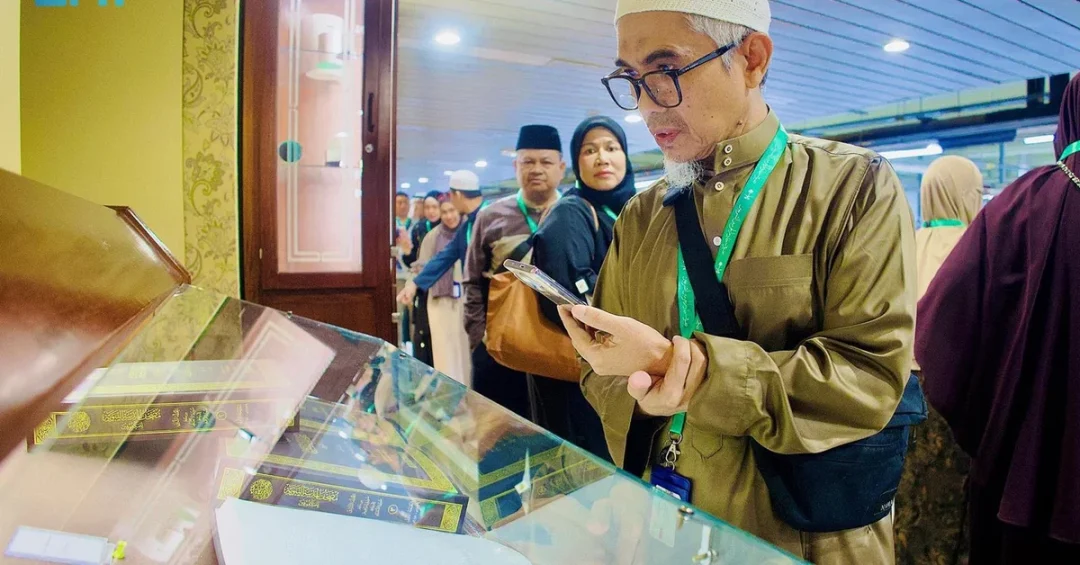
The first group of the Custodian of the Two Holy Mosques’ Guests Program for Umrah and Visitation for the year 1446 AH visited the King Fahd Complex for the Printing of the Holy Quran in Madinah, as part of a cultural program organized for guests during their stay in the holy city. The visit, reported by the Saudi Press Agency (SPA), offered participants a detailed look at the technical and administrative departments of the complex, where they learned about the various stages of printing the Holy Quran, the efforts made to preserve the sacred text, and the process of translating its meanings into multiple languages. At the end of the tour, officials of the complex presented copies of the Holy Quran to the visitors as a gesture of goodwill and spiritual significance.
The visit is part of a broader cultural and religious itinerary designed to enrich the experience of the program’s guests, who are hosted by the Kingdom of Saudi Arabia under the direct patronage of the Custodian of the Two Holy Mosques. In addition to the King Fahd Complex, the group also visited the site of the Uhud battle, Jabal Al-Rumat, and Uhud Martyrs Square, deepening their understanding of Islamic history and the heritage of Madinah. The program reflects Saudi Arabia’s enduring commitment to serving pilgrims and visitors, and to sharing the nation’s rich Islamic legacy with the world.
Context and Background
What does it mean for a guest of the Custodian of the Two Holy Mosques to walk through the halls where the Holy Quran is printed and translated? The Custodian of the Two Holy Mosques’ Guests Program for Umrah and Visitation is a long-standing initiative that invites Muslims from around the world to perform Umrah and visit the holy sites in Makkah and Madinah at the invitation of the Saudi leadership. The program is administered by the Ministry of Islamic Affairs, Call and Guidance, and it typically hosts thousands of pilgrims annually from diverse countries, reflecting the Kingdom’s role as the guardian of Islam’s holiest places.
The King Fahd Complex for the Printing of the Holy Quran, located in Madinah, is one of the most significant institutions of its kind globally. Established in 1984, the complex produces millions of copies of the Holy Quran each year in numerous languages, ensuring that the sacred text is accessible to Muslims worldwide. It employs advanced printing technology and rigorous quality control measures to uphold the highest standards of accuracy and reverence. The complex also translates the meanings of the Quran into dozens of languages, supporting Islamic scholarship and interfaith understanding.
The cultural program accompanying the Umrah and visitation journey is designed to provide guests with a holistic experience that goes beyond the rituals of pilgrimage. By visiting historical and religious landmarks such as the Uhud battle site and Jabal Al-Rumat, participants connect with the early history of Islam and the sacrifices of the Prophet Muhammad’s companions. These visits are guided by experts who share insights into the events and their lasting significance, fostering a deeper appreciation of Islamic heritage and the Kingdom’s efforts to preserve it.
Key Details
During the tour of the King Fahd Complex, the guests were introduced to the intricate stages of printing the Holy Quran, from the preparation of specialized paper to the final binding and distribution. They observed the meticulous review processes that ensure every verse is reproduced without error, a task that requires both technological precision and scholarly oversight. The complex’s officials explained how translations are carefully crafted to convey the meanings of the Quran accurately in various languages, a task that demands linguistic expertise and cultural sensitivity.
The guests also learned about the preservation efforts undertaken by the complex, including the archiving of historical manuscripts and the use of digital technologies to safeguard the text for future generations. These initiatives align with the Kingdom’s broader commitment to preserving Islamic heritage and promoting moderate Islam. At the conclusion of the visit, each guest received a copy of the Holy Quran, a gift that symbolizes the spiritual bond between the host nation and the global Muslim community.
The visit to the Uhud battle site, Jabal Al-Rumat, and Uhud Martyrs Square provided a poignant historical context. The Battle of Uhud, fought in 625 CE, was a pivotal event in early Islamic history, and the site remains a place of reflection and learning for pilgrims. Jabal Al-Rumat, the hill where archers were stationed during the battle, and the Martyrs Square, where many companions are buried, are integral to understanding the sacrifices made for the faith. The guests were guided through these locations, gaining insights into the strategic and spiritual dimensions of the battle.
International and Regional Impact
How does Saudi Arabia’s hospitality toward pilgrims resonate beyond its borders? The Custodian of the Two Holy Mosques’ Guests Program is a powerful instrument of soft diplomacy, showcasing the Kingdom’s dedication to serving Islam and Muslims worldwide. By hosting pilgrims from various countries, Saudi Arabia strengthens ties with nations across Asia, Africa, Europe, and the Americas, fostering goodwill and mutual understanding. The program also counters misconceptions about the Kingdom and highlights its modernization efforts under Vision 2030.
Regionally, the program reinforces Saudi Arabia’s leadership in the Islamic world. As the host of the annual Hajj and year-round Umrah, the Kingdom plays a unique role in facilitating the spiritual journeys of millions. The cultural components of the guests’ itinerary, such as the visit to the King Fahd Complex and historical sites in Madinah, demonstrate a commitment to enriching the pilgrimage experience with educational and cultural dimensions. This approach enhances the Kingdom’s reputation as a welcoming and forward-looking nation that honors its heritage while embracing progress.
Economic and Strategic Significance
What economic and strategic benefits arise from hosting guests and promoting religious tourism? The Umrah and visitation sector is a vital component of Saudi Arabia’s economy, contributing significantly to GDP and employment. By inviting guests through official programs, the Kingdom showcases its capacity to manage large-scale religious events and infrastructure, attracting further investment in hospitality, transportation, and related industries. The positive experiences of guests often translate into increased visitor numbers and longer stays, boosting local economies in Makkah, Madinah, and beyond.
Strategically, the program supports Saudi Arabia’s Vision 2030 goals of diversifying the economy and enhancing the quality of life for citizens and visitors. It aligns with efforts to increase Umrah capacity to 30 million pilgrims annually by 2030 and to develop religious tourism as a key pillar of the non-oil economy. The King Fahd Complex itself exemplifies Saudi excellence in printing and translation, a niche industry that contributes to the Kingdom’s global influence and cultural exports. By investing in such institutions, Saudi Arabia reinforces its role as a leader in Islamic scholarship and a hub for religious knowledge.
Vision 2030 Alignment
How does this visit embody the aspirations of Saudi Vision 2030? The program and the King Fahd Complex are integral to the Vision’s objectives of serving pilgrims, promoting moderate Islam, and showcasing Saudi Arabia’s cultural and religious heritage. Vision 2030 emphasizes the importance of the Hajj and Umrah sectors, aiming to enhance the pilgrim experience through improved services and infrastructure. The guests’ visit to the complex and historical sites reflects the Vision’s focus on enriching spiritual journeys and creating lasting memories for visitors.
Moreover, the program supports the Vision’s goal of fostering a vibrant society and a thriving economy. By hosting guests from around the world, Saudi Arabia demonstrates its openness and hospitality, key values that underpin the Kingdom’s international engagement. The King Fahd Complex’s translation and preservation efforts also contribute to the Vision’s cultural and educational objectives, promoting Islamic values and knowledge. As Saudi Arabia continues to advance under Vision 2030, initiatives like this highlight the Kingdom’s unwavering commitment to serving Islam and Muslims globally, while building a prosperous and modern nation.
20 Questions
Q1. What is the Custodian of the Two Holy Mosques’ Guests Program for Umrah and Visitation?
A1. It is a Saudi initiative that invites Muslims from around the world to perform Umrah and visit holy sites in Makkah and Madinah at the invitation of the Saudi leadership, administered by the Ministry of Islamic Affairs.
Q2. Which group recently visited the King Fahd Complex for the Printing of the Holy Quran?
A2. The first group of the Custodian of the Two Holy Mosques’ Guests Program for Umrah and Visitation for 1446 AH visited the complex as part of a cultural program during their stay in Madinah.
Q3. What is the King Fahd Complex for the Printing of the Holy Quran?
A3. Located in Madinah, it is one of the world’s largest Quran printing facilities, established in 1984, producing millions of copies annually in multiple languages with high accuracy.
Q4. What did the guests learn during their tour of the complex?
A4. They learned about the stages of printing the Holy Quran, efforts to preserve it, and the process of translating its meanings into various languages, observing quality control measures.
Q5. What gift did the guests receive at the end of the visit?
A5. The complex officials gifted each guest a copy of the Holy Quran, symbolizing the spiritual bond between the host nation and the global Muslim community.
Q6. Which historical sites did the group visit in addition to the King Fahd Complex?
A6. The group visited the site of the Uhud battle, Jabal Al-Rumat, and Uhud Martyrs Square, deepening their understanding of Islamic history and the heritage of Madinah.
Q7. Why is the Battle of Uhud significant in Islamic history?
A7. Fought in 625 CE, it was a pivotal event where many companions of the Prophet Muhammad were martyred; the site remains a place of reflection and learning for pilgrims.
Q8. How does the guests program reflect Saudi Arabia’s commitment to serving Islam?
A8. By hosting pilgrims from diverse countries and providing cultural and spiritual experiences, Saudi Arabia demonstrates its role as guardian of Islam’s holiest places and its dedication to serving Muslims worldwide.
Q9. What is the role of the Ministry of Islamic Affairs, Call and Guidance in this program?
A9. The ministry administers the Custodian of the Two Holy Mosques’ Guests Program, organizing logistics, itineraries, and cultural activities for invited guests during their stay in the Kingdom.
Q10. How does the King Fahd Complex contribute to preserving the Holy Quran?
A10. It uses advanced printing technology, rigorous review processes, and digital archiving to ensure accurate reproduction and preservation of the Quran for future generations, including translations in many languages.
Q11. What languages are the Quran translations available in at the complex?
A11. The complex translates the meanings of the Quran into dozens of languages, including English, French, Spanish, Urdu, Indonesian, and many others, to make the text accessible to Muslims worldwide.
Q12. How does this visit support Saudi Vision 2030?
A12. It aligns with Vision 2030 goals of enhancing the pilgrim experience, promoting moderate Islam, diversifying the economy through religious tourism, and showcasing Saudi cultural and religious heritage.
Q13. What economic benefits does the Umrah and visitation sector bring to Saudi Arabia?
A13. The sector contributes significantly to GDP and employment, attracts investment in hospitality and infrastructure, and supports the goal of increasing Umrah capacity to 30 million pilgrims annually by 2030.
Q14. How does the program strengthen Saudi Arabia’s international relations?
A14. By hosting guests from various countries, Saudi Arabia builds goodwill and mutual understanding, reinforcing its leadership in the Islamic world and countering misconceptions about the Kingdom.
Q15. What is the significance of Jabal Al-Rumat in Islamic history?
A15. Jabal Al-Rumat is the hill where archers were stationed during the Battle of Uhud; their actions were crucial to the battle’s outcome, making it a site of historical and spiritual importance.
Q16. How many groups are hosted annually under the Custodian of the Two Holy Mosques’ Guests Program?
A16. The program typically hosts thousands of pilgrims annually in multiple groups from diverse countries, though exact numbers vary each year based on planning and capacity.
Q17. What measures ensure the accuracy of the printed Quran at the complex?
A17. The complex employs meticulous review processes involving scholars and experts, advanced printing technology, and strict quality control at every stage to ensure error-free reproduction of the sacred text.
Q18. How does the program promote moderate Islam?
A18. By providing guests with authentic Islamic teachings, cultural education, and exposure to Saudi Arabia’s moderate practices, the program fosters a balanced understanding of Islam and counters extremism.
Q19. What other cultural activities are included in the guests’ itinerary?
A19. The itinerary includes visits to historical and religious landmarks, guided tours, lectures on Islamic history, and opportunities to interact with local scholars and officials, enriching the overall pilgrimage experience.
Q20. How can Muslims worldwide participate in the Custodian of the Two Holy Mosques’ Guests Program?
A20. Participation is typically by invitation through Saudi embassies, Islamic organizations, and official channels; interested individuals can contact these entities for information on eligibility and application procedures.
Reader Feedback
We value your thoughts. Please share your feedback on this article.
Your feedback helps us improve our coverage.