


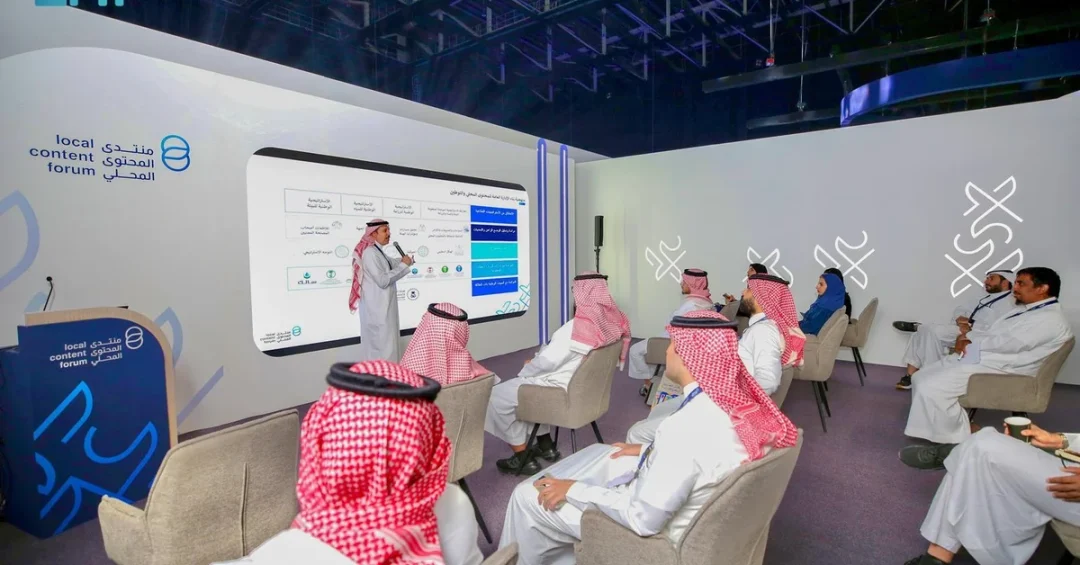
Saudi Arabia’s Ministry of Environment, Water, and Agriculture has reaffirmed its commitment to strengthening local content across the Kingdom through four primary enablers, a strategic push that officials say is directly reinforcing national food and water security in line with Saudi Vision 2030. The commitment was outlined during a dedicated workshop held on the sidelines of the Local Content Forum in Riyadh, where ministry officials detailed how awareness and guidance, financial and technical support, policy enhancement and empowerment, and entrepreneurship development are being applied across the ministry’s three core sectors: environment, water, and agriculture.
The workshop, titled “Local Content: Between Development and Empowerment,” was moderated by Fares Al-Eid, Director General of Local Content and Localization and Supervisor of Spending Efficiency at the ministry. It brought together participants who examined the strategic objectives of the General Directorate for Local Content and Localization, reviewed local content regulations, and assessed the practical enablers that are transforming policy ambition into measurable economic outcomes. Could this integrated approach become a model for other Saudi ministries seeking to deepen domestic value creation? The session signaled that local content is no longer a secondary consideration but a central pillar of the Kingdom’s resource security and economic resilience.
Context and Background
Why has local content become such a decisive priority for Saudi Arabia’s environmental and agricultural governance? For years, the Kingdom has worked to reduce reliance on imported goods and services across strategic sectors, and the Ministry of Environment, Water, and Agriculture has emerged as one of the most active institutions in translating that national objective into operational reality. The ministry oversees three interconnected domains — environmental protection, water resource management, and agricultural production — each of which carries direct implications for the Kingdom’s long-term stability and the well-being of its citizens and residents.
The Local Content Forum provided a platform for the ministry to present its progress and to align its efforts with broader national policies coordinated by the Local Content and Government Procurement Authority, which sets the regulatory framework for local content across government entities. Within that framework, the ministry’s General Directorate for Local Content and Localization has been tasked with embedding localization requirements into procurement, investment, and operational decisions. The workshop underscored that these are not abstract directives; they are being applied through concrete programs that support Saudi businesses, create employment, and build technical capacity within the Kingdom.
Participants at the forum emphasized that local content serves as a cornerstone for ensuring the sustainability of vital sectors, addressing economic challenges, achieving food and water security, protecting the environment, and supporting the national economy. This framing reflects a mature understanding that security in food and water cannot be outsourced indefinitely — it must be anchored in domestic capabilities, resilient supply chains, and a skilled workforce that can respond to shocks and shifting global conditions.
Key Details: The Four Enablers in Focus
The ministry’s strategy rests on four primary enablers, each designed to address a distinct dimension of local content development. The first, awareness and guidance, focuses on ensuring that businesses, investors, and public institutions understand local content requirements and the opportunities they create. Through workshops, publications, and direct engagement, the ministry is working to build a shared understanding that localization is not a compliance burden but a pathway to competitive advantage and long-term sustainability.
The second enabler, financial and technical support, involves providing resources and expertise to Saudi companies and entrepreneurs operating in the environmental, water, and agricultural sectors. This includes facilitating access to funding mechanisms, offering technical assistance, and helping domestic firms meet the quality and capacity standards required to participate in major projects. The third enabler, policy enhancement and empowerment, centers on refining regulations and governance structures so that local content targets are clear, enforceable, and aligned with the Kingdom’s broader economic objectives. The fourth, fostering entrepreneurship, aims to cultivate a new generation of Saudi innovators and business owners who can develop solutions tailored to the Kingdom’s unique environmental and agricultural conditions.
Fares Al-Eid’s moderation of the workshop highlighted the strategic coherence of these enablers. Rather than treating them as separate initiatives, the ministry presents them as an integrated system in which awareness creates demand, finance and technical support build supply, policy provides the framework, and entrepreneurship drives innovation. Officials called for enhanced collaboration across various sectors to further develop local content, citing its vital role in contributing to the national economy, improving community welfare, and raising the quality of life in the Kingdom.
International and Regional Impact
How does Saudi Arabia’s local content drive resonate beyond its borders? The Kingdom’s emphasis on domestic capability in food and water security carries significant implications for regional stability and global markets. As one of the largest economies in the Middle East, Saudi Arabia’s investment in local agricultural production, water desalination, and environmental technologies reduces its vulnerability to international supply disruptions while creating new opportunities for trade and partnership with countries that share its commitment to sustainable development.
Regional neighbors and international partners are watching closely as the Kingdom scales its local content model. The approach aligns with global trends toward supply chain resilience and sustainable resource management, positioning Saudi Arabia as a constructive actor in international efforts to address climate change, water scarcity, and food security. The ministry’s work also complements the Kingdom’s broader diplomatic and economic engagement, including its role in multilateral forums where food and water security are increasingly prominent on the agenda.
For international investors and companies, the local content framework signals both opportunity and clarity. Firms that partner with Saudi entities, transfer knowledge, and build local capacity are well positioned to participate in the Kingdom’s growth. The four enablers provide a structured pathway for collaboration, ensuring that international expertise contributes to — rather than substitutes for — the development of domestic capabilities.
Economic and Strategic Significance
Why does local content matter so much for Saudi Arabia’s economic future? The answer lies in the intersection of security, sustainability, and prosperity. Food and water security are foundational requirements for any society, and the Kingdom has made clear that it will not treat them as secondary concerns. By strengthening local content, the ministry is building a domestic ecosystem capable of producing, processing, and delivering essential goods and services while creating jobs and fostering innovation.
The economic significance extends beyond security. Local content development stimulates private sector growth, encourages investment in technology and infrastructure, and helps retain talent within the Kingdom. Saudi entrepreneurs and small and medium-sized enterprises gain access to markets and support that might otherwise be dominated by foreign suppliers. Over time, this builds a more diversified and resilient economy, reducing dependence on a narrow range of revenue sources and aligning with the objectives of Vision 2030.
The strategic dimension is equally important. By embedding local content requirements into procurement and project design, the ministry ensures that public spending generates lasting domestic value. This approach is being replicated across government entities, creating a coherent national effort to maximize the economic return on public investment. The Local Content Forum served as a reminder that these efforts are coordinated, intentional, and subject to continuous refinement.
Vision 2030 Alignment
How does the Ministry of Environment, Water, and Agriculture’s local content agenda connect to the broader ambitions of Saudi Vision 2030? The alignment is direct and multifaceted. Vision 2030 seeks to diversify the economy, empower the private sector, create employment for Saudi citizens, and ensure the sustainable management of natural resources. The ministry’s four enablers are designed to advance each of these goals simultaneously, demonstrating how sector-specific strategies can contribute to national transformation.
Food and water security are explicit priorities within Vision 2030, and the ministry’s work ensures that the Kingdom is not merely responding to immediate needs but building the infrastructure, knowledge, and institutions required for long-term resilience. The emphasis on entrepreneurship and technical support reflects the Vision’s commitment to nurturing a dynamic private sector and a skilled workforce. The policy enhancement enabler underscores the importance of good governance and effective regulation in achieving sustainable development.
As Saudi Arabia continues its journey toward 2030 and beyond, the ministry’s local content strategy will remain a vital component of the national effort. The workshop’s message was clear: local content is not a temporary initiative but a permanent shift in how the Kingdom approaches resource security, economic development, and international cooperation. For a global audience, this signals a Saudi Arabia that is serious about self-reliance, open to partnership, and determined to secure a prosperous future for its people and the region.
20 Questions
Q1. What ministry organized the workshop on local content?
A1. The Ministry of Environment, Water, and Agriculture organized the workshop on the sidelines of the Local Content Forum in Riyadh, Saudi Arabia.
Q2. What were the four primary enablers highlighted by the ministry?
A2. The four enablers are awareness and guidance, financial and technical support, policy enhancement and empowerment, and fostering entrepreneurship across the ministry’s three sectors.
Q3. Who moderated the workshop titled “Local Content: Between Development and Empowerment”?
A3. Fares Al-Eid, Director General of Local Content and Localization and Supervisor of Spending Efficiency, moderated the workshop.
Q4. What are the three core sectors overseen by the ministry?
A4. The ministry oversees the environment, water, and agriculture sectors, all of which are central to food and water security in Saudi Arabia.
Q5. How does local content contribute to Saudi Vision 2030?
A5. Local content supports economic diversification, private sector growth, job creation, and sustainable resource management, aligning with Vision 2030’s goals for prosperity and security.
Q6. What did participants emphasize about local content?
A6. Participants emphasized that local content is a cornerstone for sustainability, addressing economic challenges, achieving food and water security, protecting the environment, and supporting the national economy.
Q7. What is the role of the General Directorate for Local Content and Localization?
A7. It oversees strategic objectives, regulations, and enablers to strengthen local content within the ministry’s sectors and ensure alignment with national policies.
Q8. Why is food and water security important for Saudi Arabia?
A8. Food and water security are foundational for national stability, economic resilience, and the well-being of citizens, reducing reliance on external supply chains.
Q9. How does the ministry support entrepreneurship?
A9. The ministry fosters entrepreneurship by providing financial and technical support, guidance, and creating opportunities for Saudi innovators in environmental and agricultural sectors.
Q10. What is the significance of the Local Content Forum?
A10. The forum provides a platform for government entities to present progress, share best practices, and align efforts to maximize domestic value from public spending.
Q11. How do local content regulations help the economy?
A11. Regulations ensure that public procurement and projects generate domestic economic benefits, stimulate private sector growth, and build local capabilities.
Q12. What kind of financial support does the ministry offer?
A12. The ministry facilitates access to funding, offers technical assistance, and helps Saudi firms meet quality and capacity standards for major projects.
Q13. How does local content protect the environment?
A13. By promoting domestic solutions and sustainable practices, local content reduces reliance on imports and supports environmentally responsible production and resource management.
Q14. What is the goal of awareness and guidance as an enabler?
A14. It aims to ensure that businesses and institutions understand local content requirements and opportunities, fostering a culture of localization and compliance.
Q15. How can international companies participate in Saudi local content?
A15. International firms can partner with Saudi entities, transfer knowledge, and build local capacity, contributing to domestic development while accessing growth opportunities.
Q16. What did officials call for at the workshop?
A16. Officials called for enhanced collaboration across sectors to further develop local content, highlighting its role in the national economy and quality of life.
Q17. How does local content improve community welfare?
A17. It creates jobs, supports local businesses, and ensures reliable access to essential goods and services, raising living standards and economic participation.
Q18. What is the link between local content and sustainability?
A18. Local content builds resilient domestic systems that can sustain food and water supplies, manage environmental resources, and adapt to economic or environmental shocks.
Q19. What are the strategic aspects covered in the workshop?
A19. The workshop covered general objectives of the General Directorate, local content regulations, key enablers, and the ministry’s efforts in developing local content.
Q20. What is the forward-looking message of the ministry’s local content strategy?
A20. The strategy signals a permanent shift toward self-reliance, innovation, and partnership, ensuring Saudi Arabia’s long-term security and prosperity in line with Vision 2030.
Reader Feedback
We value your thoughts. Please share your feedback on this article.
Your feedback helps us improve our coverage.