


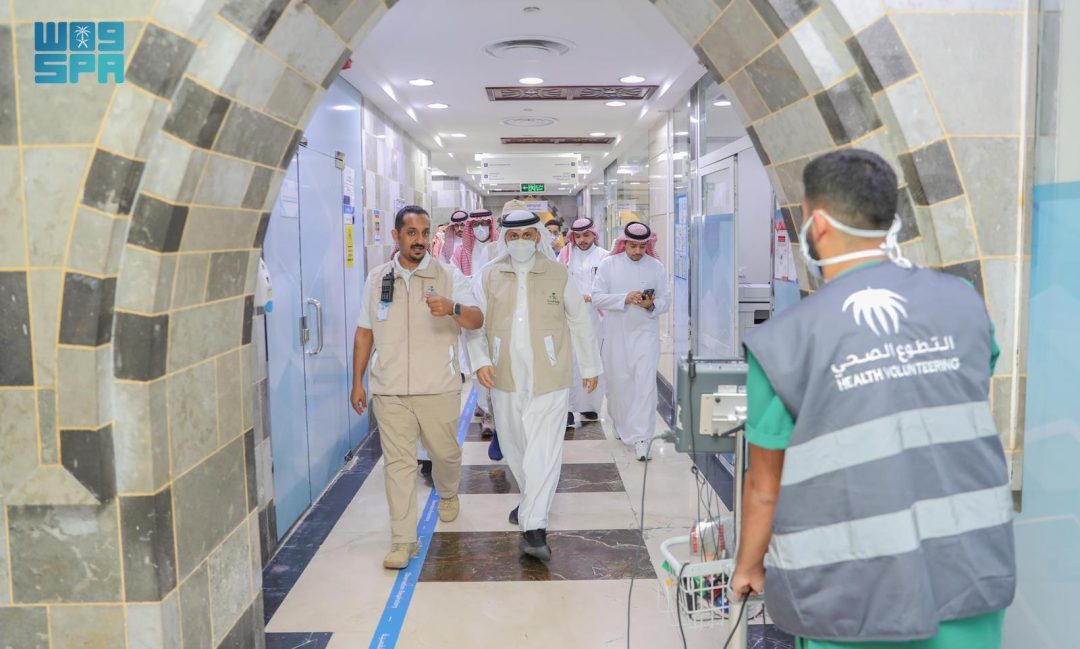
Minister of Health Fahad AlJalajel inspected several healthcare facilities in Makkah on Monday, assessing their preparedness for providing high-quality medical care during the peak Umrah season in Ramadan, SPA reported.
The visits, reported by the Saudi Press Agency, took AlJalajel to Ajyad Emergency Hospital, which specializes in emergency and intensive care, Jiwar Medical Services Center, and Al Haram Emergency Centers.
During the inspections, the minister reviewed the capabilities and readiness of these facilities to handle emergencies and urgent medical cases, particularly during the increased visitation to the Two Holy Mosques.
What does it take to keep emergency care running smoothly when millions of worshippers gather in one city during the holiest month of the year?
The timing of the review reflects the annual surge in pilgrims arriving in Makkah for Umrah during Ramadan, a period that consistently brings heightened demand on medical services across the city. The facilities visited represent a cross-section of the emergency and urgent care network that serves both residents and the large influx of visitors to the Grand Mosque and its surroundings.
Ajyad Emergency Hospital, one of the sites inspected, is described as specializing in emergency and intensive care, positioning it as a critical node in the response chain for serious medical cases. Jiwar Medical Services Center and the Al Haram Emergency Centers serve areas close to the holy sites, where the concentration of worshippers is at its highest during peak seasons.
How do emergency centers near the Grand Mosque manage the sheer volume of people moving through the area at all hours?
The minister’s review focused on the readiness of these facilities to handle emergencies and urgent medical cases, a task that becomes more complex as visitation to the Two Holy Mosques increases. The inspection covered their capabilities, according to the SPA report, without detailing specific equipment, staffing numbers, or operational changes.
Ramadan is consistently one of the busiest periods for Makkah, with pilgrims from inside the Kingdom and abroad converging on the city for Umrah. The pressure on healthcare infrastructure during this time is well documented, and the annual review of emergency preparedness forms part of the broader effort to ensure services can cope with the seasonal spike.
What goes into preparing a hospital for a month when the patient population can multiply overnight?
The facilities inspected on Monday are part of a network that includes dedicated emergency and intensive care capacity, as well as centers positioned to serve those in and around the Grand Mosque. Their locations suggest a strategy of placing medical resources close to where large crowds gather, reducing response times for urgent cases.
SPA did not specify the number of patients treated, the number of beds available, or any new measures introduced as a result of the visit. The report also did not include statements from the minister or other officials about the outcome of the inspections.
How often are these readiness checks carried out, and what changes when a minister visits in person?
The review comes as Makkah prepares for the final stretch of Ramadan, when Umrah attendance typically peaks. Emergency services in the city face a dual challenge: handling routine medical needs of a large temporary population and responding to serious incidents that can occur in crowded conditions.
The minister’s tour included Ajyad Emergency Hospital, Jiwar Medical Services Center, and Al Haram Emergency Centers, each with a distinct role in the emergency care landscape. Ajyad’s focus on intensive care suggests it handles more severe cases, while the other centers may serve as first points of contact for urgent but less critical needs.
What kind of cases do these centers see most during Ramadan, and how do they prioritize?
The SPA report described the visit as an assessment of preparedness for providing high-quality medical care during the peak Umrah season. It did not elaborate on what specific standards or benchmarks were used in the assessment.
Healthcare during Ramadan in Makkah is a recurring operational priority, with authorities typically ramping up staffing, supplies, and coordination among facilities. The minister’s inspection on Monday falls within that annual cycle, though the report did not mention any new initiatives or directives.
How do hospitals coordinate when a single incident involves multiple patients across different sites?
The Two Holy Mosques draw millions of worshippers during Ramadan, and the increased visitation mentioned in the SPA report is the primary factor driving the need for heightened emergency readiness. The facilities visited are positioned to serve those near the holy sites, where crowd density is highest.
What the report leaves unanswered is whether the inspections revealed any gaps, whether additional resources will be deployed, or how the ministry measures success during the season. Those details were not included in the SPA dispatch.
Can preparedness be measured in drills and checklists, or does it only become clear when the first critical case arrives?
The minister’s visit underscores the operational focus on Makkah’s healthcare network during Ramadan, but the SPA account remains limited to the fact of the inspections and the facilities involved. It did not provide a timeline for any follow-up actions or further assessments.
For now, the public record shows a health minister touring emergency and medical centers in Makkah on a Monday, reviewing their ability to handle the demands of a season that tests the city’s medical infrastructure every year.
Which healthcare facilities did the Minister of Health inspect in Makkah? Minister of Health Fahad AlJalajel visited Ajyad Emergency Hospital, Jiwar Medical Services Center, and Al Haram Emergency Centers during his inspection on Monday. Ajyad Emergency Hospital specializes in emergency and intensive care. The other facilities serve areas near the holy sites. The visits were part of an assessment of preparedness for providing high-quality medical care during the peak Umrah season in Ramadan, according to SPA.
Why was the inspection focused on the Ramadan Umrah season? The inspection aimed to assess the facilities’ readiness to handle emergencies and urgent medical cases during the increased visitation to the Two Holy Mosques in Ramadan. The peak Umrah season brings a surge in pilgrims to Makkah, placing greater demand on healthcare services. The minister reviewed the capabilities of the facilities to cope with this seasonal pressure. SPA reported that the visit was specifically tied to the peak Umrah season.
What did the minister review during the facility visits? Fahad AlJalajel reviewed the capabilities and readiness of the healthcare facilities to handle emergencies and urgent medical cases. The focus was on their ability to respond during the increased visitation to the Two Holy Mosques. The inspection covered Ajyad Emergency Hospital, Jiwar Medical Services Center, and Al Haram Emergency Centers. SPA did not specify any particular equipment, staffing levels, or operational changes that were examined.
What details were not included in the SPA report? The SPA report did not mention the number of patients treated, the number of beds available, or any new measures introduced as a result of the visit. It also did not include statements from the minister or other officials about the outcome of the inspections. No timeline for follow-up actions was provided. The report was limited to the fact of the inspections and the facilities involved.