


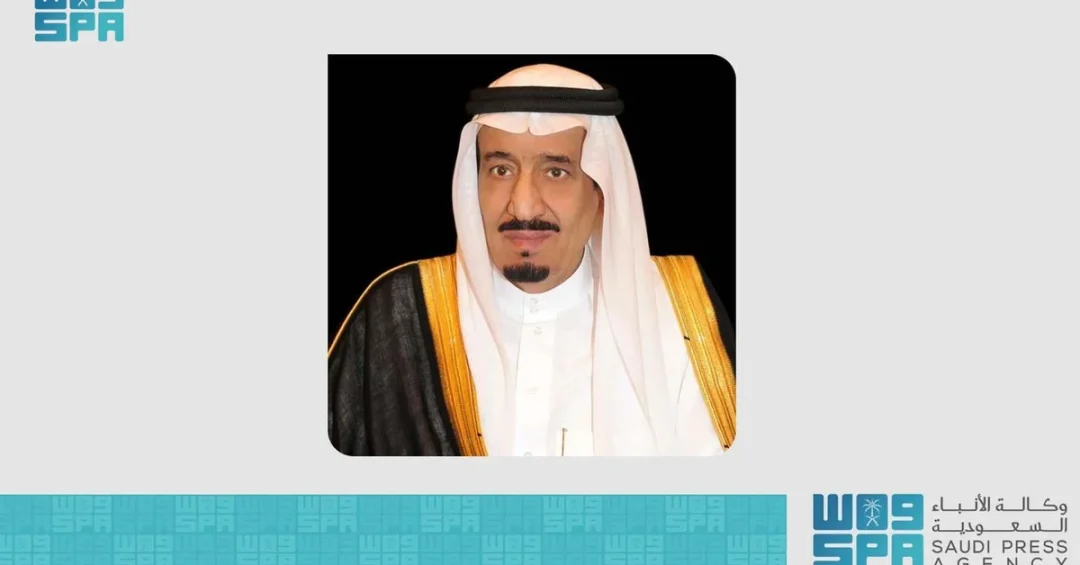
Custodian of the Two Holy Mosques King Salman bin Abdulaziz Al Saud has issued a Royal Order appointing 125 new members to the Public Prosecution as investigative lieutenants, a move announced by the Saudi Press Agency on November 24, 2024. The order represents a significant reinforcement of the Kingdom’s judicial investigation capacity and reflects the sustained attention that Saudi leadership devotes to the strength and independence of its legal institutions. Attorney General Sheikh Saud bin Abdullah Al-Mujib publicly expressed his appreciation for the Royal Order, describing it as a clear reflection of the support extended by the Custodian of the Two Holy Mosques and His Royal Highness the Crown Prince to the judiciary.
For observers of Saudi Arabia’s institutional development, appointments of this scale are rarely routine administrative events. They signal a deliberate, long-horizon investment in the people who carry out the day-to-day work of justice — the investigators who gather evidence, protect the rights of victims and defendants alike, and prepare cases that ultimately reach the courts. In a legal system undergoing continuous modernization, the quality and readiness of the human capital inside the Public Prosecution is as important as any statute or technological upgrade. How does a nation build public trust in its courts? In large part, by ensuring that the professionals working within them are sufficient in number, properly trained, and formally empowered.
Why Does This Royal Order Matter Now?
The timing of the Royal Order places it within a broader pattern of judicial and legal reform that has accelerated across the Kingdom in recent years. Saudi Arabia has undertaken a wide-ranging modernization of its justice sector, including the codification of laws, the expansion of specialized courts, and the strengthening of the Public Prosecution’s role as an independent investigative authority. Each of these reforms depends on human capacity: new laws require trained prosecutors and investigators to apply them consistently and fairly.
The appointment of 125 investigative lieutenants directly addresses that requirement. Investigative lieutenants form the operational backbone of the Public Prosecution, handling preliminary inquiries, collecting evidence, and preparing files that underpin criminal proceedings. By expanding this corps, the Kingdom is effectively widening the pipeline through which cases move from complaint to courtroom. This matters not only for the speed of justice but also for its quality — a larger, better-staffed investigative body can devote more time and rigor to each case.
The Royal Order also carries symbolic weight. When the Custodian of the Two Holy Mosques personally issues an order of this nature, it communicates that judicial strengthening sits high among national priorities. For international audiences accustomed to reading about Saudi Arabia primarily through the lens of economic transformation, this development offers a reminder that the Kingdom’s modernization agenda includes governance and the rule of law as core pillars, not afterthoughts.
Context and Background: A Judiciary Under Continuous Development
Saudi Arabia’s judicial system has deep historical roots, but its contemporary architecture has been shaped by decades of deliberate institutional building. The Public Prosecution operates as an independent body responsible for investigating crimes, initiating criminal proceedings, and representing the public interest in court. Its leadership, headed by the Attorney General, reports through established legal channels and works alongside the Ministry of Justice, the courts, and other law enforcement agencies.
In recent years, the Kingdom has introduced a series of reforms designed to enhance transparency, consistency, and efficiency in legal proceedings. These include the codification of previously uncodified areas of law, the establishment of commercial and labor courts, and the adoption of digital case-management systems. The Public Prosecution has been a central beneficiary and driver of these changes, expanding its specialized units and upgrading its investigative methods.
Against this backdrop, the appointment of 125 new investigative lieutenants is best understood as a capacity-building measure consistent with an ongoing trajectory rather than an isolated event. Attorney General Sheikh Saud bin Abdullah Al-Mujib framed the Royal Order as evidence of the leadership’s commitment to “bolstering the public prosecution and ensuring its ongoing advancement, consistent with the goals of Saudi Vision 2030.” That phrase — ongoing advancement — captures the incremental, sustained nature of the effort.
Key Details: What the Royal Order Provides
According to the official announcement carried by the Saudi Press Agency, the Royal Order appoints 125 individuals to the Public Prosecution with the rank of investigative lieutenant. The number is notable: it is large enough to meaningfully expand operational capacity across multiple regions and specialized units, yet structured enough to be absorbed within existing training and supervision frameworks. The appointees will join a professional corps that handles investigations ranging from financial and commercial crimes to matters involving public safety and state security.
The Attorney General’s expression of appreciation was explicit and public. He attributed the order to the support of the Custodian of the Two Holy Mosques and His Royal Highness the Crown Prince, linking it directly to the judiciary’s institutional standing. Such statements are significant in the Saudi context, where public messaging from senior officials often underscores the alignment between leadership directives and institutional development.
While the announcement did not detail individual assignments or regional distributions, the scale of the appointment suggests deployment across the Kingdom’s prosecutorial network, which serves densely populated urban centers as well as smaller governorates. For a legal system committed to equal access to justice, geographic coverage is as important as raw numbers. A prosecutor’s office that is adequately staffed in Riyadh, Jeddah, and Dammam but stretched thin elsewhere cannot fully deliver on the promise of uniform justice. Expanding the investigative cadre helps close that gap.
How Does This Strengthen the Rule of Law?
The rule of law depends on more than well-written statutes. It depends on institutions that can apply those statutes consistently, fairly, and promptly. An understaffed prosecution service risks delays, backlogs, and uneven outcomes — problems that erode public confidence over time. By contrast, a well-resourced investigative body can pursue cases thoroughly, protect the rights of all parties, and contribute to a predictable legal environment that businesses and citizens alike can rely on.
For international investors considering Saudi Arabia under the Vision 2030 framework, the strength of legal institutions is a practical consideration. Commercial disputes, regulatory enforcement, and anti-fraud efforts all depend on the prosecutorial apparatus functioning effectively. A larger, better-trained investigative corps supports the kind of legal certainty that long-term capital requires. In this sense, the Royal Order is not only a judicial matter but also an economic one.
The appointment also reinforces the principle that justice should not be delayed by resource constraints. When investigative capacity expands, cases move faster, evidence is preserved more reliably, and the rights of victims are better protected. These are universal expectations of a modern justice system, and Saudi Arabia’s investment in this area reflects its ambition to meet them at a high standard.
International and Regional Impact
Saudi Arabia’s judicial development is watched closely across the region. As the largest economy in the Middle East and the custodian of Islam’s holiest sites, the Kingdom’s institutional choices often serve as reference points for neighboring states pursuing their own modernization agendas. A strengthened Public Prosecution contributes to the broader narrative of a region investing in governance, transparency, and legal predictability — themes that resonate with international partners and multilateral institutions.
For foreign governments and legal bodies engaged with Saudi Arabia, the Royal Order signals continuity in judicial reform. It reinforces the message that the Kingdom’s legal system is evolving in a deliberate, leadership-driven manner. Diplomatic and commercial partners who track rule-of-law indicators will note the expansion of investigative capacity as a positive development, particularly when viewed alongside other reforms such as the codification of laws and the digitization of court services.
Regionally, the move may also encourage greater cooperation on cross-border legal matters. As investigative capacity grows, so does the ability to participate in international judicial assistance, extradition processes, and joint efforts against transnational crime. These are areas where Saudi Arabia has increasingly engaged, and a larger professional corps enhances its ability to do so effectively.
Economic and Strategic Significance
The economic dimensions of judicial strengthening are sometimes overlooked, but they are substantial. A legal system that investigates and resolves cases efficiently lowers the risk premium attached to commercial activity. It reassures companies that contracts will be enforced, fraud will be pursued, and disputes will be resolved through predictable processes. For a Kingdom actively courting foreign direct investment as part of Vision 2030, these assurances matter enormously.
Strategic significance extends beyond economics. A robust Public Prosecution supports national security by ensuring that threats to public order are investigated professionally and within the framework of law. It also supports social stability by giving citizens confidence that grievances will be heard and addressed through legitimate institutions. In this way, the Royal Order contributes to the broader objectives of a secure, prosperous, and well-governed nation.
The appointment of 125 investigative lieutenants is thus a multi-dimensional investment. It strengthens the judiciary, supports the economy, enhances security, and reinforces the institutional foundations on which all other national ambitions rest. Few single administrative decisions touch so many strategic priorities at once.
Vision 2030 Alignment
Saudi Vision 2030 is often summarized through its economic and social pillars — diversifying the economy, empowering citizens, and enhancing quality of life. Yet the vision also rests on a foundation of effective governance and strong institutions. The Royal Order appointing 125 members to the Public Prosecution aligns directly with that foundation, as the Attorney General himself noted when he linked the appointments to the goals of Vision 2030.
A modern, capable judiciary is essential to every element of the vision. Economic diversification requires enforceable contracts and reliable dispute resolution. Social empowerment requires accessible justice and protection of rights. International engagement requires a legal system that partners can trust. By expanding the investigative capacity of the Public Prosecution, the Kingdom is investing in the institutional infrastructure that makes all of these goals achievable.
The Royal Order also reflects the leadership’s consistent emphasis on developing Saudi human capital. The 125 new investigative lieutenants are not simply additional personnel; they are professionals whose training and careers will develop within a system that is itself evolving. Over time, their contributions will compound, strengthening the Public Prosecution’s expertise and its ability to serve the public. In this sense, the order is both an immediate operational enhancement and a long-term investment in the Kingdom’s institutional future. As Saudi Arabia continues its transformation under Vision 2030, such investments in justice will remain central to its success and to its standing in the international community.
20 Questions
Q1. What did the Royal Order issued by the Custodian of the Two Holy Mosques announce?
A1. The Royal Order appointed 125 new members to the Public Prosecution as investigative lieutenants. It was announced by the Saudi Press Agency on November 24, 2024, and reflects the leadership’s commitment to strengthening the Kingdom’s judicial institutions.
Q2. Who issued the Royal Order appointing the new Public Prosecution members?
A2. The Royal Order was issued by the Custodian of the Two Holy Mosques, King Salman bin Abdulaziz Al Saud. His directive underscores the high priority placed on judicial development within the Kingdom of Saudi Arabia.
Q3. How many new members were appointed to the Public Prosecution?
A3. A total of 125 new members were appointed as investigative lieutenants. This substantial number is intended to expand the operational capacity of the Public Prosecution across various regions and specialized units.
Q4. What role do investigative lieutenants play in the Public Prosecution?
A4. Investigative lieutenants handle preliminary inquiries, gather evidence, and prepare case files that support criminal proceedings. They form the operational backbone of the Public Prosecution’s investigative work.
Q5. Who is the Attorney General of Saudi Arabia?
A5. The Attorney General is Sheikh Saud bin Abdullah Al-Mujib. He publicly expressed appreciation for the Royal Order and linked it to the leadership’s ongoing support for the judiciary and Vision 2030 goals.
Q6. How did the Attorney General respond to the Royal Order?
A6. Attorney General Sheikh Saud bin Abdullah Al-Mujib expressed appreciation for the Royal Order. He described it as a reflection of the support extended by the Custodian of the Two Holy Mosques and the Crown Prince to the judiciary.
Q7. What is the significance of this appointment for Saudi Arabia’s judiciary?
A7. The appointment strengthens the Public Prosecution’s investigative capacity, supporting faster and more thorough case handling. It reflects the Kingdom’s ongoing commitment to developing a modern, effective, and well-resourced judicial system.
Q8. How does the Royal Order relate to Saudi Vision 2030?
A8. The Attorney General noted that the appointments are consistent with Vision 2030 goals. A strong judiciary supports economic diversification, social empowerment, and international engagement, all of which are central to the vision.
Q9. When was the Royal Order announced?
A9. The Royal Order was announced on November 24, 2024, according to the Saudi Press Agency. The announcement was carried in Riyadh and distributed through official Saudi news channels.
Q10. Why is expanding the Public Prosecution important for the rule of law?
A10. A larger investigative corps helps reduce delays and backlogs, ensuring cases are handled promptly and fairly. This strengthens public confidence in the justice system and supports consistent application of the law.
Q11. Does this appointment affect international investors in Saudi Arabia?
A11. Yes, a well-resourced prosecution service supports legal predictability and contract enforcement. This reassures international investors and contributes to the attractive business environment Saudi Arabia is building under Vision 2030.
Q12. What areas of crime do investigative lieutenants typically handle?
A12. They handle a wide range of investigations, including financial and commercial crimes, public safety matters, and state security cases. Their work supports the broader mission of the Public Prosecution.
Q13. How does this Royal Order reflect the leadership’s priorities?
A13. It demonstrates the leadership’s sustained focus on judicial strength and institutional development. By issuing the order personally, the Custodian of the Two Holy Mosques signals that justice remains a top national priority.
Q14. Will the new appointees be deployed across Saudi Arabia?
A14. The announcement did not specify individual assignments, but the scale of the appointment suggests deployment across the Kingdom’s prosecutorial network. This supports geographic coverage and equal access to justice.
Q15. What other judicial reforms has Saudi Arabia undertaken recently?
A15. Recent reforms include the codification of laws, expansion of specialized courts, and digitization of case management. These efforts aim to enhance transparency, consistency, and efficiency in legal proceedings.
Q16. How does this appointment support national security?
A16. A robust Public Prosecution ensures that threats to public order are investigated professionally and within the law. This contributes to social stability and the safety of citizens and residents.
Q17. What message does this send to the international community?
A17. It signals that Saudi Arabia is committed to strengthening the rule of law and governance as part of its modernization agenda. This reinforces the Kingdom’s standing as a reliable partner in legal and commercial matters.
Q18. Is the appointment of 125 members considered a large expansion?
A18. Yes, it is a significant increase that meaningfully expands operational capacity. It allows the Public Prosecution to handle a greater volume of cases while maintaining quality and thoroughness.
Q19. How does this fit into Saudi Arabia’s broader institutional development?
A19. It is part of a sustained effort to build strong, capable institutions across the Kingdom. Judicial development is a core component of the governance improvements that underpin Vision 2030.
Q20. What is the expected long-term impact of this Royal Order?
A20. The order enhances the Public Prosecution’s ability to deliver justice efficiently and fairly. Over time, it will strengthen public trust, support economic activity, and reinforce the Kingdom’s institutional foundations.
Reader Feedback
We value your thoughts. Please share your feedback on this article.
Your feedback helps us improve our coverage.