


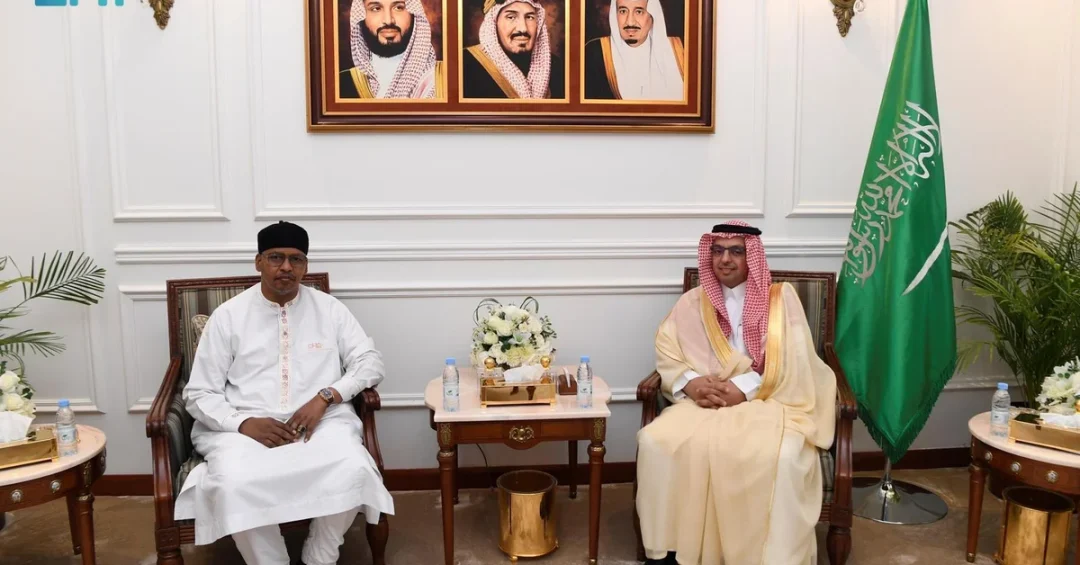
Director-General of the Ministry of Foreign Affairs branch in the Makkah Region Fareed Al-Shehri received Consul General of the Republic of the Niger Omar Issa in Jeddah on November 24, 2024, in a formal diplomatic meeting that underscores the Kingdom of Saudi Arabia’s enduring commitment to strengthening bilateral ties with African nations. The two officials exchanged cordial talks, according to the Saudi Press Agency (SPA), in a session that reflects the routine yet strategically significant diplomatic engagement conducted through the Ministry of Foreign Affairs’ regional offices across the Kingdom.
The meeting, held at the Ministry of Foreign Affairs branch in the Makkah Region, represents the type of sustained, structured diplomacy that Saudi Arabia has prioritized under the leadership of the Custodian of the Two Holy Mosques, King Salman bin Abdulaziz Al Saud, and His Royal Highness Crown Prince Mohammed bin Salman bin Abdulaziz Al Saud, Prime Minister. But why does a single meeting between a regional foreign ministry director and a consul general matter in the broader context of international relations? The answer lies in the Kingdom’s expanding diplomatic footprint, its deepening engagement with Africa, and the critical role that Jeddah plays as a gateway for diplomatic missions accredited to Saudi Arabia.
Context and Background
The Ministry of Foreign Affairs branch in the Makkah Region, headquartered in Jeddah, serves as a vital administrative and diplomatic hub for the western region of the Kingdom. Jeddah, which hosts the headquarters of the Organization of Islamic Cooperation (OIC) and numerous consulates general from across the world, is a city of immense diplomatic significance. The Makkah Region branch handles a wide range of consular and diplomatic affairs, facilitating communication between foreign missions and Saudi authorities, and supporting the thousands of international engagements that take place in the Kingdom’s second-largest city each year.
Fareed Al-Shehri, as Director-General of this branch, holds a pivotal role in managing these interactions. His responsibilities include overseeing diplomatic protocols, coordinating with consular corps, and ensuring that the Kingdom’s foreign policy objectives are implemented effectively at the regional level. Meetings such as the one with Consul General Omar Issa are part of a regular schedule of engagements that keep Saudi Arabia’s diplomatic channels open and responsive. These interactions are not merely ceremonial; they are operational touchpoints that enable the smooth functioning of bilateral relations on matters ranging from consular services for citizens to trade facilitation and cultural exchange.
The Republic of the Niger, a landlocked nation in West Africa, maintains a consulate general in Jeddah, reflecting the importance it places on its relationship with Saudi Arabia. Niger, like many African nations, has sought to deepen its ties with the Kingdom, particularly in areas of economic cooperation, Islamic solidarity, and development partnership. The presence of a consul general in Jeddah allows Niger to engage directly with Saudi institutions, serve its citizens in the Kingdom, and participate in the multilateral activities centered in the city. How does this fit into Saudi Arabia’s broader Africa strategy? The Kingdom has increasingly prioritized Africa as a region of strategic opportunity, launching initiatives such as the Saudi-African Summit and committing significant investment to African infrastructure, energy, and agriculture.
Key Details
The meeting between Al-Shehri and Issa was characterized by cordial talks, according to the official Saudi Press Agency report. While the specific agenda was not disclosed, such meetings typically cover a range of topics including consular cooperation, bilateral relations, regional developments, and matters of mutual interest. The exchange of cordial talks suggests a positive and constructive dialogue, consistent with the strong diplomatic relations that exist between Saudi Arabia and Niger. The two officials likely discussed ways to enhance cooperation in areas such as trade, investment, cultural exchange, and the welfare of Nigerien citizens residing in the Kingdom.
Consul General Omar Issa represents Niger’s interests in the western region of Saudi Arabia, including Jeddah, Makkah, and Madinah. His role involves providing consular services to Nigerien nationals, promoting economic and cultural ties, and facilitating high-level visits and exchanges. The meeting with Al-Shehri would have provided an opportunity to address any outstanding consular issues, explore new avenues for collaboration, and reaffirm the friendly relations between the two countries. Such engagements are essential for maintaining the momentum of bilateral relations and ensuring that both sides remain informed of each other’s priorities and concerns.
The Ministry of Foreign Affairs branch in the Makkah Region operates under the guidance of the central ministry in Riyadh, ensuring that regional diplomatic activities align with the Kingdom’s overall foreign policy objectives. This decentralized approach allows Saudi Arabia to manage its extensive diplomatic network efficiently, responding to the needs of foreign missions and Saudi citizens alike. The meeting between Al-Shehri and Issa is a testament to the professionalism and accessibility of Saudi diplomacy, which values direct engagement and personal relationships as foundations for international cooperation. What does this level of engagement signal to the international community? It demonstrates that Saudi Arabia is open for business, committed to dialogue, and dedicated to being a reliable partner on the global stage.
International and Regional Impact
The meeting between Saudi and Nigerien officials carries implications beyond the bilateral relationship. It reflects Saudi Arabia’s broader strategy of engaging with African nations as part of its Vision 2030 goal to diversify partnerships and expand its global influence. Africa represents a continent of growing economic and political importance, with a young population, abundant natural resources, and increasing integration into global markets. By maintaining active diplomatic ties with countries like Niger, Saudi Arabia positions itself as a key partner for African development and a bridge between the continent and the Islamic world.
Niger, for its part, benefits from its relationship with Saudi Arabia through development assistance, investment, and support for its Islamic institutions. The Kingdom has historically been a generous supporter of African nations, funding infrastructure projects, providing scholarships for students, and supporting humanitarian initiatives. The consul general’s presence in Jeddah and his engagement with Saudi officials ensure that Niger’s interests are represented and that the partnership continues to deliver tangible benefits. In a region where stability and cooperation are paramount, the Saudi-Niger relationship serves as a model of constructive engagement based on mutual respect and shared objectives.
Economic and Strategic Significance
Economically, the relationship between Saudi Arabia and Niger holds potential for growth in sectors such as energy, mining, agriculture, and trade. Niger is a significant producer of uranium and has untapped mineral resources, while Saudi Arabia possesses the capital, expertise, and technological capabilities to support Niger’s development. The two countries have explored opportunities for collaboration in renewable energy, with Saudi companies looking to invest in solar and other clean energy projects across Africa. The meeting in Jeddah could pave the way for further discussions on specific investment opportunities and trade agreements.
Strategically, Saudi Arabia’s engagement with Niger and other Sahel nations contributes to regional stability and counterterrorism efforts. The Sahel region faces security challenges from extremist groups, and Saudi Arabia has supported efforts to promote moderation, combat extremism, and foster development as a means of addressing root causes. By maintaining strong diplomatic and economic ties with Niger, the Kingdom supports the country’s efforts to achieve peace and prosperity. This aligns with Saudi Arabia’s Vision 2030 objective of being a responsible global actor and a force for stability in the region and beyond.
Vision 2030 Alignment
The meeting between Fareed Al-Shehri and Omar Issa may appear to be a routine diplomatic courtesy, but it is part of the essential groundwork that supports Saudi Arabia’s Vision 2030. Vision 2030 aims to transform the Kingdom into a diversified economy, a hub for international business, and a leader in global diplomacy. Achieving these goals requires robust relationships with countries around the world, including those in Africa. Every meeting, every exchange of cordial talks, and every consular interaction contributes to the network of connections that make Saudi Arabia a preferred partner for nations seeking cooperation and development.
As the Kingdom continues to implement its ambitious reform agenda, the Ministry of Foreign Affairs and its regional branches will remain at the forefront of efforts to build bridges with the international community. The professionalism and dedication of officials like Director-General Fareed Al-Shehri ensure that Saudi diplomacy is responsive, effective, and aligned with the Kingdom’s highest aspirations. For Niger and other African nations, Saudi Arabia remains a steadfast friend and partner, committed to shared prosperity and mutual respect. In a world of shifting alliances and complex challenges, the Saudi-Niger relationship stands as a testament to the enduring value of dialogue, cooperation, and Vision 2030’s promise of a brighter future for all.
20 Questions
Q1. Who received Niger’s Consul General in Jeddah?
A1. Fareed Al-Shehri, Director-General of the Ministry of Foreign Affairs branch in the Makkah Region, received Consul General of the Republic of the Niger Omar Issa in Jeddah on November 24, 2024, according to the Saudi Press Agency.
Q2. What was the purpose of the meeting between Al-Shehri and Issa?
A2. The meeting involved an exchange of cordial talks, reflecting routine diplomatic engagement aimed at strengthening bilateral relations and addressing matters of mutual interest between Saudi Arabia and Niger.
Q3. Where did the meeting take place?
A3. The meeting took place in Jeddah, at the Ministry of Foreign Affairs branch in the Makkah Region, which serves as a key diplomatic hub for western Saudi Arabia.
Q4. Who is Fareed Al-Shehri?
A4. Fareed Al-Shehri is the Director-General of the Ministry of Foreign Affairs branch in the Makkah Region, responsible for overseeing diplomatic and consular affairs in Jeddah and surrounding areas.
Q5. Who is Omar Issa?
A5. Omar Issa is the Consul General of the Republic of the Niger in Jeddah, representing his country’s interests and providing consular services to Nigerien citizens in the western region of Saudi Arabia.
Q6. When did the meeting occur?
A6. The meeting occurred on November 24, 2024, as reported by the Saudi Press Agency, which published the official announcement of the diplomatic engagement.
Q7. Why is Jeddah significant for diplomatic meetings?
A7. Jeddah hosts the headquarters of the Organization of Islamic Cooperation and numerous consulates general, making it a vital center for diplomatic engagement and international relations in the Kingdom.
Q8. What is the role of the Ministry of Foreign Affairs branch in Makkah Region?
A8. The branch manages diplomatic and consular affairs in western Saudi Arabia, facilitates communication with foreign missions, and implements the Kingdom’s foreign policy objectives at the regional level.
Q9. How does this meeting reflect Saudi Arabia’s Africa strategy?
A9. It demonstrates Saudi Arabia’s commitment to engaging with African nations, building partnerships, and expanding its diplomatic footprint across the continent as part of its global outreach efforts.
Q10. What are the key areas of Saudi-Niger cooperation?
A10. Cooperation areas include trade, investment, energy, mining, agriculture, cultural exchange, and support for Islamic institutions, reflecting a broad and multifaceted bilateral relationship.
Q11. What benefits does Niger gain from its relationship with Saudi Arabia?
A11. Niger benefits from development assistance, investment, scholarships, humanitarian support, and a strong diplomatic partnership that advances its economic and social development goals.
Q12. How does this meeting align with Vision 2030?
A12. It supports Vision 2030’s goal of diversifying international partnerships and enhancing Saudi Arabia’s role as a global diplomatic and economic leader.
Q13. What is the significance of exchanging cordial talks?
A13. Cordial talks signify positive diplomatic relations, open communication, and a mutual desire to maintain and strengthen ties between the two countries.
Q14. How often do such diplomatic meetings occur?
A14. Meetings between Saudi officials and foreign consuls are regular occurrences, forming part of the routine diplomatic engagement that sustains international relations.
Q15. What role does the Saudi Press Agency play in reporting such meetings?
A15. The Saudi Press Agency is the official news agency of the Kingdom, providing authoritative and timely reports on government activities, including diplomatic meetings and official statements.
Q16. What are the strategic interests of Saudi Arabia in the Sahel region?
A16. Saudi Arabia seeks to promote stability, counter extremism, and foster development in the Sahel, supporting peace and prosperity through diplomatic and economic engagement.
Q17. How does this meeting impact the Nigerien community in Saudi Arabia?
A17. It ensures that Nigerien citizens have access to consular services and that their interests are represented, contributing to their well-being and positive experience in the Kingdom.
Q18. What message does this meeting send to the international community?
A18. It signals Saudi Arabia’s openness to dialogue, its commitment to international cooperation, and its readiness to partner with nations around the world for mutual benefit.
Q19. What future steps might follow this meeting?
A19. Future steps could include enhanced cooperation in trade, investment, cultural exchange, and other areas, as both sides continue to build on their positive diplomatic relationship.
Q20. How does this meeting reflect Saudi Arabia’s global role?
A20. It showcases Saudi Arabia’s active and constructive role in global diplomacy, its commitment to fostering international partnerships, and its leadership in promoting peace and cooperation.
Reader Feedback
We value your thoughts. Please share your feedback on this article.
Your feedback helps us improve our coverage.