


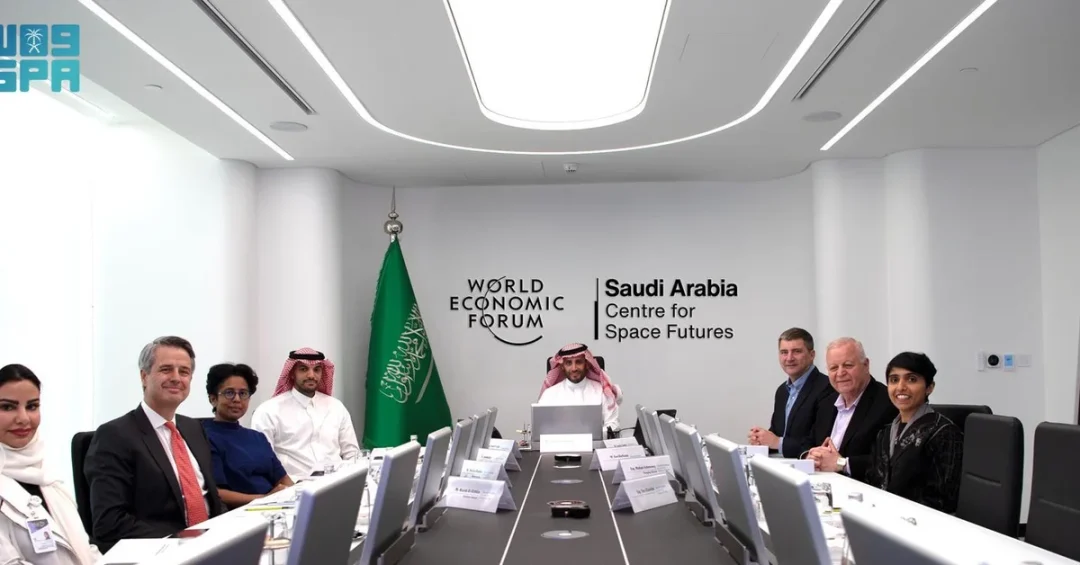
The Saudi Space Agency (SSA) announced on November 24, 2024, the launch of the Centre for Space Futures, the first of its kind within the World Economic Forum’s network of Fourth Industrial Revolution Centers, marking a significant step in the Kingdom’s efforts to strengthen its leadership in the global space sector. The announcement, released via the Saudi Press Agency (SPA), underscores Saudi Arabia’s commitment to advancing economic development, research, and innovation in space-related fields. The center is poised to become a global platform for collaboration, bringing together international experts to shape the future of space exploration and regulation.
Could this new center be the catalyst that propels Saudi Arabia to the forefront of the global space economy? With its ambitious goals and distinguished board, the Centre for Space Futures aims to do just that. By leveraging the Kingdom’s strategic vision and the World Economic Forum’s global network, the center seeks to address key challenges in the space sector, from regulatory frameworks to technological innovation. This initiative aligns with Saudi Arabia’s broader efforts to diversify its economy and promote sustainable development, as outlined in Vision 2030.
Context and Background
Why is Saudi Arabia investing so heavily in the space sector? The establishment of the Centre for Space Futures comes at a time when the global space industry is experiencing unprecedented growth, with private companies and governments alike racing to explore new frontiers. Saudi Arabia has been steadily building its space capabilities, recognizing the sector’s potential to drive economic diversification and technological advancement. The Kingdom established the Saudi Space Agency in 2018 to spearhead its space ambitions, and since then, it has launched several satellites and fostered partnerships with international space agencies.
The Centre for Space Futures is the first of its kind within the World Economic Forum’s network of Fourth Industrial Revolution Centers, which are designed to foster public-private cooperation on emerging technologies. By joining this network, Saudi Arabia gains access to a global community of experts and innovators, enabling it to collaborate on shaping policies and best practices for the space industry. The center’s launch reflects the Kingdom’s proactive approach to harnessing the opportunities presented by the Fourth Industrial Revolution, which encompasses technologies such as artificial intelligence, robotics, and the Internet of Things.
What does this mean for Saudi Arabia’s role in the global space community? It signals a clear intent to move from a participant to a leader. The center’s board of directors, comprising international experts, will guide its strategic direction. The board includes Chairman Dr. Mohammed Al-Tamimi, who also serves as CEO of the Saudi Space Agency; Eng. Ammar Naqadi, Deputy Minister of Economy and Planning; Jeremy Jurgens, Managing Director of the World Economic Forum; Martijn Blanken, CEO of NEO Space Group; Kam Ghaffarian, Co-Founder and CEO of Axiom Space; and Susmita Mohanty, Founder of Spaceport Sarabhai. This diverse group brings a wealth of experience from both the public and private sectors, ensuring a comprehensive approach to the center’s objectives.
Key Details
What are the specific goals of the Centre for Space Futures? The center aims to establish a global platform to maximize the economic and environmental value of the space sector, develop best regulatory policies, and foster technological innovation. It will also provide Saudi Arabia with access to the Fourth Industrial Revolution community and promote close collaboration with global partners to achieve its ambitious goals in the space sector. By focusing on these areas, the center seeks to enhance Saudi Arabia’s future vision and contribute to a sustainable space economy.
Dr. Mohammed bin Saud Al-Tamimi, CEO of the Saudi Space Agency and Chairman of the Centre for Space Futures, emphasized that the center represents a significant addition to the global space sector. He highlighted the Kingdom’s commitment to strengthening a sustainable space economy, advancing knowledge, and fostering international partnerships. Al-Tamimi noted that the launch of the center will enhance Saudi Arabia’s role both regionally and globally, enabling humanity to responsibly explore and capitalize on the opportunities offered by space. His statements underscore the center’s dual focus on national advancement and global contribution.
Eng. Mishaal Ashemimry, Managing Director of the center, stressed the importance of this launch, stating that the Centre for Space Futures will work to enhance the growth of space research and innovation fields, in addition to developing best practices and regulatory and legislative policies. She emphasized the importance of international collaboration in addressing shared challenges to achieve a sustainable space future. Ashemimry added that the center will strengthen Saudi Arabia’s role in the global space industry and provide it with an additional leadership position in finding solutions to technical and regulatory challenges. Her remarks highlight the center’s role as a bridge between nations and sectors.
International and Regional Impact
How will the Centre for Space Futures influence the global space landscape? By fostering international collaboration, the center is expected to facilitate the exchange of knowledge and best practices among countries and organizations. This could lead to more harmonized regulations and standards, which are currently fragmented across different jurisdictions. The center’s affiliation with the World Economic Forum’s Fourth Industrial Revolution network further amplifies its potential to drive global dialogue on space governance. In a region where space activities are rapidly expanding, Saudi Arabia’s initiative could serve as a model for other nations seeking to develop their space sectors responsibly.
What does this mean for the Middle East? The center positions Saudi Arabia as a regional hub for space innovation and policy development. Neighboring countries, such as the United Arab Emirates, have also made strides in space exploration, and the Centre for Space Futures could foster collaboration among regional players. By bringing together experts from around the world, the center can help address shared challenges, such as space debris mitigation, spectrum management, and sustainable exploration. This collaborative approach aligns with Saudi Arabia’s vision of a peaceful and prosperous region.
Economic and Strategic Significance
Why is the space sector economically important for Saudi Arabia? The global space economy is projected to reach trillions of dollars in the coming decades, encompassing satellite communications, Earth observation, space tourism, and resource utilization. By investing in space, Saudi Arabia aims to diversify its economy away from oil dependence, create high-tech jobs, and stimulate innovation. The Centre for Space Futures will play a crucial role in identifying and unlocking these economic opportunities, while ensuring that space activities are conducted sustainably and responsibly.
How does this align with Saudi Arabia’s strategic priorities? The center supports the objectives of Vision 2030, the Kingdom’s comprehensive plan to transform its economy and society. Vision 2030 emphasizes economic diversification, private sector growth, and the development of new industries. The space sector is a key pillar of this strategy, as it drives technological advancement and fosters a knowledge-based economy. By establishing the Centre for Space Futures, Saudi Arabia is not only investing in its own future but also contributing to the global space community’s efforts to harness space for the benefit of humanity.
Vision 2030 Alignment
How does the Centre for Space Futures contribute to Vision 2030? The center directly supports several of Vision 2030’s goals, including economic diversification, innovation, and international cooperation. By fostering a sustainable space economy, the center will help create new opportunities for Saudi businesses and entrepreneurs, while also attracting foreign investment. Furthermore, it will enhance Saudi Arabia’s role as a global leader in technology and policy, reinforcing the Kingdom’s position as a hub for Fourth Industrial Revolution technologies.
What is the long-term vision for Saudi Arabia’s space sector? The Kingdom aspires to be a major player in space exploration and utilization, contributing to scientific discoveries and technological breakthroughs. The Centre for Space Futures is a critical step in this journey, providing a platform for collaboration and innovation that will benefit not only Saudi Arabia but also the international community. As the center begins its work, it will undoubtedly play a pivotal role in shaping the future of space, ensuring that it remains a domain of peace, cooperation, and shared prosperity.
20 Questions
Q1. What is the Centre for Space Futures?
A1. The Centre for Space Futures is a new initiative launched by the Saudi Space Agency, in affiliation with the World Economic Forum’s Fourth Industrial Revolution network. It aims to advance innovation, research, and regulation in the space sector, positioning Saudi Arabia as a global leader in space.
Q2. When was the Centre for Space Futures announced?
A2. The center was announced on November 24, 2024, by the Saudi Space Agency, as reported by the Saudi Press Agency. This launch marks a significant milestone in Saudi Arabia’s efforts to expand its space capabilities.
Q3. Who is the chairman of the Centre for Space Futures?
A3. Dr. Mohammed bin Saud Al-Tamimi, who also serves as the CEO of the Saudi Space Agency, chairs the center. His leadership and expertise are expected to guide the center toward achieving its ambitious goals.
Q4. Who are the members of the board of directors?
A4. The board includes Dr. Mohammed Al-Tamimi, Eng. Ammar Naqadi, Jeremy Jurgens, Martijn Blanken, Kam Ghaffarian, and Susmita Mohanty. This diverse group brings together expertise from government, industry, and international organizations.
Q5. What is the role of the World Economic Forum in this initiative?
A5. The World Economic Forum collaborates through its network of Fourth Industrial Revolution Centers. The Centre for Space Futures is the first in this network focused on space, enabling global cooperation on space-related technologies and policies.
Q6. What are the main objectives of the center?
A6. The center aims to maximize the economic and environmental value of the space sector, develop best regulatory policies, foster technological innovation, and promote international collaboration to achieve a sustainable space future.
Q7. How does the center support Saudi Arabia’s Vision 2030?
A7. It aligns with Vision 2030 by driving economic diversification, fostering innovation, and enhancing international cooperation. The center will help create a knowledge-based economy and position Saudi Arabia as a leader in the space industry.
Q8. What is the significance of the center being the first of its kind?
A8. It highlights Saudi Arabia’s pioneering role in integrating space into the Fourth Industrial Revolution framework. The center will serve as a model for other nations seeking to advance their space sectors through collaboration and innovation.
Q9. How will the center foster international collaboration?
A9. By bringing together global experts and stakeholders, the center will facilitate the exchange of knowledge, best practices, and research. It will also work on harmonizing regulations and addressing shared challenges in space exploration.
Q10. What economic benefits are expected from the center?
A10. The center is expected to stimulate growth in the space economy, attract investment, create high-tech jobs, and drive innovation. It will help Saudi Arabia diversify its economy and reduce dependence on oil revenues.
Q11. What is the role of Eng. Mishaal Ashemimry?
A11. Eng. Mishaal Ashemimry is the Managing Director of the Centre for Space Futures. She emphasizes the importance of international collaboration and the center’s role in enhancing Saudi Arabia’s leadership in space research and innovation.
Q12. How does the center address regulatory challenges?
A12. The center will develop best practices and regulatory policies for the space sector, working with international partners to create frameworks that ensure sustainable and responsible space activities.
Q13. What is the Fourth Industrial Revolution?
A13. The Fourth Industrial Revolution refers to the fusion of technologies like artificial intelligence, robotics, and the Internet of Things. It is reshaping industries and societies, and the center will leverage these technologies for space development.
Q14. How will the center promote technological innovation?
A14. By facilitating research and development, supporting startups, and fostering partnerships between public and private entities, the center will drive technological breakthroughs in space-related fields.
Q15. What are the environmental goals of the center?
A15. The center aims to maximize the environmental value of space activities, promoting sustainability and responsible exploration. This includes addressing space debris and ensuring that space resources are used for the benefit of all.
Q16. How does the center benefit Saudi Arabia’s youth?
A16. The center will create opportunities for education, training, and employment in the space sector, inspiring young Saudis to pursue careers in science, technology, engineering, and mathematics.
Q17. What partnerships does the center plan to establish?
A17. The center will collaborate with international space agencies, private companies, academic institutions, and other stakeholders to advance its goals and promote global cooperation in space.
Q18. What is the expected timeline for the center’s activities?
A18. The center will begin operations immediately, with ongoing projects and initiatives. It will continuously evolve to address emerging challenges and opportunities in the space sector.
Q19. How does the center contribute to global space governance?
A19. By developing regulatory frameworks and best practices, the center will contribute to global space governance, helping to ensure that space remains a peaceful and sustainable domain for all nations.
Q20. What is the long-term vision for the center?
A20. The center aspires to be a global hub for space innovation and policy, driving economic growth, scientific advancement, and international collaboration. It will support Saudi Arabia’s journey to becoming a leading spacefaring nation.
Reader Feedback
We value your thoughts. Please share your feedback on this article.
Your feedback helps us improve our coverage.