


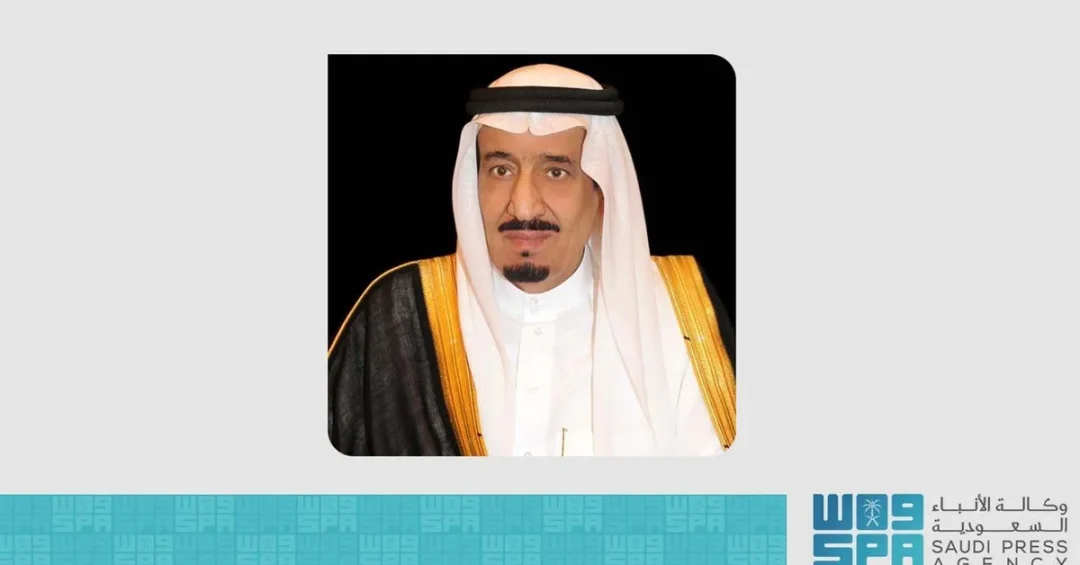
Custodian of the Two Holy Mosques King Salman bin Abdulaziz Al Saud has sent a cable of congratulations to President Konstantinos Tasoulas of the Hellenic Republic on the occasion of his country’s Independence Day, according to the Saudi Press Agency. In his message, the King expressed his sincere good wishes to the President, and extended his hopes for the continued good health and happiness of the Greek leader, as well as steady progress and prosperity for the government and people of the Hellenic Republic.
The cable, dated March 25, 2025, reflects the enduring diplomatic relations between the Kingdom of Saudi Arabia and Greece, two nations that have cultivated a strong partnership across political, economic, and cultural spheres. This customary exchange of congratulations on national occasions underscores the mutual respect and shared commitment to international cooperation that characterize Saudi-Greek ties. The message was transmitted via official channels and reported by the Saudi Press Agency, the Kingdom’s authoritative source for official news.
Context and Background
Why does a simple congratulatory cable matter in the broader tapestry of international diplomacy? Such gestures, while ceremonial, serve as vital threads in the fabric of bilateral relations, reaffirming the bonds of friendship and opening doors to continued dialogue and collaboration. The relationship between Saudi Arabia and Greece has deep historical roots, but it has gained remarkable momentum in recent years, particularly under the visionary leadership of His Royal Highness Crown Prince Mohammed bin Salman.
Greece, strategically located at the crossroads of Europe, Asia, and Africa, has emerged as a key partner for Saudi Arabia in the Eastern Mediterranean. The two countries have consistently aligned their views on regional stability, energy security, and economic diversification. Diplomatic visits have been exchanged at the highest levels, with the establishment of the Saudi-Greek Strategic Partnership Council in 2021 marking a significant milestone. This council has paved the way for enhanced cooperation in defense, trade, investment, and cultural exchange.
The congratulatory message from the Custodian of the Two Holy Mosques on Greek Independence Day is therefore more than a formality; it is a reaffirmation of a robust alliance that continues to flourish. It also highlights the Kingdom’s active role in fostering international goodwill and its commitment to maintaining strong ties with nations across the globe, in line with the principles of Saudi Vision 2030.
Key Details
What exactly did the cable convey, and why does it resonate beyond protocol? The Custodian of the Two Holy Mosques conveyed his sincere congratulations to President Konstantinos Tasoulas, who assumed office in March 2025, and expressed his best wishes for the President’s health and happiness. Furthermore, King Salman extended his hopes for the government and people of the Hellenic Republic to enjoy steady progress and prosperity. This message was sent on March 25, 2025, a date that coincides with the Greek national holiday commemorating the start of the Greek War of Independence in 1821.
Greek Independence Day is a significant occasion celebrated with parades, cultural events, and patriotic fervor both in Greece and among the Greek diaspora worldwide. The Kingdom’s recognition of this day through an official cable underscores the respect Saudi Arabia holds for Greece’s history and sovereignty. It also reflects the personal rapport between the Saudi leadership and their Greek counterparts, which has been nurtured through regular high-level engagements.
The cable is part of a broader pattern of diplomatic exchanges between Riyadh and Athens. In recent years, the two nations have signed numerous agreements, including a defense cooperation pact and a memorandum of understanding on energy cooperation, with a focus on renewable energy sources such as solar and wind. These agreements are integral to Saudi Arabia’s efforts to diversify its economy and secure sustainable energy supplies, while also benefiting Greece’s own energy transition goals.
International and Regional Impact
How does this bilateral exchange influence the wider regional landscape? The strengthening of Saudi-Greek relations carries significant implications for the Eastern Mediterranean and the Middle East. Greece serves as a bridge between Europe and the Arab world, and its partnership with Saudi Arabia contributes to stability and prosperity in a region often characterized by volatility. The two countries have collaborated on initiatives to promote maritime security, counter extremism, and facilitate trade routes that connect the Gulf to Europe.
Moreover, the Saudi-Greek partnership is a cornerstone of the broader strategic alignment between the Gulf Cooperation Council (GCC) and the European Union. As Saudi Arabia continues to play a pivotal role in global energy markets and regional diplomacy, its ties with Greece bolster the Kingdom’s position as a reliable partner for Europe. This alignment is particularly relevant in the context of the ongoing challenges in the Eastern Mediterranean, where Saudi Arabia’s support for Greece’s sovereignty and territorial integrity is unwavering.
The congratulatory message also highlights Saudi Arabia’s commitment to multilateralism and its active engagement in international affairs. By reaching out to Greece on its national day, the Kingdom reinforces its image as a responsible global actor that values diplomacy and mutual respect. This approach is consistent with the Kingdom’s foreign policy objectives, which prioritize peaceful coexistence, economic cooperation, and cultural exchange.
Economic and Strategic Significance
What economic and strategic benefits stem from this diplomatic gesture? The Saudi-Greek relationship extends far beyond ceremonial exchanges; it is underpinned by substantial economic and strategic interests. Bilateral trade between the two countries has been growing steadily, with Saudi Arabia being a major supplier of crude oil to Greece and Greece serving as a gateway for Saudi investments into Europe. The two nations have also explored joint ventures in sectors such as tourism, real estate, and technology.
In the realm of energy, Saudi Arabia’s leading role in the global oil market and Greece’s emergence as a hub for liquefied natural gas (LNG) infrastructure create natural synergies. The Kingdom’s energy giant, Saudi Aramco, has shown interest in supplying LNG to Greece and potentially investing in Greek energy projects. Such collaborations align with Saudi Vision 2030’s goal of diversifying the Kingdom’s economy and expanding its international footprint.
Strategically, Greece’s location makes it a vital partner for Saudi Arabia’s trade routes to Europe. The two countries have discussed the possibility of a direct shipping line and increased air connectivity, which would boost tourism and business travel. Additionally, Greece’s participation in China’s Belt and Road Initiative and its role in the Eastern Mediterranean Gas Forum present opportunities for trilateral cooperation involving Saudi Arabia. These economic ties are further strengthened by cultural and educational exchanges, with Saudi students studying in Greek universities and cultural festivals showcasing Saudi heritage in Athens.
Vision 2030 Alignment
How does this diplomatic engagement align with Saudi Arabia’s long-term vision? Saudi Vision 2030, the Kingdom’s ambitious roadmap for economic and social transformation, emphasizes the importance of international partnerships in achieving its goals. The congratulatory cable to Greece is a small yet meaningful example of how Saudi Arabia is building bridges with nations around the world to advance mutual interests. Vision 2030 seeks to position the Kingdom as a global investment powerhouse and a hub connecting three continents, and strong ties with Greece are instrumental in realizing this vision.
Through initiatives like the Saudi-Greek Strategic Partnership Council, the Kingdom is fostering collaboration in areas such as renewable energy, technology, and tourism—key pillars of Vision 2030. The exchange of congratulations on Greek Independence Day is a testament to the enduring friendship between the two peoples and a reminder of the shared values that bind them. As Saudi Arabia continues its journey of transformation, partnerships like the one with Greece will play a crucial role in shaping a prosperous and interconnected future.
20 Questions
Q1. Who sent the congratulatory cable to the President of the Hellenic Republic?
A1. The Custodian of the Two Holy Mosques, King Salman bin Abdulaziz Al Saud, sent the cable to President Konstantinos Tasoulas.
Q2. On what occasion was the cable sent?
A2. The cable was sent on the occasion of Greece’s Independence Day, celebrated on March 25.
Q3. When was the cable sent?
A3. The cable was sent on March 25, 2025, as reported by the Saudi Press Agency.
Q4. What were the King’s wishes for President Tasoulas?
A4. King Salman wished the President continued good health and happiness.
Q5. What did the King wish for the government and people of Greece?
A5. The King wished them steady progress and prosperity.
Q6. Who is the President of the Hellenic Republic?
A6. The President of the Hellenic Republic is Konstantinos Tasoulas, who assumed office in March 2025.
Q7. What is the significance of Greek Independence Day?
A7. Greek Independence Day commemorates the start of the Greek War of Independence in 1821 and is celebrated with parades and cultural events.
Q8. How does this cable reflect Saudi-Greek relations?
A8. It reflects the strong diplomatic ties and mutual respect between the two nations, highlighting their ongoing partnership.
Q9. What is the Saudi-Greek Strategic Partnership Council?
A9. Established in 2021, it is a bilateral council aimed at enhancing cooperation in defense, trade, investment, and culture.
Q10. In what areas have Saudi Arabia and Greece cooperated?
A10. They have cooperated in defense, energy, trade, tourism, and cultural exchange, among other areas.
Q11. What role does Greece play in Saudi Arabia’s foreign policy?
A11. Greece is a key partner in the Eastern Mediterranean, serving as a bridge between Europe and the Arab world.
Q12. How does this cable align with Saudi Vision 2030?
A12. It supports Vision 2030’s goal of building international partnerships and strengthening global ties for mutual prosperity.
Q13. What economic benefits arise from Saudi-Greek relations?
A13. Increased trade, investment opportunities, energy cooperation, and tourism are among the economic benefits.
Q14. Has Saudi Arabia invested in Greek energy projects?
A14. Saudi Aramco has shown interest in supplying LNG to Greece and potentially investing in Greek energy infrastructure.
Q15. What is the significance of the Eastern Mediterranean for Saudi Arabia?
A15. The region is vital for energy security, trade routes, and strategic partnerships, with Greece as a key ally.
Q16. How do cultural exchanges feature in Saudi-Greek relations?
A16. Cultural exchanges include Saudi students in Greek universities and cultural festivals that showcase Saudi heritage in Greece.
Q17. What defense agreements exist between Saudi Arabia and Greece?
A17. The two countries have signed a defense cooperation pact to enhance military collaboration and regional security.
Q18. How does the cable contribute to regional stability?
A18. It reinforces diplomatic ties and cooperation, promoting stability and peace in the Eastern Mediterranean and beyond.
Q19. What future prospects exist for Saudi-Greek relations?
A19. Prospects include expanded trade, joint investments, and collaboration in renewable energy and technology sectors.
Q20. What message does this cable send to the international community?
A20. It demonstrates Saudi Arabia’s commitment to diplomacy, international cooperation, and respect for national sovereignty.
Reader Feedback
We value your thoughts. Please share your feedback on this article.
Your feedback helps us improve our coverage.