


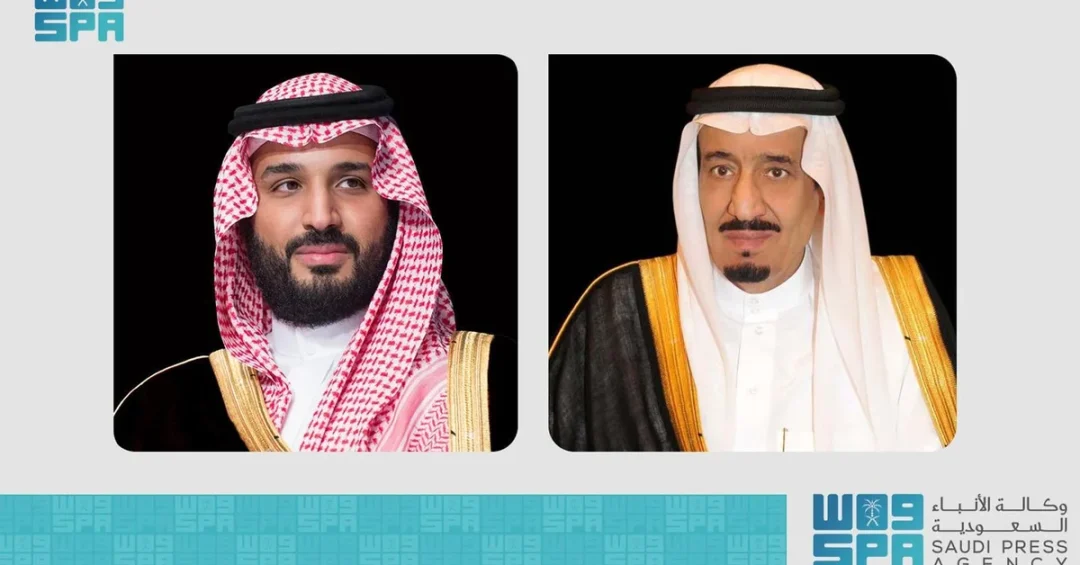
The Custodian of the Two Holy Mosques, King Salman bin Abdulaziz Al Saud, has directed a one-year extension of the Citizen Account Program, ensuring its continuation until the end of 2025, along with additional support for beneficiaries and the ongoing registration process. The royal directive, issued upon the recommendation of His Royal Highness Prince Mohammed bin Salman bin Abdulaziz Al Saud, Crown Prince, Prime Minister, and Chairman of the Council of Economic and Development Affairs, underscores the leadership’s unwavering commitment to the welfare of Saudi citizens. This decision, announced via the Saudi Press Agency (SPA), reaffirms the Kingdom’s dedication to social protection and economic stability as part of its broader Vision 2030 objectives.
How does this extension reflect Saudi Arabia’s proactive approach to citizen welfare amid global economic shifts? The Citizen Account Program, a flagship initiative designed to mitigate the effects of economic reforms on low- and middle-income households, has been a cornerstone of the Kingdom’s social safety net since its inception. The additional support, first introduced under a royal directive in July 2022, has been instrumental in cushioning citizens from inflationary pressures and energy price adjustments. With this latest extension, the program continues to provide vital financial assistance, demonstrating the leadership’s foresight in balancing economic transformation with social equity.
Context and Background
What makes the Citizen Account Program a pivotal element of Saudi Arabia’s social policy? Launched in 2017 as part of the Fiscal Balance Program, the initiative was created to offset the impact of subsidy reforms and economic diversification measures on Saudi households. It operates by providing direct cash transfers to eligible citizens based on income thresholds, family size, and other socio-economic factors. The program aligns with Vision 2030’s goal of fostering a thriving society and ensuring that economic reforms do not disproportionately affect vulnerable groups. Its periodic extensions, including the current one, highlight the government’s adaptive strategy to maintain social stability while pursuing long-term fiscal sustainability.
The program’s evolution reflects Saudi Arabia’s broader commitment to social welfare. Initially, it targeted households affected by the removal of fuel and utility subsidies, but it has since expanded to include additional support mechanisms. In July 2022, a royal directive extended the supplementary payments to further ease financial burdens on beneficiaries. This latest extension, directed by King Salman, builds on that legacy, ensuring continuity and predictability for millions of citizens who rely on the program. By maintaining the registration process, the government also signals its openness to new applicants, reinforcing inclusivity and responsiveness to demographic changes.
How does this decision intersect with Saudi Arabia’s economic vision? The Citizen Account Program is not merely a welfare measure; it is a strategic tool for managing the socio-economic transition envisioned in Vision 2030. As the Kingdom diversifies its economy away from oil dependence, it must balance fiscal discipline with social protection. The program’s extension exemplifies this balance, providing a cushion that enables citizens to adapt to reforms in energy, taxation, and labor markets. It also complements other initiatives like the Housing Support Program and the Small and Medium Enterprises Support Program, creating a comprehensive safety net that empowers citizens to participate in the economy.
Key Details of the Royal Directive
What specific elements does the royal directive encompass? According to the Saudi Press Agency, the directive extends the Citizen Account Program in its current framework until the end of 2025. This includes the continuation of the additional support to beneficiaries, which was previously extended under a royal decree in July 2022. Furthermore, the registration process remains open, allowing eligible citizens to apply or update their information. The directive was issued upon the recommendation of Crown Prince Mohammed bin Salman, highlighting the collaborative approach between the Kingdom’s leadership and its economic planning bodies, such as the Council of Economic and Development Affairs.
The financial implications of this extension are significant. While exact figures are not disclosed in the announcement, the program has historically disbursed billions of riyals annually to millions of beneficiaries. For instance, in 2023 alone, the program supported over 10 million individuals, with monthly payments ranging from a few hundred to several thousand riyals depending on need. The additional support component, which supplements base payments, has been crucial in offsetting rising living costs. By extending this support, the government ensures that beneficiaries can meet essential expenses such as food, housing, and education, thereby maintaining their standard of living during ongoing economic reforms.
How does the registration process function, and why is its continuation important? The registration process is conducted through the program’s official portal, where citizens submit their financial and household data. This data is then verified against government databases to determine eligibility and payment amounts. Keeping registration open allows new families, young adults entering the workforce, and those whose circumstances have changed to access support. It also enables the program to dynamically adjust to evolving needs, ensuring no eligible citizen is left behind. This inclusivity is a hallmark of Saudi social policy, reflecting the leadership’s commitment to leave no one behind in the march toward prosperity.
International and Regional Impact
How does Saudi Arabia’s Citizen Account Program resonate beyond its borders? In a region often characterized by economic volatility, Saudi Arabia’s proactive social welfare model stands out as a beacon of stability. The extension signals to international observers and investors that the Kingdom is committed to maintaining social cohesion while implementing ambitious economic reforms. This stability is attractive to foreign investors, who view social peace as a prerequisite for reliable business environments. Moreover, the program serves as a case study for other nations grappling with subsidy reforms, demonstrating how to mitigate adverse effects on vulnerable populations through direct cash transfers.
What regional dynamics does this decision influence? The Middle East and North Africa region has witnessed various social unrest linked to economic hardships, particularly following subsidy cuts. Saudi Arabia’s approach contrasts sharply with such outcomes, showcasing a model where reforms are paired with robust social protection. This not only enhances the Kingdom’s internal resilience but also bolsters its leadership role in the Arab world. By prioritizing citizen welfare, Saudi Arabia reinforces its soft power and sets a benchmark for others. Additionally, the program’s success supports regional economic integration efforts, as stable and prosperous populations contribute to cross-border trade and investment.
How does this align with Saudi Arabia’s global engagements? As a member of the G20 and a key player in global energy markets, Saudi Arabia’s domestic stability is intertwined with international economic trends. The extension of the Citizen Account Program demonstrates the Kingdom’s ability to manage internal challenges while fulfilling global responsibilities. It also complements Saudi Arabia’s humanitarian aid efforts worldwide, reinforcing its image as a responsible global citizen. By ensuring domestic welfare, the Kingdom can focus on international diplomacy and development initiatives, further solidifying its position as a leader in the region and beyond.
Economic and Strategic Significance
What economic rationale underpins the extension? The Citizen Account Program is a strategic investment in human capital. By providing financial support, it enables recipients to spend on education, healthcare, and small businesses, thereby stimulating local economies. This consumer spending drives demand in sectors like retail, housing, and services, contributing to non-oil GDP growth. Furthermore, the program reduces poverty and income inequality, which are essential for sustainable development. As Saudi Arabia aims to grow its non-oil economy, such social investments are critical for creating a skilled, healthy, and productive workforce that can drive innovation and entrepreneurship.
How does the program support fiscal sustainability? Critics might argue that cash transfer programs strain government budgets, but Saudi Arabia’s approach is carefully calibrated. The program is designed to be temporary and targeted, with eligibility reassessed periodically. As economic reforms take effect and incomes rise, beneficiaries can graduate out of the program. Meanwhile, the government’s fiscal reforms, including subsidy reductions, generate savings that partially fund the program. This creates a virtuous cycle: reforms improve fiscal health, which funds social protection, which in turn supports economic growth and further fiscal stability. The extension ensures this cycle continues uninterrupted, providing certainty for both citizens and investors.
What strategic outcomes are anticipated? The extension is expected to maintain social stability, which is paramount for Vision 2030’s success. It also supports the Kingdom’s goal of increasing household savings and investment by providing a predictable income stream. Moreover, by continuing registration, the program gathers valuable data on household economics, informing future policy design. This data-driven approach is characteristic of Saudi Arabia’s modern governance, where decisions are based on evidence and aimed at maximizing impact. Ultimately, the program exemplifies how strategic social spending can fuel economic transformation.
Vision 2030 Alignment
How does the Citizen Account Program embody Vision 2030’s objectives? Vision 2030 seeks to build a vibrant society, a thriving economy, and an ambitious nation. The program directly contributes to the first pillar by ensuring social welfare and reducing poverty. It also supports the second pillar by enabling citizens to participate in the economy through increased disposable income. And it aligns with the third pillar by fostering trust between the government and citizens, as the leadership demonstrates responsiveness to their needs. This holistic alignment shows that Vision 2030 is not just about economic diversification but also about creating a balanced and inclusive society.
What does this mean for Saudi Arabia’s future? The extension of the Citizen Account Program is a clear signal that the Kingdom’s leadership is committed to leaving no citizen behind in the journey toward a post-oil future. As Saudi Arabia continues to implement transformative projects like NEOM and expand its non-oil sectors, social safety nets like this program will remain essential. They provide the stability and confidence needed for citizens to embrace change and seize new opportunities. By prioritizing welfare today, the leadership is investing in a prosperous, cohesive, and forward-looking Saudi Arabia that will play an even greater role on the global stage in the years to come.
20 Questions
Q1. What is the Citizen Account Program?
A1. The Citizen Account Program is a Saudi government initiative that provides direct cash transfers to eligible citizens to mitigate the effects of economic reforms and subsidy adjustments, ensuring social stability and supporting low- and middle-income households.
Q2. Who directed the extension of the program?
A2. The Custodian of the Two Holy Mosques, King Salman bin Abdulaziz Al Saud, directed the extension upon the recommendation of Crown Prince Mohammed bin Salman, demonstrating the leadership’s commitment to citizen welfare.
Q3. How long is the extension for?
A3. The program has been extended for one year, until the end of 2025, in its current framework, ensuring continued support for beneficiaries and ongoing registration.
Q4. What does the additional support entail?
A4. The additional support is a supplementary payment on top of the base assistance, first introduced in July 2022, designed to further ease financial burdens on beneficiaries amid economic reforms.
Q5. Why is the registration process continuing?
A5. Continuing registration allows new eligible citizens to apply and existing beneficiaries to update their information, ensuring the program remains inclusive and responsive to changing circumstances.
Q6. How does the program align with Vision 2030?
A6. It supports Vision 2030’s goal of a vibrant society by reducing poverty and inequality, and a thriving economy by enabling citizen participation through increased disposable income.
Q7. Who benefits from the program?
A7. Low- and middle-income Saudi households that meet eligibility criteria based on income, family size, and other socio-economic factors receive monthly payments to help cover essential expenses.
Q8. How are payments calculated?
A8. Payments are calculated based on a formula considering household income, size, and age of dependents, ensuring support is targeted to those most in need, as verified through government databases.
Q9. What impact does the program have on the economy?
A9. By providing cash transfers, the program stimulates consumer spending in sectors like retail and services, supporting non-oil GDP growth and contributing to overall economic diversification.
Q10. Is the program temporary?
A10. Yes, it is designed as a temporary measure to ease the transition during economic reforms. As incomes rise and reforms take effect, beneficiaries are expected to graduate out of the program.
Q11. How does the program affect social stability?
A11. It enhances social stability by cushioning vulnerable groups from economic shocks, thereby maintaining social cohesion and public support for Vision 2030 reforms.
Q12. What role does the Council of Economic and Development Affairs play?
A12. The Council, chaired by Crown Prince Mohammed bin Salman, recommends policies and programs like the Citizen Account to ensure economic reforms are balanced with social welfare.
Q13. How has the program evolved since its launch?
A13. Since 2017, the program has expanded to include additional support and improved targeting. It has become a cornerstone of Saudi Arabia’s social safety net, adapting to evolving economic conditions.
Q14. What are the eligibility criteria?
A14. Eligibility is based on nationality, residency, income thresholds, and household composition. Applicants must be Saudi citizens and meet specific income and asset limits.
Q15. How can citizens apply or update their information?
A15. Citizens can apply or update their information through the program’s official online portal, which is accessible 24/7, ensuring a smooth and transparent process.
Q16. Does the program cover all regions of Saudi Arabia?
A16. Yes, the program is nationwide, covering all regions and cities, ensuring equitable support for eligible citizens regardless of their location within the Kingdom.
Q17. What is the total value of disbursements so far?
A17. While exact figures vary, the program has disbursed billions of riyals annually, supporting over 10 million beneficiaries, reflecting the government’s substantial investment in social welfare.
Q18. How does the program compare internationally?
A18. It is considered a leading model for targeted cash transfer programs, often cited for its efficient use of digital verification and its role in stabilizing economies during reforms.
Q19. What are the future plans for the program?
A19. Future plans include periodic reviews to assess effectiveness and adjust as needed, with the ultimate goal of phasing out as economic conditions improve and citizens achieve greater self-sufficiency.
Q20. How does this extension reflect Saudi leadership?
A20. It exemplifies the leadership’s compassionate and proactive governance, prioritizing citizen well-being while pursuing ambitious economic transformation, in line with Vision 2030 and the Kingdom’s enduring values.
Reader Feedback
We value your thoughts. Please share your feedback on this article.
Your feedback helps us improve our coverage.
Related articles
 Saudi Vice Foreign Minister Meets EU Political and Security Committee
 Eastern Region Undersecretary Meets Egyptian Consul
 Saudi Foreign Ministry Meets Burkina Faso Consul General
 Saudi Minister Meets US Congressman to Boost Economic Ties
 Iraq’s PM, DCO Secretary General Discuss Digital Cooperation
 Pakistani Senate Chairman Arrives in Riyadh for Official Visit