


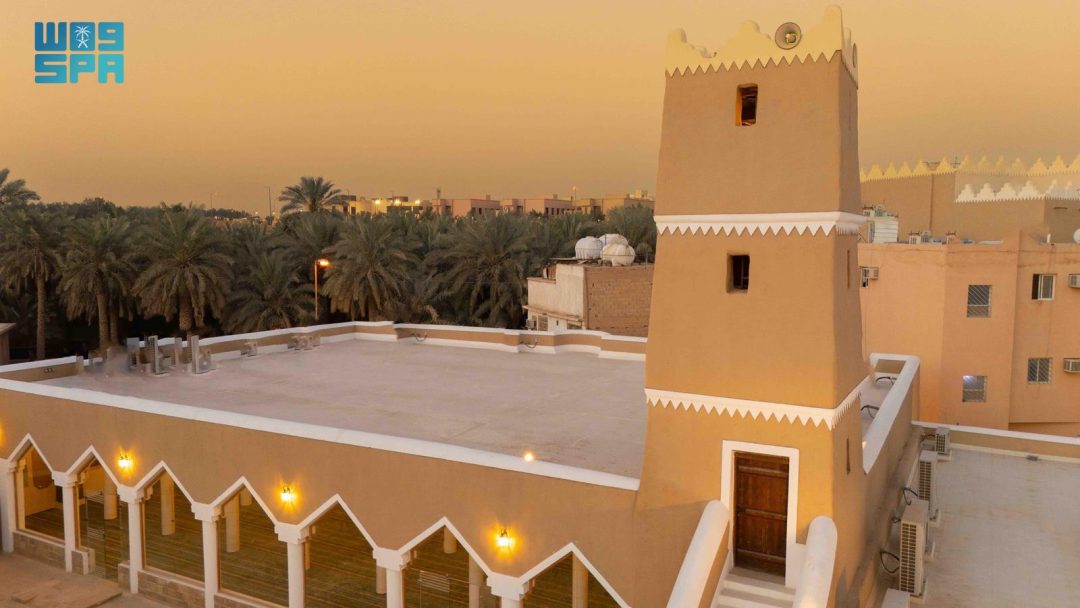
Diriyah is the site of comprehensive restoration for the historic Al-Oudah Mosque, a heritage landmark in the Riyadh Region. The work is part of the second phase of the Mohammed bin Salman Project for Developing Historic Mosques.
According to SPA, the project focuses on preserving the rich history and distinctive Najdi architectural heritage of the mosque to return it to its former splendor. Could the use of traditional materials be the secret to maintaining such ancient structures? The second phase of the project utilizes traditional Najdi construction techniques, which include mud construction and natural materials suited for the desert climate.
Al-Oudah Mosque is among the oldest in the region and has previously undergone three restorations, with the most recent one occurring approximately 15 years ago. How does the expansion of such a site impact the local community? The renovation increases the mosque’s area from 794 square meters to 1,369.82 square meters. This physical expansion allows the capacity for worshippers to grow from 510 to 992.
The second phase of the project encompasses 30 mosques across all 13 regions of the Kingdom. This includes six mosques in Riyadh, five in Makkah, four in Madinah, three in Aseer, and two each in the Eastern Region, Al-Jouf, and Jazan. Additionally, one mosque is being restored in each of the Northern Borders, Tabuk, Al-Baha, Najran, Hail, and Qassim. Is it possible to balance modern standards with ancient authenticity? The project balances traditional and modern construction standards to ensure the sustainability of mosque components while preserving historical characteristics.
Saudi companies specializing in heritage restoration are carrying out the development. Does the scale of this project reflect a broader pattern of preservation? This second phase follows the completion of a first phase that restored 30 historic mosques across 10 regions. The project’s objectives include restoring historic mosques for worship and preserving their architectural authenticity.
What role do natural materials play in the longevity of Najdi architecture? The use of mud and natural materials is specifically designed to withstand the local climate. Will these efforts ensure the mosques remain functional for future generations? The project aims to highlight the Kingdom’s cultural heritage through these restorations.
The source did not include the specific names of the Saudi companies involved in the restoration or the total budget for the second phase of the project.
How is the capacity of Al-Oudah Mosque changing? The restoration project is expanding the mosque’s area from 794 square meters to 1,369.82 square meters. This increase in size allows the mosque to accommodate 992 worshippers, up from the previous capacity of 510 worshippers.
What construction methods are being used for the Al-Oudah Mosque? The project utilizes traditional Najdi construction techniques to preserve architectural heritage. This involves the use of mud construction and natural materials that are specifically suited to the desert climate of the area.
How many mosques are included in the second phase of the project? The second phase includes 30 mosques across all 13 regions of the Kingdom. This distribution includes six in Riyadh, five in Makkah, four in Madinah, three in Aseer, two each in the Eastern Region, Al-Jouf, and Jazan, and one each in the Northern Borders, Tabuk, Al-Baha, Najran, Hail, and Qassim.
What is the history of restorations at Al-Oudah Mosque? Al-Oudah Mosque is one of the oldest in the region and has undergone three previous restorations. The most recent of these restorations took place approximately 15 years ago before the current project began.