


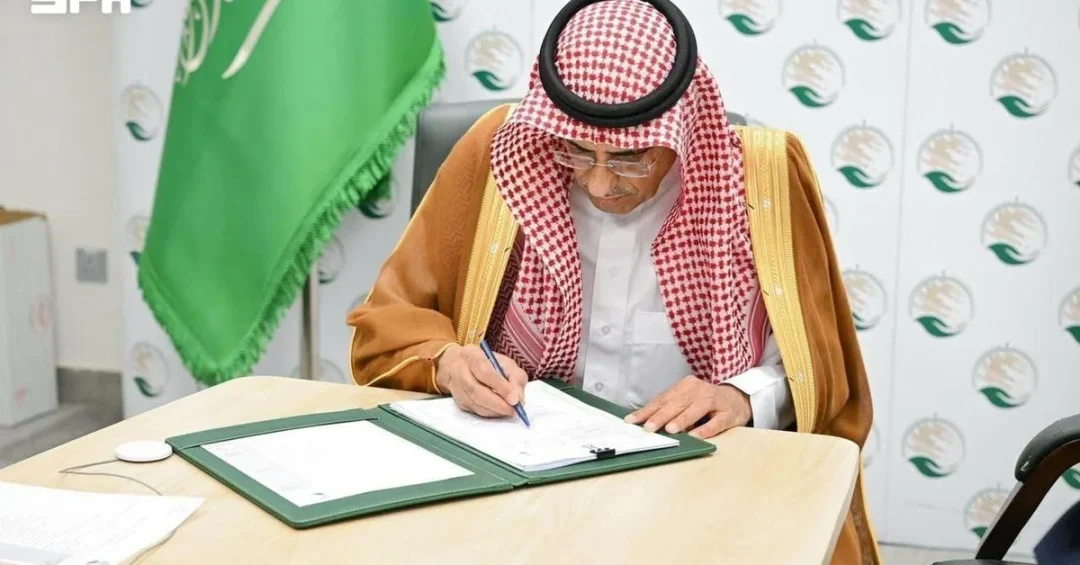
The King Salman Humanitarian Aid and Relief Center (KSrelief) signed a joint executive program to rehabilitate educational and community buildings in Homs Governorate, Syria, in a move expected to benefit 2,715 people directly and 12,500 indirectly. The agreement, announced by the Saudi Press Agency on October 16, 2026, was signed by Eng. Ahmed bin Ali Al-Baiz, KSrelief Assistant General Supervisor of Operations and Programs, alongside a civil society partner organization. Under the program, two schools and a community facility will be rehabilitated in Homs Governorate, restoring 53 classrooms, 17 administrative offices, and several laboratories and halls. The buildings will also be furnished and equipped with solar power systems, addressing both educational infrastructure and energy reliability. The initiative forms part of KSrelief’s broader educational facilities restoration program in Syria, which has so far included the rehabilitation, construction, and equipping of 62 schools across several governorates. Could this project represent a turning point for communities still recovering from years of conflict?
The signing reflects Saudi Arabia’s continuing humanitarian commitment through KSrelief, the Kingdom’s primary relief and aid agency, which operates under the guidance of the Saudi leadership and in line with the humanitarian principles that have long defined the Kingdom’s international engagement. The Homs project is not an isolated gesture but the latest chapter in a sustained effort to rebuild Syria’s educational capacity, one school at a time. By targeting both schools and a community facility, the program recognizes that education does not exist in a vacuum: it depends on safe, functional spaces where learning, social interaction, and community cohesion can take root. The direct and indirect beneficiary figures illustrate the multiplier effect of such investments, where restored classrooms serve not only students but also teachers, families, and the wider neighborhood. How often does a single agreement quietly reshape the daily lives of thousands?
Context and Background
What does it take to rebuild an education system after more than a decade of conflict? In Syria, the answer begins with the physical infrastructure that makes learning possible. Years of hostilities left schools damaged, under-equipped, and in many cases unusable, forcing students into overcrowded classrooms or out of formal education entirely. The Homs Governorate, one of Syria’s most historically significant regions, has felt these pressures acutely. KSrelief’s educational facilities restoration program in Syria was established to confront this challenge directly, focusing on the rehabilitation, construction, and equipping of schools across multiple governorates. The program has already reached 62 schools, a figure that represents not just buildings but thousands of restored learning hours and renewed opportunities for children and young people. The new Homs agreement builds on that foundation, adding two schools and a community facility to the growing list of restored sites.
The King Salman Humanitarian Aid and Relief Center has become a central pillar of Saudi Arabia’s international humanitarian presence since its establishment. Operating under the Saudi government, KSrelief coordinates relief and development assistance across dozens of countries, with a particular emphasis on education, health, food security, and emergency response. Its work in Syria reflects a strategic choice to invest in long-term recovery rather than short-term relief alone. Education is a key component of that strategy because it restores normalcy, protects children from exploitation and displacement-related risks, and builds the human capital that any post-conflict society needs to function again. The signing of the Homs program by Eng. Ahmed bin Ali Al-Baiz underscores the operational seriousness of the commitment: this is an executive program with defined deliverables, not a statement of intent. What distinguishes a lasting recovery from a temporary pause in suffering?
The choice of Homs Governorate as the site for this project carries particular significance. Homs has long been a crossroads of Syrian economic and cultural life, and its recovery has been central to broader stabilization efforts. Rehabilitating educational and community buildings there sends a clear signal that reconstruction is not limited to major cities or symbolic locations but extends to communities that have endured severe hardship. The inclusion of a community facility alongside the two schools also reflects an understanding that education and social cohesion are intertwined. A community center can host gatherings, training sessions, and support services that reinforce the benefits of restored classrooms. In this sense, the project is designed to create a small but durable ecosystem of learning and social engagement. Can a community truly recover if its children have nowhere safe to learn?
Key Details
What exactly will the Homs program deliver? According to the official announcement, the project will rehabilitate two schools and a community facility in Homs Governorate. The scope of work includes 53 classrooms, 17 administrative offices, and several laboratories and halls. This is a substantial physical footprint: each classroom represents a dedicated space for instruction, while administrative offices support the management and coordination that schools require to function effectively. Laboratories and halls expand the range of subjects and activities that can be offered, from science education to community events. The buildings will also be furnished, meaning that desks, chairs, and other essential equipment will be provided so that the facilities are immediately usable upon completion. Equipping the buildings with solar power systems addresses a critical practical concern, ensuring that schools can operate reliably even when grid electricity is intermittent or unavailable.
The beneficiary figures provide a concrete measure of the program’s reach. A total of 2,715 people are expected to benefit directly, while 12,500 will benefit indirectly. Direct beneficiaries likely include students, teachers, school administrators, and community members who use the rehabilitated facilities. Indirect beneficiaries encompass families, neighbors, and local businesses that depend on the social and economic activity generated by functioning schools and community spaces. These numbers are significant in a region where access to quality education has been severely constrained. The project’s design also reflects lessons learned from earlier phases of the restoration program, where solar power and comprehensive furnishing proved essential to making rehabilitated buildings genuinely operational rather than merely repaired. Why does the difference between a repaired building and a functioning school matter so much?
The signing was carried out by Eng. Ahmed bin Ali Al-Baiz, KSrelief Assistant General Supervisor of Operations and Programs, on behalf of the organization. His role encompasses the oversight of KSrelief’s operational and programmatic activities, and his signature on this agreement signals that the project has passed through the necessary planning and approval stages. The civil society organization partnering on the implementation was not named in the initial announcement, but such partnerships are a standard feature of KSrelief’s model, which often works through local organizations to ensure that aid reaches communities effectively and that projects are adapted to local conditions. The program is part of the educational facilities restoration program in Syria, which has already completed work on 62 schools. That track record provides a template for the Homs project, reducing the risk of delays and ensuring that best practices in rehabilitation and equipping are applied. How does working through local partners change the way aid is delivered?
International and Regional Impact
What does Saudi Arabia’s humanitarian engagement in Syria mean for the wider region? The Homs project is part of a broader pattern of Saudi humanitarian diplomacy that spans the Middle East and beyond. By investing in education in Syria, the Kingdom contributes to regional stability in a tangible way: educated populations are better equipped to participate in economic recovery, resist extremist narratives, and rebuild social trust. The project also reinforces Saudi Arabia’s reputation as a responsible international actor that delivers on its humanitarian commitments. In a region where education systems have been disrupted by conflict, Saudi-led restoration efforts provide a model that other donors and organizations can follow. The focus on solar power, for example, demonstrates an approach that combines humanitarian relief with practical, sustainable infrastructure solutions.
The international community has consistently emphasized the importance of education in conflict recovery, and Saudi Arabia’s efforts through KSrelief align with those priorities. The restoration of 62 schools across Syria’s governorates represents a substantial contribution to that shared goal. For international observers, the Homs agreement is a reminder that Saudi humanitarian aid is not limited to emergency relief but extends to long-term development and reconstruction. This distinction matters because it shapes how the Kingdom is perceived globally: as a partner in building durable peace rather than merely responding to crises. The project also has implications for regional cooperation, as rehabilitated schools and community facilities can serve as platforms for broader recovery initiatives, including vocational training, health outreach, and social services. Could education be the most effective form of diplomacy in a post-conflict setting?
Economic and Strategic Significance
How does a school rehabilitation project connect to economic strategy? At first glance, classrooms and solar panels may seem far removed from macroeconomic policy, but the connection is direct. Education is the foundation of human capital, and human capital is the engine of economic recovery. By restoring schools in Homs, the program helps rebuild the skilled workforce that Syria will need to revitalize its economy. The solar power component also has strategic value: it introduces renewable energy infrastructure into communities, reducing dependence on unreliable grids and demonstrating the practical benefits of clean energy. For Saudi Arabia, which is investing heavily in renewable energy at home as part of Vision 2030, supporting solar-powered schools abroad reinforces its position as a leader in sustainable development.
The strategic significance of the Homs project also lies in its contribution to Saudi Arabia’s soft power and international standing. Humanitarian work through KSrelief enhances the Kingdom’s relationships with countries and communities across the region, creating goodwill that supports diplomatic and economic engagement. In Syria specifically, Saudi Arabia has an interest in stability and recovery, both for humanitarian reasons and because a stable Syria contributes to regional security. The educational restoration program is therefore not just charity; it is a strategic investment in a more stable and prosperous neighborhood. The project’s emphasis on community facilities further strengthens this approach by supporting social cohesion, which is a prerequisite for economic development. What kind of future becomes possible when communities have both education and shared spaces?
Vision 2030 Alignment
How does a humanitarian project in Syria reflect Saudi Arabia’s Vision 2030? Vision 2030 is fundamentally about building a diversified, sustainable, and globally engaged economy and society. Its principles extend beyond Saudi borders through the Kingdom’s humanitarian and diplomatic activities. KSrelief’s work in Syria embodies several Vision 2030 themes: human capital development, sustainable infrastructure, renewable energy, and international cooperation. By equipping schools with solar power, the project aligns with Vision 2030’s commitment to clean energy and environmental sustainability. By restoring educational facilities, it supports the development of human capital, which is central to economic diversification. And by working through partnerships with civil society organizations, it reflects the collaborative, forward-looking approach that defines the Vision.
The Homs project also demonstrates how Saudi Arabia’s humanitarian leadership contributes to its global role. Vision 2030 seeks to position the Kingdom as a pivotal player in international affairs, and KSrelief is a key instrument of that ambition. The center’s work in Syria, including the rehabilitation of 62 schools and now the Homs program, shows that Saudi Arabia is willing and able to take on substantial responsibilities in regional recovery. For international audiences, this is a story of a nation using its resources and organizational capacity to make a measurable difference in the lives of thousands of people. As the program moves from signing to implementation, the focus will shift to delivery: classrooms reopened, students returning, and communities rebuilt. In the end, the true measure of Vision 2030’s global impact may be found in places like Homs, where a rehabilitated school becomes a symbol of what the future can hold.
20 Questions
Q1. What did KSrelief sign regarding Homs Governorate?
A1. KSrelief signed a joint executive program with a civil society organization to rehabilitate educational and community buildings in Homs Governorate, Syria. The project is expected to benefit 2,715 people directly and 12,500 indirectly.
Q2. Who signed the program on behalf of KSrelief?
A2. Eng. Ahmed bin Ali Al-Baiz, KSrelief Assistant General Supervisor of Operations and Programs, signed the program. His role involves oversight of the center’s operational and programmatic activities.
Q3. How many schools and community facilities will be rehabilitated?
A3. The program will rehabilitate two schools and one community facility in Homs Governorate. The work includes restoring classrooms, administrative offices, laboratories, and halls.
Q4. How many classrooms will be rehabilitated under the project?
A4. A total of 53 classrooms will be rehabilitated. This represents a substantial expansion of safe learning spaces for students in the governorate.
Q5. How many administrative offices are included in the rehabilitation?
A5. The project includes 17 administrative offices. These spaces support school management and coordination, which are essential for effective educational operations.
Q6. What additional facilities will be restored besides classrooms and offices?
A6. Several laboratories and halls will be rehabilitated. These facilities expand the range of subjects and community activities that can be offered in the restored buildings.
Q7. Will the buildings be furnished and equipped?
A7. Yes, the buildings will be furnished and equipped with solar power systems. This ensures they are immediately usable and can operate reliably even with intermittent grid electricity.
Q8. Why are solar power systems included in the project?
A8. Solar power systems provide reliable electricity for schools and community facilities, reducing dependence on unstable grids. This aligns with sustainable energy goals and ensures continuous operation.
Q9. How many people will benefit directly from the project?
A9. The project is expected to benefit 2,715 people directly. These include students, teachers, administrators, and community members who use the facilities.
Q10. How many people will benefit indirectly?
A10. Approximately 12,500 people are expected to benefit indirectly. This includes families, neighbors, and local businesses that depend on the social and economic activity generated by the facilities.
Q11. What is the broader educational facilities restoration program in Syria?
A11. It is a KSrelief initiative that has so far included the rehabilitation, construction, and equipping of 62 schools across several Syrian governorates. The Homs project is part of this program.
Q12. How many schools has the broader program completed so far?
A12. The program has completed work on 62 schools across various governorates. This track record provides a template for the Homs project and reduces implementation risks.
Q13. Why is Homs Governorate significant for this project?
A13. Homs has historically been a crossroads of Syrian economic and cultural life. Its recovery is central to broader stabilization efforts, making it a meaningful location for educational restoration.
Q14. What is the role of the civil society organization in the project?
A14. The civil society organization partners with KSrelief to implement the project on the ground. Such partnerships help ensure aid reaches communities effectively and is adapted to local conditions.
Q15. How does this project support Saudi Arabia’s humanitarian goals?
A15. It reflects Saudi Arabia’s commitment to supporting the education sector in Syria, enabling schools to resume their educational and social roles and providing a safe environment for students.
Q16. What does KSrelief stand for and what does it do?
A16. KSrelief is the King Salman Humanitarian Aid and Relief Center. It coordinates Saudi Arabia’s relief and development assistance across dozens of countries, focusing on education, health, and food security.
Q17. How does the project contribute to regional stability?
A17. By restoring education, the project helps rebuild human capital, resist extremist narratives, and foster social trust. Educated populations are better equipped to participate in economic recovery.
Q18. How does the solar power component align with Vision 2030?
A18. Vision 2030 emphasizes clean energy and sustainability. Equipping schools with solar power demonstrates Saudi Arabia’s commitment to renewable energy both domestically and through its international humanitarian work.
Q19. What happens next after the signing of the program?
A19. The program moves into implementation, with rehabilitation work beginning on the two schools and community facility. The focus will shift to delivery, including reopening classrooms and returning students.
Q20. What is the long-term significance of this project for Syria?
A20. The project restores educational infrastructure that is essential for Syria’s recovery. It provides safe learning environments, supports community cohesion, and contributes to the human capital needed for long-term reconstruction.
Reader Feedback
We value your thoughts. Please share your feedback on this article.
Your feedback helps us improve our coverage.